
Fence Stapling




Fence Stapling
FenceFast offers a range of fencing staples including galvanized, barbed, smooth, and heavy-duty staples designed for wooden posts, high-tensile wire, woven wire, and mesh fencing.
Staple size depends on the type of wire you're securing and the post material. Thicker wires or high-tensile fence lines typically need longer, heavier gauge staples for a secure hold.
Barbed staples have small hooks or twists on the legs that grip wood more securely and resist pull-out, while smooth staples are easier to install but may not hold as firmly under wire tension.
Yes. Galvanized staples have a protective coating that resists rust and corrosion, which is essential for outdoor use in Canadian conditions where moisture, snow, and temperature changes are common.
Yes – but the wire should not be pinched tightly. Leave a small gap or use insulators to prevent grounding or damage to the conductor.
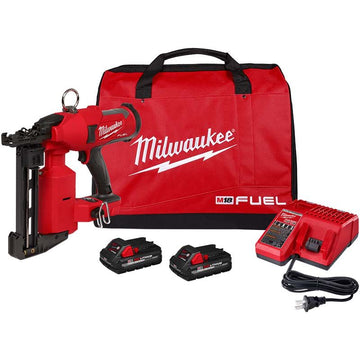
Some staples are compatible with fencing staplers or pneumatic tools, while others are meant for manual hammering. Always check if your staples are collated or designed for tool use before installation.
To avoid splitting, drive staples at a slight diagonal angle, avoid hammering them completely flush, and don’t place them too close to the edge or crack lines in the wood.
Wire should be tensioned first, then stapled with enough space to allow slight movement. Over-driving staples can restrict wire flex and cause premature wear or breakage.
Yes – but for high-tensile or high-tension fence systems, it’s recommended to use heavy-gauge or barbed staples that provide stronger grip and resistance to pull-out.
Yes. In wet, snowy, or coastal environments, galvanized or class-3 coated staples are ideal to prevent rust and extend the life of your fence.
Common tools include a fencing hammer or stapler, fencing pliers, post driver, wire strainers, and wire tensioners. Wearing safety gloves and eye protection is also recommended.
Typically, two staples per wire per post are used, though woven wire or mesh may require more depending on the number of horizontal and vertical strands.