
Deer




-
- 1
- 2
-
Deer

Electric Fence For Deer
Electric fencing for deer is a safe, economical and long lasting alternative to non-electric and dangerous barbed wire fencing.
FenceFast offers a range of electric fence options that cater for the specific needs and unpredictable nature of deer. Select from permanent (high tensile) or portable (mobile)fence systems below.
Choose the solution that best suits your situation. We’ll be happy to assist you contact us
High tensile fence for deer
Deer fences should be fitted by experts. Deer can jump high, and are flight animals. Gallagher specialises in game fences, and offers solutions that are both proven and safe. These fences are also used for protecting crops, such as wheat or barley, vineyards, or field of vegetables. .
Our advice
Looking for a professional permanent enclosure for deer or to protect your crops against deer? Then use High Tensile.
- Longest lasting most durable
- A longer distance between posts is possible, which means you need less material. Can be stretched tightly with tensioners and tension springs
- Use tension springs to deal with temperature fluctuations (shrinkage and expansion);
- use Gallagher Line Posts
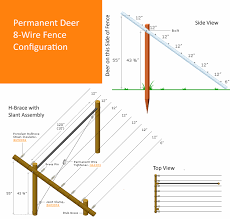
Fence Configurations - Deer
Deer can do major damage to crops or newly planted plants, stripping them down to the ground. The best way to put a definitive end to this is erect an electric fence. A slant fence has been used for many years to protect orchards and nursery crops. A 15-wire electric fence has also proven effective with deer control.

|
|
|
||||||||||||||||||||
|
|
||||||||||||||||||||


Mobile fence for deer


A mobile fence is ideal as a temporary or easy-to-move enclosure. It’s also suitable for subdividing large deer parks, or protecting your crops against deer.
A Gallagher Food Plot Protector Fence allows you to achieve both forms of protection. The three-dimensional configuration keeps all species (including deer) out of the plot until it is ready for harvest. By removing the outside fence and changing the wire configuration of the inside fence, you will allow deer into the plot while keeping wild hogs and livestock out of the plot!
There are several effective designs: mobile electric netting systems for rotational grazing; 3-line or multi-wire reel systems; permanent high-tensile wire fences; and offset electrified wires added to existing fences.
Sheep often carry thick fleece which insulates them from electrical shock, and they are smaller and more agile – this means your energizer must be stronger and your fence layout must ensure full contact and visibility.
For primary containment and training sheep, a minimum output around 3 joules or greater is recommended to ensure the shock is sufficient given fleece insulation and longer wire runs.
A good rule is five to seven wires, with bottom wires close to the ground to prevent slipping or crawling under. Heights range from about 36″ (≈90 cm) to 48″ (≈122 cm) depending on predator risk and terrain.
Yes – you can use offset insulators on the existing fence posts and add an electrified conductor as a barrier. This discourages leaning, rubbing or escape, and upgrades the old fence without full rebuilding.
Absolutely. Portable netting or reel systems allow you to subdivide pastures, rotate grazing, protect lambing paddocks, and adjust quickly – ideal for flexible management.
Monitor tension, ensure conductors are visible, keep vegetation clear from bottom wires, inspect insulators, verify grounding rods, and test energizer output annually or after severe weather.
Freeze-thaw cycles, heavy snow, wet vegetation and uneven terrain can reduce grounding effectiveness and conductor visibility. Using corrosion-resistant components, deeper ground rods, and visible tape or wire helps mitigate the issues.
Training involves introducing sheep to the energised fence while grazing so they learn to respect it. Properly trained sheep are less likely to challenge the line and the system performs more reliably.
You’ll need heavier duty wire or tape, additional wires (six or seven strands), proper braced corners, visible conductors, secure bottom wires near ground, and an energizer with sufficient power to maintain deterrence.
Yes – most systems are modular. You can extend lengths, add wires, upgrade energiser, add portable netting sections or convert mobile systems into semi-permanent as your operation evolves.
Yes – for lambs or lighter breeds you may need lower height, closer wire spacing, lighter posts or temporary paddocks for flexibility and protection until they mature.