

Over 50 percent of Canadian farmers managing large livestock herds report fence failures linked to inadequate insulators, a statistic that frustrates both animal safety and productivity. With tougher pasture demands and extreme weather, finding gear that matches or outperforms American brands is critical for reliable animal containment and peace of mind. This guide reveals how the right high tensile electric fence insulators can secure your property, streamline maintenance, and withstand the rigours of the Canadian environment.
Table of Contents
- What Are High Tensile Electric Fence Insulators
- Types And Material Differences Explained
- How Insulators Work In Electric Fencing
- Installation Requirements And Best Practices
- Common Issues And Mistakes To Avoid
Key Takeaways
| Point | Details |
|---|---|
| High Tensile Electric Fence Insulators | They are essential for preventing electrical current from grounding, ensuring effective livestock containment. |
| Material Selection | Choose between UV-resistant polymers and ceramic composites based on durability needs and climate conditions. |
| Installation Best Practices | Proper mounting and wire tensioning are crucial for maintaining fence performance and minimizing maintenance. |
| Common Mistakes | Avoid low-quality insulators, improper installation, and neglecting regular inspections to enhance fence efficiency and safety. |
What Are High Tensile Electric Fence Insulators
High tensile electric fence insulators are specialized components designed to support and electrically isolate high-tension fencing wire while preventing electrical current from grounding through fence posts. These critical devices play a fundamental role in creating secure, effective containment systems for livestock and property boundaries across Canadian agricultural landscapes.
At their core, these insulators prevent electrical current from escaping through fence posts by creating a critical barrier between the electrified wire and the supporting structure. Unlike standard fence insulators, high tensile versions are engineered to withstand significantly greater mechanical stress and tension, making them ideal for large pasture management and robust livestock containment scenarios.
High tensile electric fence insulators come in multiple configurations tailored to different fencing requirements. Farmers and ranchers can select from designs specific to line posts, corner posts, end posts, and strain points. Key features typically include:
Here is a quick reference table outlining high tensile electric fence insulator configurations and their suited fence locations:
| Insulator Style | Typical Fence Location | Distinct Advantage |
|---|---|---|
| Line Post | Midpoints of fence | Maintains electrical continuity |
| Corner | Directional changes | Withstands high mechanical force |
| End Post | Fence terminals | Secures wire ends under tension |
| Strain Point | High-stress areas | Prevents wire slippage or sagging |
- Durable polymer or ceramic construction
- UV and weather-resistant materials
- Ability to handle wire tensions up to 1200 pounds
- Compatibility with various wire gauges
- Resistance to cracking and degradation
Pro tip: When selecting high tensile electric fence insulators, always match the insulator’s load rating to your specific wire tension and environmental conditions to ensure maximum performance and longevity.
Types and Material Differences Explained
High tensile electric fence insulators come in diverse materials and designs, each engineered to meet specific agricultural and livestock management requirements. Insulators range from ring styles for wire to specialized corner designs that handle high tensile forces, providing farmers with flexible solutions for different fencing scenarios.
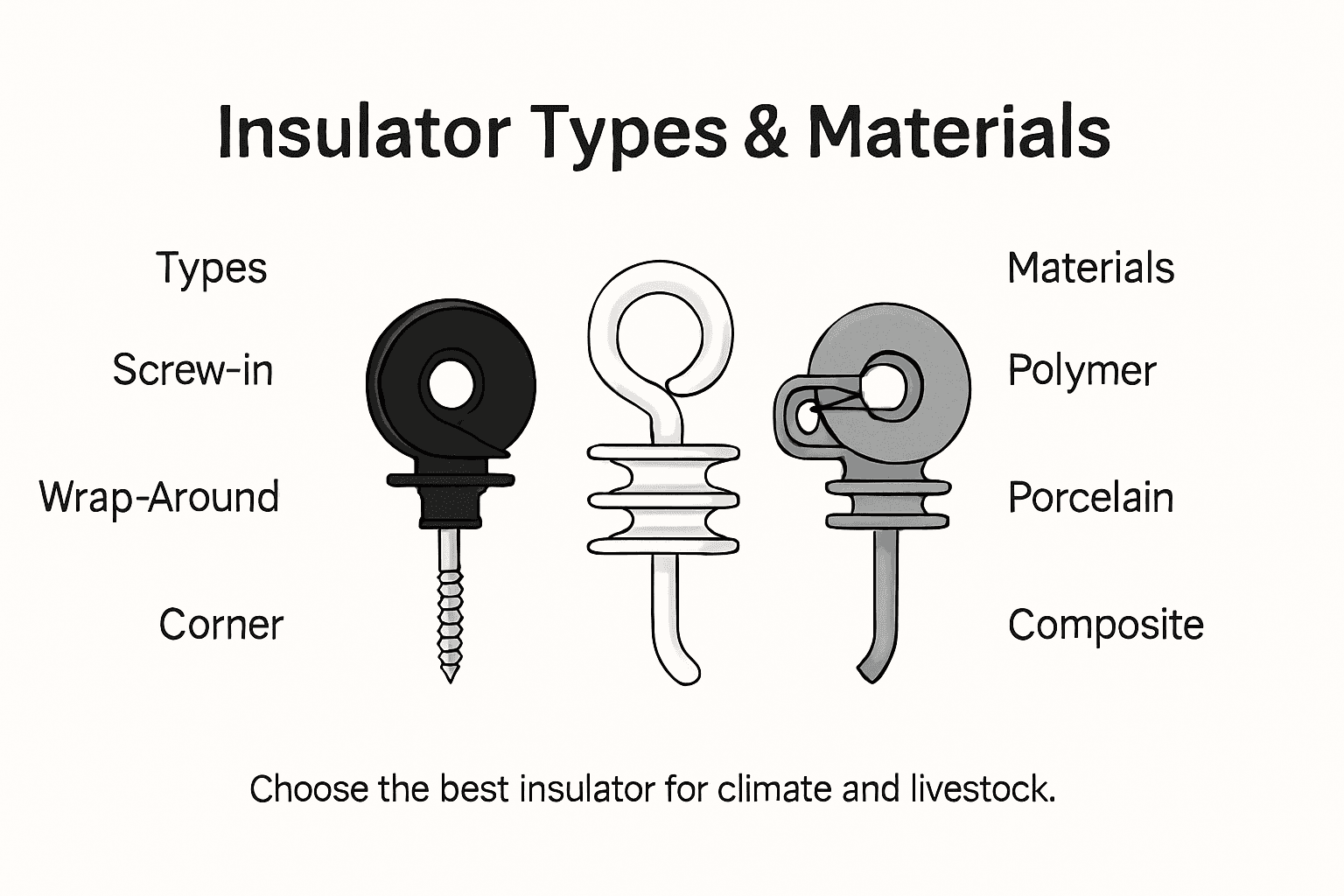
The primary materials used in manufacturing these critical components include UV-resistant polymers and ceramic composites. Polymer insulators offer lightweight construction and cost-effectiveness, while ceramic versions provide superior durability and resistance to extreme weather conditions. These material differences significantly impact performance, longevity, and suitability for various Canadian agricultural environments.
Key insulator types include:
- Ring Insulators: Ideal for standard wire applications
- Tape Insulators: Designed for wide electric tape fencing
- Cord Insulators: Used for flexible electric rope systems
- Corner Insulators: Engineered to manage high tension at directional changes
Material Comparison:
| Material | Durability | UV Resistance | Cost | Best Use |
|---|---|---|---|---|
| Polymer | Moderate | High | Lower | Temporary/Short-Term Fencing |
| Ceramic | Excellent | Very High | Higher | Permanent Livestock Enclosures |
Pro tip: Select insulators with material properties that match your specific climate and livestock management needs, considering factors like temperature range, animal behavior, and fence configuration.
For added clarity, this table summarizes how material selection impacts maintenance requirements for electric fence insulators:
| Material Type | Estimated Replacement Cycle | Maintenance Effort |
|---|---|---|
| Polymer | Every 2–4 years | Periodic cleaning needed |
| Ceramic | Every 6–10 years | Occasional visual checks |
How Insulators Work in Electric Fencing
Electric fence insulators create a critical electrical barrier that prevents electrical current from escaping through fence posts, ensuring the fence remains fully energized and effective for livestock containment. By strategically interrupting the potential ground path, these specialized components maintain the integrity of the electric circuit and deliver consistent performance across diverse agricultural environments.
The fundamental mechanism of electric fence insulators involves blocking electrical conductivity between the electrified wire and supporting structures. Constructed from non-conductive materials like high-density polymers or ceramic compounds, these insulators effectively prevent electrical current from grounding out through fence posts, wooden supports, or surrounding terrain. This isolation ensures that the electrical charge remains concentrated in the wire, creating a consistent deterrent barrier for livestock management.
Key operational principles of electric fence insulators include:
- Preventing electrical leakage
- Maintaining wire tension
- Resisting environmental degradation
- Supporting consistent electrical flow
- Protecting against short circuits
Electrical Flow Mechanics:
| Component | Function | Importance |
|---|---|---|
| Insulator Material | Blocks Conductivity | Critical for Circuit Integrity |
| Wire Positioning | Maintains Electrical Separation | Ensures Shock Delivery |
| Post Interface | Prevents Ground Connection | Maximizes Fence Efficiency |
Pro tip: Regularly inspect your insulators for signs of wear, damage, or material degradation to maintain optimal electric fence performance and prevent unexpected livestock containment failures.
Installation Requirements and Best Practices
High tensile electric fence installation involves precise wire height marking and strategic insulator placement to ensure optimal livestock containment and electrical performance. Canadian farmers must carefully consider post types, wire tension, and insulator selection to create a robust and reliable electric fencing system that withstands harsh environmental conditions.
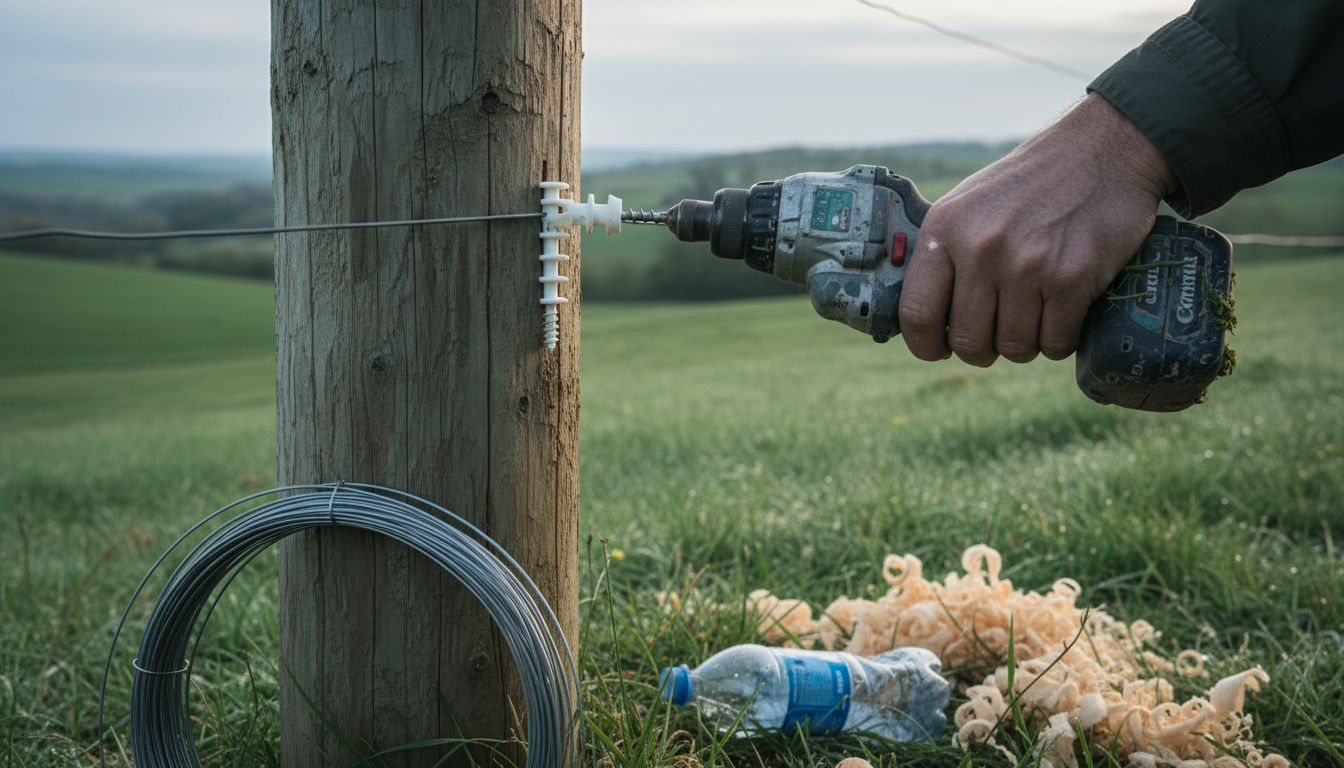
The installation process requires meticulous attention to several critical components. Farmers should select insulators that match their specific post material and fence configuration, using mounting methods like screw-in, nail-on, or plug-in systems. Proper positioning is crucial for maintaining low maintenance requirements and ensuring consistent electrical conductivity throughout the fence line.
Key installation steps include:
- Measuring and marking precise wire heights
- Selecting appropriate insulator types
- Ensuring correct wire tension
- Using wire-crimping sleeves for secure connections
- Allowing slight movement in insulator attachments
Installation Mounting Methods:
| Mounting Type | Pros | Best Used For |
|---|---|---|
| Screw-In | Most Secure | Permanent Installations |
| Nail-On | Quick Installation | Temporary or Wooden Posts |
| Plug-In | Easy Replacement | Flexible Fencing Configurations |
Pro tip: Always pre-drill mounting holes and use corrosion-resistant fasteners to prevent long-term degradation and ensure the longevity of your electric fence insulators.
Common Issues and Mistakes to Avoid
Electric fence insulator failures often stem from improper selection and installation practices that compromise the entire fencing system’s effectiveness. Canadian farmers must be vigilant about identifying and preventing potential issues that can lead to livestock escapes, reduced fence performance, and unnecessary maintenance expenses.
Critical mistakes in electric fence insulator management include selecting inappropriate materials that cannot withstand local environmental conditions, using damaged or degraded insulators, and failing to maintain proper electrical separation. Improperly installed or low-quality insulators can create significant safety risks, including electrical leakage, reduced fence voltage, and potential injury to livestock.
Most Common Mistakes to Avoid:
- Choosing low-quality insulators
- Ignoring environmental compatibility
- Improper mounting techniques
- Failing to inspect insulators regularly
- Using damaged or cracked insulators
Insulator Failure Risk Assessment:
| Risk Factor | Potential Consequence | Mitigation Strategy |
|---|---|---|
| Material Degradation | Electrical Leakage | Regular Replacement |
| Incorrect Installation | Reduced Fence Efficiency | Proper Mounting Techniques |
| Environmental Stress | Premature Failure | Select Weather-Resistant Types |
Pro tip: Conduct quarterly visual inspections of your electric fence insulators, looking for signs of cracking, discoloration, or physical damage, and replace any compromised components immediately to maintain optimal fence performance.
Strengthen Your Fencing with Reliable High Tensile Electric Fence Insulators
Maintaining secure and efficient containment requires the right combination of durable materials and expert installation. The challenges you face in preventing electrical leakage and ensuring long-lasting performance can be solved with high-quality electric fence insulators designed specifically for high tensile applications. Matching insulator load ratings to your wire tension and selecting weather-resistant materials are essential steps toward a dependable fencing system.

Discover our wide range of electric fencing supplies and livestock management tools at FenceFast.ca. Whether you need sturdy insulators, reliable connectors, or complete electric fencing setups, we provide Canadian farmers and ranchers with products tailored to withstand harsh environments and demanding livestock needs. Act now to secure your fence against costly failures and protect your animals with expert guidance and nationwide shipping when you shop at FenceFast.ca. Start building a safer, more effective containment system today.
Frequently Asked Questions
What are high tensile electric fence insulators?
High tensile electric fence insulators are components designed to support and isolate high-tension fencing wire, preventing electrical current from grounding through fence posts. They are essential for creating effective containment systems for livestock and property boundaries.
How do electric fence insulators work?
Electric fence insulators work by blocking electrical conductivity between the electrified wire and supporting structures, ensuring no electrical current escapes. This maintains the effectiveness of the fence in deterring livestock from crossing boundaries.
What materials are used in high tensile electric fence insulators?
High tensile electric fence insulators are commonly made from UV-resistant polymers and ceramic composites. Polymer insulators are lightweight and cost-effective, whereas ceramic insulators offer superior durability and resistance to harsh weather conditions.
What installation tips should I follow for high tensile electric fence insulators?
When installing high tensile electric fence insulators, ensure proper wire height marking, select suitable insulator types for your fence configuration, maintain correct wire tension, and use secure mounting methods like screw-in, nail-on, or plug-in systems.

