

Reducing costs while keeping cattle secure is a daily concern for Canadian farmers and ranchers. Solar-powered fencing systems offer a practical answer, using sunlight to create a reliable barrier for livestock management across remote and expansive pastures. This article explores the Gallagher S400 solar fence charger, highlighting its portable design and advanced energy features that support sustainable agriculture while simplifying containment for cattle and livestock. Bold concept: solar-powered fencing solutions.
Table of Contents
- Gallagher S400 Solar Fence Charger Explained
- Core Features And Operational Principles
- Installation Requirements And Best Practices
- Power Output, Coverage, And Real-World Suitability
- Comparing Solar, Battery, And Mains Chargers
- Common Mistakes And Essential Maintenance Tips
Key Takeaways
| Point | Details |
|---|---|
| Portable Solar Design | The Gallagher S400 features a solar-powered setup, allowing for off-grid electricity generation and mobility across diverse agricultural landscapes. |
| Robust Performance | With a voltage output of 2000-6000 volts and multi-mile coverage, it effectively deters livestock from escaping and predators from entering. |
| Installation Best Practices | Proper placement and maintenance, including solar panel positioning and grounding techniques, are crucial for optimal charger performance. |
| Regular Maintenance | Periodic inspections and addressing common issues such as vegetation interference and battery health are essential for ensuring long-term functionality. |
Gallagher S400 Solar Fence Charger Explained
The Gallagher S400 is a sophisticated solar-powered electric fence charger designed specifically for Canadian livestock management. Advanced photovoltaic technology enables this device to generate reliable electrical pulses for containing and protecting animals across remote agricultural settings.
Key features of the Gallagher S400 include:
- Portable solar-powered design
- Off-grid electricity generation
- High-voltage electrical pulse delivery
- Non-lethal animal deterrent system
- Battery storage for consistent performance
The energizer works by converting solar energy into controlled electrical pulses that travel through fence wire. These pulses deliver a short, startling shock when animals contact the fence, effectively preventing livestock from escaping or predators from entering. Solar charging mechanisms ensure continuous operation by maintaining battery power through photovoltaic input.
Installation requires strategic placement where consistent sunlight can charge the integrated battery. Farmers should position solar panels to maximize direct sun exposure, ensuring optimal charging throughout daylight hours. The system’s modular design allows flexible deployment across various pasture configurations.
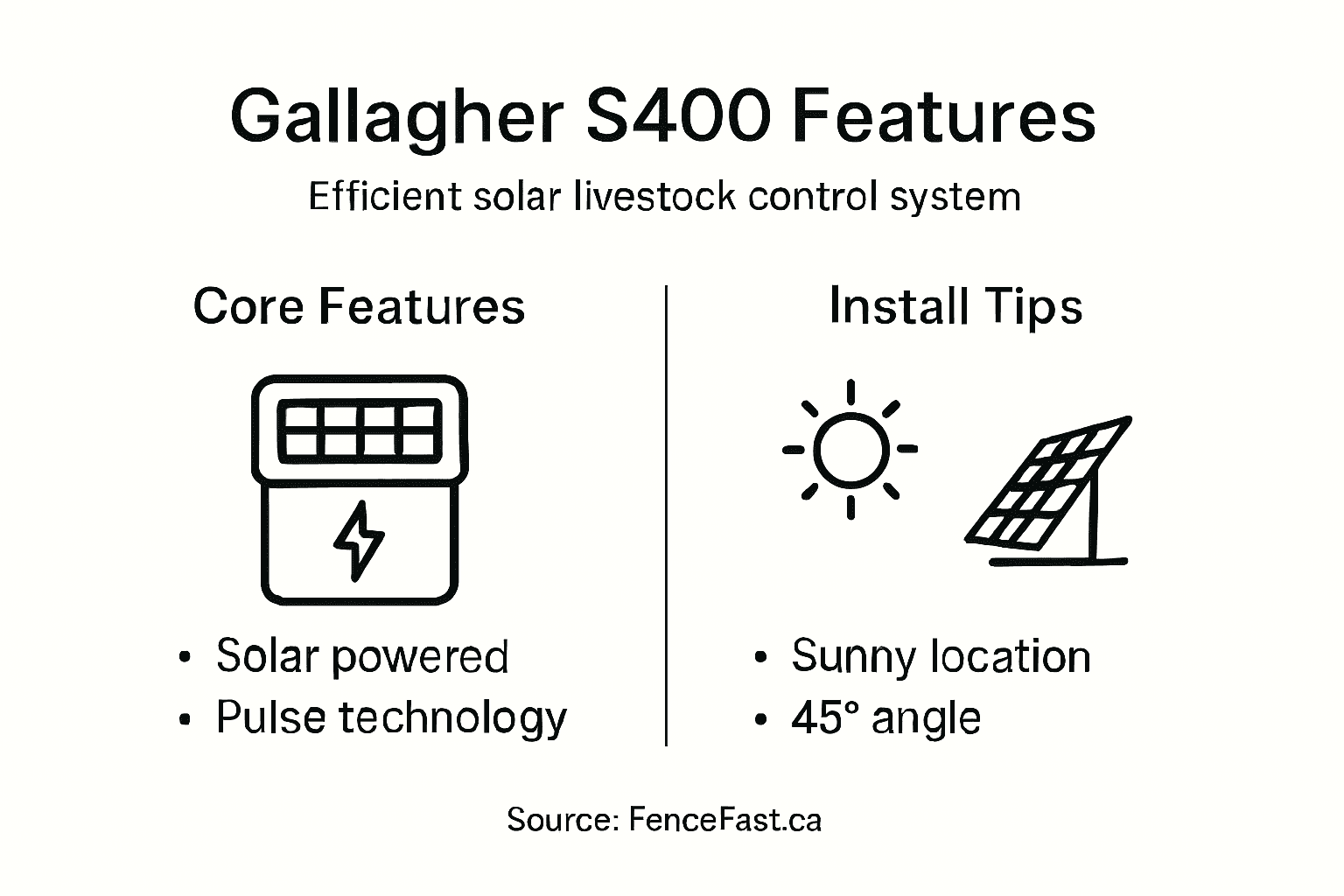
Pro tip: Position your solar fence charger’s panel at a 45-degree angle facing south to maximize solar energy capture and maintain consistent electrical fence performance.
Core Features and Operational Principles
The Gallagher S400 solar fence charger represents an advanced technological solution for livestock management, utilizing sophisticated solar energy integration to deliver reliable fence protection. Its core operational design centers on converting solar power into precise electrical containment systems for agricultural environments.
Key operational components include:
- Photovoltaic solar panel
- Rechargeable battery storage system
- Low impedance energizer circuit
- High voltage pulse generator
- Weather-resistant electrical components
Pulse Generation Mechanism: The device generates intermittent electrical pulses through a specialized energizer circuit. Low impedance design ensures consistent voltage output, maintaining an effective deterrent barrier even when vegetation or environmental conditions might typically disrupt electrical flow. These controlled pulses create a psychological barrier that prevents livestock from approaching or crossing fence boundaries.
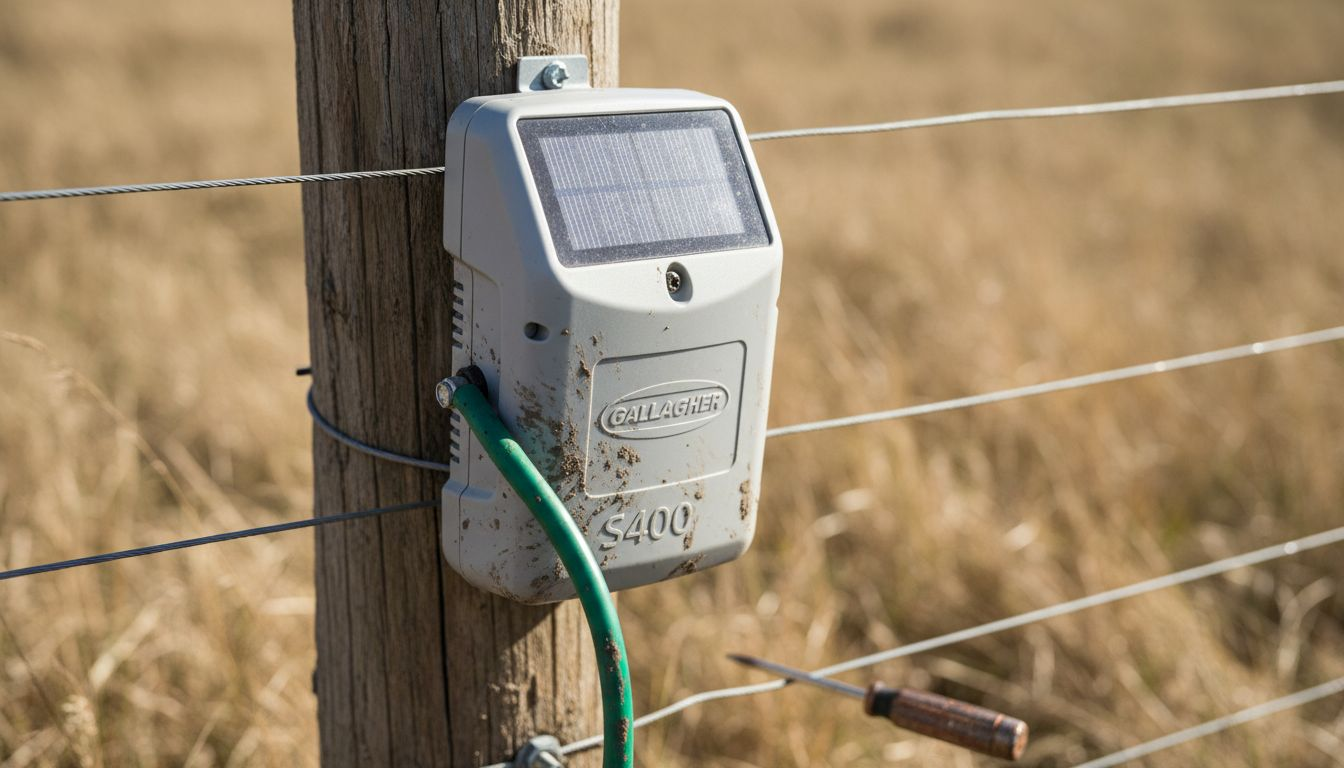
The solar charging system operates through a continuous energy conversion process. During daylight hours, photovoltaic panels capture solar radiation and transform it into electrical energy, which is then stored in a dedicated battery unit. This stored energy powers the fence charger during both daylight and nighttime hours, ensuring uninterrupted fence performance across varying environmental conditions.
Pro tip: Regularly clean solar panels and check battery connections to maintain optimal electrical fence performance and maximize energy conversion efficiency.
Installation Requirements and Best Practices
Successful deployment of the Gallagher S400 solar fence charger requires careful planning and adherence to specific electrical safety standards. Proper installation ensures optimal performance and long-term reliability for livestock management systems across Canadian agricultural landscapes.
Critical installation considerations include:
- Strategic solar panel positioning
- Proper grounding techniques
- Weather-resistant component protection
- Correct cable and connector selection
- Regular system maintenance
Ground Rod Installation: The effectiveness of the solar fence charger depends significantly on proper grounding. Ground rod placement requires driving a copper rod deeply into moist soil, typically 6-8 feet deep, to create an efficient electrical circuit. Multiple ground rods might be necessary for larger fence perimeters, spaced approximately 10 feet apart to ensure consistent electrical conductivity.
When positioning the solar panel, farmers must prioritize maximum sunlight exposure. Ideal locations include open areas free from tree shade, with a south-facing orientation that captures maximum daylight hours. The panel should be mounted at a 45-degree angle to optimize solar energy collection, taking into account seasonal sun angle variations typical in Canadian agricultural regions.
Pro tip: Conduct a detailed site survey before installation to identify optimal solar panel positioning and potential electrical grounding challenges.
Power Output, Coverage, and Real-World Suitability
The Gallagher S400 solar fence charger delivers robust performance across diverse Canadian agricultural environments, with powerful voltage output designed to meet demanding livestock management requirements. Its sophisticated engineering ensures reliable electrical containment across varied terrain and environmental conditions.
Key performance specifications include:
Here’s a quick summary of how the S400’s power features address real-world livestock management needs:
| Specification | Practical Benefit | Real-World Scenario |
|---|---|---|
| 2000-6000 volt range | Deterrence for most animals | Protects cattle and sheep |
| Multi-mile fence coverage | Suits large properties | Ranches with open pastures |
| Two weeks battery reserve | Maintains uptime in shade | Long cloudy periods |
| Low impedance design | Efficient through brush | Fences with tall grass |
- Voltage range between 2000-6000 volts
- Fence coverage up to several miles
- Low impedance circuit design
- Battery storage for two weeks without sunlight
- Adaptable to multiple livestock types
Power Characteristics: The energizer’s performance depends critically on joule rating and pulse characteristics. Fence charger joule ratings determine the effective current fall distance and ability to overcome vegetation load, making the S400 particularly suited for challenging rural landscapes with variable terrain and vegetation density.
Real-world suitability extends beyond raw power metrics. The device’s built-in rechargeable battery provides continuous operation during extended periods of reduced sunlight, ensuring consistent livestock containment in remote Canadian pastures. This reliability makes the Gallagher S400 an ideal solution for ranchers managing expansive properties with limited electrical infrastructure.
Pro tip: Calculate your specific fence length and vegetation density before selecting your solar fence charger to ensure optimal power coverage and performance.
Comparing Solar, Battery, and Mains Chargers
Fence chargers come in three primary power configurations, each with unique advantages for Canadian agricultural operations. Energizer power technologies offer distinct solutions tailored to specific farm management needs and environmental conditions.
Comparative characteristics of fence charger types:
This table compares the main fence charger types for typical Canadian farm use:
| Charger Type | Energy Source | Best For | Key Limitation |
|---|---|---|---|
| Solar | Sunlight, battery | Off-grid pastures | Low output in deep shade |
| Battery | Replaceable battery | Temporary fencing | Frequent battery change |
| Mains | Household electricity | Permanent installations | Requires power access |
- Solar Chargers
- Renewable energy source
- Off-grid capabilities
- No ongoing electricity costs
- Battery Chargers
- Portable and flexible
- Limited runtime
- Regular battery replacement
- Mains Chargers
- Consistent power supply
- Limited placement options
- Dependent on electrical infrastructure
Performance Considerations: Fence charger selection requires careful evaluation of site-specific requirements. Solar chargers excel in remote locations with abundant sunlight, battery chargers provide mobility for temporary fencing, and mains chargers deliver uninterrupted power where electrical infrastructure exists.
Ultimately, the optimal charger depends on specific agricultural contexts. Remote Canadian pastures might benefit most from solar solutions, while smaller enclosed farms could leverage mains-powered systems. Hybrid approaches combining solar panels with battery backup can provide maximum flexibility and reliability across varying environmental conditions.
Pro tip: Assess your specific terrain, power availability, and livestock management needs before selecting an electric fence charger to ensure optimal performance.
Common Mistakes and Essential Maintenance Tips
Maintaining a Gallagher S400 solar fence charger requires proactive and systematic attention to prevent performance degradation and potential system failures. Electric fence maintenance involves multiple critical aspects that Canadian farmers must consistently monitor.
Common maintenance challenges include:
- Vegetation interference with fence lines
- Corrosion of ground wires and connections
- Insulator damage and degradation
- Battery performance reduction
- Solar panel efficiency decline
Critical Inspection Points: Farmers should conduct comprehensive periodic assessments of their solar fence charger system. Regular visual inspections help identify potential issues before they compromise fence effectiveness. This includes checking wire tension, examining insulators for cracks, verifying ground rod connections, and ensuring solar panels remain clean and unobstructed.
Potential mistakes that can significantly impact fence performance range from inadequate grounding to neglecting routine maintenance. Proper ground rod installation requires multiple rods in moist soil, properly connected to create a low-resistance electrical path. Farmers should test ground system resistance periodically and replace any corroded or damaged components immediately to maintain optimal fence functionality.
Pro tip: Schedule quarterly comprehensive system checks and keep a maintenance log to track your solar fence charger’s performance and quickly identify potential issues.
Secure Your Livestock with Proven Electric Fence Solutions
Managing livestock means overcoming challenges like inconsistent power, poor ground connections, and weather-related disruptions. The Gallagher S400 Solar Fence Charger offers reliable off-grid performance that keeps your animals safe and contained through advanced solar technology and optimized pulse delivery. If you want to avoid the frustration of low voltage or battery failure, understanding installation best practices and maintenance tips is essential.

Explore a wide range of electric fencing supplies crafted for Canadian farmers and ranchers at FenceFast.ca. Discover fencing components, power supplies, solar panels, and accessories designed to maximize the efficiency of your solar charger and protect your investment. Take action now to ensure continuous livestock containment by visiting FenceFast.ca and equip your farm with trusted products and expert advice.
Frequently Asked Questions
What is the Gallagher S400 Solar Fence Charger?
The Gallagher S400 Solar Fence Charger is a solar-powered electric fence device designed for effective livestock management. It converts solar energy into electrical pulses to deter animals from escaping or prevent predators from entering.
How does the Gallagher S400 work?
The charger uses photovoltaic technology to generate electrical pulses that travel through fence wire. When animals touch the fence, they receive a non-lethal shock, discouraging them from breaching the boundary. The integrated battery ensures consistent performance, even at night or during cloudy conditions.
What are the installation requirements for the Gallagher S400?
Proper installation includes placing the solar panel in a sunny location at a 45-degree angle to maximize sunlight exposure, ensuring proper grounding techniques, and using weather-resistant components. Regular maintenance checks are also essential to maintain functionality.
What are the advantages of choosing a solar fence charger like the Gallagher S400 over battery or mains chargers?
Solar chargers like the Gallagher S400 offer renewable energy solutions and off-grid capabilities, making them ideal for remote areas. Unlike battery chargers, they don’t require frequent battery replacements, and they provide flexibility compared to mains chargers, as they can be placed anywhere without electrical infrastructure.
Recommended
- 7 Key Benefits of the Gallagher S100 Solar Electric Fence Charger – FenceFast Ltd.
- Gallagher S200 Solar Fence Charger: Reliable Livestock Power – FenceFast Ltd.
- Gallagher S40 Solar Fence Charger: Secure Livestock – FenceFast Ltd.
- Gallagher Solar Fence Charger: Reliable Livestock Control – FenceFast Ltd.

