

Most American and Canadian farms face rising energy costs for animal containment, yet solar fence chargers can cut expenses by up to 60 percent compared to grid-powered alternatives. Efficient livestock management matters to every rancher, especially across Canada’s vast, remote landscapes where access to reliable power is limited. Discover how advanced solar fencing solutions empower Canadian farmers to keep herds secure, reduce costs, and support sustainable agricultural practices year-round.
Table of Contents
- Gallagher Solar Fence Charger Explained
- Key Types And Performance Differences
- How Solar-Powered Electric Fencing Works
- Benefits For Canadian Livestock Operations
- Common Mistakes And What To Avoid
- Comparing Solar Chargers To Other Options
Key Takeaways
| Point | Details |
|---|---|
| Sustainable Solution | Gallagher solar fence chargers utilize solar energy for livestock containment, promoting environmental sustainability while reducing operational costs. |
| Variety of Models | The range includes entry-level, mid-range, and professional-grade models suited for different pasture sizes and livestock needs. |
| Performance and Reliability | Key features like weatherproof design, adaptable voltage settings, and advanced technologies ensure robust performance in diverse conditions. |
| Installation Best Practices | Proper installation and maintenance, including optimal solar panel positioning, are crucial for maximizing efficiency and minimizing common mistakes. |
Gallagher Solar Fence Charger Explained
Gallagher solar fence chargers represent a cutting-edge solution for livestock management, providing farmers with a sustainable and efficient method of animal containment. These innovative devices convert solar energy into electrical power, creating a reliable barrier that safely controls livestock movement across pastures and agricultural lands. Advanced solar fence technology enables farmers to maintain secure boundaries without relying on traditional power sources.
The core functionality of Gallagher solar fence chargers involves generating high-voltage electrical pulses through solar-powered batteries. When an animal contacts the electrified fence, they receive a short, sharp shock that teaches them to avoid the boundary. This psychological deterrent is far more effective than physical barriers, as animals quickly learn to respect the fence line. The solar panel continuously charges the battery, ensuring consistent performance even in remote locations with limited electrical infrastructure.
Key features of Gallagher solar fence chargers include robust weatherproof design, adaptable voltage settings, and minimal maintenance requirements. Farmers can select chargers based on their specific pasture size and livestock type, with models ranging from small paddock systems to extensive ranch installations. The integration of solar technology means reduced operational costs and increased environmental sustainability, making these chargers an intelligent investment for modern agricultural operations.
Pro tip: Position your solar fence charger’s solar panel to receive maximum direct sunlight, typically facing south, to ensure optimal battery charging and consistent fence performance throughout the day.
Key Types and Performance Differences
Gallagher solar fence chargers offer multiple models designed to meet the diverse needs of Canadian agricultural operations, with performance variations that significantly impact livestock management effectiveness. The lineup typically includes low, medium, and high-powered models, each tailored to specific farm requirements and terrain challenges. Solar electric fence technologies provide farmers flexible solutions for containment across different pasture sizes and livestock types.
The primary performance differences among Gallagher solar fence chargers center on power output, coverage area, and battery efficiency. Entry-level models are ideal for smaller paddocks and light livestock management, delivering 0.5 to 1 joule of energy. Mid-range chargers provide 1-2 joules of power, suitable for medium-sized operations with mixed livestock populations. Professional-grade models offer 3-5 joules, designed for extensive ranches with challenging terrain and larger herds requiring robust containment systems.
Key differentiation factors include battery capacity, solar panel size, and voltage regulation. Advanced models feature larger solar panels with monocrystalline technology, enabling faster charging and more consistent performance in variable weather conditions. Some high-end Gallagher solar fence chargers incorporate microprocessor-controlled circuits that optimize energy distribution, ensuring stable electrical pulses even during partial cloud cover or reduced sunlight periods.
Here’s a summary of main Gallagher solar fence charger models and their typical applications:
| Model Type | Power Output (Joules) | Recommended Use | Coverage Area |
|---|---|---|---|
| Entry-Level | 0.5 to 1 | Small paddocks, light livestock | Up to 15 acres |
| Mid-Range | 1 to 2 | Mixed livestock, medium operations | 15 to 50 acres |
| Professional-Grade | 3 to 5 | Large herds, challenging terrain | 50 acres and above |
Pro tip: When selecting a solar fence charger, calculate your total fence length and livestock type to match the appropriate joule rating, ensuring optimal containment and energy efficiency.
How Solar-Powered Electric Fencing Works
Solar-powered electric fencing represents a sophisticated agricultural technology that transforms solar energy into an effective livestock management system. At its core, the system consists of three primary components: a solar panel, a battery, and an energizer that generates electrical pulses. Portable solar electric fence solutions have revolutionized how farmers maintain secure and flexible boundary control across diverse terrains.
The operational mechanism begins with the solar panel, which captures sunlight and converts it into electrical energy stored in a rechargeable battery. When an animal approaches the fence, the energizer releases a high-voltage, low-amperage pulse through the fence wire. This pulse creates a short, sharp shock that serves as a psychological deterrent, teaching livestock to respect boundary limits without causing permanent harm. The electrical pulse typically lasts a fraction of a second, providing an immediate but safe correction that prevents animals from attempting to cross the fence.
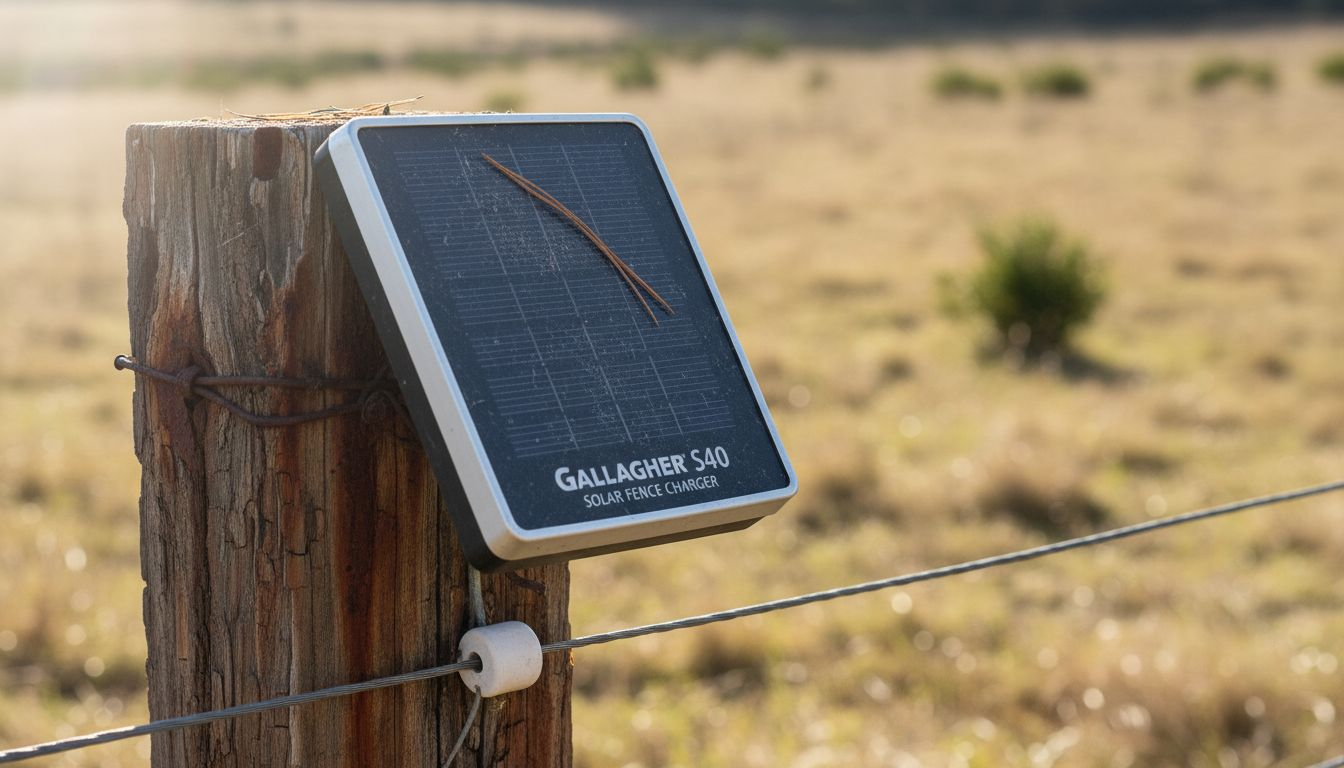
Modern solar fence chargers incorporate advanced technologies to ensure consistent performance. These include microprocessor-controlled circuits that regulate voltage output, temperature-compensated battery management systems, and intelligent power distribution mechanisms. Some sophisticated models feature built-in lightning protection, automatic grounding systems, and adaptive charging capabilities that optimize energy collection during varying sunlight conditions. The result is a reliable, low-maintenance solution that provides continuous livestock containment with minimal human intervention.
Pro tip: Regularly clean your solar panel’s surface and position it at an optimal angle to maximize sunlight absorption, ensuring consistent battery charging and fence performance throughout the year.
Benefits for Canadian Livestock Operations
Gallagher solar fence chargers offer transformative advantages for Canadian livestock operations, addressing unique challenges posed by remote and varied agricultural landscapes. Solar fence technologies provide ranchers with unprecedented flexibility in managing livestock across expansive and often challenging Canadian terrains, from prairie grasslands to mountainous regions.
The primary benefits extend beyond simple animal containment, encompassing operational efficiency and sustainability. These solar-powered systems enable ranchers to implement sophisticated livestock management strategies, such as rotational grazing, without the limitations of traditional electrical infrastructure. By allowing easy fence repositioning and providing consistent power in remote locations, solar fence chargers support more dynamic and responsive agricultural practices. They perform exceptionally well in Canadian environments, maintaining reliable performance through harsh winters and variable sunlight conditions.
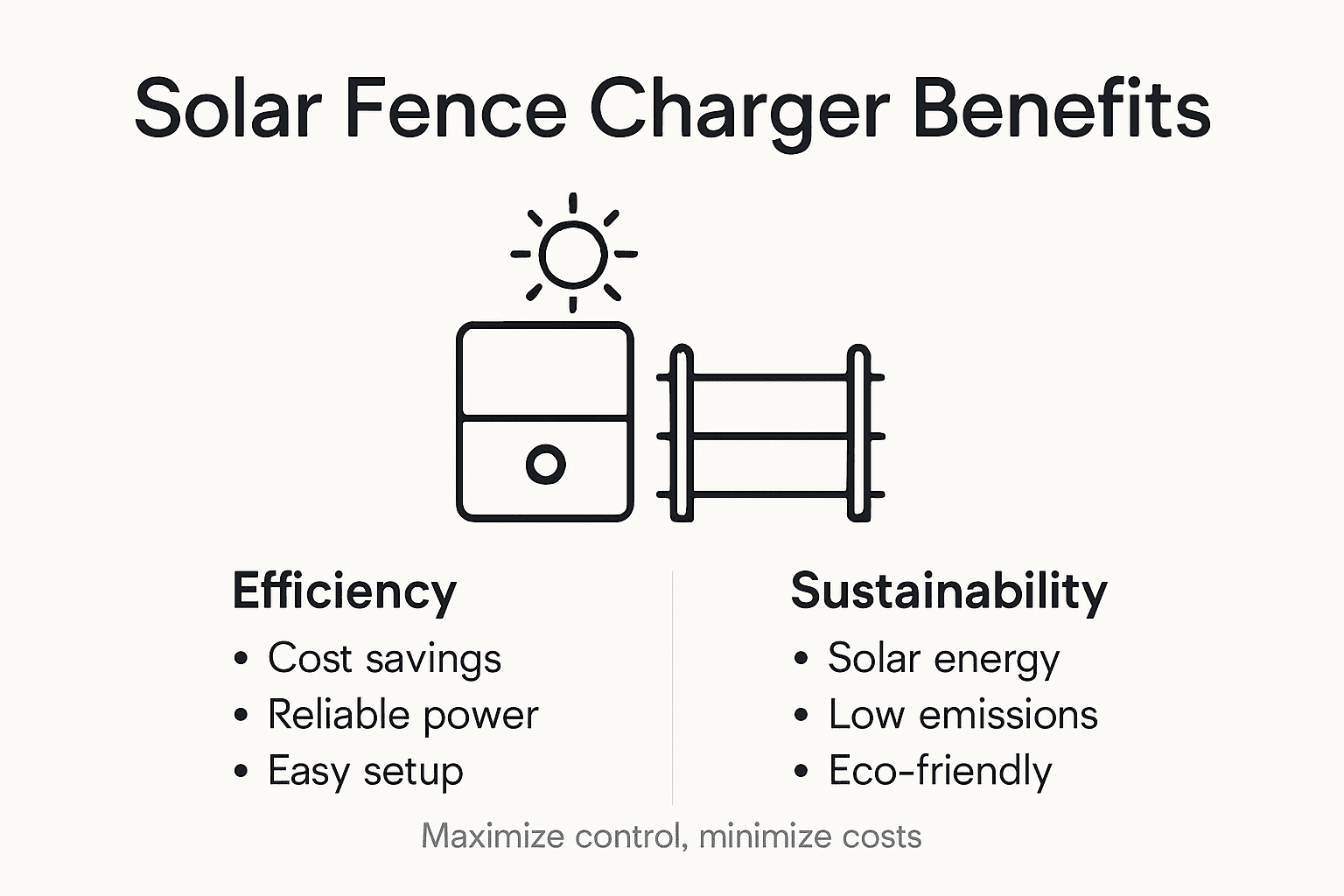
Economic advantages are equally compelling for Canadian farmers. Solar fence chargers eliminate ongoing electricity costs, reduce maintenance requirements, and provide a low-carbon solution for livestock management. The systems are particularly beneficial for operations in rural and off-grid areas, where electrical connections are expensive or impractical. Advanced models incorporate intelligent charging systems that optimize energy collection, ensuring consistent fence performance regardless of weather fluctuations or seasonal changes.
Pro tip: Position your solar fence charger’s solar panel facing south and at a 45-degree angle to maximize sunlight absorption during Canada’s variable seasonal conditions.
Common Mistakes and What to Avoid
Improper installation techniques can severely compromise the effectiveness of solar fence chargers for Canadian livestock operations. Ranchers frequently encounter critical errors that undermine their fence system’s performance, ranging from inadequate grounding to poor solar panel positioning. Understanding these potential pitfalls is essential for maintaining a reliable livestock containment strategy.
One of the most significant mistakes involves incorrect charger selection and installation. Farmers often underestimate the importance of matching the charger’s power output to their specific fence length and livestock type. Insufficient voltage can lead to repeated animal breaches, while overpowered systems waste energy and potentially harm livestock. Critical installation errors include improper grounding, which reduces electrical effectiveness, and neglecting to clear vegetation and debris from fence lines that can create unwanted electrical shorts and reduce system efficiency.
Battery and solar panel management represents another crucial area where ranchers can improve their solar fence charger performance. Low-quality batteries, incorrect charging configurations, and poorly positioned solar panels can dramatically reduce system reliability. Canadian farmers must be particularly vigilant about solar panel placement, ensuring maximum sunlight exposure during variable seasonal conditions. This means strategically positioning panels to capture optimal light, avoiding shaded areas, and regularly cleaning panels to maintain peak energy absorption.
Pro tip: Perform a monthly voltage test on your solar fence charger and maintain a comprehensive maintenance log to track performance and identify potential issues before they become critical system failures.
Comparing Solar Chargers to Other Options
Comparing electric fence charging technologies reveals significant advantages of solar-powered systems over traditional alternatives. Unlike AC-powered chargers that rely on fixed electrical infrastructure, solar fence chargers provide unprecedented flexibility for Canadian agricultural operations, particularly in remote and expansive rural landscapes.
Traditional AC-powered fence chargers require consistent electrical connections, limiting their deployment to areas with reliable grid access. In contrast, battery-powered and solar options offer greater mobility and installation versatility. Battery-only chargers demand frequent recharging or replacement, creating ongoing maintenance challenges. Solar chargers overcome these limitations by continuously generating power through integrated photovoltaic panels, ensuring consistent electrical output without external power sources or frequent battery interventions.
The comparative advantages of solar fence chargers extend beyond operational flexibility. While AC chargers provide steady power in urban or developed agricultural settings, solar chargers excel in remote locations with limited infrastructure. They significantly reduce long-term operational costs, eliminate dependency on electrical grids, and offer superior environmental sustainability. Solar technologies enable farmers to implement livestock management strategies across diverse terrains, from prairie grasslands to mountainous regions, without compromising fence effectiveness or incurring substantial electrical expenses.
Compare solar fence chargers to other power options for livestock fencing:
| Power Source | Mobility | Maintenance Needs | Suitability for Remote Areas |
|---|---|---|---|
| Solar-Powered | Highly portable | Low, occasional checks | Excellent |
| AC-Powered | Fixed location | Regular, grid upkeep | Poor |
| Battery-Only | Portable | Frequent battery swap | Moderate |
Pro tip: Assess your specific farm’s terrain, fence length, and livestock type before selecting a charging system to ensure optimal performance and cost-effectiveness.
Secure Your Livestock with Reliable Gallagher Solar Fence Chargers Today
Managing livestock safely across vast and remote Canadian landscapes is a challenge that requires dependable equipment designed specifically for your pasture size and animal types. This article highlights key concerns such as selecting the correct charger power output, ensuring proper solar panel placement for consistent battery charging, and avoiding common installation mistakes. These are vital to maintaining a secure and energy-efficient boundary that protects your animals and reduces operational headaches.
At FenceFast.ca, we specialize in providing a wide range of electric fencing solutions, including Gallagher solar fence chargers tailored to meet the demands of Canadian farmers and ranchers. Our selection empowers you to choose the perfect system whether you operate a small paddock or a large ranch in challenging terrain. You can also access expert advice and helpful resources to optimize setup and maximize fence performance. Explore our electric fencing systems and discover how integrating solar-powered chargers can reduce costs and increase flexibility while helping you maintain full control over your livestock.

Take the next step now by visiting FenceFast.ca to find quality Gallagher solar fence chargers and related fencing supplies designed for Canadian agricultural conditions. Act today to secure your animals with sustainable technology that delivers peace of mind and lasting reliability.
Frequently Asked Questions
What is a Gallagher solar fence charger and how does it work?
Gallagher solar fence chargers convert solar energy into electrical power, generating high-voltage pulses to create a psychological barrier for livestock. The system consists of a solar panel, a rechargeable battery, and an energizer that releases electrical pulses when animals approach the fence.
What are the main benefits of using a solar fence charger for livestock management?
Solar fence chargers provide operational efficiency, cost savings on electricity, and environmental sustainability. They are ideal for remote areas, allow for flexible fence repositioning, and maintain reliable performance even in harsh weather conditions.
How do I choose the right Gallagher solar fence charger for my farm?
Choose a charger based on your total fence length, the type of livestock you have, and your specific pasture size. Entry-level models are suitable for small paddocks, while professional-grade chargers are best for larger herds and challenging terrains.
What maintenance is required for Gallagher solar fence chargers?
Minimal maintenance is needed, but regular tasks include cleaning the solar panel to maximize sunlight absorption, checking battery health, ensuring proper grounding, and performing monthly voltage tests to monitor performance.

