

Every Canadian cattle rancher knows the frustration of seeing livestock slip through fences or finding fresh signs of wildlife damage on their land. Keeping herds secure and predators out depends on more than just strong wires—the right electric fence insulator makes all the difference. By understanding the key role insulators play in maintaining voltage and performance, you can protect your animals, minimize costly escapes, and safeguard your property investment year after year.
Table of Contents
- Electric Fencing Insulator Defined And Purpose
- Main Types Of Electric Fencing Insulators
- How Electric Fencing Insulators Work
- Installation Methods For Various Fence Posts
- Risks, Failures, And Common Mistakes
- Alternatives And Cost Comparisons
Key Takeaways
| Point | Details |
|---|---|
| Importance of Insulators | Electric fence insulators are vital for maintaining electrical charge and ensuring livestock containment by preventing current leakage. |
| Material Selection | Insulators vary in materials such as ceramic and HDPE; choosing the right type based on environmental conditions is crucial for durability. |
| Installation Techniques | Proper installation methods differ by post material and are critical for maintaining electrical continuity and preventing short circuits. |
| Regular Maintenance | Monthly inspections are essential to identify wear and degradation, ensuring optimal fence performance and minimizing risks to livestock. |
Electric fencing insulator defined and purpose
An electric fence insulator is a critical component in agricultural fencing systems designed to safely contain livestock while preventing electrical current from grounding or dissipating. These specialized devices play a fundamental role in electric fence functionality, ensuring that high-voltage electrical pulses remain precisely where they’re intended.
The primary purpose of an electric fence insulator is to strategically support and separate electrical conducting wire from fence posts or supporting structures. By creating a non-conductive barrier, insulators prevent electrical current from escaping into the ground or post material, maintaining the fence’s intended electrical charge. This design ensures that animals receive a consistent, controlled shock when they contact the electrified wire.
Key functions of electric fence insulators include:
- Providing mechanical support for electrical wire
- Preventing electrical current leakage
- Maintaining consistent voltage across the fence line
- Protecting wooden or metal fence posts from electrical degradation
- Enabling flexible fence configuration for various livestock management needs
Insuators come in multiple designs tailored to different post materials and environmental conditions, including ceramic, plastic, and polymer variations. Each type offers unique advantages for specific agricultural settings, ensuring ranchers can select the most appropriate solution for their specific livestock containment requirements.
Pro tip: When selecting electric fence insulators, always match the insulator material to your specific environmental conditions and post type to maximize long-term performance and durability.
Main types of electric fencing insulators
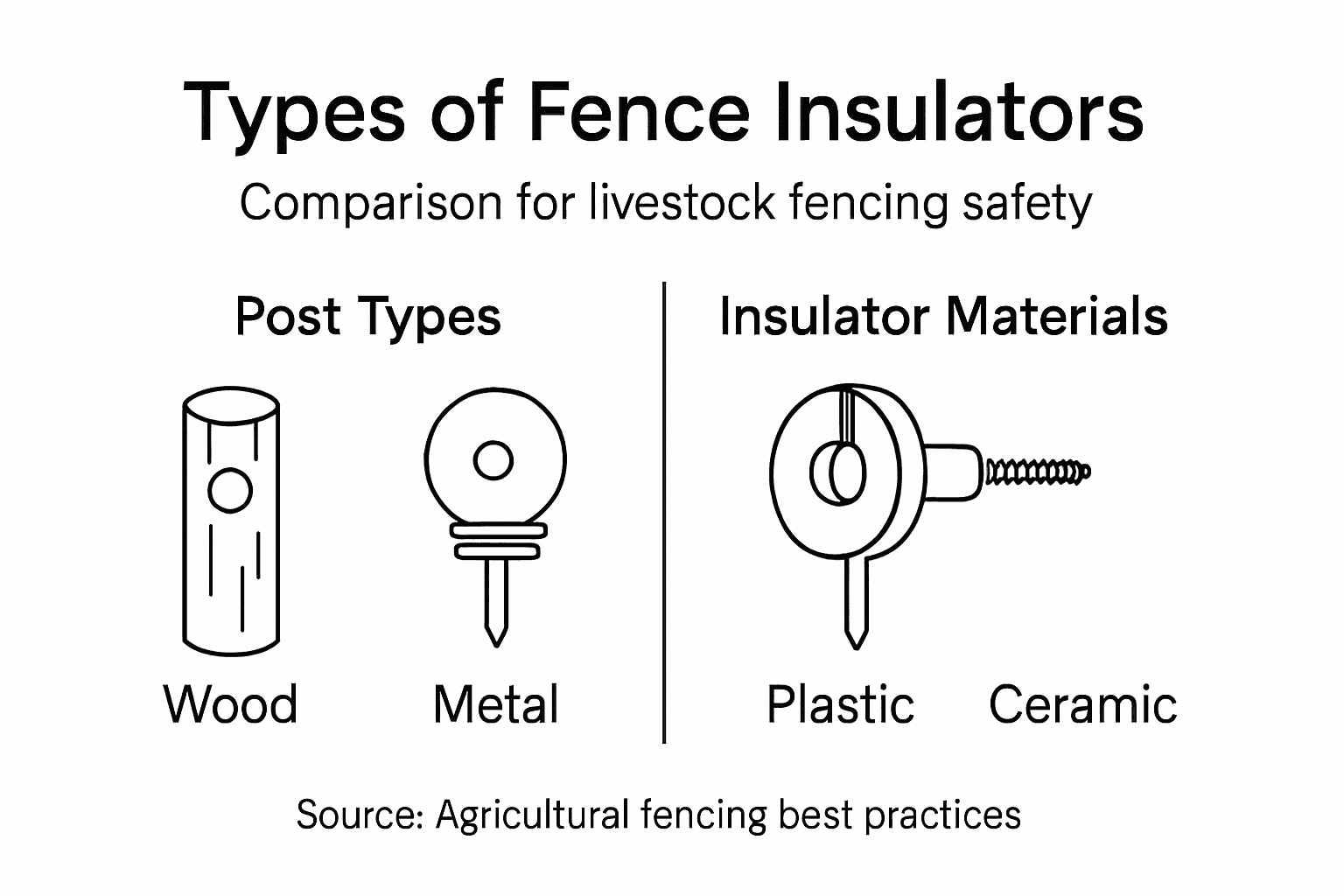
Electric fence insulators are classified into multiple types based on their material composition and specific design characteristics. Comparison of electric fencing insulators reveals several critical categories that ranchers must understand to select the most appropriate solution for their livestock management needs.
The primary material types of electric fence insulators include:
- Ceramic Insulators: Best for high-voltage applications and long electrical runs
- High-Density Polyethylene (HDPE) Insulators: Ideal for temporary fencing and lightweight applications
- Porcelain Insulators: Excellent for exposed outdoor environments with extreme weather conditions
- Reinforced Plastic Insulators: Designed for high-tensile strain points and challenging terrain
- Glass-Fiber Reinforced Plastic Insulators: Providing superior durability and electrical resistance
Mounting styles further differentiate these insulators, with specialized designs to accommodate various post materials and fencing configurations. Common mounting options include nail-on for wooden posts, clip-on for temporary installations, post-top designs for standard configurations, and tension strain insulators specifically engineered for corner and end sections of electric fence lines.
Each insulator type offers unique advantages, allowing farmers to customize their electric fencing system based on specific environmental conditions, livestock requirements, and terrain challenges. The selection process involves carefully matching insulator characteristics to the intended agricultural application.
Pro tip: Consult with local agricultural experts to determine the most suitable electric fence insulator type for your specific regional climate and livestock management needs.
Here’s a quick reference comparing major insulator materials for electric fences:
| Material Type | Durability | Ideal Use Scenario | Typical Cost |
|---|---|---|---|
| Ceramic | Very High | Permanent fences | Moderate |
| HDPE Plastic | Low | Temporary applications | Low |
| Porcelain | Extremely High | Extreme weather regions | Highest |
| Reinforced Plastic | High | High-tension corners | High |
| Glass-Fiber Reinforced | Very High | Challenging environments | Premium |
How electric fencing insulators work
Electric fence insulators operate on a fundamental principle of electrical isolation, preventing unwanted current dissipation and maintaining a consistent electrical circuit. Electrical current prevention is crucial for the effective functioning of electric livestock fencing systems.
The operational mechanism of electric fence insulators involves several key processes:
- Electrical Isolation: Completely separating electrified wire from conductive posts
- Circuit Integrity: Ensuring electrical current remains contained within the fence wire
- Energy Conservation: Minimizing electrical energy loss through strategic positioning
- Shock Delivery: Creating a controlled pathway for electrical current
- Environmental Protection: Preventing ground leakage and potential short circuits
When an animal contacts the electrified wire, the insulator ensures that the electrical current passes through the animal’s body to the ground, creating a brief but memorable shock. This momentary experience conditions the animal to avoid future contact with the fence, effectively establishing a psychological barrier in addition to the physical one.
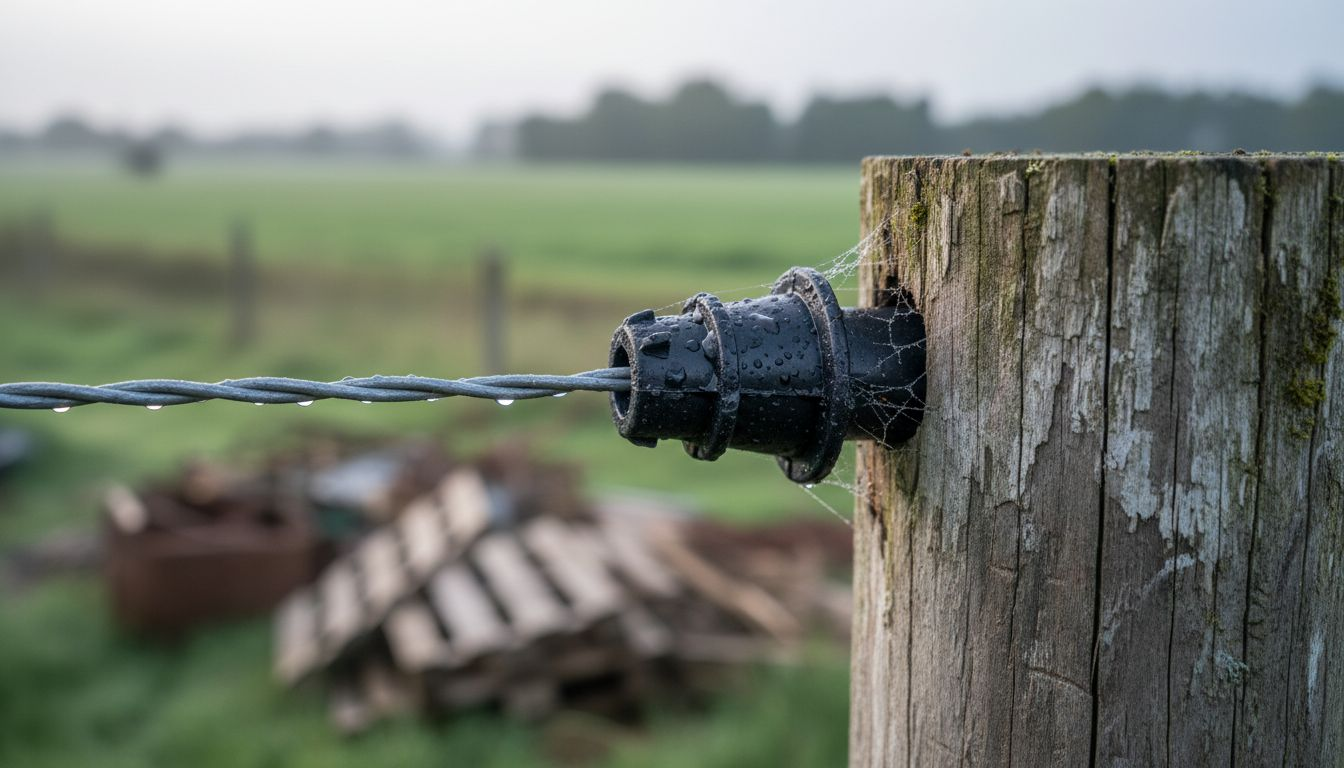
Insulators work by creating a high-resistance barrier between the electrified wire and supporting structures, which means that under normal circumstances, no electrical current can flow through the post or ground. This design maximizes the efficiency of the electric fence, ensuring that the maximum possible voltage is delivered when an animal makes contact.
Pro tip: Regularly inspect your electric fence insulators for signs of wear, damage, or degradation to maintain optimal electrical performance and livestock containment.
Installation methods for various fence posts
Electric fence insulator installation requires different techniques depending on the specific post material and fencing environment. Fence building tools play a crucial role in ensuring secure and effective mounting across various post types.
The primary installation methods for electric fence insulators vary based on post materials:
-
Wooden Posts:
- Use screw-in or nail-on ceramic or plastic insulators
- Predrill holes to prevent wood splitting
- Space insulators evenly along the post height
-
Metal T-Posts:
- Utilize clip-on or wrap-around style insulators
- Ensure tight connection to prevent wire movement
- Select insulators specifically designed for metal post profiles
-
Temporary Fiberglass Posts:
- Choose lightweight, flexible clip-on insulators
- Use push-in or hook-style attachments
- Ensure minimal stress on the post material
-
Concrete or Stone Posts:
- Employ bolt-on or adhesive-mounted insulators
- Use specialized masonry anchors for secure attachment
- Consider additional reinforcement for heavy-duty applications
Proper installation techniques are critical for maintaining electrical continuity and preventing short circuits. Each post type requires specific mounting considerations to ensure the electric fence remains effective and secure. Ranchers must carefully select insulators that match their specific post material and environmental conditions.
Pro tip: Always match your insulator type and mounting method precisely to your specific post material to prevent electrical inefficiency and potential fence failure.
Risks, failures, and common mistakes
Electric fence systems are vulnerable to multiple critical failures that can compromise livestock safety and containment effectiveness. Common electric fence problems significantly impact the reliability of agricultural fencing infrastructure.
Key risks and potential failures in electric fence insulator systems include:
-
Voltage Drops:
- Caused by poor electrical connections
- Reduced shock effectiveness
- Compromised animal containment
-
Insulator Degradation:
- Cracking from UV exposure
- Material fatigue
- Loss of electrical isolation properties
-
Vegetation Interference:
- Grass and weeds creating ground connections
- Reducing fence voltage
- Increasing electrical resistance
-
Installation Errors:
- Improper mounting techniques
- Incorrect insulator selection
- Inadequate spacing between wire and posts
Severe voltage leakage can render electric fences completely ineffective, creating significant risks for livestock management. Ranchers must understand that even minor insulation failures can create pathways for electrical current to dissipate, dramatically reducing fence performance and potentially exposing animals to unpredictable electrical conditions.
Pro tip: Conduct monthly comprehensive inspections of your electric fence insulators, checking for micro-cracks, discoloration, and structural integrity to prevent unexpected system failures.
This summary highlights risks and prevention strategies for electric fence insulator issues:
| Risk Type | Impact on Fence | Prevention Strategy |
|---|---|---|
| Voltage Drop | Reduces shock power | Tighten connections regularly |
| Insulator Degradation | Loss of isolation | Install UV-resistant materials |
| Vegetation Growth | Causes shorts | Clear fence line frequently |
| Installation Mistake | Circuit failure | Use correct insulator and method |
Alternatives and cost comparisons
Electric fence insulator selection involves carefully balancing performance, durability, and budget considerations for Canadian ranchers. Electric fencing insulator comparison reveals multiple material options with distinct cost-performance characteristics.
Insulator alternatives can be categorized by material and cost profile:
-
HDPE Plastic Insulators:
- Lowest initial cost
- Best for temporary fencing
- Limited durability
- Ideal for short-term or seasonal use
-
Ceramic Insulators:
- Moderate to high cost
- Superior electrical performance
- Excellent for permanent installations
- Extended operational lifespan
-
Porcelain Insulators:
- Highest material cost
- Maximum durability
- Heavyweight design
- Best for extreme environmental conditions
-
Reinforced Composite Insulators:
- Premium pricing
- High mechanical strength
- Specialized applications
- Optimal for high-tension fence lines
Cost considerations extend beyond initial purchase price, encompassing long-term maintenance, replacement frequency, and potential livestock protection effectiveness. Ranchers must evaluate total lifecycle expenses rather than focusing solely on upfront investment.
Pro tip: Calculate total ownership costs by considering material durability, replacement frequency, and potential livestock loss prevention when selecting electric fence insulators.
Secure Your Livestock with Reliable Electric Fence Insulators from FenceFast.ca
Keeping your livestock safe means choosing the right electric fencing insulators that ensure strong electrical isolation and prevent costly voltage drops. Whether you face harsh Canadian weather, challenging terrain, or need durable solutions for wooden or metal posts, selecting high-quality insulators designed for your fence system is essential. Avoid common risks like insulator degradation or installation mistakes that can compromise containment and herd safety.

Find a broad selection of trusted electric fencing components and accessories at FenceFast.ca. Our expert-curated products are made to withstand outdoor conditions and deliver consistent shock performance to protect your animals effectively. Act now to upgrade your fencing system with durable insulators and easy installation tools. Browse our offerings, get professional advice, and benefit from nationwide shipping offered by FenceFast.ca to ensure your electric fence stands strong year-round.
Frequently Asked Questions
What is the purpose of an electric fencing insulator?
Electric fencing insulators are designed to prevent electrical current from grounding or dissipating, keeping it contained within the fence wire to safely contain livestock and deliver controlled shocks when animals make contact with the electrified wire.
What are the main types of electric fencing insulators and their uses?
The main types of electric fencing insulators include ceramic, high-density polyethylene (HDPE), porcelain, reinforced plastic, and glass-fiber reinforced plastic. Each type is suited for different applications, such as high voltage, temporary fencing, or extreme weather environments.
How do electric fencing insulators work?
Electric fencing insulators work by creating an electrical barrier between the electrified wire and the fence posts, ensuring that the electrical current remains within the wire and does not dissipate into the ground, thereby maximizing voltage delivery to livestock.
What are common mistakes to avoid when installing electric fencing insulators?
Common mistakes include improper mounting techniques, incorrect insulator selection based on post materials, inadequate spacing between wire and posts, and neglecting vegetation clearance that can cause shorts, all of which can compromise the effectiveness of the electric fence.

