

Most Canadian farms rely on electric fencing to keep livestock safely contained, yet up to 40 percent of electric fence failures are tied to improper insulator choice or installation. When managing cattle or horses, trusted solutions like T post electric fence insulators borrowed from American ranching practices offer improved safety and reliability—making a real difference for both animals and property. Discover which insulators work best and how simple adjustments prevent escapes and injury to livestock.
Table of Contents
- What Are T Post Electric Fence Insulators
- Types Of Insulators For T Post Fencing
- How T Post Insulators Support Electric Fencing
- Installation Methods And Common Mistakes
- Costs, Durability, And Alternative Solutions
Key Takeaways
| Point | Details |
|---|---|
| Importance of Insulators | T Post electric fence insulators are essential for preventing electrical grounding, ensuring effective livestock containment. |
| Types of Insulators | Various insulator designs, such as snap-on and bolt-on, cater to different agricultural requirements and installation needs. |
| Installation Precision | Proper installation is crucial; incorrect placement can compromise fence effectiveness and allow livestock to escape. |
| Material Considerations | Selecting the right material—plastic, ceramic, or composite—depends on durability, voltage handling, and maintenance needs. |
What Are T Post Electric Fence Insulators
T Post electric fence insulators are specialized hardware designed to support and isolate electrical fencing from steel fence posts, creating a critical barrier for livestock containment. These small but essential components prevent electrical current from grounding through the metal post, ensuring an effective and safe electric fence system. Steel fence posts with distinctive T-shaped cross sections serve as the primary structural support, while insulators act as critical electrical barriers.
The primary function of these insulators is to hold electric fence wire securely while preventing electrical current from dissipating into the ground. Made from highly resistant materials like ceramic or durable plastics, they create a physical separation between the energized wire and the metal post. Electric fence insulators effectively prevent current grounding by providing a non-conductive pathway that maintains the electrical pulse along the fence line.
Insulators come in multiple designs tailored to different agricultural needs. Some common types include:
- Snap-on insulators that quickly attach to T-posts
- Bolt-on insulators for more permanent installations
- Ring insulators for multiple wire configurations
- Polytape insulators for wider electric tape systems
Each design ensures that the electrical current remains contained within the fence wire, creating a psychological and physical barrier for livestock. By preventing electrical dissipation, these insulators maintain a consistent shock potential that deters animals from crossing boundary lines.
Pro tip: When selecting T post electric fence insulators, always choose models rated for your specific voltage and wire type to ensure maximum safety and effectiveness.
Types of Insulators for T Post Fencing
Electric fence insulators for T-posts come in several distinct designs, each engineered to meet specific agricultural and livestock management requirements. Plastic and ceramic insulators dominate the electric fencing market, offering farmers versatile options for containing and controlling livestock movement. Understanding the unique characteristics of each insulator type helps ranchers select the most appropriate solution for their specific fencing needs.
The primary categories of T-post electric fence insulators include:
- Snap-on Insulators: Lightweight plastic insulators that quickly attach to T-posts
- Bolt-on Insulators: More permanent installations requiring direct metal attachment
- Wrap-around Insulators: Flexible designs that encircle the post for secure wire positioning
- Pin-type Insulators: Rigid models with metal pins for precise wire placement
Plastic insulators remain particularly popular due to their weather resistance and electrical non-conductivity. Polyethylene and polypropylene materials offer excellent UV protection and durability, making them ideal for Canadian agricultural environments with extreme temperature variations. Ceramic insulators, while more fragile, provide superior voltage handling and are recommended for high-intensity electrical containment systems.
The selection of an appropriate T-post electric fence insulator depends on multiple factors including voltage requirements, environmental conditions, livestock type, and specific fencing configuration. Professional ranchers typically consider wire thickness, expected animal pressure, and potential environmental challenges when making their final insulator selection.
Pro tip: Always inspect your insulators seasonally and replace any that show signs of cracking, UV damage, or electrical wear to maintain fence effectiveness and animal safety.
How T Post Insulators Support Electric Fencing
Electric fence insulators play a critical role in maintaining the structural and electrical integrity of livestock containment systems. These specialized components serve two primary functions: mechanical support and electrical isolation. By preventing electrical current from grounding through metal T-posts, insulators ensure a consistent and effective electrical barrier that keeps livestock securely contained within designated areas.
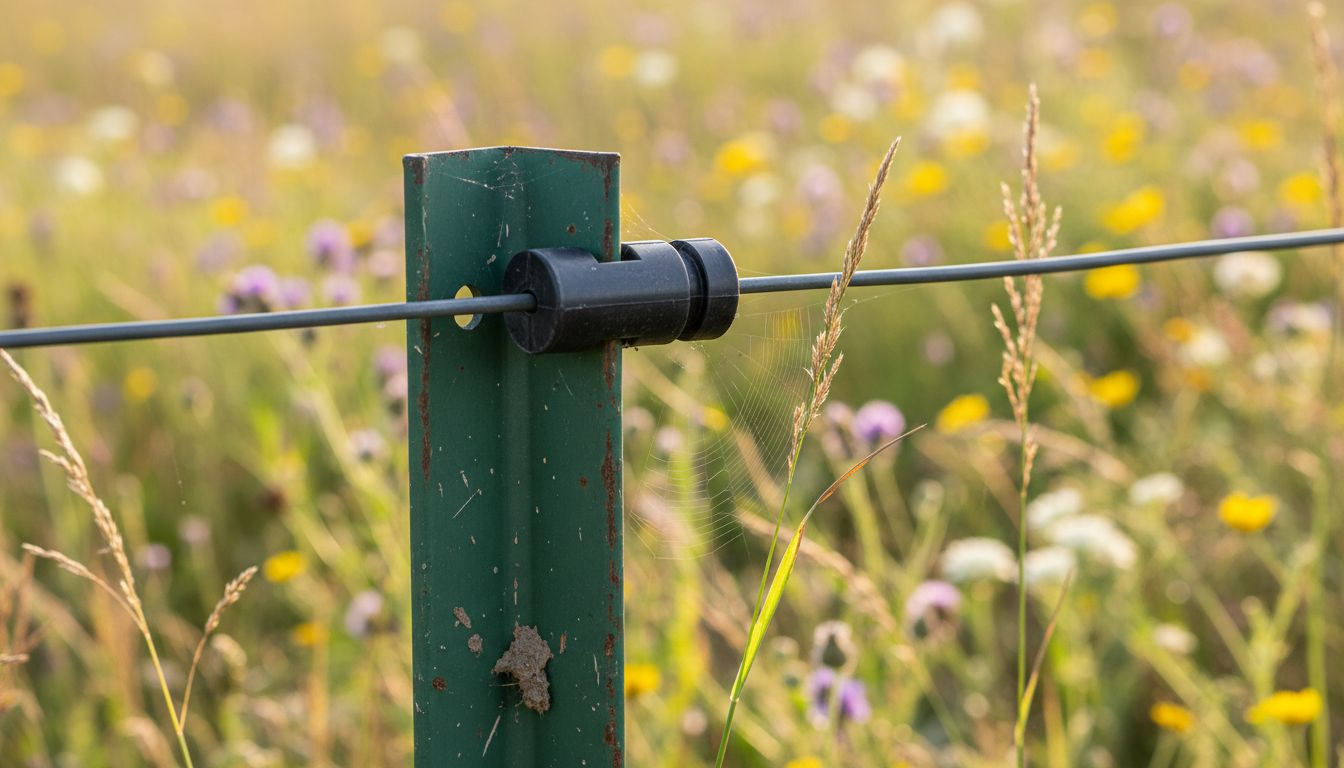
The mechanical support provided by T-post insulators is equally important as their electrical insulation properties. They must withstand significant environmental stresses including wind, temperature variations, and animal contact. Composite line post insulators are engineered to endure multiple directional mechanical stresses, ensuring reliable performance under diverse agricultural conditions. The insulators hold electric wires at precise distances from the metal post, creating a consistent and predictable fence configuration.
Key support mechanisms of T-post electric fence insulators include:
- Electrical Isolation: Preventing current dissipation through metal posts
- Mechanical Positioning: Maintaining exact wire placement and tension
- Structural Integrity: Supporting wire weight and directional forces
- Environmental Resistance: Withstanding UV exposure and temperature extremes
Modern T-post insulators are designed to accommodate various wire types and fence configurations. Their advanced materials and engineering allow farmers to create customized electric fencing solutions that provide maximum livestock control with minimal maintenance. The precise engineering of these insulators transforms simple metal posts into sophisticated containment systems that effectively manage animal movement.
Pro tip: Select insulators with UV-stabilized materials and check their voltage rating to ensure optimal performance and longevity in your specific agricultural environment.
Installation Methods and Common Mistakes
Electric fence insulator installation requires precision and careful planning to ensure livestock containment and electrical system effectiveness. Proper installation begins with selecting the right insulators compatible with your specific T-posts and wire configuration. Canadian farmers must consider factors like post spacing, wire tension, and environmental conditions to create a reliable electric fence system that maintains animal safety and prevents unexpected breaches.
The step-by-step installation process involves several critical stages:
-
Post Preparation
- Drive T-posts securely into ground
- Ensure posts are straight and evenly spaced
- Check ground conditions for stability
-
Insulator Attachment
- Select UV-stabilized insulators
- Attach insulators at consistent heights
- Verify insulator compatibility with post diameter
-
Wire Placement
- Thread wire through insulators carefully
- Maintain consistent tension
- Avoid direct contact between wire and metal post
Electric fence systems demand precise insulator placement to prevent short-circuits and energy loss. Common installation mistakes include using non-UV resistant materials, improper spacing, and failing to maintain consistent wire tension. Professional ranchers understand that even minor installation errors can compromise the entire fence’s effectiveness, potentially allowing livestock to escape or reducing the shock potential of the electric barrier.
Understanding potential pitfalls helps farmers create more reliable containment systems. Properly installed insulators transform a simple metal fence into a sophisticated livestock management tool that provides both physical and psychological barriers to animal movement.
Pro tip: Always perform a complete system test after installation, checking voltage levels and insulator integrity to ensure maximum fence performance and animal safety.
Costs, Durability, and Alternative Solutions
Composite insulators represent a strategic investment for Canadian farmers seeking long-term electric fencing solutions. While initial purchase costs might appear higher compared to traditional plastic insulators, their extended service life and reduced maintenance requirements make them an economically sound choice for agricultural operations. Understanding the total cost of ownership involves evaluating durability, replacement frequency, and performance under challenging environmental conditions.
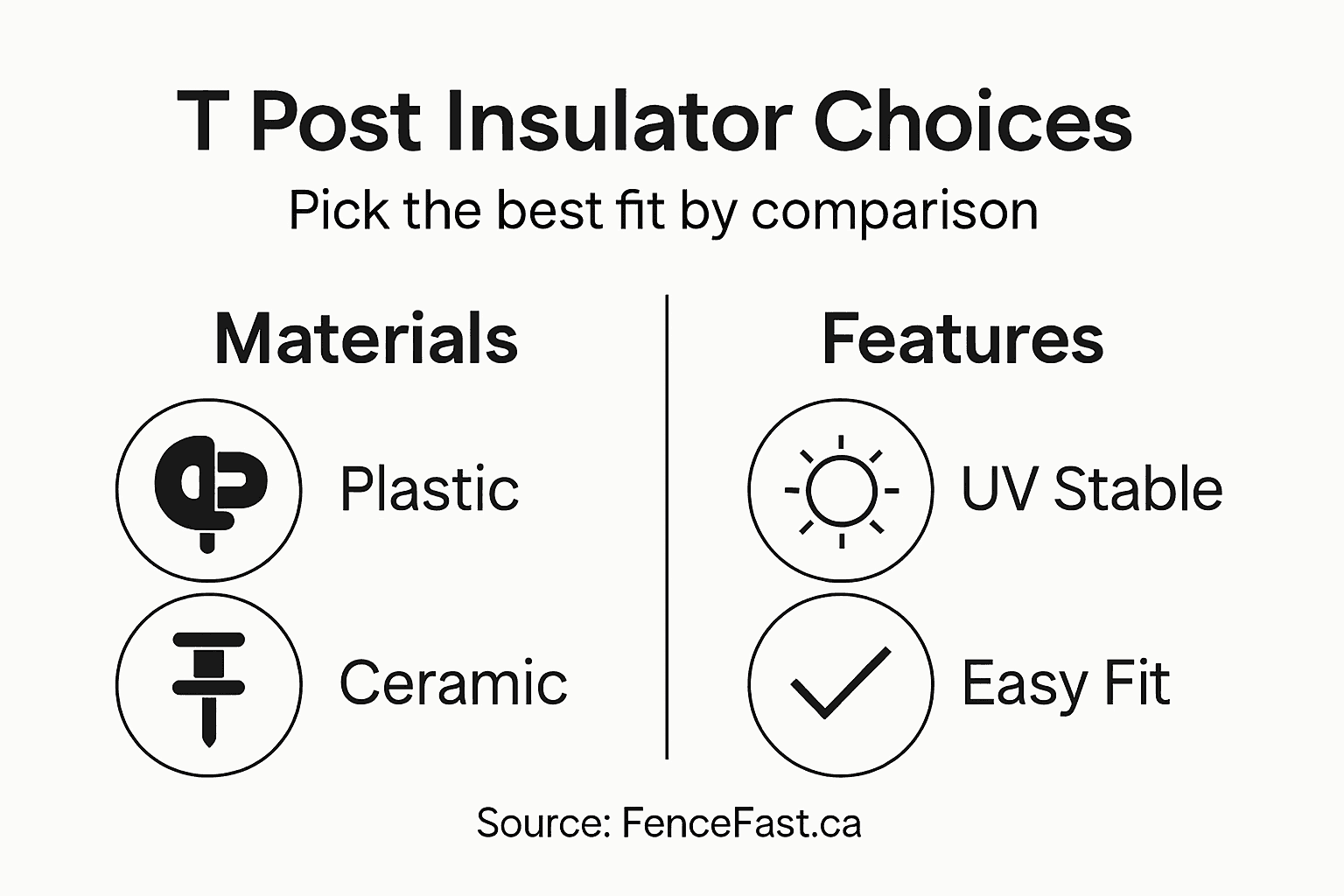
The primary insulator options for T-post electric fencing include:
Here’s a comparison of the main T-post electric fence insulator materials:
| Material Type | Durability | Voltage Handling | Maintenance Needs |
|---|---|---|---|
| Plastic | Moderate lifespan | Good for standard installations | Requires frequent checks |
| Ceramic | Very long-lasting | Excellent for high voltage | Can be brittle, infrequent replacement |
| Composite Polymer | Long-lasting, weatherproof | Reliable across conditions | Minimal maintenance needed |
-
Plastic Insulators
- Lowest upfront cost
- Shorter lifespan
- Higher replacement frequency
- Limited UV resistance
-
Ceramic Insulators
- High durability
- Superior voltage handling
- More brittle
- Higher initial investment
-
Composite Polymer Insulators
- Balanced performance
- Weather-resistant
- Moderate cost
- Lighter weight
Alternative insulator materials offer unique performance characteristics, enabling farmers to customize their electric fencing approach. Polymer composites have emerged as a versatile solution, combining mechanical strength with excellent electrical insulation properties. These advanced materials resist environmental degradation, providing consistent performance across temperature ranges and reducing long-term replacement expenses.
Farmers must consider regional climate, livestock type, and specific containment requirements when selecting insulators. While cost remains a critical factor, investing in high-quality materials ultimately delivers more reliable and effective electric fencing systems that protect livestock and optimize agricultural operations.
Consider these factors when choosing the right T-post electric fence insulator for your farm:
| Consideration | Why It Matters | Example Impact |
|---|---|---|
| Climate | Affects UV and weather resistance | Extreme cold may cause brittle insulators |
| Livestock Type | Influences required wire strength | Larger animals need higher shock potential |
| Fence Voltage | Determines material suitability | High voltage needs ceramic or composite |
Pro tip: Calculate total lifetime costs by comparing initial purchase price, expected service life, and replacement frequency rather than focusing solely on upfront expenses.
Secure Your Livestock with Reliable T Post Electric Fence Insulators
Managing a safe and effective electric fence system depends on quality insulators that prevent electrical grounding and maintain consistent shock potential. If you are concerned about selecting the right UV-stabilized, weather-resistant, and voltage-rated T post electric fence insulators, you are not alone. Many Canadian farmers and ranchers face challenges ensuring their fences provide both mechanical support and electrical isolation without frequent breakdowns or safety issues.

At FenceFast.ca, we understand the critical role of insulators in livestock containment and offer a wide range of durable, high-performance electric fence components and accessories. Whether you want snap-on, bolt-on, or composite polymer insulators tailored for Canadian climates our expert knowledge and product selection can help you build a customized fencing system that lasts. Visit FenceFast.ca today to explore our electric fencing solutions and livestock management tools. Get peace of mind knowing your fence delivers reliable containment and protects your animals starting now.
Frequently Asked Questions
What is the purpose of T Post electric fence insulators?
T Post electric fence insulators prevent electrical current from grounding through metal posts, ensuring an effective electrical barrier for livestock containment.
What materials are T Post electric fence insulators made from?
They are typically made from durable materials such as plastic or ceramic, which provide electrical insulation and weather resistance.
How do I choose the right insulator type for my electric fence?
Select insulators based on factors like voltage requirements, livestock type, and the specific fencing configuration to ensure optimal performance.
How often should I inspect and replace my electric fence insulators?
It’s advisable to inspect insulators seasonally for signs of damage, such as cracking or UV wear, and replace any that are compromised to maintain fence effectiveness.

