

Effective predator protection almost always combines three or more approaches: permanent fencing (woven wire with electrified top and trip wires), portable options like electrified netting and night pens, visual deterrents like fladry, livestock guardian animals, and virtual fencing collars that manage location but don’t stop a coyote or wolf. No single tool works everywhere. Reviews show effectiveness swings widely by method and situation, which is exactly why the strongest setups on working farms layer two or three systems instead of betting on one.
TL;DR:
- Combining multiple predator deterrents, such as fencing, guardian animals, and visual or electronic tools, is necessary because no single method works best everywhere.
- Proper fence design must match predator behavior, with wire spacing, energizer strength, and height tailored to species like coyotes, wolves, or bears.
- Portable tools like electrified netting or temporary night pens are highly effective during high-risk periods but should be rotated or moved to prevent habituation.
- Virtual fencing and electronic detection tools are suitable for herd management but should not replace physical barriers or guardian animals for predator exclusion.
- Legal, ethical, and environmental considerations require matching tools to regulations, avoiding habitat fragmentation, and prioritizing non-lethal methods first.
Table of Contents
- Examples of Predator Control Systems by Category
- How Do You Choose the Right Predator Control System?
- Deployment and Maintenance Best Practices
- Technology-Based Predator Detection Tools
- Legal and Ethical Considerations in Predator Control
- Environmental Impact of Predator Control Strategies
- What Actually Determines Success With Predator Control
- Get Help Designing Your Predator Protection System
- Sources
- FAQ
Examples of Predator Control Systems by Category
Every predator problem is different, so the right setup depends on what’s hunting your livestock, how much perimeter you’re protecting, and how much labor you can commit to maintenance. Here’s what actually gets deployed on working operations.
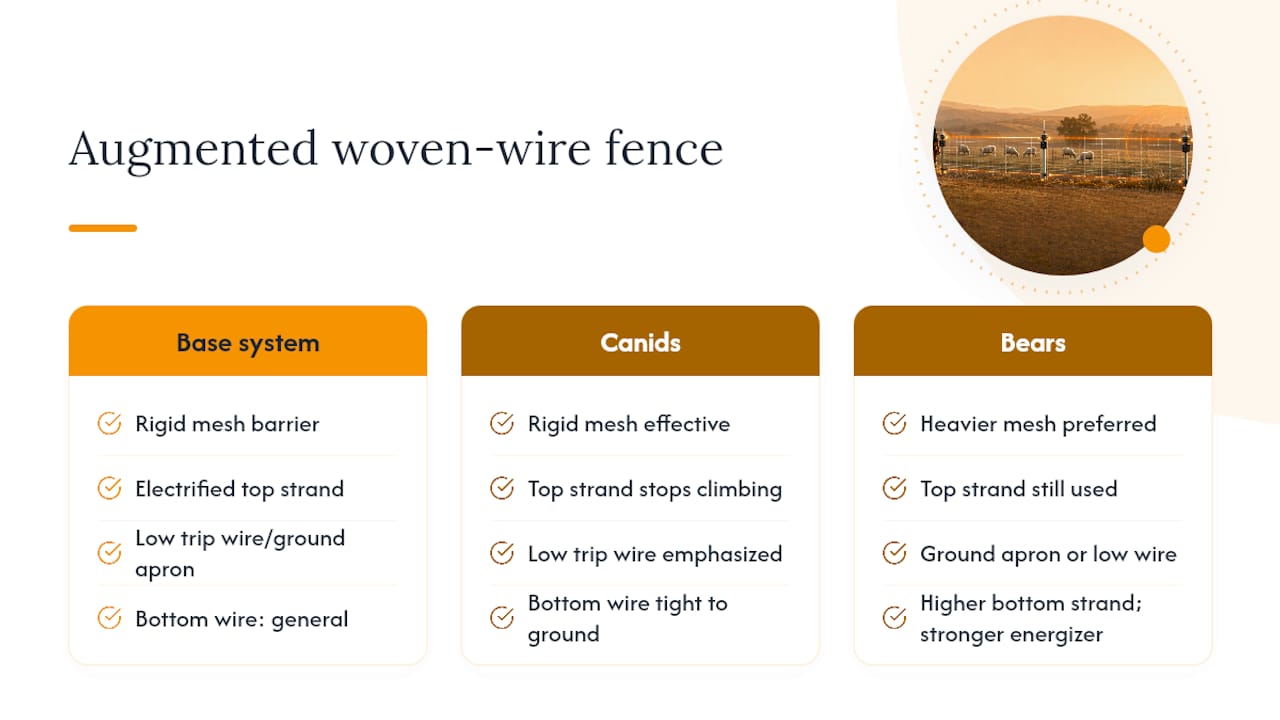
Permanent woven wire with electrified top and trip wires. This is the backbone system for operations with fixed pastures and consistent predator pressure. Extension research recommends augmented woven-wire designs that pair a rigid mesh barrier with an electrified strand at the top (to stop climbing) and a low trip wire or ground apron (to stop digging). Design specs shift by predator: canids need a lower bottom wire tight to the ground, while bear country calls for a higher bottom strand and a stronger energizer. This is a long-term investment, not a quick fix, but it’s the closest thing to a set-and-forget system once it’s built correctly.
Multi-wire electric fences (4, 5, or 9 wire). These systems use spaced strands, typically 4 to 9 inches apart near the ground and widening higher up, energized to deliver a jolt strong enough to deter but not injure. For coyotes and foxes, tighter bottom spacing matters more than sheer wire count. For larger predators like wolves or bears, energizer output matters more. Match your energizer’s joule rating to fence length and predator size. A weak energizer on a long perimeter is the most common reason these fences underperform.
Temporary electrified netting and night pens. These are the fastest tool to deploy when you know exactly where and when the risk spikes, lambing, calving, or a known predator moving through. In one documented trial, electrified netting cut coyote intrusions from 47% down to 6%. That’s the kind of result that makes portable netting worth owning even if it’s not your primary fence. Rotate the pen location every few days to avoid mud and parasite buildup.
Drive-over electric mats. These solve a narrow but real problem: gates and service access points where you can’t string a hot wire without blocking vehicle traffic. The mat carries current across the gap so the fence line stays continuous without a physical gate interruption.
Fladry and turbo-fladry. Fladry is flagging tied along a fence line that flutters and spooks predators, particularly wolves, on visual instinct alone. Turbo-fladry adds an electrified wire behind the flagging for a stronger deterrent. The catch: fladry loses effectiveness after roughly 60 days as animals habituate to it. Treat it as a short-term response to an active threat, not a permanent fixture.
Acoustic and light deterrents. Randomized-activation alarms, strobe lights, and sound devices can buy time during an active predation event, especially when triggered irregularly rather than on a fixed schedule. Predators are smart enough to learn a pattern fast, so these tools work best as a stopgap while you get a fence or guardian animal in place.
Livestock guardian animals (LGDs, donkeys, llamas). Dogs, donkeys, and llamas protect through territorial exclusion, confrontation, and simple disruption of a predator’s approach. Guardian dog effectiveness depends heavily on proper bonding and training, a poorly bonded dog can be worse than no dog at all. Pair guardian animals with fencing rather than relying on them alone.
Virtual fencing (Gallagher eShepherd). GPS-enabled collars and base stations track location and hold cattle inside a boundary using audio cues and mild stimulus, no physical barrier involved. Virtual fencing manages containment and movement, but it is not a predator exclusion tool. It’s excellent for precision grazing and cross-fencing reduction, but pair it with physical fencing or guardian animals during calving, lambing, or any high-risk window.
How Do You Choose the Right Predator Control System?
Start with the predator, not the product. Coyotes dig and squeeze through gaps low to the ground. Wolves and bears climb and push. Your fence design, wire spacing, and energizer output all follow from that single answer. Landscape matters too: dense brush and creek crossings create blind spots that no single fence line fully covers.
- Identify the predator species and its behavior. Digging, climbing, or jumping each demands a different fence detail.
- Map vulnerability windows. Calving and lambing seasons need tighter protection than routine grazing periods.
- Weigh budget against labor. Permanent fencing costs more upfront but needs less daily attention than portable netting or fladry.
- Check the evidence honestly. Effectiveness ranges vary from 0 to 100% for deterrents, 66.4 to 100% for fencing, and 42.3 to 79.4% for guardian animals depending on context. No tool guarantees results in isolation.
- Run the integration checklist. Confirm energizer joule output for your fence length, mesh or wire gap sizing for your target predator, LGD-to-herd ratios, night pen dimensions, and GPS coverage limits if you’re adding virtual fencing.
Pro Tip: Before buying anything, walk your perimeter at dawn or dusk and note exactly where tracks, scat, or worn trails cross your fence line. That’s where your money and labor should go first, not evenly spread across the whole property.
Deployment and Maintenance Best Practices
A fence that isn’t maintained is a fence that fails, usually quietly. Vegetation touching the wire and poor grounding are the most common fixable causes of electric fence failure, and both take an afternoon to fix once you know to look for them.
- Check energizer output and grounding rods monthly, more often during wet or overgrown seasons.
- Rotate night pens every few days to limit mud buildup and disease pressure.
- Store electrified netting carefully; tangled or damaged netting loses tension and creates gaps.
- Treat fladry as temporary. Move or refresh it once you see predators approaching without hesitation.
- Build LGD bonding pens adjacent to the herd so young dogs learn the animals they’re protecting before they’re given free range.
- Use virtual fence GPS alerts to spot unusual herd movement fast, a bunched or scattered herd on the app often means a predator is nearby before you’d see it in person.
Pro Tip: Pair a virtual fencing alert with a quick physical check rather than treating the notification as the end of the response. The collar tells you something happened; it won’t tell you what.
Technology-Based Predator Detection Tools
Motion-triggered cameras, automated alarms, and remote sensors have become a practical add-on layer for operations that can’t have eyes on livestock around the clock. Trail cameras positioned along known predator paths give you a record of what’s actually moving through your property, information that shapes which physical system you invest in next. Motion sensors linked to lights or sound alarms can interrupt an approach in real time, particularly useful around night pens and calving areas where a few extra minutes of warning matters.
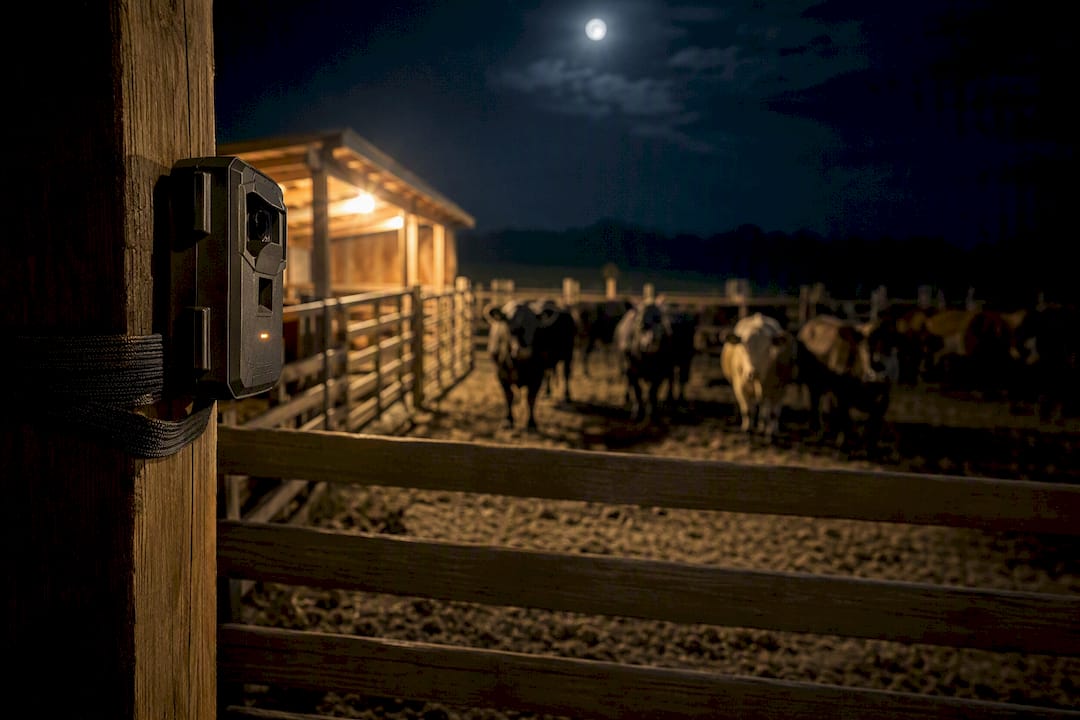
The limitation is the same one that applies to fladry: predators habituate to predictable stimuli. A camera that only records doesn’t deter anything by itself; it’s a monitoring tool, not a barrier. Automated alarms lose punch fast if they fire the same way every time. The operations getting the most value from this technology treat it as an early-warning system that triggers a human or dog response, not a replacement for one.
Virtual fencing platforms like Gallagher eShepherd fit into this same category more than people expect. The GPS collar and base station combination gives you a live map of herd location and can flag when animals bunch up or scatter unexpectedly, a pattern that often shows up before a predator is spotted by anyone on foot. It’s detection and management technology, not exclusion technology, and treating it as the latter is the single most common mistake in virtual fence adoption.
Legal and Ethical Considerations in Predator Control
Predator protection methods carry real legal weight, particularly where the predator species involved is federally or provincially protected. Wolves, grizzly bears, and other listed species often fall under specific regulations governing what deterrent methods are permitted and what triggers a lethal-response exemption. Rules vary by jurisdiction and by species, so verify current regulations with your provincial wildlife agency or a local extension office before deploying anything beyond standard fencing.
Non-lethal tools like fencing, fladry, and guardian animals generally carry the fewest legal restrictions because they don’t target the animal directly. Electrified systems still need to meet safety standards for both livestock and any humans who might contact the fence, particularly around public access points or shared trails. Non-lethal practices work best as a coordinated set: electric fencing, fladry, night penning, carcass management, and range riding, rather than any single method deployed in isolation.
Ethically, the case for non-lethal-first strategies has gotten stronger as evidence accumulates. Guardian animals, enclosures, and fladry show up repeatedly in systematic reviews as methods with real, if context-dependent, effectiveness, giving producers a defensible starting point before considering more aggressive intervention. Choosing exclusion and deterrence first also tends to be the more sustainable path for operations that share land with recovering predator populations, since it avoids escalating conflict that can draw regulatory attention or public scrutiny.
Environmental Impact of Predator Control Strategies
Fencing and deterrent systems generally carry a lighter ecological footprint than lethal control, but they’re not impact-free. Permanent woven-wire fencing can fragment habitat and interfere with movement corridors for non-target wildlife, deer and elk in particular, if it’s built without wildlife-friendly gaps or crossing points. Placement matters as much as the fence itself.
Electrified netting and portable systems leave a smaller permanent footprint since they’re removed after the risk window passes, but they still require careful placement near water sources and travel corridors to avoid blocking access for other species. Fladry and turbo-fladry have essentially no lasting environmental impact given their short deployment window, though frequent human presence to maintain and relocate flagging can itself disturb sensitive areas during calving or lambing season.
Livestock guardian animals introduce a different set of considerations. A well-bonded LGD focuses on the herd and rarely chases wildlife far from it, but poorly managed dogs can range widely and disrupt native predator and prey behavior beyond the property line. Virtual fencing has the lightest physical footprint of any option here, no wire, no posts, since it relies entirely on GPS boundaries and collar feedback. That advantage doesn’t extend to predator protection, though. It reduces fence-related habitat fragmentation while still requiring backup physical measures during vulnerable periods.
What Actually Determines Success With Predator Control
The gap between what gets marketed and what gets results is wider than most new buyers expect. A lot of predator control advice treats fencing, guardian animals, and deterrents as competing options, pick the best one and you’re covered. That framing doesn’t hold up against the evidence. Those aren’t rounding errors. They’re the difference between a system that earns its cost and one that gives you a false sense of security.
What we’d push back on is the instinct to buy the most advanced tool first. Virtual fencing collars are genuinely useful, faster response, better herd visibility, less interior fencing to maintain, but they’re a management layer, not a wall. We see producers adopt eShepherd expecting predator protection and get frustrated when it doesn’t deliver that. It was never built to. The fix isn’t abandoning the technology; it’s stacking it correctly, virtual fencing for containment and early alerts, physical fencing or a guardian animal for the actual exclusion during calving and lambing.
Fencefast has experience assisting producers with fence design and virtual fencing rollouts and knows that the operations with the fewest losses aren’t the ones with the fanciest single system. They’re the ones who matched their combination of tools to their actual predator, their actual terrain, and their actual labor capacity, then maintained it. Complex terrain, large perimeters, or high-value breeding stock usually justify a proper design consult rather than a DIY guess. Simpler, lower-risk setups often don’t need one.
— Juiced
Get Help Designing Your Predator Protection System
Figuring out the right combination of fencing, netting, and virtual collars for your specific terrain and predator pressure is easier with someone who’s designed hundreds of these systems. Fencefast offers design and consultation services built around Canadian conditions, plus a full lineup of permanent and portable electric fencing components and Gallagher eShepherd virtual fencing hardware, all shipped nationwide.

If you’re weighing whether virtual fencing makes financial sense for your operation, Clients can find guidance on OFCAF and BMP funding programs that offset adoption costs in many provinces. Whether you’re building a permanent perimeter, setting up a temporary night pen for lambing season, or adding GPS collars to a cattle herd, start with a design consultation to make sure every dollar goes toward a system that actually fits your predator pressure and terrain.
Sources
- Effectiveness ranges for non-lethal predator protection (review)
- Livestock protection tools for California ranchers (UC ANR)
- Virtual Fence (VF) technical note (NRCS/MNSTAC)
- Non-lethal risk management practices technical note (Western Landowners)
- LGDs: An overview (Texas A&M/AgriLife) — 2026
FAQ
What Are the Main Types of Predator Control Systems?
The main categories are permanent electrified or woven-wire fencing, temporary electrified netting and night pens, visual deterrents like fladry, livestock guardian animals, and virtual fencing collars such as Gallagher eShepherd for herd management.
Do Virtual Fences Stop Predators?
No. Virtual fencing manages location and containment through GPS collars, but it provides no physical barrier, so it should be paired with fencing or guardian animals during calving and lambing.
How Effective Are Livestock Guardian Dogs?
Effectiveness ranges from roughly 42.3% to 79.4% depending on bonding and training quality, according to systematic reviews of non-lethal predator protection.
How Long Does Fladry Stay Effective?
Fladry and turbo-fladry typically remain effective against wolves for about 60 days before animals habituate, so it works best as a short-term response rather than a permanent fixture.
Where Can I Get Help Designing a Predator Protection System?
Design and consultation services are offered alongside permanent and portable electric fencing and virtual fencing products, with current pricing available directly on the site.

