

Yes, RFID tags give livestock managers reliable traceability, real labor savings, and better data for herd care and compliance. The technology isn’t new, but the payoff is measurable: fewer hours spent chasing paperwork, faster detection of sick animals, and cleaner records when a buyer or inspector asks for proof. The catch is picking the right tag type and reader setup for your herd size, which is where most producers get stuck.
TL;DR:
- RFID tags significantly improve herd traceability, linking animals to their vaccination, movement, and sale histories with reliable scans.
- The most common costs involve tags, readers, software, and installation, with a typical annual loss rate of 1 to 5 percent requiring budget for replacements.
- LF tags excel in wet conditions and retention for breeding stock, while UHF tags support long-range reads and faster processing of large groups.
- Proper placement—ear base for cattle and consistent application—along with environmental considerations, optimize read accuracy and reduce tag loss.
- Starting with a small pilot group helps identify setup issues early, ensuring long-term efficiency and better integration into existing farm workflows.
Table of Contents
- What Are the Benefits of RFID Tags for Livestock Managers?
- How Does RFID Actually Work: EID Basics, LF, and UHF
- What Does It Cost to Set Up RFID, and What’s the Payback?
- Real Farm Scenarios Where RFID Pays Off
- Where Should RFID Tags Go on Working Livestock?
- What Environmental Factors Reduce RFID Read Reliability?
- How Do You Choose an RFID Vendor for Farm Conditions?
- How Should You Pilot Test RFID Before Full Rollout?
- How Do You Maintain and Troubleshoot RFID Systems Long Term?
- Fencefast’s Take on Getting RFID Right the First Time
- Ready to Set Up RFID on Your Operation?
- Sources
- FAQ
What Are the Benefits of RFID Tags for Livestock Managers?
RFID tags solve a problem every livestock operation has faced: matching an animal to its history without relying on memory, a notebook, or a faded ear notch. A passive tag holds a unique ID number that a reader picks up and your software turns into a full record, from birth weight to the last vaccine date.
The biggest wins show up in five areas:
- Traceability that actually holds up. Every scan links an animal to its vaccination, movement, and sale history, so you’re not reconstructing records from memory when a buyer or inspector asks.
- Labor savings at the alley. Fixed alleyway readers and handheld scanners cut manual sorting time. A DPIRD guide to EID confirms the tag itself functions like a digital barcode, meaning your software does the recordkeeping instead of you.
- Fewer stressed animals. Less manual handling for identification means less stress on cattle and less risk to handlers.
- Compliance without the scramble. Verified electronic ID records support market access and satisfy traceability rules that are tightening across most cattle-producing regions.
- Automation payoffs beyond ID. RFID tags integrate with auto-drafting gates, weigh scales, and feeding systems, turning a simple tag read into a data point for daily gain or feed intake.
A conservative estimate from Queensland Country Life’s coverage of RFID adoption puts realistic labor savings at a few hours per 100 animals per week on medium operations using automated drafting and weighing, alongside a small percentage reduction in medication costs from catching sick animals earlier. Those numbers won’t wow anyone chasing viral case studies, but they compound fast across a full season.
The Merck Animal Health guide to electronic identification notes that a 15-digit EID number improves both the speed and accuracy of data collection compared to visual tag reading, which matters most when you’re processing large groups under time pressure.
How Does RFID Actually Work: EID Basics, LF, and UHF
An EID tag is not a tracking device. It doesn’t ping a satellite or show you where an animal is standing right now. It’s a static, unique identifier, closer to a barcode than a GPS unit. When a reader passes near the tag, it captures that ID number, and your farm software matches it to a stored record, whether that record lives on a local computer or in the cloud.
Two radio frequencies dominate livestock RFID, and each has real tradeoffs:
- Low frequency (LF), typically 134.2 kHz: LF transponders remain the standard for implanted boluses and regulated national ID systems because they penetrate wet tissue reliably, according to RFIDFYI’s livestock RFID guide. LF also tends to hold up better on retention in some tag formats.
- Ultra-high frequency (UHF): UHF reads at longer range and can capture multiple animals moving through an alley at once. The DEFRA and Welsh Government BEID pilot report recorded a very high read rate for free-moving, tagged animals in a narrow alleyway, and complete read rates in a single-cow raceway. Farmers in that pilot also valued UHF’s “what you see is what you get” handheld readers, which show the tag ID instantly on screen.
Reader hardware splits into handheld units for spot checks and fixed alleyway readers for continuous, hands-free capture during processing. Either way, a read becomes useful only once it’s matched against a record in your management software, which is why compatibility between your tags and your chosen platform matters more than the tag price tag alone. Our guide to RFID for animal tracking breaks down practical setups by herd size.
What Does It Cost to Set Up RFID, and What’s the Payback?
Budget for four line items: tags, readers, software, and installation or training time. Passive LF tags run cheapest per unit; smart tags that add sensors for temperature or activity cost more but make sense mainly for high-value breeding stock, per RFIDFYI’s cost guidance. Handheld readers are the lower entry point; fixed alley readers cost more upfront but pay off faster on larger operations processing groups regularly.
Tag retention is the line item most first-time buyers underestimate. Expect a small annual loss or failure rate depending on tag style and how rough your terrain and handling facilities are. Budget for replacement tags and build a quick reporting step into your workflow so a lost tag gets reissued before an animal falls out of your traceability chain. Even in regions with high EID adoption, the DEFRA/Welsh BEID pilot found abattoirs and markets still need manual backup checks for lost or failed tags. Full automation isn’t guaranteed on day one.
Before you buy, work through this checklist:
- Confirm your tags meet ISO 11784/11785 standards so they’re compatible with national databases and most commercial readers.
- Check that your farm management software can import reader data directly, ideally through an API or a simple export/import routine, rather than manual entry.
- Map out how readings will flow into any required national or regional traceability database.
- Train whoever runs the chute or alley before go-live, not after.
- Monitor data quality for the first few weeks. A reader misfire or duplicate scan is easier to fix early than after 500 records are wrong.
Reliability and integration, not raw feature counts, determine whether an RFID rollout sticks. A critical assessment of RFID adoption in agriculture found initial learning curves get offset by long-term efficiency gains, provided the hardware performs consistently.
Pro Tip: Calculate ROI using hours saved on drafting and weighing, plus any drop in medication costs from earlier illness detection. Skip the marketing math and use your own labor rate to see the real number.
Real Farm Scenarios Where RFID Pays Off
Different operations get value from RFID in different ways, and seeing where it fits your setup beats reading generic feature lists.
- Cow-calf operations: Tag calves at birth, link the tag to dam and sire records immediately, and sale paperwork that used to take an evening takes minutes because buyers get verified parentage and vaccine history on request.
- Feedlots: Alleyway readers paired with auto-weighing scales track average daily gain per animal without extra handling, which is where the labor savings compound fastest.
- Swine operations: Electronic sow feeders read RFID tags to deliver personalized rations per animal. A case documented by Queensland Country Life showed this setup simplified recordkeeping, improved sow welfare, and cut manual labor on a mixed farming operation.
- Equipment and medicine tracking: Tagging trailers, generators, and medicine containers with RFID prevents loss and gives you a maintenance log without a separate spreadsheet.
None of these examples require overhauling your entire operation at once. Most producers start with one group, one reader, and one workflow, then expand once the data proves useful. Our practical guide for livestock owners walks through starting small without overcommitting.
Where Should RFID Tags Go on Working Livestock?
Tag placement determines whether your read rates stay high or start dropping off within a season. For cattle, the standard is the middle third of the ear, avoiding major blood vessels and cartilage ridges, which reduces tearing during normal grazing and fence contact. Applicators matter here: a dull or mismatched applicator pin is one of the most common causes of early tag loss, so pair your tags with the applicator your supplier recommends rather than whatever’s on hand.
For herds working rough terrain, brush, or dense pasture edges, placement needs extra thought. Tags mounted too far toward the ear tip catch more often on brush and fencing, so keeping the tag closer to the base of the ear reduces snagging without compromising reader range. If your operation runs livestock through wooded or brushy paddocks regularly, that placement choice alone can cut your annual replacement count noticeably.
Bolus tags, inserted orally into the reticulum, sidestep ear-tag snagging entirely and tend to have stronger long-term retention, which is part of why LF remains the standard for that format. They cost more upfront and require a specific applicator, so they make more sense for breeding stock or animals staying in the herd for years rather than for fast-turnover feeder cattle.
Whichever tag style you choose, apply it consistently across the herd. Mixing placement styles across different handlers creates inconsistent read rates that are hard to diagnose later.
What Environmental Factors Reduce RFID Read Reliability?
Weather and terrain affect RFID performance more than most first-time buyers expect. Wet ear tissue and mud buildup around a tag can reduce LF read range slightly, though LF still tends to outperform UHF in these damp, close-contact conditions because it penetrates tissue and moisture more reliably.
Dense brush and heavy vegetation cause a different problem for UHF systems specifically. UHF signals scatter more easily when animals move through thick cover, which can lower read consistency compared to open alleyways or clear pasture. If your land includes significant treed or brushy sections where livestock graze, factor that into your reader choice rather than assuming lab-tested read rates will hold up in the field.
Extreme cold affects battery-powered smart tags more than passive LF or UHF tags, since passive tags draw power from the reader itself rather than an internal battery. If you’re running temperature or activity sensors on high-value animals, check the manufacturer’s cold-weather rating before committing to a full herd rollout.
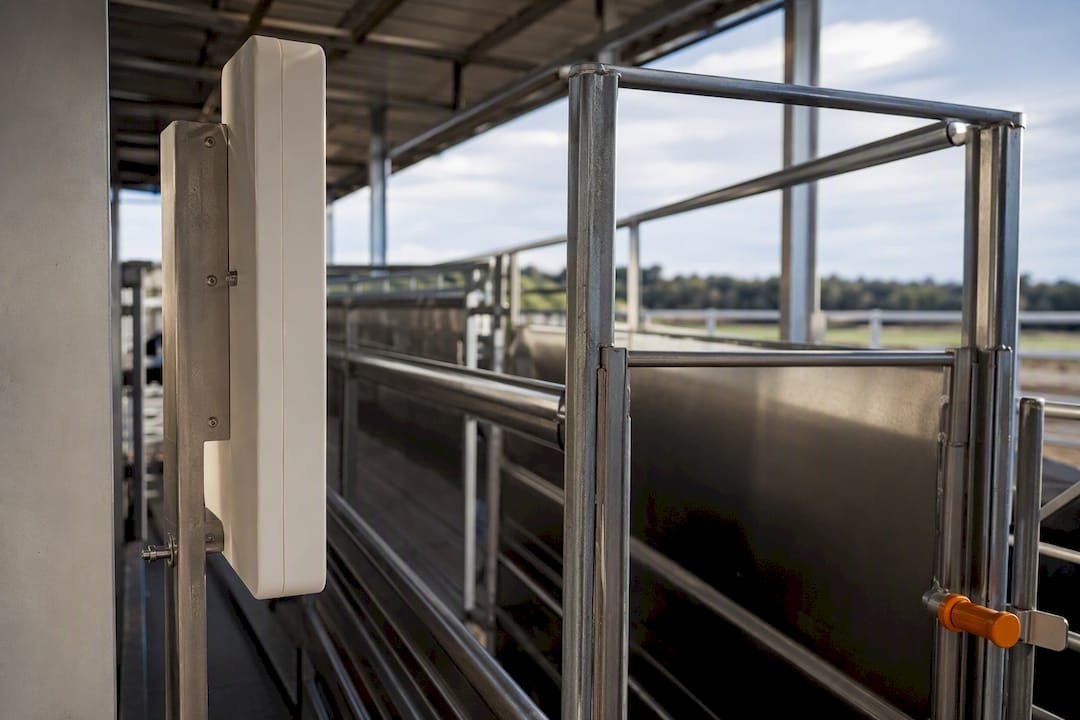
Metal infrastructure, like steel alleyways, gates, and squeeze chutes, can interfere with UHF signal consistency more than it affects LF. Positioning fixed readers away from large metal surfaces, or working with your supplier on antenna placement, solves most of this before it becomes a daily frustration. None of these factors make RFID unreliable. They just mean the setup has to match your actual terrain and infrastructure, not a showroom demo.
How Do You Choose an RFID Vendor for Farm Conditions?
Not every RFID supplier understands what happens when a tag meets a muddy alley in February. Look for a vendor with direct agricultural experience rather than a general industrial RFID supplier repackaging hardware for farms.
A few criteria separate a good fit from a frustrating one. First, check whether the vendor sells hardware that’s actually compatible with ISO 11784/11785 standards and your regional traceability database requirements. Second, ask what happens after the sale. Do they offer setup guidance, or do you get a box and an invoice? Third, look for a track record with your specific species and herd size. A vendor experienced with 5,000-head feedlots may not be the right fit for a 40-cow operation, and vice versa.
Service support matters more than most buyers realize until their first reader malfunctions mid-season. A vendor that answers the phone during calving season is worth more than one offering marginally cheaper tags. Ask about warranty terms on readers specifically, since that’s the hardware most likely to need service over a multi-year lifespan.
Also worth checking: does the vendor have experience helping producers access funding support for adoption? Programs supporting on-farm technology upgrades exist in several regions, and a vendor familiar with that paperwork saves you a separate research project. Our RFID livestock tracking setup guide covers what to ask a vendor before signing anything.
How Should You Pilot Test RFID Before Full Rollout?
Jumping straight to a full-herd RFID rollout is the most common mistake producers make, and it’s an avoidable one. A staged pilot exposes integration problems while the stakes are still low.
Start with a subset of your herd, not the whole operation. Tag 10 to 20 percent of animals and install a single reader, whether that’s a handheld unit or one fixed alleyway station, along with whatever software or logging pipeline you plan to use long term. This lets you catch data flow issues, like a reader that doesn’t sync cleanly with your farm management platform, before they affect your entire herd’s records.
Run the pilot through at least one full processing cycle, whether that’s a weaning, a vaccination round, or a sale. Measure two things specifically: how reliably the reader captures tags on the first pass, and how much staff time the new workflow actually takes compared to your old method. This staged approach, recommended in research on RFID adoption in agriculture, minimizes disruption and surfaces integration issues early, before you’ve committed to tagging 500 head.
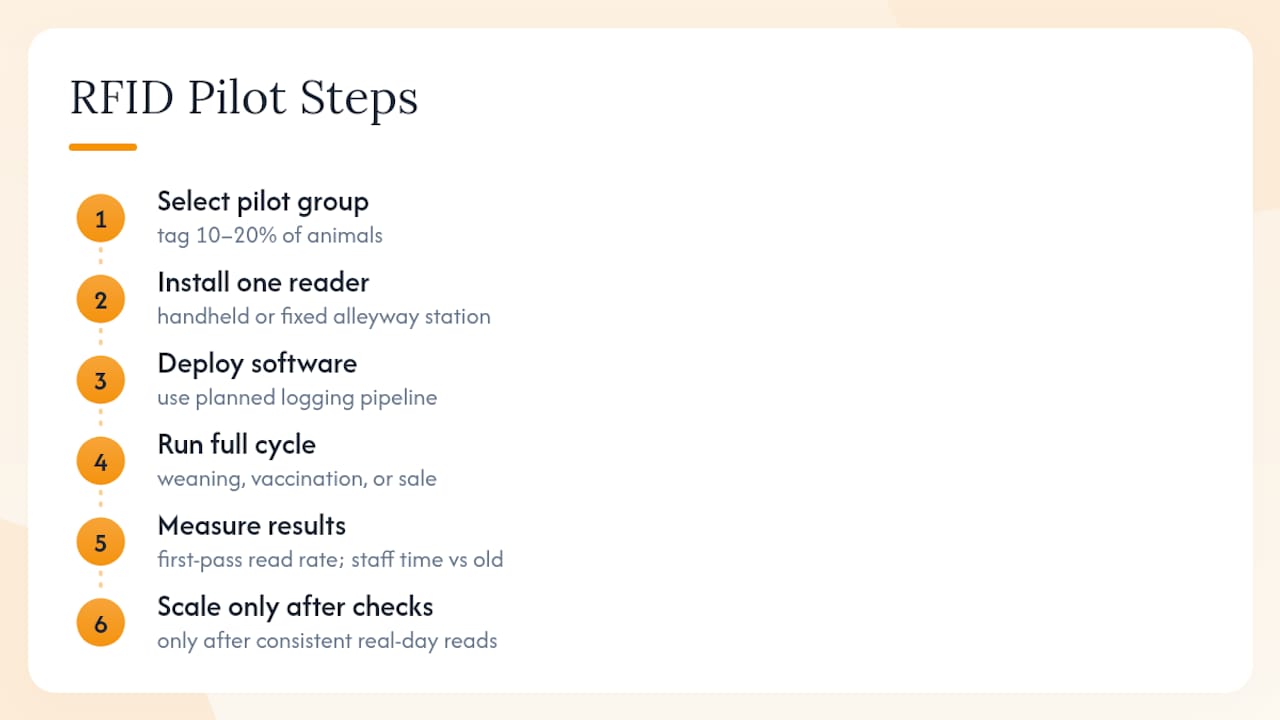
If the pilot reveals a mismatch, whether that’s poor read rates in your specific alley setup or software that doesn’t play well with your reader, you’ve only lost the cost of a small test group, not your full operating budget. Scale up only once the pilot group shows consistent, reliable reads across a real working day.
How Do You Maintain and Troubleshoot RFID Systems Long Term?
RFID systems need periodic attention, not constant babysitting, but skipping maintenance entirely catches up with you eventually. Fixed alleyway readers should get a visual inspection each season for loose mounting, cable wear, or moisture intrusion, especially if they’re positioned near washdown areas or exposed to weather.
When read rates start dropping unexpectedly, check the obvious culprits first: antenna alignment on fixed readers, battery levels on any handheld units, and buildup of mud or debris around the reader itself. A sudden drop in read consistency is more often a positioning or cleanliness issue than a hardware failure.
Keep a simple log of tag losses and failures as they happen rather than trying to reconstruct the pattern later. If a particular pasture or handling facility shows a higher-than-normal loss rate, that’s useful information for adjusting tag placement or applicator technique going forward, not just a replacement cost to absorb quietly.
Software issues tend to surface as duplicate records or unmatched reads rather than dramatic system crashes. Building a habit of reviewing your data weekly, even for five minutes, catches these small errors before they compound into a messy database. Most producers find that once the system is running smoothly, maintenance becomes a seasonal task rather than a daily one.
Fencefast’s Take on Getting RFID Right the First Time
RFID adoption fails less often because of the technology and more often because of mismatched expectations. It doesn’t, not without the right reader placement, the right tag for their terrain, and a software setup that actually talks to their reader.
The guidance producers get here comes from extensive experience with real herds running through practical setups. It comes from watching real herds run through real setups, including virtual fencing and RFID-compatible tools that need to work in the same brush and weather conditions described above. That includes helping producers apply for programs like OFCAF and BMP grants, which can offset a meaningful share of adoption costs for virtual fencing and related technology.
The honest take: start smaller than you think you need to. A single alley reader and a subset of tagged animals will tell you more about your specific operation than any spec sheet.
— Juiced
Ready to Set Up RFID on Your Operation?
Some suppliers provide design consulting that accounts for your actual terrain, herd size, and handling setup, not just a catalog listing.
If you’re weighing tag types, reader placement, or which system integrates with your existing software, a design consultation saves you from costly guesswork before you commit to a full herd rollout. Some vendors offer assistance with funding support options like grants to help reduce the upfront cost of adopting virtual fencing and RFID-compatible tools.
Browse fence equipment for readers and accessories, or check fence tools and fasteners for tag applicators and installation gear. If you’re not sure where to start, visit the Fencefast homepage to reach the team directly and get a plan built around your herd, not a generic package.
Sources
- Put electronic identification to work for you - Merck Animal Health USA
- RFID for Livestock Management — RFIDFYI
- RFID tags improve animal welfare and cuts labour costs - Queensland Country Life
FAQ
What Are the Main Benefits of RFID Tags for Livestock?
RFID tags improve traceability, cut labor at the alley through automated reads, reduce animal handling stress, and support compliance with market and regulatory requirements for verified identification.
Is LF or UHF Better for Cattle Tagging?
LF tends to offer better tag retention and reliable reads through wet tissue, while UHF supports faster group reads and longer range, so the right choice depends on herd size and handling setup.
How Much Does RFID Cost to Set Up on a Farm?
Costs vary by tag type, reader hardware, and software, so producers should request current pricing directly rather than rely on industry averages; check Fencefast’s fence equipment collection for current options.
How Often Do RFID Tags Fail or Get Lost?
Annual tag loss or failure rates typically fall between 1 and 5 percent, depending on tag style, terrain, and handling conditions, so budgeting for replacements is part of normal operating costs.
Can RFID Tags Track an Animal’s Location?
No, standard EID tags are static identifiers, not GPS devices; they provide a unique ID that software links to records, while location tracking requires separate GPS enabled equipment like virtual fencing collars.

