

The fastest, most reliable way to keep deer, boar, and predators out of pastures is an energized or purpose-built exclusion fence sized to the species, kept monitored and powered year-round. Voltage needs to stay high enough to deter the animal you’re targeting, wires spaced correctly, and vegetation cleared from the line. Virtual fencing adds flexibility where physical barriers are impractical. The sections below cover which option fits your land, how to install it correctly, and how to fix it when it fails.
TL;DR:
- Properly maintaining high voltage and good grounding is essential for electric fences to effectively deter targeted wildlife like deer and boar.
- Permanent exclusion fences should be at least six to eight feet tall with small mesh to prevent animals from squeezing through or digging under.
- Virtual fencing using GPS collars offers flexible, effective exclusion, particularly in challenging terrain or riparian zones, but requires ongoing management and monitoring.
- Regular inspection, vegetation clearing, and avoiding seasonal de-energizing are critical to prevent breaches and ensure fence reliability.
- Combining physical fences with habitat management and community coordination enhances wildlife control efficiency and reduces fence failures.
Table of Contents
- Wildlife Management Techniques: Matching the Fence to the Threat
- How Do You Choose the Right Technique for Your Property?
- Installation and Maintenance Best Practices
- Virtual Fencing: What It Actually Delivers on Working Land
- Combining Methods and Fixing Persistent Breaches
- How Do You Track Wildlife Pressure on Your Land?
- Habitat Manipulation and Management on Working Land
- Repellents and Deterrents: Where They Fit and Where They Don’t
- Wildlife Corridors and Landscape Connectivity
- Resolving Conflicts Between Wildlife and Farm Operations
- Legal and Ethical Considerations in Wildlife Management
- What Field Experience Actually Teaches You
- How Fencefast Helps You Build a Fence That Actually Holds
- Sources
- FAQ
Wildlife Management Techniques: Matching the Fence to the Threat
Every fencing option trades off cost, labor, and permanence differently, and picking wrong wastes both money and a grazing season. Here’s what actually works in the field, species by species.
Electric fences work as psychological barriers, not physical ones. A deer or boar could push through most agricultural electric wire if it wanted to, but a properly energized fence teaches the animal to avoid it after one or two contacts. A replicated study in rice-growing regions found hippo detection dropped to 1.3% in fenced fields compared with 80% in unfenced ones, evidence that correctly built electric fences deter even very large mammals. Conservation Evidence also notes trials showing electric fencing deters everything from rabbits to elephants when the design matches the animal. Multi-wire designs with 5 to 7 strands work best for deer; single or double strands suit smaller nuisance species.
Exclusion (woven) fences make sense where you want a permanent, no-maintenance-required barrier and have the budget upfront. Non-electric exclusion fencing reduces incursions from both predators and herbivores when built to spec: typically 6 to 8 feet tall for deer, small enough mesh to stop young animals from squeezing through, and a buried or outward-angled apron to stop diggers like boar and coyotes.
Portable polytape and poliwire systems are the right call for seasonal crops, rotational paddocks, or any situation where the fence line moves. They’re cheap, fast to deploy, and highly visible, but they carry lower voltage capacity than permanent high-tensile wire and need more frequent checks.
Species notes matter here:
- Deer jump, so height and wire spacing near the top matter more than sheer wire count.
- Wild boar and feral pigs dig, so aprons and ground-level wires matter more than height.
- Predators (coyotes, wolves) push and test weak points, so continuous energizing and perimeter checks matter more than any single design element.
How Do You Choose the Right Technique for Your Property?
Start by naming the species causing damage, because a fence built for deer won’t stop a digging boar and vice versa. From there, work through four practical filters: area size, permanence needs, budget, and available labor.
- Identify the target species and the damage pattern. Are they jumping, digging, or pushing through weak points?
- Measure the area and decide on permanence. A 2 acre market garden calls for different fencing than a 200 acre pasture boundary.
- Set a realistic budget, including the energizer, wire, posts, grounding rods, and labor, not just materials.
- Assess your labor capacity. Weekly voltage checks and vegetation clearing take time; be honest about whether you or hired help will do it.
- Check what your neighbors are doing. Fencing one property often pushes wildlife pressure onto the next one over, so community-level coverage works better than isolated installs.
Seasonal portable fencing makes sense for row crops, market gardens, or short-term calving paddocks. Permanent exclusion fencing earns its higher upfront cost on boundary lines protecting livestock year-round or high-value orchards. A community-level study found that installing electric fencing reduced crop-guarding hours and crop losses, a labor-saving benefit that matters as much as the deterrence itself.
Pro Tip: *Before buying materials, walk your fence line at dusk or dawn for a week and note where tracks and damage actually concentrate.
Installation and Maintenance Best Practices
An electric fence is only as good as its weakest connection, and most failures trace back to three things: insufficient voltage, poor grounding, or vegetation shorting out the line.
Energizer selection depends on your site. AC-powered units suit fixed installations near a power source. Battery units work for remote or temporary fencing. Solar energizers are the standard choice for pastures without grid access, and pairing a solar unit with a battery back-up avoids gaps during cloudy stretches.
Grounding makes or breaks the whole system. Drive galvanized ground rods deep into moist soil, space multiple rods apart, and test the circuit regularly, since a poorly grounded fence can read fine on the voltmeter but deliver almost no shock to a dry-footed animal.
Battens matter more than most people think. Extension guidance for high-tensile deer fencing recommends spacer battens regularly spaced to stop wire sag and preserve the spacing deer test with their noses before pushing through. Skipping battens is one of the most common, and cheapest to fix, causes of breaches.
Maintenance routine:
- Check voltage weekly with a digital fence tester, not by touch.
- Clear vegetation along the fence line before it grounds out the current.
- Energize new sections immediately, never leave a gap “for later.”
- Inspect connectors and insulators each season for corrosion or wear.
Voltage targets matter: technical handbooks for high-tensile deer exclusion fencing note that fences built and maintained to spec, about six feet tall with multiple strands, can largely eliminate deer depredation.
Never turn a wildlife fence off between seasons. Extension research is blunt on this point: an unenergized fence during the off-season quickly trains animals to ignore the barrier, undoing months of deterrence in a single unpowered week. For a full setup walkthrough covering grounding and energizer wiring, see FenceFast’s basic electric fence setup guide.
Virtual Fencing: What It Actually Delivers on Working Land
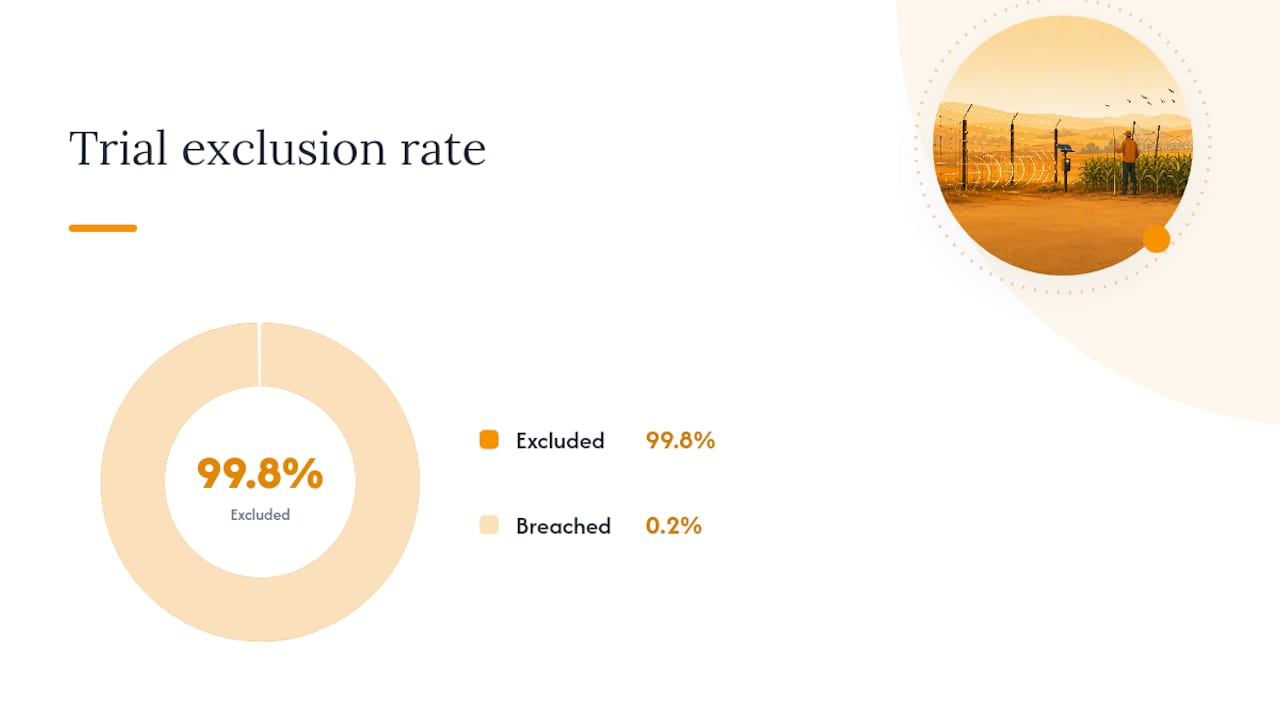
Virtual fencing uses GPS-enabled neckbands that give animals an audio cue followed by a mild pulse if they approach a boundary you’ve drawn in an app, backed by base stations that track location in real time. Cattle typically learn the audio-then-pulse pattern within days, and one 44-day commercial trial recorded a 99.8% exclusion rate keeping cattle out of a regenerating area, evidence the technology works at scale, not just in a lab.
It shines in situations physical fencing struggles with: excluding livestock from riparian zones, protecting a recently burned or regenerating area, or managing complex terrain where running wire is impractical. PERC’s analysis frames this as “precision exclusion,” a level of boundary control fixed fencing can’t match. A separate PERC piece makes the same point specifically about riparian and post-fire protection.
Expect a real learning curve, both for the herd and for whoever manages the app and base stations. Signal reliability, battery life on collars, and consistent monitoring all require attention, and grant programs in some regions help offset the upfront cost of adoption.
Pro Tip: Run virtual fencing alongside a physical perimeter fence for the first season rather than replacing it outright. The overlap catches any animal that hasn’t fully learned the boundary yet.
- Riparian buffer protection
- Rotational grazing without moving wire
- Temporary exclusion of a regenerating pasture
- Complex or steep terrain where wire is costly to run
Fencefast’s virtual fencing overview covers the collar mechanics in more depth for anyone comparing this against a physical build.
Combining Methods and Fixing Persistent Breaches
The most resilient setups layer methods rather than betting on one. A permanent exclusion fence with an electric outrigger wire stops both climbers and diggers. A temporary polytape line inside a permanent boundary protects a vulnerable crop for one season without touching the main fence.
When breaches keep happening, work through this checklist:
- Test voltage at the point of the breach first, low readings usually mean a grounding or vegetation problem.
- Check for sag between battens, since a dropped wire is the single most common weak point.
- Watch for “learned” animals that have figured out a gap. These often need targeted reinforcement, not a whole-fence rebuild.
- If breaches persist after basic checks, request a design consult rather than guessing further.
- Coordinate with neighbors on shared boundary lines. Isolated fixes just shift pressure onto the next property.
How Do You Track Wildlife Pressure on Your Land?
You can’t manage what you don’t measure, and most farmers underestimate how much a simple tracking habit improves fence decisions. Camera traps placed at known crossing points give a low-cost read on which species are testing your perimeter and how often. Track counts along dusty field edges or fresh snow after storms tell you the same thing without any equipment cost at all.
Some ranchers keep a basic damage log, noting the date, location, and likely species behind crop or fence damage. Over a season or two, that log usually reveals a pattern: pressure concentrates near tree lines, water sources, or low points in the terrain rather than spreading evenly across a boundary. That pattern should drive where you invest in stronger fencing rather than upgrading the whole perimeter at once.
For virtual fencing users, the base station and app already provide a rough population and movement picture for anything wearing a collar, since GPS logs show how often animals approach a boundary before learning it. That data has a practical use beyond the herd it tracks: it can flag where wild deer or predators are also concentrating, since collared cattle tend to avoid the same pressure points wild animals use.
Monitoring doesn’t need to be sophisticated to be useful. A phone camera, a notebook, and a walk along the fence line twice a month catches most emerging problems before they become a full breach.
Habitat Manipulation and Management on Working Land
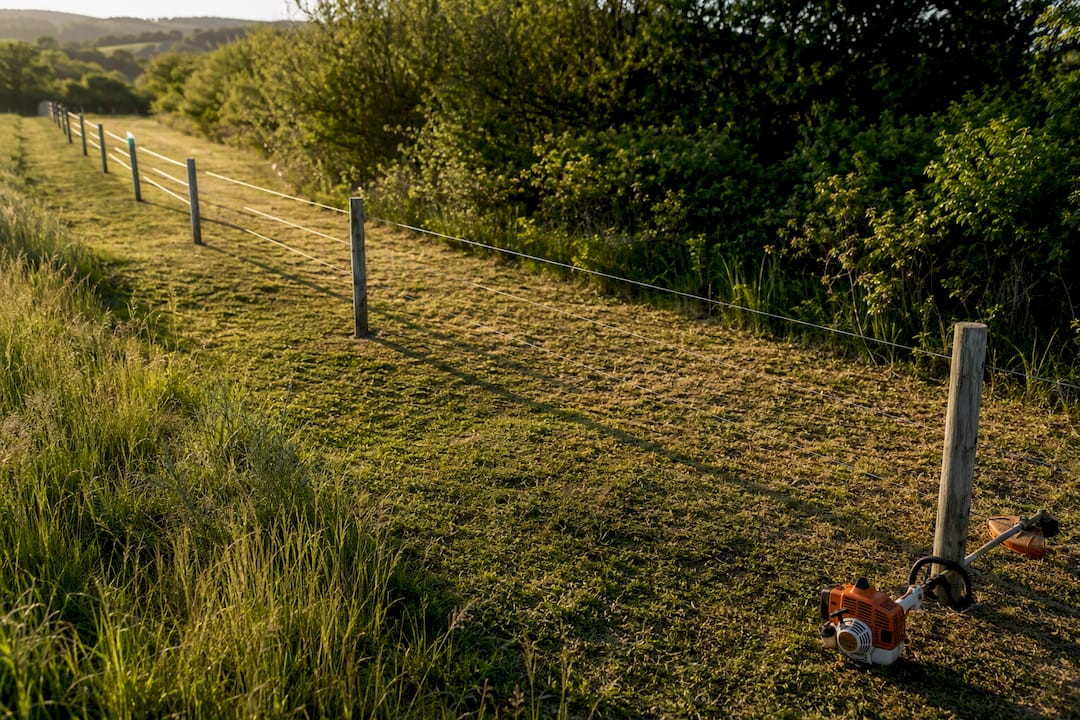
Adjusting the habitat around your fence line often reduces pressure more cheaply than reinforcing the fence itself. Dense brush or tall grass within a few feet of a wire gives predators cover to approach undetected and gives deer a running start toward a jump. Clearing a visual buffer, typically several feet on both sides of the line, removes that advantage and makes the fence itself more visible and more respected.
Water and forage placement matters too. If a stock pond or mineral lick sits near a weak stretch of fence, you’re drawing pressure exactly where you can least afford it. Moving those resources toward the center of a pasture, away from vulnerable boundary sections, reduces how often animals test the perimeter in the first place.
On larger properties, leaving or planting a buffer strip of less palatable vegetation along the boundary can reduce the pull toward cultivated fields on the other side. This isn’t about excluding wildlife from the whole property, it’s about giving them a reason to stay away from the exact line you’re trying to protect.
None of this replaces a properly energized fence. Habitat adjustments work as a force multiplier, making an already-functional fence more effective and reducing how hard it has to work.
Repellents and Deterrents: Where They Fit and Where They Don’t
Chemical and scent-based repellents, motion-activated lights, and noise deterrents all have a place, but treat them as a supplement to fencing, not a replacement for it. Repellents degrade with rain and need reapplication, and most animals habituate to a static noise or light deterrent within days once they realize it poses no real threat.
Where repellents earn their keep is in gap situations: protecting a small garden bed, covering a fence section under repair, or adding a deterrent layer around a known weak point while you plan a permanent fix. Taste-based repellents applied directly to vulnerable plants work reasonably well against deer browsing pressure specifically, since the deterrent hits the animal at the point of contact rather than relying on it avoiding an area altogether.
Motion-activated deterrents work best when moved periodically. A stationary light or sprinkler loses effectiveness once wildlife learns its pattern and location, but rotating a couple of units between known trouble spots keeps the element of surprise that makes them work at all.
The honest takeaway: repellents buy time and cover edge cases. They don’t substitute for the voltage, grounding, and physical design that make a fence line hold under real pressure.
Wildlife Corridors and Landscape Connectivity
Fencing decisions don’t happen in isolation from the broader landscape, and blocking every possible movement path across a large property usually isn’t practical or necessary. Identifying natural corridors, tree lines, creek beds, or low saddles in terrain that wildlife already uses to move through an area lets you concentrate fencing investment where it counts, rather than fortifying a boundary wildlife rarely crosses anyway.
In practice, this means some stretches of a property’s perimeter genuinely need less reinforcement than others. A boundary running along open, exposed pasture with no cover draws far less wildlife traffic than a fence line crossing a wooded draw or following a stream. Concentrating your electric outriggers, battens, and monitoring on the high-traffic corridor sections stretches a limited fencing budget considerably further.
This is also where coordinating with neighbors pays off. If your fence blocks a corridor completely while an adjacent property leaves it open, pressure simply redirects rather than resolving. Community-level fencing programs, sometimes supported through regional grant funding, address this by encouraging coordinated boundary planning across several properties rather than one-off fixes that just move the problem next door.
Resolving Conflicts Between Wildlife and Farm Operations
Most wildlife conflict on working land comes down to competing needs for the same resource, whether that’s forage, water, or crop cover, and the fix usually involves separating those needs rather than eliminating the wildlife causing the problem. A well-placed fence does exactly that: it doesn’t require removing deer or predators from the landscape, it just draws a line they learn to respect.
Timing matters as much as design. Damage tends to spike during specific windows, calving season for predator pressure, harvest for deer and boar, drought periods when natural forage and water dry up. Concentrating fencing and monitoring effort around those windows, rather than treating every season identically, uses labor and budget more efficiently.
Where conflict persists despite a properly maintained fence, the next step usually isn’t more voltage, it’s identifying whether a specific “problem” animal has learned to defeat the barrier and needs targeted intervention, separate from the broader fencing strategy. Local extension offices and wildlife agencies typically have protocols for handling repeat offenders that go beyond what fencing alone can solve.
Legal and Ethical Considerations in Wildlife Management
Regulations on fencing height, materials, and wildlife management vary significantly by province and even by municipality, so check local bylaws before building anything higher or more elaborate than a standard livestock fence, especially near protected species habitat or public land boundaries. Some regions also regulate voltage output on electric fencing to protect both wildlife and passersby, so confirm your energizer’s specifications meet local standards before installation.
Ethically, the goal of every technique in this guide is exclusion, not harm. A properly designed and maintained fence deters through mild discomfort and learned avoidance, not injury, and that distinction matters both for animal welfare and for compliance with most regional wildlife protection statutes. Lethal control of nuisance wildlife is heavily regulated in most jurisdictions and typically requires permits, so fencing and deterrents should be the first line of defense, not lethal methods pursued out of frustration with a persistent problem.
If you’re managing land near a protected corridor or a species with special conservation status, it’s worth a quick call to your regional wildlife agency before finalizing a fence design. Some programs even offer funding or design input specifically because coordinated, wildlife-friendly fencing serves conservation goals as much as farm protection ones.
What Field Experience Actually Teaches You
The single most common mistake we see isn’t a bad fence design, it’s a good fence turned off. Farmers de-energize for winter to save on power or wear, and by spring, animals have relearned that the wire is harmless. The second most common mistake is skipping battens, a cheap fix that prevents most sag-related breaches. The third is a single point of failure: one energizer, no backup, no monitoring.
Small changes fix most of this. Clear a visual buffer along the line so animals see the fence before they test it. Use polytape instead of plain wire for visibility. Add a second solar energizer or battery backup so a cloudy week or a dead unit doesn’t leave a gap.
— Juiced
How Fencefast Helps You Build a Fence That Actually Holds
If you’ve read this far, you already know the theory. What most properties actually need is the right combination of energizer, wire, posts, and grounding hardware sized correctly the first time, plus someone who’s seen what fails and what doesn’t. An authorized Gallagher dealer offers extensive experience helping Canadian farmers and ranchers do exactly that.

Whether you’re building a permanent deer exclusion line, setting up temporary polytape fencing for a single growing season, or exploring Gallagher eShepherd virtual fencing for a pasture with tricky terrain, components and design consulting are available to help get it right. Guidance on government funding programs like OFCAF and BMP grants for virtual fencing adoption may help offset upfront costs for ranchers ready to make the switch.
If your current fence keeps failing, or you’re planning a new boundary for next season, start by browsing Fencefast’s electric fencing collection or request a design consultation directly through Fencefast to get a system sized to your land, your species, and your budget.
Sources
- Install electric fencing to protect crops from mammals to reduce human-wildlife conflict - Conservation Evidence
- Study reporting reduced crop guarding and crop loss after electric fence installation
- Electric Fencing to Control Deer and Elk on Montana’s Farms and Ranches - MSU Extension Animal and Range Science
- Energized fencing handbook for high-tensile deer exclusion fence - Minnesota DNR
- How virtual fencing is revolutionizing wildlife conservation and rangeland health - PERC (2026)
FAQ
What Voltage Do I Need to Deter Deer or Boar?
Deer-rated electric fences generally need to maintain a high, consistent charge across multiple wires to remain an effective psychological barrier, according to extension fencing guidance. Check voltage weekly with a digital tester rather than relying on visual inspection, since a fence can look intact while delivering almost no charge.
Is Virtual Fencing a Replacement for Physical Fencing?
Not entirely. It works best for precision exclusion in areas like riparian zones or regenerating pastures, as PERC’s analysis notes, but most operations run it alongside a physical perimeter fence, especially during the herd’s initial learning period. Fencefast sells Gallagher eShepherd systems designed to complement, not necessarily replace, existing fence lines.
How Often Should I Check My Fence Line?
Weekly voltage checks plus a visual walk of the perimeter catch most problems before they become breaches. Clear vegetation before it grounds out the line, and inspect battens and connectors each season for wear.
Why Did My Fence Stop Working After Working Fine Last Year?
The most common cause is de-energizing the fence during the off-season, which trains animals to ignore the barrier once power returns. Grounding failures and sagging wire from missing battens are the next most likely culprits.
Does Fencefast Offer Design Help for New Fence Installations?
Yes. Design and consultation services alongside electric, portable, and virtual fencing product lines, along with guidance on funding programs for virtual fencing adoption, are provided by authorized dealers. Pricing for consultation and products is available directly through Fencefast.

