

Nearly 40 percent of American ranchers now use solar fencers to manage livestock safely and efficiently. With rising energy costs and more farms in remote areas, the need for reliable, low-maintenance fencing is greater than ever. Solar fencers offer an effective solution by using the sun’s power instead of grid electricity, helping American farmers control cattle while saving money and reducing their environmental impact.
Table of Contents
- Solar Fencers Defined For Livestock Management
- Types Of Solar Fencers And Key Differences
- How Solar Fencers Operate For Cattle Control
- Installation Steps And Maintenance Essentials
- Comparing Solar Fencers To Traditional Electric Fencing
Key Takeaways
| Point | Details |
|---|---|
| Innovative Livestock Management | Solar fencers use renewable energy to effectively manage livestock without relying on traditional electricity sources. |
| Types of Solar Fencers | Options include portable, permanent, and hybrid models, each tailored for specific agricultural needs and terrains. |
| Operational Efficiency | Solar fencers provide consistent performance with lower operational costs, especially in remote locations with challenging infrastructure. |
| Minimal Maintenance | Regular monitoring and simple maintenance routines ensure optimal performance and livestock containment, reducing overall system efforts. |
Solar Fencers Defined for Livestock Management
A solar fencer represents an innovative electrical containment system designed specifically for managing livestock in agricultural environments. These advanced solar-powered electric fence systems harness renewable energy to create reliable perimeter barriers that effectively control and protect cattle herds.
The core functionality of solar fencers involves converting sunlight into electrical energy through integrated solar panels, which then store power in rechargeable batteries. This stored energy powers an energizer that generates periodic high-voltage electrical pulses through conductive fence wires. When livestock contact these electrified wires, they receive a brief but memorable shock that serves as a psychological deterrent, encouraging animals to respect established boundary lines.
Solar electric fence systems offer significant advantages for agricultural operations, particularly in remote locations with limited infrastructure. They eliminate dependence on traditional grid electricity, reducing operational costs and enabling flexible livestock management practices. Ranchers can now deploy robust fencing solutions in previously challenging terrains, from mountainous regions to isolated pastures, without worrying about consistent power supply.
Key features of solar fencers include weatherproof construction, adjustable voltage settings, and low maintenance requirements. Modern systems integrate advanced monitoring capabilities, allowing farmers to track fence performance and potential breaches remotely.
Pro Tip: Battery Performance Check: Conduct monthly battery health assessments on your solar fencer to ensure consistent electrical output and prevent unexpected livestock containment failures.
Types of Solar Fencers and Key Differences
Solar fencers for livestock management come in diverse configurations, each designed to meet specific agricultural requirements. When exploring solar fence solutions, farmers can choose from several primary types that offer unique advantages for cattle containment and pasture management.
The main categories of solar fencers include portable units, permanent installation systems, and hybrid models. Portable solar fencers are lightweight, typically featuring compact solar panels and rechargeable batteries, making them ideal for temporary grazing areas or rotational farming practices. Permanent installation systems integrate more robust solar panels with high-capacity battery storage, providing consistent power for extensive ranch perimeters and large livestock operations.
Key differences between solar fencer types emerge in their power output, battery capacity, and coverage range. Low-power units suitable for small herds might generate 0.5 to 1 joule of energy, while high-performance models can produce 4-6 joules, capable of managing extensive cattle operations across multiple acres. Factors like panel efficiency, battery storage, and energizer technology significantly impact the fencer’s overall performance and reliability.
Modern solar fencers also differentiate themselves through additional features like digital voltage meters, lightning protection circuits, and remote monitoring capabilities. Advanced models offer programmable settings, allowing ranchers to customize electrical pulse intensity and duration based on specific livestock behavioral patterns and fence section requirements.
Here’s a comparison of solar fencer types highlighting key factors for different farm needs:
| Type | Portability | Typical Coverage Area | Ideal Use Case |
|---|---|---|---|
| Portable | Easy to reposition | Small plots/rotational | Temporary grazing zones |
| Permanent | Fixed installation | Large fields/pastures | Main boundary for big operations |
| Hybrid | Somewhat portable | Varies by setup | Combination of temporary and core areas |
Pro Tip: Voltage Selection: Always match your solar fencer’s voltage output to your specific cattle breed and pasture conditions to ensure effective containment without unnecessary stress on the animals.
How Solar Fencers Operate for Cattle Control
Solar fencers for cattle management represent a sophisticated electrical containment system that leverages renewable energy technology. Solar-based electric fence mechanisms capture sunlight through specialized panels, converting solar energy into a powerful livestock management tool that ensures effective boundary control without relying on traditional power sources.
The operational process begins with photovoltaic solar panels strategically positioned to maximize sunlight absorption. These panels convert solar radiation into electrical energy, which is then stored in rechargeable batteries. The stored energy powers an energizer unit that generates periodic high-voltage electrical pulses transmitted through conductive fence wires. When cattle contact these electrified wires, they experience a brief but memorable shock, creating a psychological barrier that prevents them from crossing established boundaries.
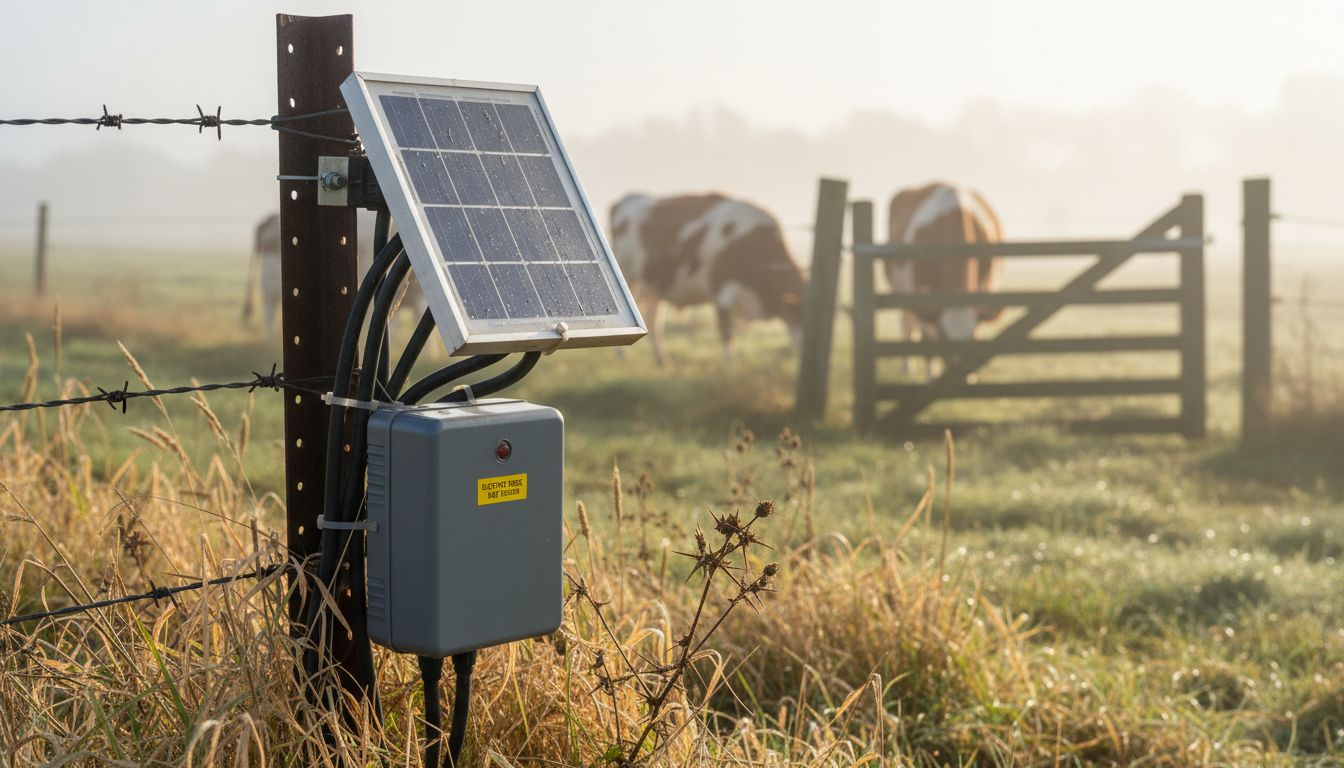
Solar electric fence systems eliminate the need for grid electricity, offering a sustainable and flexible livestock management solution. The technology allows ranchers to deploy effective fencing in remote locations without access to traditional power infrastructure. Advanced models incorporate intelligent pulse generation technology that adjusts electrical output based on environmental conditions, ensuring consistent performance across varying weather patterns and terrain types.
Precision engineering defines modern solar fencers, with sophisticated components like voltage regulators, lightning protection circuits, and digital monitoring systems. These features enable ranchers to customize electrical pulse characteristics, track fence performance remotely, and maintain optimal cattle containment with minimal manual intervention.
Pro Tip: Pulse Calibration: Regularly test and adjust your solar fencer’s voltage output to match your specific pasture conditions and cattle behavioral patterns, ensuring effective containment without unnecessary stress.
Installation Steps and Maintenance Essentials
Solar fencer installation requires careful planning and systematic execution to ensure optimal performance for cattle management. Selecting the appropriate solar kit involves matching the panel specifications with the energizer’s joule rating, creating a foundation for reliable livestock containment.
The installation process begins with strategic solar panel positioning to maximize sunlight capture and energy generation. Ranchers must identify locations with maximum sun exposure, typically south-facing areas with minimal shade interference. The solar panels connect directly to rechargeable batteries, which store electrical energy to power the fence energizer. Ground rods must be installed at precise intervals, typically 10 feet apart, to ensure proper electrical grounding and consistent voltage transmission through the conductive fence wires.
Maintenance of solar fencers involves regular systematic checks to preserve system integrity and performance. Critical maintenance tasks include monthly voltage testing, cleaning solar panels to remove dust and debris, inspecting wire connections for corrosion, and verifying battery charge levels. Ranchers should conduct seasonal equipment assessments, particularly before extreme weather periods, to prevent potential system failures that could compromise livestock containment.
Advanced solar fencing systems incorporate digital monitoring technologies that allow remote performance tracking. These sophisticated components enable ranchers to receive real-time alerts about voltage fluctuations, battery health, and potential fence breaches. Modern systems can integrate smartphone applications, providing comprehensive insights into fence performance and allowing immediate intervention when unexpected issues arise.
Pro Tip: Diagnostic Routine: Implement a quarterly comprehensive diagnostic check that includes voltage testing, wire tension assessment, and solar panel efficiency evaluation to preemptively identify and resolve potential solar fencer performance issues.
Comparing Solar Fencers to Traditional Electric Fencing
Electric fencing technology has undergone significant transformation with the introduction of solar-powered solutions. Solar electric fence systems represent a revolutionary approach to livestock management, eliminating traditional power infrastructure dependencies, offering ranchers unprecedented flexibility and sustainability.
Solar-based electric fences harness renewable energy to create effective livestock barriers, fundamentally differing from conventional electric fencing in several critical aspects. Traditional electric fences rely on direct grid connections or battery replacements, whereas solar fencers generate and store their own energy through integrated photovoltaic panels. This key distinction translates to lower operational costs, reduced maintenance requirements, and increased installation possibilities in remote agricultural locations.
The comparative advantages of solar fencers become particularly pronounced in challenging terrain and off-grid environments. Traditional electric fencing demands consistent electrical infrastructure, limiting deployment options and increasing installation complexity. Solar fencers, conversely, can be strategically placed in mountainous regions, remote pastures, and areas without reliable electricity, providing ranchers with unprecedented livestock management capabilities. The self-sustaining nature of solar technology means reduced long-term expenses and minimal environmental impact compared to conventional electrical systems.
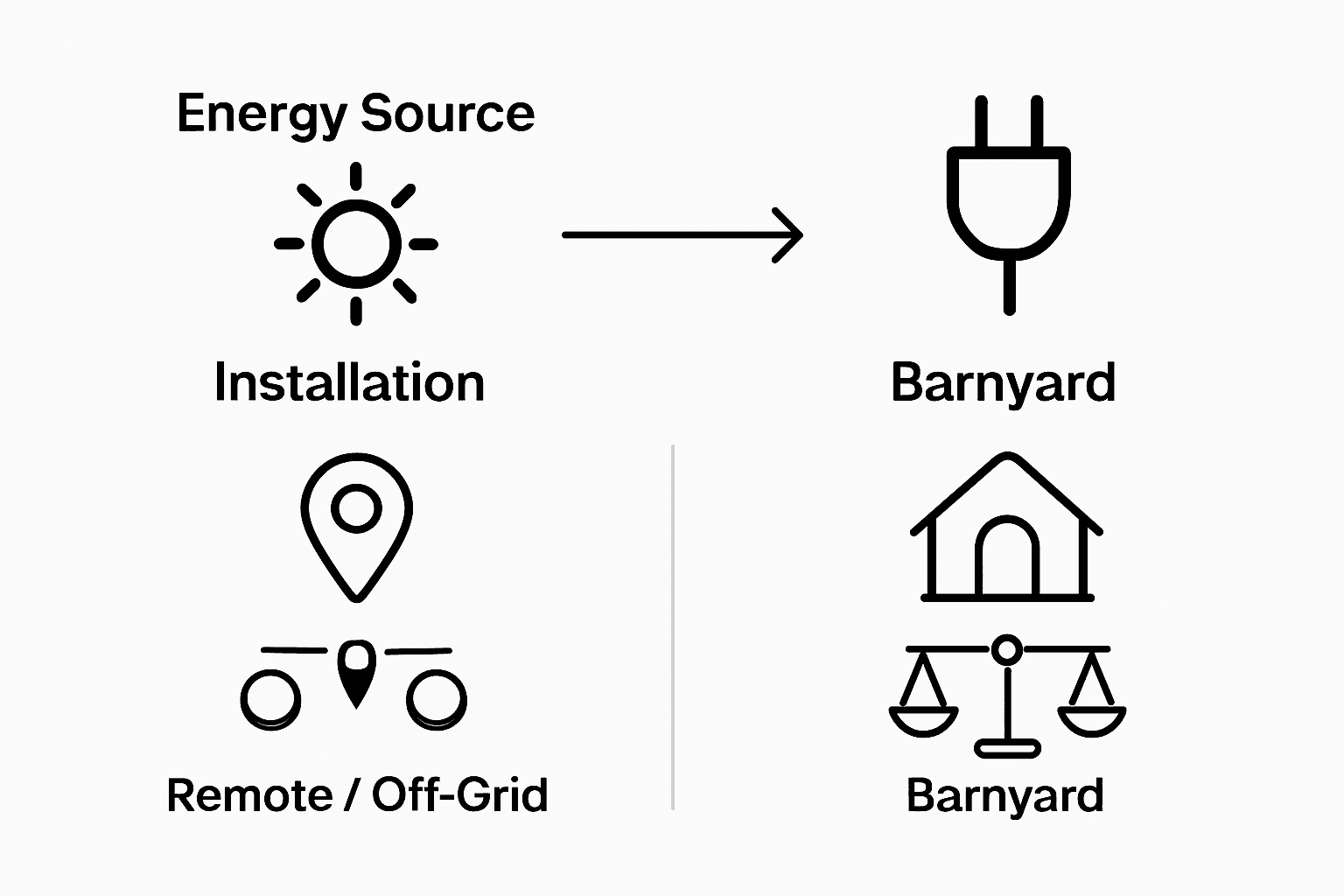
Performance metrics further distinguish solar fencers from traditional alternatives. Modern solar fencing systems deliver consistent voltage output, with advanced models incorporating intelligent pulse generation technology that adapts to environmental conditions. These sophisticated systems offer real-time monitoring, digital tracking, and remote management capabilities that traditional electric fences cannot match, providing ranchers with comprehensive livestock containment solutions.
Below is a side-by-side summary comparing solar fencers and traditional electric fencing:
| Aspect | Solar Fencer | Traditional Electric Fence |
|---|---|---|
| Power Source | Solar panels + batteries | Grid or replaceable batteries |
| Installation Flexibility | Effective in remote areas | Limited by power infrastructure |
| Long-Term Costs | Lower, thanks to self-sufficiency | Higher, ongoing energy/battery costs |
| Maintenance | Minimal with modern models | Routine battery/grid upkeep |
| Environmental Impact | Reduces carbon footprint | Depends on electricity source |
Pro Tip: Adaptive Deployment: Conduct a comprehensive site assessment of your property’s solar exposure and terrain characteristics before selecting between solar and traditional electric fencing to maximize effectiveness and cost efficiency.
Power Your Livestock Management with Reliable Solar Fencing Solutions
Managing cattle boundaries with solar fencers means overcoming challenges like remote locations, inconsistent power supplies, and costly maintenance. The article highlights how solar-powered electric fences provide effective, off-grid containment by transforming sunlight into dependable energy for your livestock barriers. If you are seeking to secure your pasture with low-maintenance, weatherproof, and efficient systems that adapt to your herd’s needs, understanding the right solar fencing technology is critical.
At FenceFast.ca, we specialize in providing high-quality fencing components, solar panels, energizers, and accessories built for Canadian agricultural conditions. Our selection supports the seamless installation and ongoing maintenance of solar electric fences designed to keep your cattle safe and contained anywhere.
Explore our comprehensive products and expert guidance at FenceFast.ca and discover how our solutions help you:
- Reduce reliance on grid electricity and lower operational costs
- Install durable, weather-resistant solar fencing in remote or challenging terrain
- Customize voltage and system features to suit your cattle breed and pasture

Don’t wait to upgrade your fencing system with cutting-edge solar technology. Visit FenceFast.ca today and empower your livestock management with dependable power anywhere you need it.
Frequently Asked Questions
What is a solar fencer and how does it work?
A solar fencer is an electrical containment system that manages livestock using renewable energy. It converts sunlight into electricity through solar panels, storing power in batteries to generate high-voltage pulses through conductive fence wires. When livestock contact the wires, they receive a brief shock that deters them from crossing established boundaries.
What types of solar fencers are available for cattle management?
Solar fencers come in various types, including portable units for temporary grazing, permanent installation systems for larger fields, and hybrid models that combine both features. Each type offers different power outputs, battery capacities, and coverage areas to suit specific farm needs.
How do I maintain my solar fencer for optimal performance?
Maintenance involves monthly checks, such as testing voltage, cleaning solar panels, inspecting wire connections, and verifying battery health. Seasonal assessments are also recommended, especially before extreme weather, to ensure the system remains effective for livestock containment.
How do solar fencers compare to traditional electric fencing?
Solar fencers provide several advantages over traditional electric fences, including independence from grid power, lower operational costs, and greater flexibility for installation in remote locations. They also offer features like digital monitoring and intelligent pulse generation, which enhance performance and adaptability to environmental conditions.

