

Choosing portable fencing for your sheep operation can feel overwhelming when every supplier promises durability and cost savings. The truth is not all portable fencing performs equally under Canadian conditions, and poor design or material choices can lead to costly repairs and lost livestock. This guide walks you through proven portable fencing solutions, from traditional electric designs to emerging virtual technology, helping you make informed decisions for your farm in 2026.
Table of Contents
- Understanding Electric Fencing Designs For Sheep Management
- Choosing The Right Wire And Materials For Safety And Durability
- Exploring Advanced Options: Virtual Fencing And Its Benefits
- Practical Tips For Setting Up And Maintaining Portable Sheep Fences
- Explore Portable Fencing Solutions At FenceFast Ltd.
Key takeaways
| Point | Details | |-------|---------|| | Electric fencing saves money | Electric fence designs reduce costs in intensified grazing by controlling movement efficiently. | | Safety depends on wire type | Use smooth steel or polywire, never electrified barbed wire, to prevent injuries. | | Polywire balances cost and function | Polywire costs half as much per foot as polytape while serving portable setups well. | | Virtual fencing offers flexibility | GPS collar technology allows remote pasture management without physical fences. | | Material quality prevents failures | Proper design and quality materials address most common fencing problems. |
Understanding electric fencing designs for sheep management
Electric fence designs deliver significant cost savings in intensified grazing systems by controlling sheep movement with minimal materials. You can apply electric designs to both perimeter fences and internal cross fences, creating flexible paddocks that maximize pasture utilization. This approach works particularly well for rotational grazing, where you move sheep frequently to fresh forage.
Many farmers blame electric fencing technology when problems arise, but most issues stem from poor design choices, cheap materials, or sloppy installation work. A properly designed electric fence uses the correct wire types, adequate energizer output, and proper grounding to maintain reliable voltage along the entire fence line. When you follow proven sheep fencing principles, electric fences perform reliably year after year.
Key design features include:
- Sufficient energizer capacity for fence length and vegetation pressure
- Proper grounding system with multiple ground rods in moist soil
- Correct wire spacing based on sheep size and behavior
- Quality insulators that prevent current leakage
- Regular monitoring to maintain voltage above 4,000 volts
Understanding these basics helps you avoid the common pitfalls that lead to fence failures and escaped livestock. The initial investment in quality components pays dividends through reduced maintenance and better animal control. Most portable systems work best with portable electric livestock fence configurations that balance portability with durability.
Pro Tip: Walk your fence lines weekly with a voltage tester, checking multiple points along each run to catch developing problems before they cause escapes or injuries.
Choosing the right wire and materials for safety and durability
Safety standards for sheep fencing are clear: use either smooth steel wire or polywire, never electrified barbed wire. Barbed wire poses serious injury risks when electrified, causing cuts and entanglements that can kill sheep. Smooth high tensile steel wire (HTSW) provides excellent conductivity and longevity but requires more substantial end posts and tensioning hardware.
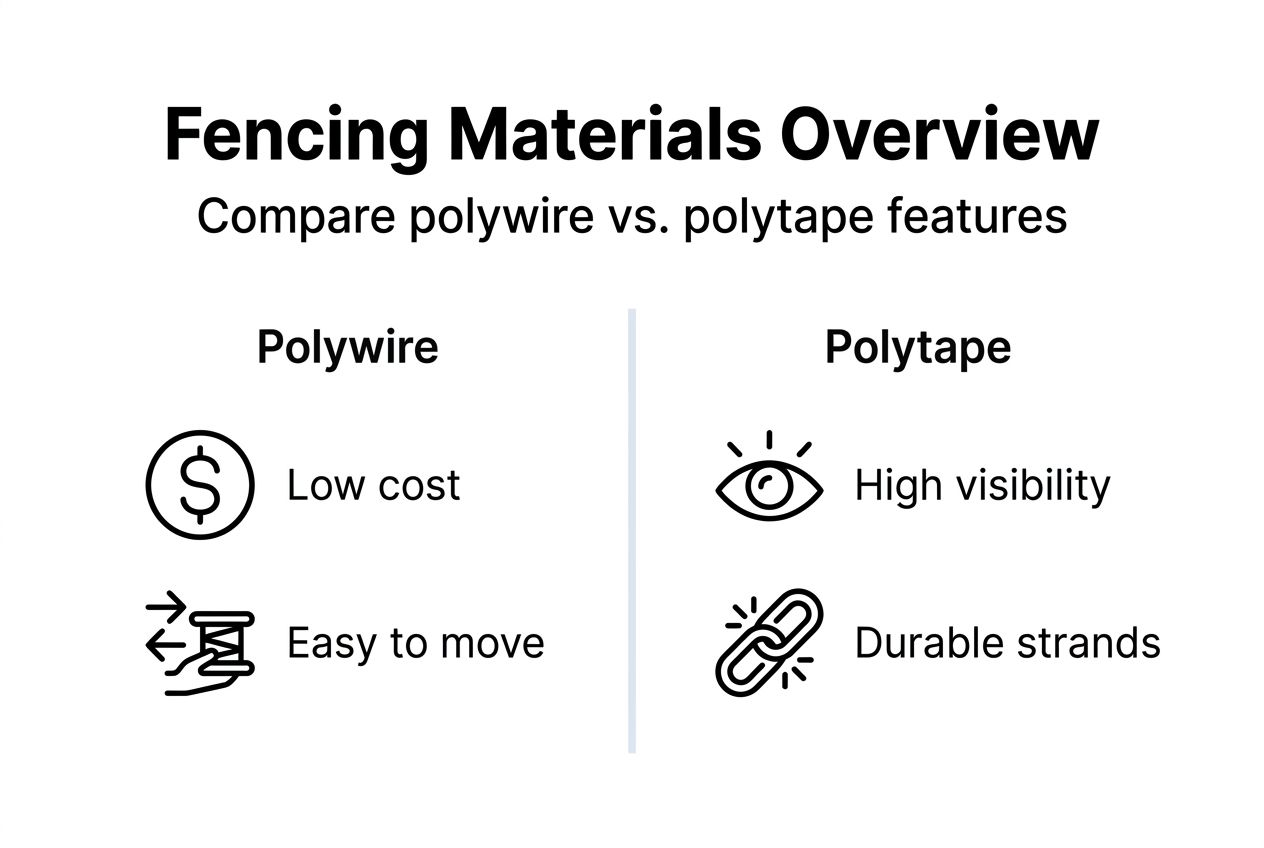
Polywire offers a practical middle ground for portable fencing applications. This material combines synthetic fibers with metal conductors, creating a lightweight product that’s easy to move and install. Polywire costs approximately half as much per foot as polytape, making it budget friendly for farmers covering large areas. The tradeoff is durability: polywire typically lasts 5-6 years with frequent moving.
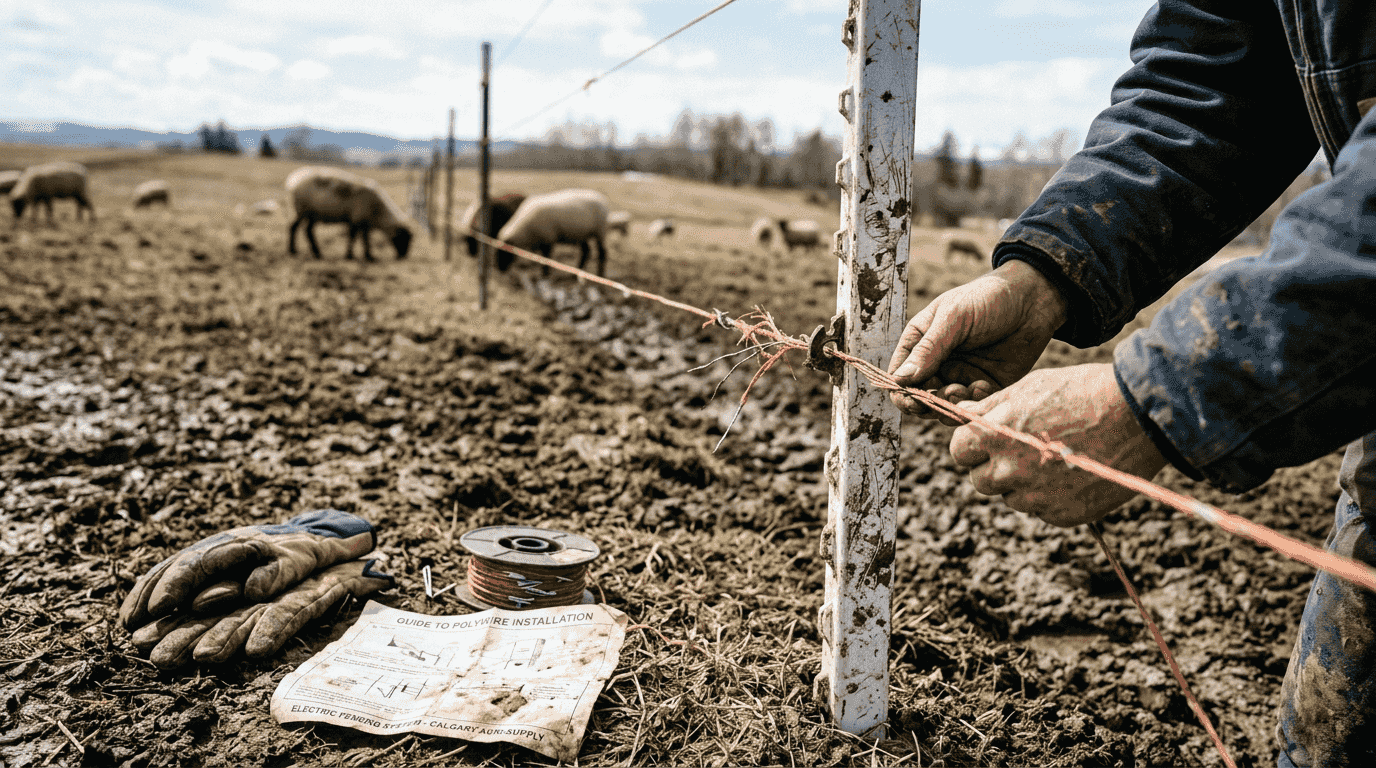
For short runs under 660 feet, six strand polywire delivers adequate performance. Longer distances or areas with heavy vegetation require wire with enhanced conductivity to maintain effective voltage throughout the fence line. Stainless steel filament polywire resists corrosion better than copper or aluminum alternatives, making it ideal for frequently moved portable fences.
| Feature | Polywire | Polytape |
|---|---|---|
| Cost per foot | Lower (50% less) | Higher |
| Visibility | Moderate | High |
| Durability | 5-6 years | 5-6 years |
| Best use | Budget portable fences | High visibility applications |
| Conductivity | Adequate for short runs | Better for longer distances |
Material selection directly impacts both initial costs and long term maintenance expenses. Choosing appropriate wire for your specific application, considering factors like fence length, moving frequency, and predator pressure, determines whether your portable system succeeds or frustrates you with constant repairs. Quality electric fencing for sheep starts with appropriate wire selection.
Pro Tip: Select stainless steel filament polywire for fences you’ll move weekly or more often, and aluminum filament for semi permanent installations that stay in place for months.
Exploring advanced options: virtual fencing and its benefits
Virtual fencing technology represents a significant innovation for Canadian livestock producers in 2026. This system uses GPS enabled collars that emit audio warnings when animals approach virtual boundary lines, followed by mild electric pulses if they continue forward. The beauty lies in how quickly livestock adapt: cattle learn to respond to the audio cue alone, avoiding the pulse entirely after a brief learning period.
Virtual fencing eliminates the need for physical fence posts, wire, and regular fence line maintenance. You can redraw paddock boundaries from your smartphone, adjusting grazing areas instantly based on forage conditions or weather patterns. This flexibility proves especially valuable for rotational grazing systems where you want to move animals frequently without the labor of relocating physical fences.
The technology delivers several practical advantages:
- Remote pasture management allows boundary changes without visiting the field
- Behavioral alerts notify you when animals breach boundaries or show unusual inactivity
- Reduced material costs eliminate posts, wire, and insulators
- Enhanced grazing monitoring provides data on animal location and movement patterns
- Year round effectiveness works in snow, rain, and extreme temperatures
Livestock producers receive real time notifications about grazing breaches or potential health issues, enabling faster response to problems. The system works particularly well on large ranches or irregular terrain where physical fencing proves difficult or expensive to install. Virtual fencing also supports sustainable grazing practices by making it easier to implement complex rotational patterns that would be impractical with traditional fences.
While the upfront collar investment exceeds traditional portable fencing costs, the elimination of ongoing material and labor expenses can create net savings over time. The technology suits operations ready to embrace digital livestock management and willing to invest time in properly training animals to the system. Consider how sheep fencing ideas integrate with virtual technology for hybrid approaches.
Practical tips for setting up and maintaining portable sheep fences
Successful portable fencing requires systematic installation and maintenance practices. Follow these steps to maximize performance and longevity:
-
Choose wire based on your specific needs, considering fence length, moving frequency, and budget constraints. Six strand polywire works for most portable applications under 660 feet, while longer runs need higher conductivity options.
-
Install your energizer according to manufacturer specifications, ensuring proper grounding with at least three ground rods driven six feet deep in moist soil. Test voltage at multiple fence points before introducing sheep to verify adequate current throughout the system.
-
Move fence lines regularly to optimize pasture utilization and prevent overgrazing. Most rotational grazing systems benefit from moves every one to three days, depending on paddock size and forage availability. This frequent movement maximizes the cost effectiveness of your portable electric livestock fence investment.
-
Inspect fences after each move for damage, wear, or developing problems. Replace polywire every 5-6 years even if it appears functional, as internal conductor degradation reduces effectiveness before visible damage occurs. Keep replacement materials on hand to minimize downtime.
-
Maintain clear fence lines by controlling vegetation that can drain voltage. Tall grass or weeds touching the wire create continuous current leaks that reduce shock effectiveness. Walk fence lines weekly during growing season, clearing problem areas promptly.
Proper setup prevents most common failures. Take time to install correctly rather than rushing through the process and creating problems you’ll fight all season. Document your fence layout and energizer settings to maintain consistency across your operation. Train all farm workers on proper installation and troubleshooting procedures to ensure consistent results.
Pro Tip: Use white or brightly colored polytape for the top wire in portable fences, even if lower wires use polywire, to improve visibility for sheep in low light conditions or unfamiliar paddocks.
Explore portable fencing solutions at FenceFast Ltd.
Finding reliable portable fencing products tailored for Canadian sheep farming becomes simpler when you work with specialists who understand livestock management challenges.

FenceFast Ltd. offers comprehensive portable electric fencing systems optimized for sheep and other livestock operations. Their Patriot accessory kits include all components needed to set up and maintain effective electric fences, eliminating guesswork about compatible parts. For producers seeking enhanced containment, electric fence netting provides a durable solution that contains livestock while deterring nuisance animals and predators. Visit FenceFast Ltd. to explore their full range of portable fencing options and find solutions that match your operation’s specific needs in 2026.
FAQ
Can I use barbed wire in electric fences for sheep?
No, barbed wire should never be electrified because it creates serious injury risks for sheep. The barbs can cause cuts, entanglements, and potentially fatal wounds when animals contact an electrified wire and panic. Always use smooth steel wire or polywire for electric fencing for sheep to ensure both safety and regulatory compliance.
How long does polywire last when used in portable sheep fencing?
With frequent moving, polywire typically lasts 5-6 years before requiring replacement. This lifespan applies to both polywire and polytape under normal field conditions. Proper handling during moves and protection from UV exposure can extend useful life, while rough handling or excessive stretching shortens it. Plan replacement cycles into your portable electric livestock fence budget to avoid unexpected failures during critical grazing periods.
What are the advantages of virtual fencing over traditional portable fences?
Virtual fencing reduces labor and material costs by eliminating physical fence installation and maintenance. The technology enables instant paddock boundary adjustments from your phone, allowing precise grazing management without moving posts or wire. GPS collars also provide valuable behavioral data and health monitoring capabilities that traditional fences cannot offer. This makes virtual systems particularly attractive for large operations or irregular terrain where conventional sheep fencing proves challenging.
What wire type is recommended for long distance portable fencing?
For distances exceeding 660 feet or areas with heavy vegetation, use wire with enhanced conductivity rather than standard six strand polywire. Options include polytape with more metal conductors or high tensile smooth wire, both of which maintain effective voltage over longer runs. The increased conductivity compensates for voltage drops caused by fence length and vegetation contact, ensuring adequate shock at the far end of your fence line.

