

Selecting the right agricultural fencing transforms livestock management and property security across Canadian farms. Electric fences can reduce livestock escapes by up to 90% when properly installed, making material choice critical for operational success. This guide explores fencing materials, electric systems, livestock-specific solutions, and maintenance strategies tailored to Canada’s demanding climate, helping you make informed decisions that protect your investment and animals.
Table of Contents
- Types Of Agricultural Fencing Materials And Their Suitability In Canada
- Electric Fencing Systems: Components, Benefits, And Usage
- Livestock-Specific Fencing Solutions And Best Practices
- Environmental And Maintenance Considerations For Canadian Agricultural Fencing
- Cost, Funding, And Practical Implementation Advice
- Common Misconceptions And Expert Clarifications
- Conclusion And Next Steps For Canadian Farmers And Ranchers
- Explore Fencing Solutions And Accessories From FenceFast Ltd.
Key takeaways
| Point | Details |
|---|---|
| Material selection impacts durability | Choosing fencing suited to livestock type and Canadian weather greatly improves longevity and containment effectiveness. |
| Electric fencing delivers safety and efficiency | Modern electric systems reduce breaches by 85-90% while causing zero injury in over 95% of installations. |
| Maintenance extends fence life significantly | Routine inspections, tensioning, and rust prevention reduce long-term costs and prevent costly failures. |
| Government funding offsets installation costs | Provincial and federal programs help Canadian farmers invest in quality fencing infrastructure. |
| Common myths lead to expensive mistakes | Understanding electric fence safety and true material costs prevents poor purchasing decisions. |
Types of agricultural fencing materials and their suitability in Canada
High-tensile wire dominates Canadian agricultural fencing for good reason. It withstands freeze-thaw cycles better than alternatives and costs significantly less over its lifespan. Wood fencing can cost 6 times more per linear foot while demanding regular maintenance against moisture damage and rot.
Barbed wire remains popular for cattle containment due to its deterrent effect and affordability. However, it poses injury risks to horses and requires careful installation with proper spacing. Woven wire excels for sheep and goats, creating a physical barrier that prevents escapes through gaps.
Canadian winters accelerate material degradation through moisture, ice expansion, and temperature extremes. Galvanized coatings on wire products provide essential rust resistance, extending operational life by years. Wood posts treated with preservatives handle moisture better than untreated alternatives but still require periodic inspection and replacement.
Fencing material comparison:
- High-tensile wire: Excellent durability, lowest long-term cost, requires specialized tools for installation
- Barbed wire: Affordable upfront, effective cattle deterrent, higher injury risk for other species
- Woven wire: Superior containment for small livestock, moderate cost, labor-intensive installation
- Wood fencing: Attractive appearance, highest cost and maintenance, vulnerable to moisture damage
Consider eco-friendly fencing materials when sustainability aligns with your farm values. Modern agricultural fencing wire solutions combine strength with environmental responsibility, using recycled content and non-toxic coatings.
| Material Type | Cost per 100ft | Lifespan (years) | Best For |
|---|---|---|---|
| High-tensile wire | $75-$120 | 20-30 | Cattle, perimeter fencing |
| Barbed wire | $60-$90 | 15-25 | Cattle containment |
| Woven wire | $150-$250 | 15-20 | Sheep, goats, mixed livestock |
| Wood rail | $450-$600 | 10-15 | Horses, aesthetic applications |
Electric fencing systems: components, benefits, and usage
Electric fences deliver short, safe pulses that teach livestock to respect boundaries without physical barriers. The system requires three core components: an energizer that generates pulses, conductive wire or tape that carries the charge, and proper grounding that completes the circuit.
Electric fencing reduces livestock breaches by 85-90% on Canadian farms through psychological conditioning rather than physical restraint. Animals learn quickly after one or two encounters, making electric systems highly effective for rotational grazing and temporary paddocks.
Solar-powered energizers revolutionize off-grid farming by eliminating power line dependency. These units charge batteries during daylight hours, maintaining fence effectiveness around the clock. Battery backup ensures continuous operation during cloudy periods, critical for Canadian winter conditions.
Essential electric fence components:
- Energizer: Powers the system; choose output based on fence length and vegetation contact
- Grounding rods: Minimum three rods, 6-8 feet deep, provide circuit completion
- Conductor: Wire, tape, or rope carries electrical pulse; visibility matters for training
- Insulators: Prevent current leakage at posts and corner assemblies
- Gates: Insulated handles and spring-loaded connectors maintain circuit when closed
Portable electric systems excel for rotational grazing, moving quickly between paddocks without permanent installation. Lightweight posts and reels allow one person to reconfigure grazing areas in under an hour. This flexibility optimizes pasture use while reducing equipment investment.
Pro Tip: Proper grounding makes or breaks electric fence reliability. Install at least three 6-foot grounding rods spaced 10 feet apart in moist soil for optimal performance, especially critical in sandy or rocky Canadian terrain.
Safety concerns about electric fencing are largely unfounded. Over 95% of electric fences cause zero injury when properly installed, delivering momentary discomfort rather than harm. Modern energizers include safety features that limit pulse duration and energy output to safe levels for all livestock species.
Explore comprehensive guidance in our basic electric fence setup guide for installation best practices. For temporary applications, review portable electric fence system options that maximize flexibility. Detailed instructions in how to install electric fence livestock control ensure reliable results from your first installation.
Livestock-specific fencing solutions and best practices
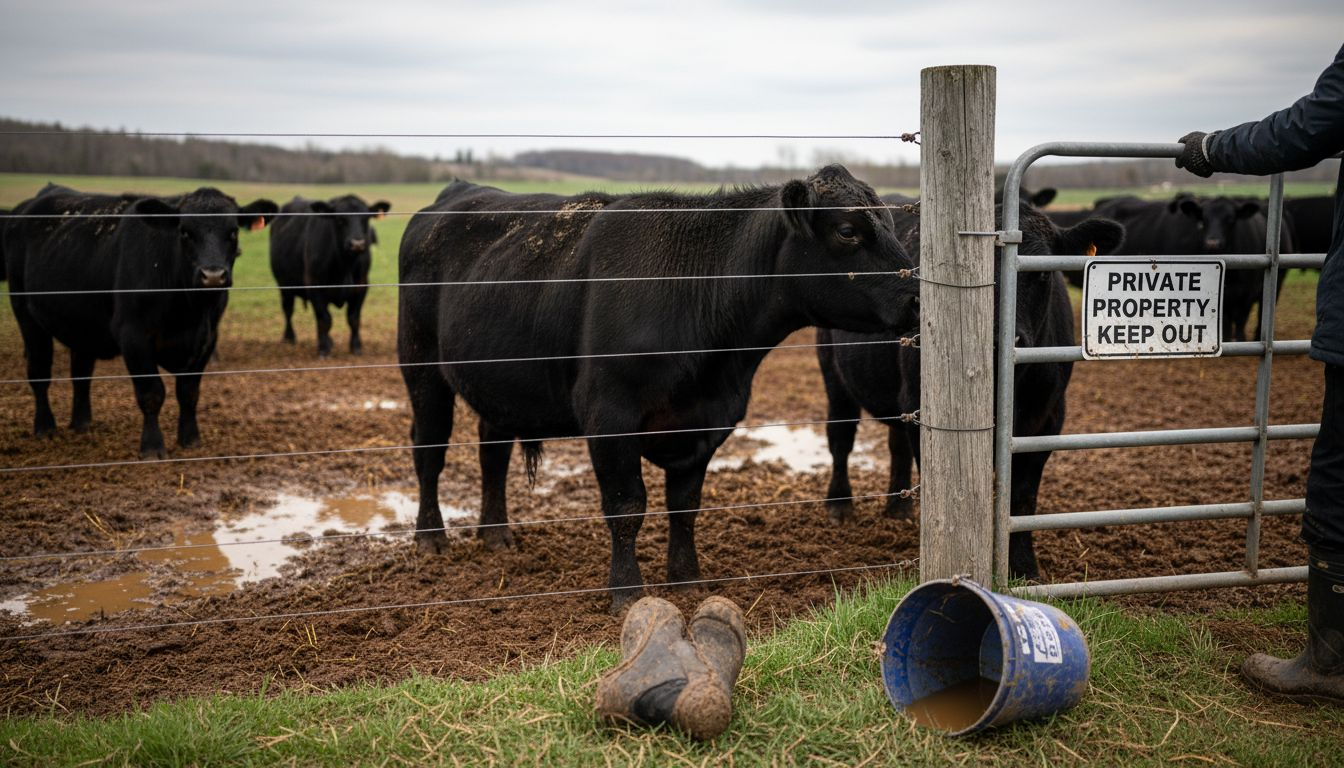
Cattle require sturdy fencing that withstands pressure from large animals rubbing and testing boundaries. Five-strand high-tensile wire with a top height of 54 inches provides effective containment for most breeds. Barbed wire on the top two strands adds deterrent value without excessive injury risk.
Horses demand safer fencing that prevents entanglement and reduces injury during panic responses. Wood rail, electric tape, or coated wire eliminates sharp edges that cause lacerations. Visibility is crucial because horses spook easily; white or colored materials prevent collisions that damage both fence and animal.
Sheep and goats are escape artists that exploit any gap or weakness. Woven wire with 6-inch or smaller openings prevents head entrapment and squeezing through. A single electric strand 6 inches from the ground discourages digging, while another at nose height stops climbing attempts.
Species-specific fencing recommendations:
- Cattle: 5-strand high-tensile wire, 54-inch height, barbed top strands optional
- Horses: 4-5 rail wood or coated wire, 60-inch height, high visibility essential
- Sheep: Woven wire with electric offset, 48-inch height, prevents climbing and digging
- Pigs: Woven wire with electric strand at snout level, reinforced bottom prevents rooting
- Poultry: 6-foot woven wire with buried apron, overhead netting deters aerial predators
Predator pressure varies across Canadian regions, requiring fencing adaptation. Coyotes and wolves jump surprisingly high, necessitating 6-foot fencing in high-risk areas. Electric offset wires placed 12 inches outside the main fence deliver deterrent shocks before predators reach vulnerable livestock.
Mixed-species farms benefit from versatile fencing that accommodates different animal behaviors. Woven wire provides the physical barrier smaller animals need, while electric strands at multiple heights address species-specific tendencies. This combination reduces infrastructure costs compared to separate enclosures.
Discover proven strategies in cattle fencing ideas for Canadian ranchers that balance containment effectiveness with budget constraints.
Environmental and maintenance considerations for Canadian agricultural fencing
Winter moisture accelerates rust formation on unprotected steel components, reducing fence lifespan by years. Ice buildup on wires increases weight stress, stretching wire beyond proper tension. Spring thaw cycles heave posts from frozen ground, creating alignment problems that compromise structural integrity.
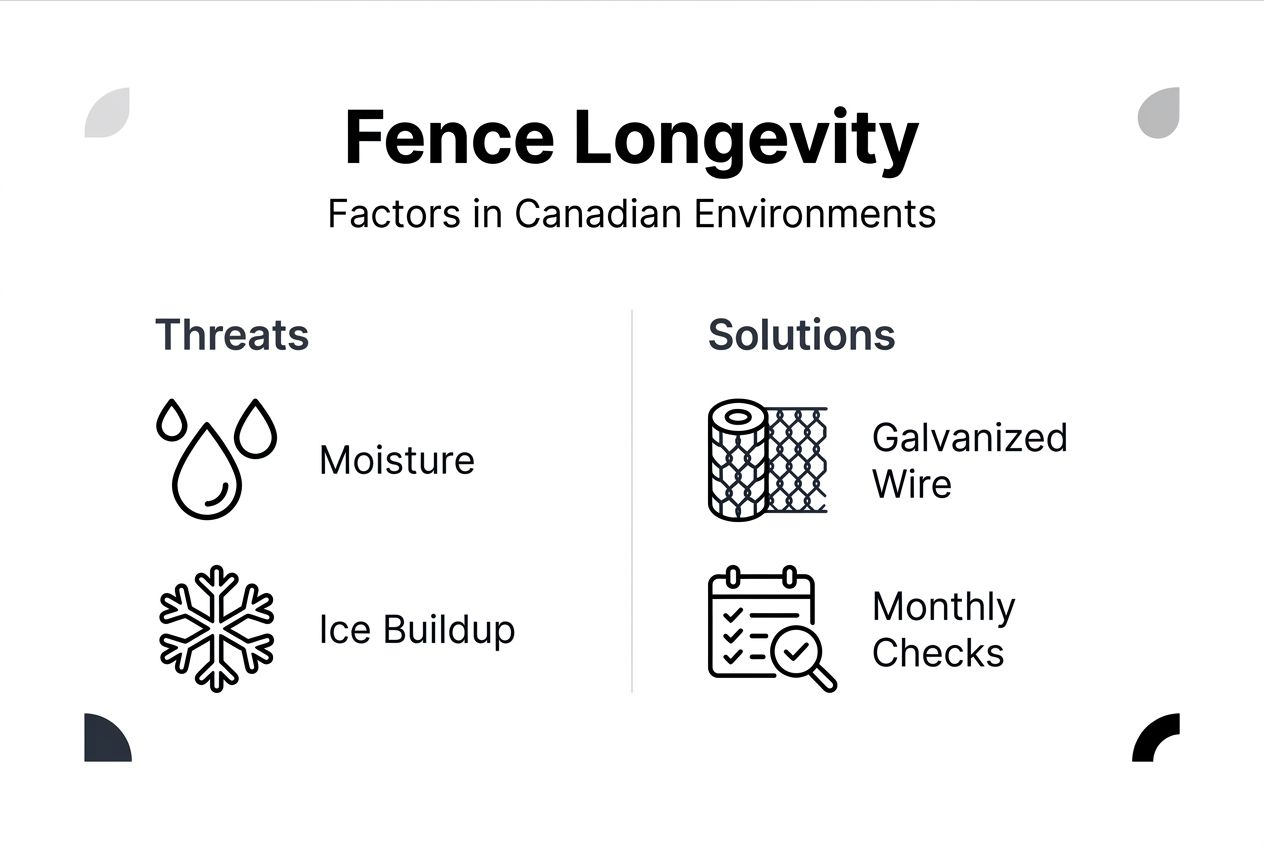
Routine inspection catches small problems before they become expensive failures. Walk fence lines monthly during growing season, checking for broken wires, loose staples, and rotted posts. Vegetation contact drains electric fence power and provides pathways for livestock escapes.
Essential maintenance tasks by season:
- Spring: Re-tension wires stretched by winter ice, replace damaged insulators, reset heaved posts
- Summer: Clear vegetation from fence lines, treat wood components, verify electric fence output
- Fall: Inspect all connections, replace worn components before winter, apply rust prevention treatments
- Winter: Monitor for ice damage, clear snow buildup from electric conductors, check battery backup systems
Pro Tip: Use galvanized or high-tensile wire in moisture-prone areas along creeks, low spots, and north-facing slopes where rust accelerates. The modest upfront premium pays dividends through extended service life.
Preventive maintenance costs fraction of reactive repairs. Replacing a $3 insulator takes minutes; repairing a broken fence after livestock escape costs hours of labor plus potential animal loss. Budget 2-3% of fence installation cost annually for routine upkeep.
Government programs help offset both installation and maintenance expenses. Research grants for farm fencing Canada to identify funding that reduces your net investment in quality infrastructure.
Cost, funding, and practical implementation advice
Budgeting for agricultural fencing requires balancing upfront costs against long-term value. High-tensile wire systems cost $1.20-$1.80 per linear foot installed, while wood rail fencing runs $4.50-$6.00 per foot. Material longevity and maintenance requirements dramatically affect total ownership costs.
Canadian farmers access multiple funding streams for fencing projects. The Agricultural Clean Technology Program covers up to 50% of eligible costs for environmental projects, including wildlife exclusion fencing. Provincial programs vary by region; Alberta, Ontario, and Quebec offer specific grants for livestock infrastructure improvements.
Government funding application tips:
- Research eligibility criteria early; many programs require pre-approval before purchasing materials
- Document existing conditions with photos and measurements for baseline comparison
- Obtain multiple quotes to demonstrate competitive pricing and project necessity
- Submit applications 6-8 weeks before planned installation to account for processing time
- Maintain detailed receipts and installation records for reimbursement verification
Implementation success depends on proper planning and phased execution. Mark corner posts first, ensuring square corners and straight runs. Stretch wire with mechanical tighteners to achieve proper tension without overstressing. Install bracing at corners and gates to handle directional pull forces.
| Fence Type | Material Cost/100ft | Labor Hours | Total Cost/100ft | Expected Lifespan |
|---|---|---|---|---|
| High-tensile 5-strand | $75-$120 | 3-4 | $180-$240 | 20-30 years |
| Barbed wire 4-strand | $60-$90 | 2-3 | $140-$190 | 15-25 years |
| Woven wire 48" | $150-$250 | 5-6 | $350-$550 | 15-20 years |
| Wood 4-rail | $450-$600 | 6-8 | $900-$1,200 | 10-15 years |
| Electric portable | $40-$70 | 1-2 | $90-$150 | 10-15 years |
Material procurement timing affects costs significantly. Order bulk supplies during winter months when demand drops and suppliers offer discounts. Group purchases with neighboring farms increase negotiating power for better pricing on wire, posts, and hardware.
Explore comprehensive funding information at grants for farm fencing Canada to maximize financial support for your project.
Common misconceptions and expert clarifications
Myth: Electric fences harm livestock and should be avoided for animal welfare reasons. Reality: Most fears about electric fence harm are unfounded with proper installation, causing no injury in 95%+ of cases. The momentary pulse startles animals without delivering dangerous current levels.
Myth: Wood fencing always provides better value because it lasts longer. Reality: Wood requires replacement every 10-15 years plus ongoing maintenance, while high-tensile wire lasts 20-30 years with minimal upkeep. Total ownership costs favor wire in most agricultural applications.
Myth: Barbed wire effectively contains all livestock species. Reality: Barbed wire works well for cattle but creates injury risks for horses and fails to contain sheep or goats. Species-specific design prevents costly mistakes and animal harm.
Additional misconceptions debunked:
- Taller is always better: Excessive height wastes materials; proper height varies by species and behavior patterns
- More strands improve containment: Optimal strand count balances effectiveness with cost; diminishing returns occur beyond species requirements
- Cheap materials save money: Low-quality wire and posts fail prematurely, increasing replacement frequency and total expense
- DIY installation always costs less: Professional installation prevents expensive mistakes; complex projects benefit from experienced contractors
Understanding these realities helps farmers avoid common pitfalls that waste money and compromise livestock safety. Expert consultation during planning prevents problems that become expensive after installation.
Conclusion and next steps for Canadian farmers and ranchers
Effective agricultural fencing balances material durability, livestock needs, and Canadian environmental challenges. High-tensile wire and electric systems offer proven performance across diverse farming operations, delivering reliable containment at reasonable costs.
Modern technology like solar-powered energizers and portable systems provides flexibility that traditional fencing cannot match. Government funding programs reduce financial barriers to quality infrastructure investment. Proper maintenance extends fence lifespan while preventing costly failures and livestock losses.
Start by assessing your specific livestock, property conditions, and budget constraints. Research available funding to maximize return on investment. Consult experienced suppliers who understand Canadian agricultural requirements and can recommend proven solutions for your operation.
Explore fencing solutions and accessories from FenceFast Ltd.
Transform your agricultural fencing knowledge into action with specialized products designed for Canadian farming conditions. FenceFast Ltd. offers durable high-tensile wire, electric fence components, and livestock management tools that withstand harsh winters and demanding use.

Advanced accessories like the electric fence accessory kit provide everything needed for reliable installations. Monitor livestock efficiently with tools like the handheld EID tag reader that integrates seamlessly with modern farm management systems. Expert product support helps you select components that optimize containment, security, and operational efficiency across your property.
FAQ
What are the best fencing materials for Canadian winters?
High-tensile galvanized wire resists rust and handles freeze-thaw cycles better than alternatives, making it ideal for Canadian climates. Wood fencing works when treated with preservatives but requires more frequent maintenance and replacement. Wire systems offer superior longevity and lower total ownership costs in harsh winter conditions.
Is electric fencing safe for all types of livestock?
Properly installed electric fences deliver momentary pulses that startle without injuring animals, proving safe for cattle, horses, sheep, and pigs. Modern energizers limit pulse duration and energy to levels that cause no harm in over 95% of installations. Correct grounding and regular maintenance ensure continued safe operation across all livestock species.
How can I maintain my agricultural fence to last longer?
Inspect fence lines monthly for damage, loose connections, and vegetation contact that compromises performance. Re-tension wires after winter ice damage, treat wood components annually, and address rust spots immediately. Clearing debris and maintaining proper electric fence grounding prevents deterioration and extends service life by years, reducing replacement costs significantly.
Are there government grants to help with fencing costs?
Various provincial and federal programs provide funding for agricultural fencing, including the Agricultural Clean Technology Program covering up to 50% of eligible costs. Application requirements vary by region and program; early research improves approval chances. Visit grants for farm fencing Canada for comprehensive information on available funding and application procedures.

