

Finding a reliable way to keep livestock secure while reducing energy bills is a constant challenge for many Canadian farmers. Solar-powered electric fence chargers offer a practical solution, using sunlight to generate power even in remote pastures far from the grid. By harnessing photovoltaic panel technology that transforms sunlight into usable electricity, ranchers can maintain effective fencing, cut ongoing costs, and support sustainable animal management all year round.
Table of Contents
- Solar Panel Electric Fence Charger Basics
- Key Types And Performance Differences
- How Solar-Powered Electric Fencing Works
- Benefits For Canadian Livestock Operations
- Installation Best Practices And Mistakes To Avoid
- Cost, Maintenance, And Comparisons With Alternatives
Key Takeaways
| Point | Details |
|---|---|
| Solar Panel Functionality | Solar panel electric fence chargers convert sunlight into electrical energy, enabling reliable operation in remote areas. |
| Types of Solar Panels | Monocrystalline, polycrystalline, and thin-film panels each have unique performance characteristics and cost implications. |
| Benefits | These systems offer energy independence, lower long-term costs, environmental sustainability, and minimal maintenance. |
| Installation Best Practices | Proper installation and maintenance are crucial; focus on adequate grounding and panel positioning for maximum efficiency. |
Solar panel electric fence charger basics
Solar panel electric fence chargers represent a cutting-edge solution for Canadian ranchers seeking reliable, renewable livestock management technology. These innovative power systems leverage photovoltaic cell technologies to generate electricity that keeps electric fences operational in remote pasture environments.
The core mechanism of solar electric fence chargers involves converting sunlight directly into electrical energy through specialized photovoltaic panels. These panels are composed of silicon cells designed to absorb solar radiation and generate an electrical charge. When sunlight strikes the panel, electrons are dislodged from semiconductor materials, creating a continuous flow of electricity that can power electric fence systems even in challenging rural Canadian landscapes.
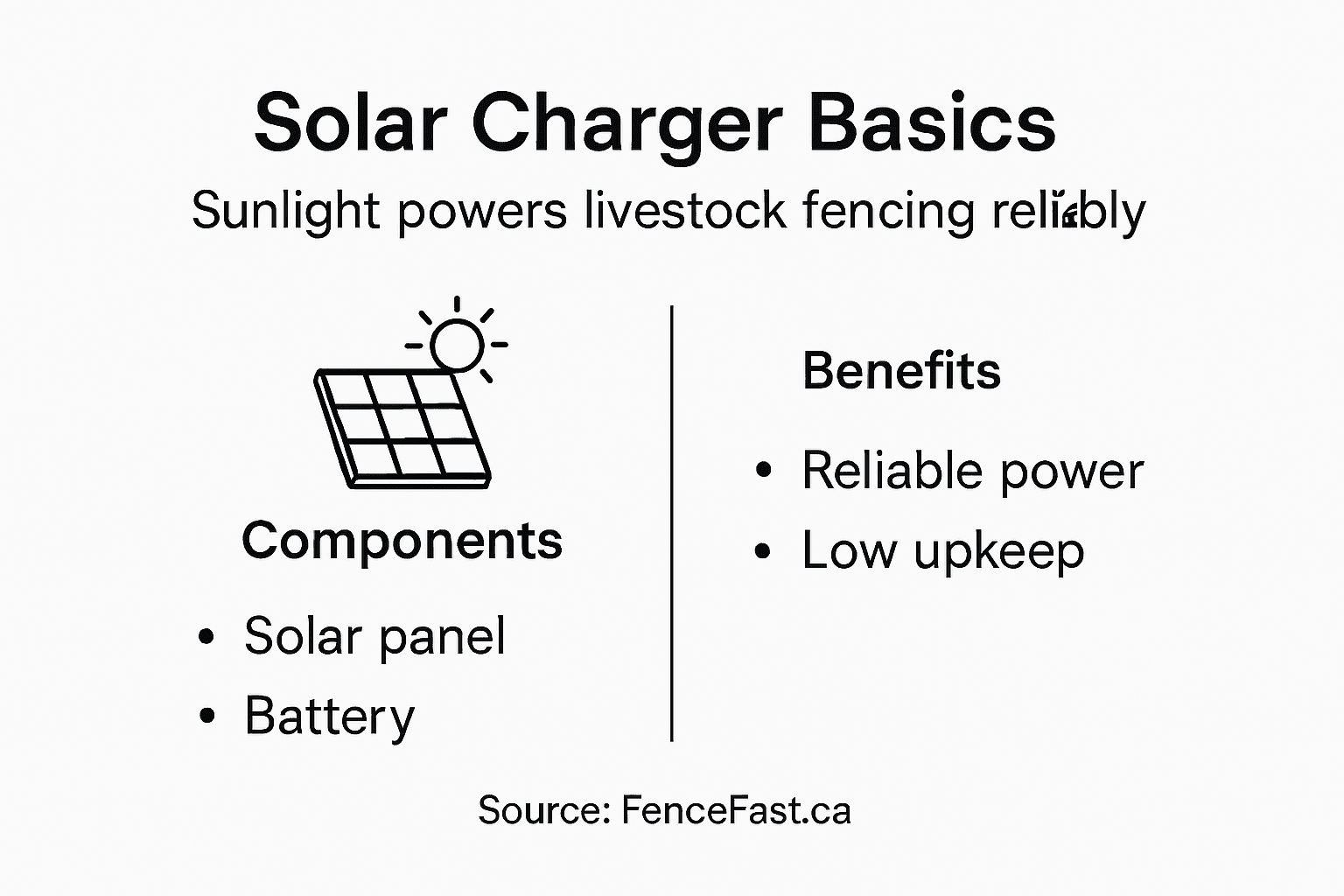
Key components of a solar panel electric fence charger include:
- Photovoltaic Panel: Captures solar energy and converts it into electrical current
- Battery Storage Unit: Stores generated electricity for nighttime and low-light conditions
- Voltage Regulator: Ensures consistent power output and prevents electrical system damage
- Fence Energizer: Transforms stored electricity into controlled electrical pulses
Understanding how these systems generate power is critical for farmers. PV cells convert sunlight directly into electricity by creating a voltage potential similar to a battery, allowing continuous fence operation without traditional electrical grid connections.
Pro tip: Position your solar panel in a location with maximum direct sunlight exposure to optimize charging efficiency and ensure consistent electric fence performance.
Key types and performance differences
Solar panel electric fence chargers come in various types, each with unique performance characteristics tailored to different agricultural environments. Solar cell technologies offer Canadian ranchers multiple options for powering their livestock management systems, with each type presenting distinct advantages and limitations.
The primary solar panel types used in electric fence chargers include:
-
Monocrystalline Panels:
- Highest efficiency rates
- Most expensive option
- Perform better in low-light conditions
- Ideal for areas with limited direct sunlight
-
Polycrystalline Panels:
- Lower cost compared to monocrystalline
- Slightly reduced efficiency
- Good performance in bright, consistent sunlight
- More budget-friendly for larger fence installations
-
Thin-Film Panels:
- Most affordable option
- Lowest efficiency rates
- More flexible and lightweight
- Best for smaller or temporary fencing setups
Photovoltaic panel technologies directly impact the electrical output and reliability of electric fence systems. The choice depends on specific ranch conditions, including sunlight exposure, budget constraints, and fence length requirements.
Here’s a comparison of the three main solar panel types for electric fence chargers:
| Panel Type | Efficiency Range | Durability | Best Use Case |
|---|---|---|---|
| Monocrystalline | 17-22% | High, long lifespan | Shaded or low-light locations |
| Polycrystalline | 13-16% | Moderate, robust build | Open, sunny fields |
| Thin-Film | 10-12% | Flexible, shorter life | Portable and small setups |
Performance varies significantly across solar panel types, with efficiency rates ranging from 10-22% depending on the specific technology used.
Pro tip: Evaluate your specific ranch environment and sunlight conditions before selecting a solar panel type to ensure optimal electric fence performance and long-term cost-effectiveness.
How solar-powered electric fencing works
Solar electric fences provide an innovative solution for livestock control, combining renewable energy technology with animal management strategies. These systems transform sunlight into a powerful deterrent mechanism that keeps livestock contained and protected without relying on traditional electrical infrastructure.
The core operational process involves several critical components working together:
- Solar Panel: Captures solar energy and converts sunlight into electrical current
- Battery Storage: Stores generated electricity for continuous operation
- Energizer/Charger: Converts stored energy into high-voltage pulses
- Fence Wire: Conducts electrical pulses to create a psychological barrier
Electric fence mechanisms operate on a simple but effective principle. When an animal touches the energized wire, an electrical circuit completes, delivering a short, sharp shock that creates a powerful psychological deterrent. This shock is designed to be uncomfortable but not harmful, teaching animals to avoid the fence boundary.
The electrical pulse typically lasts less than one-thousandth of a second, providing a quick, memorable experience for livestock without causing lasting physical damage.
The system’s design allows for consistent performance across various environmental conditions, making it particularly valuable for Canadian ranchers managing livestock in remote or challenging terrain. Solar-powered electric fences eliminate the need for complex wiring and provide a sustainable, low-maintenance solution for animal containment.
Pro tip: Regularly inspect your solar panel and clean its surface to maintain maximum energy conversion efficiency and ensure consistent fence performance.
Benefits for Canadian livestock operations
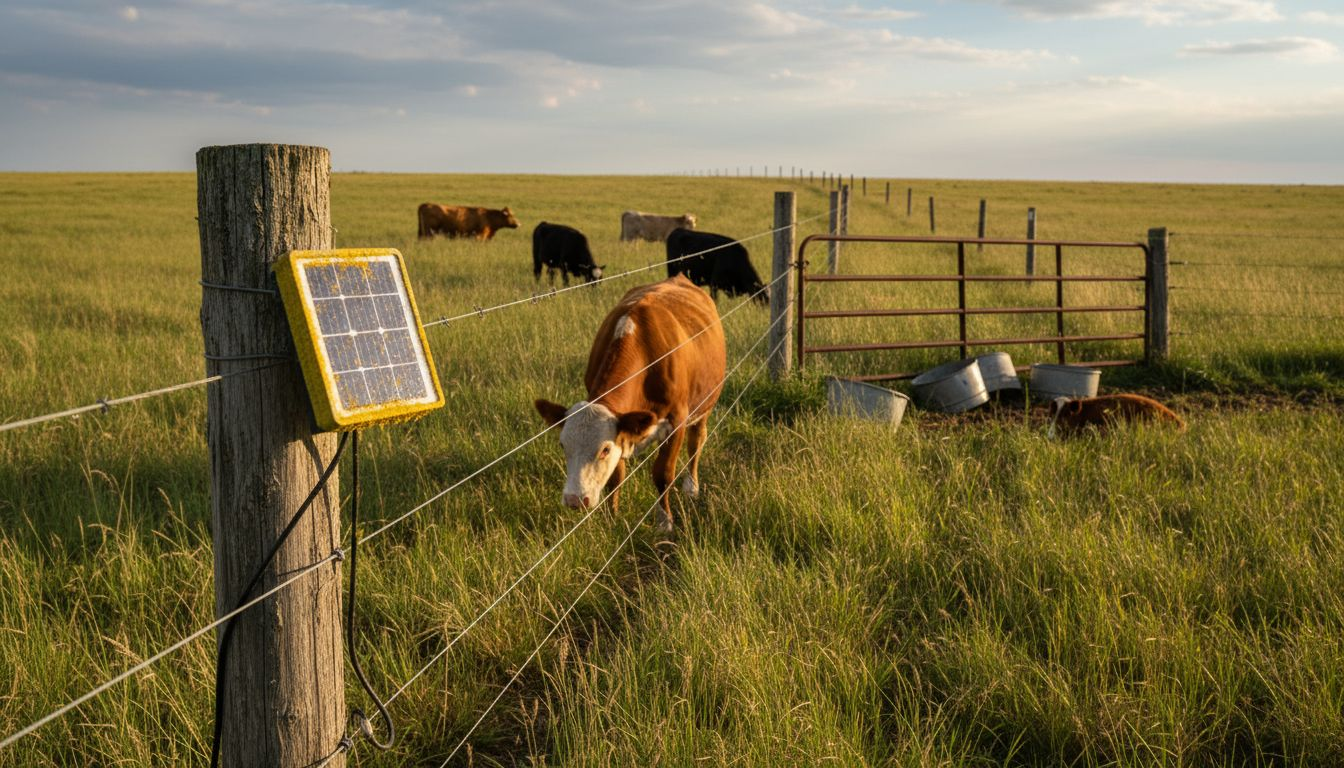
Solar-powered livestock systems represent a game-changing technology for Canadian ranchers seeking sustainable and efficient animal management solutions. These innovative systems address multiple challenges faced by agricultural operations across diverse Canadian landscapes, from the prairies to remote northern regions.
Key benefits for livestock operations include:
-
Energy Independence:
- Eliminates reliance on grid electricity
- Reduces operational costs
- Functions in remote locations without electrical infrastructure
-
Environmental Sustainability:
- Minimizes carbon footprint
- Utilizes renewable solar energy
- Supports green agricultural practices
-
Operational Efficiency:
- Low maintenance requirements
- Consistent performance in varied weather conditions
- Reduces labor-intensive fence management
-
Cost Management:
- Lower long-term operational expenses
- Minimal ongoing electricity costs
- Reduces infrastructure installation complexities
Solar-powered electric fencing provides Canadian ranchers with a reliable, adaptable solution that combines technological innovation with practical agricultural needs.
The technology is particularly valuable in regions with significant sunlight exposure, allowing ranchers to leverage abundant solar resources for consistent livestock management. By integrating renewable energy technologies, Canadian farmers can enhance their operational resilience and environmental stewardship.
Pro tip: Calculate your specific solar panel requirements based on your ranch’s fence length and local sunlight conditions to maximize system efficiency.
Installation best practices and mistakes to avoid
Electrical safety codes are crucial when installing solar-powered electric fence systems for Canadian livestock operations. Proper installation requires meticulous attention to detail and understanding of both electrical standards and agricultural best practices.
Critical installation steps include:
-
Site Preparation:
- Select a location with maximum sunlight exposure
- Clear vegetation from fence perimeter
- Ensure level ground for panel and equipment mounting
-
Grounding Requirements:
- Install multiple ground rods
- Space ground rods at least 10 feet apart
- Use copper or galvanized steel rods
- Connect rods with low-resistance wire
Common Mistakes to Avoid:
- Inadequate grounding
- Using low-quality charger components
- Neglecting routine maintenance
- Allowing vegetation to contact fence lines
- Improper panel positioning
Proper grounding is the single most critical factor in maintaining an effective electric fence system.
Most installation failures stem from poor electrical circuit design or insufficient understanding of solar panel performance characteristics. Canadian ranchers must prioritize professional-grade equipment and follow manufacturer specifications carefully to ensure reliable livestock containment.
Pro tip: Conduct a comprehensive voltage test of your solar electric fence system every six months to verify consistent performance and identify potential maintenance needs.
Cost, maintenance, and comparisons with alternatives
Solar photovoltaic system costs vary significantly depending on specific ranch requirements and environmental conditions. Canadian ranchers must carefully evaluate the long-term financial implications of solar electric fence technologies compared to traditional power solutions.
Cost Breakdown for Solar Electric Fence Systems:
The following table summarizes one-time and ongoing costs for solar electric fencing systems:
| Cost Category | Typical Range | Frequency | Budget Impact |
|---|---|---|---|
| Solar panel | $200-$600 | One-time | Most significant upfront |
| Battery replacement | $100-$300 | Every 3-5 years | Planned future expense |
| Maintenance | $20-$50/year | Annual cleaning/testing | Low but essential |
-
Initial Investment:
- Solar panel: $200-$600
- Battery unit: $100-$300
- Energizer: $150-$500
- Installation: $100-$250
-
Maintenance Expenses:
- Annual panel cleaning
- Battery replacement every 3-5 years
- Periodic voltage testing
- Component inspection
Comparison with Alternative Power Sources:
-
Grid-Powered Electric Fences:
- Higher ongoing electricity costs
- Limited installation flexibility
- Dependent on electrical infrastructure
-
Battery-Powered Systems:
- Frequent battery replacements
- Higher long-term operational expenses
- Limited operational duration
-
Solar-Powered Systems:
- Low ongoing maintenance
- Free energy generation
- Excellent for remote locations
Solar electric fence systems typically recover their initial investment within 2-3 years through reduced operational costs.
The technology offers significant advantages for Canadian ranchers, particularly in remote agricultural regions where traditional electrical infrastructure is challenging to install or maintain.
Pro tip: Calculate your specific return on investment by comparing your current fencing electricity expenses against the projected solar system costs over a five-year period.
Empower Your Livestock Control with Solar-Powered Electric Fencing Solutions
Managing livestock across remote or challenging terrain requires reliable fencing systems that deliver consistent performance without heavy dependence on grid power. The article highlights crucial challenges such as maintaining efficient solar panel placement, ensuring proper grounding, and selecting the right type of solar charger technology to maximize electric fence reliability. Many Canadian ranchers face issues with fence energizers, voltage regulation, and balancing cost against long-term durability and maintenance.
At FenceFast.ca, we understand these concerns and offer a comprehensive range of electric fencing systems, including advanced solar panel chargers and all necessary accessories. Our expert solutions feature high-quality photovoltaic panels and energizers designed for maximum efficiency in low-light Canadian conditions. We provide tools and components that help you avoid common installation mistakes highlighted in the article, such as improper grounding and inadequate system testing.

Take control of your livestock management today by exploring our expertly curated solar-powered fencing options to ensure energy independence and operational efficiency for your ranch. Visit FenceFast.ca now to access trusted products, design consulting services, and nationwide shipping that support your farm’s unique needs. Don’t wait to secure a sustainable future—equip your electric fence system with proven, top-tier solar technology designed specifically for Canadian agricultural environments.
Frequently Asked Questions
What are solar panel electric fence chargers?
Solar panel electric fence chargers are innovative systems that use photovoltaic cells to convert sunlight into electrical energy for powering electric fences. They enable reliable livestock management in remote areas without needing traditional electrical infrastructure.
How do solar electric fences work?
Solar electric fences function by capturing solar energy with panels, which then charge a battery storage unit. This stored energy is converted into high-voltage pulses by an energizer, creating an electric barrier that deters livestock without causing harm.
What are the different types of solar panels used in electric fence chargers?
The primary types of solar panels used in electric fence chargers are monocrystalline, polycrystalline, and thin-film panels. Monocrystalline panels offer the highest efficiency, while polycrystalline are more cost-effective, and thin-film panels are the most affordable but have the lowest efficiency.
What maintenance do solar electric fence chargers require?
Maintenance for solar electric fence chargers includes regular cleaning of the solar panel surface, periodic voltage testing of the system, checking connections and components, and replacing batteries every 3-5 years to ensure continuous operational efficiency.

