

Managing grazing on rural Canadian properties comes with daily decisions about safety and space that impact both horses and the land. Flexible portable fencing provides a lightweight, adaptable solution where permanent barriers often fall short. For ranchers and horse owners seeking confident livestock control, a portable horse fence brings the power to redefine pasture boundaries, minimize risk, and respond quickly to changing needs without heavy infrastructure.
Table of Contents
- Portable Horse Fence: What It Is And Isn’t
- Types Of Portable Horse Fencing Systems
- Essential Features And Setup Strategies
- Real-World Uses For Flexible Containment
- Risks, Legal Concerns, And Common Mistakes
- Cost Comparisons And Alternative Solutions
Key Takeaways
| Point | Details |
|---|---|
| Portable Horse Fences Offer Flexibility | These fences enable dynamic grazing management and quick relocation, setting them apart from traditional permanent fencing solutions. |
| Variety of Systems Available | Options such as Electric Tape, Net Wire, and Virtual Fencing cater to different terrains and livestock needs. |
| Consider Legal and Safety Factors | Ranchers must be aware of local regulations and ensure proper installation to avoid legal issues and safety hazards. |
| Cost-Effectiveness is Key | When choosing fencing, evaluate both short-term costs and long-term management expenses for a sound investment. |
Portable horse fence: what it is and isn’t
A portable horse fence represents a flexible, lightweight alternative to traditional permanent fencing systems designed to provide dynamic grazing management and animal containment. Unlike rigid permanent installations, these temporary solutions offer ranchers and horse owners unprecedented control over livestock movement and land use.
Portable horse fences typically include several key characteristics:
- Lightweight materials like synthetic rope, electric tape, or flexible wire
- Easy setup and breakdown capabilities
- Minimal ground disturbance during installation
- Adaptable to various terrain and pasture configurations
- Quick relocation without significant infrastructure investment
These fencing systems fundamentally differ from permanent installations by enabling dynamic land management through flexible boundary creation. Traditional permanent fences create static barriers, whereas portable options allow ranchers to quickly adjust grazing zones, protect specific areas, or create temporary containment spaces.
Crucial distinctions between portable and permanent horse fencing include installation complexity, cost, and long-term durability. Permanent fences require substantial upfront investment, concrete posts, and complex ground preparation. In contrast, portable fences can be deployed rapidly with minimal equipment and moved as pasture conditions or livestock management needs change.
Important considerations for portable horse fence selection involve understanding your specific land management requirements, horse behavior, and environmental constraints. Not all portable fencing solutions work identically - some use electric components, while others rely on mechanical tension and lightweight materials.
Portable horse fences are not permanent solutions but strategic management tools for flexible livestock control.
Pro tip: Always test portable fence sections in a controlled environment before full deployment to ensure your horses understand and respect the new boundaries.
Types of portable horse fencing systems
Portable horse fencing systems come in several sophisticated designs, each tailored to meet specific management needs and terrain challenges. Diverse fencing technologies have emerged to provide ranchers and horse owners flexible solutions for animal containment and grazing control.
The primary types of portable horse fencing include:
- Electric Tape Fencing: Lightweight, highly visible synthetic material with integrated electric conductors
- Net Wire Fencing: Flexible mesh design with vertical and horizontal wire supports
- Panel Fencing: Rigid modular sections that can be quickly assembled and relocated
- Virtual Fencing: GPS-enabled technology using electronic collars to create invisible boundaries
- Temporary Electric Rope Fencing: Durable synthetic cordage with electrical conductivity
Each fencing system offers unique advantages depending on specific ranch requirements. Electric options provide dynamic boundary control with minimal infrastructure investment, while panel systems offer robust physical containment for more challenging environments.
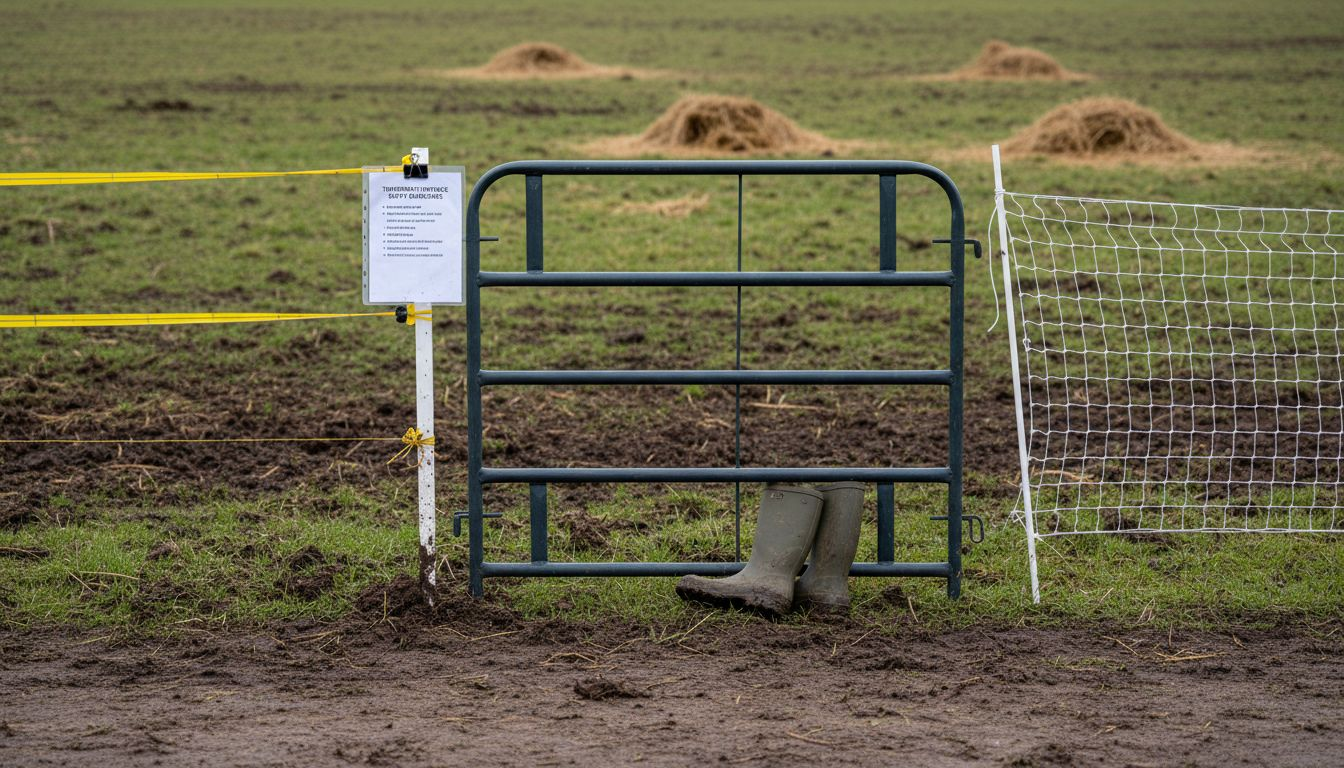
Key factors influencing portable fence selection include terrain complexity, horse behavior, budget constraints, and management objectives. Some systems work better on flat pastures, while others excel in rugged or uneven landscapes. Understanding these nuanced differences helps ranchers make informed decisions about their livestock management strategies.
Here’s how major portable horse fence types differ for practical use:
| System Type | Best-Use Scenario | Main Strength | Notable Limitation |
|---|---|---|---|
| Electric Tape | Temporary grazing boundaries | High visibility | Can be affected by vegetation |
| Panel | Short-term confinement | Strong physical barrier | Bulky for solo transport |
| Virtual | Tech-enabled management | Zero physical barrier | Requires collar training |
| Rope Electric | Easy pasture rotation | Quick to move | Less visible for some horses |
| Net Wire | Herd control on mixed terrain | Versatile layout options | Susceptible to tangling |
Portable horse fencing is not just about containment, but creating adaptive and responsive management solutions.
Pro tip: Consult with local agricultural experts to determine the most suitable portable fencing system for your specific regional conditions and horse breed.
Essential features and setup strategies
Successful portable horse fencing requires careful planning and strategic implementation of advanced setup techniques. The most effective systems combine technological innovation with practical horse management principles to ensure safe and reliable containment.
Key essential features for portable horse fencing include:
- Visibility: High-contrast colors and materials that horses can easily recognize
- Flexibility: Ability to quickly reconfigure fence lines and boundaries
- Safety Mechanisms: Breakaway sections and smooth connections to prevent injury
- Power Options: Battery or solar-powered energizers for consistent performance
- Durability: Weather-resistant materials that withstand harsh environmental conditions
Setup strategies demand meticulous attention to terrain, horse behavior, and specific management goals. Ranchers must consider ground conditions, potential obstacles, and the specific movement patterns of their herd when designing portable fence layouts.
Electric fence systems require additional specialized setup considerations. Proper grounding, consistent voltage levels, and strategic wire placement are critical for creating an effective psychological and physical barrier. Horses need gradual training to understand and respect electric boundaries, which involves controlled exposure and positive reinforcement techniques.
Effective portable fencing is more than a physical barrier - it’s a dynamic management tool that adapts to your specific agricultural needs.
Pro tip: Conduct a comprehensive property survey and test fence sections in small increments before full deployment to ensure optimal horse safety and system performance.
Real-world uses for flexible containment
Portable horse fencing solutions have revolutionized livestock management by offering unprecedented flexibility across diverse agricultural environments. Dynamic grazing control strategies enable ranchers to optimize land use and animal welfare with minimal infrastructure investment.
Practical applications for flexible horse containment include:
- Rotational Grazing Management: Quickly reconfigure pasture zones to prevent overgrazing
- Ecological Restoration: Protect sensitive habitat areas and control livestock movement
- Riparian Zone Protection: Create temporary boundaries near water sources to minimize environmental impact
- Small Acreage Farming: Efficiently manage limited land resources
- Training and Quarantine Spaces: Develop secure areas for horse rehabilitation or introduction to new herds
Beyond traditional agricultural settings, portable fencing provides critical solutions for specialized scenarios. Equine rehabilitation centers use modular fencing to create controlled recovery environments, while research facilities leverage these systems to study horse behavior and movement patterns without permanent infrastructure.
Adaptive management remains the core strength of portable horse fencing. Conservation-focused ranching practices demonstrate how these flexible containment solutions can simultaneously address agricultural productivity and environmental stewardship goals.
Flexible fencing is not just about containment - it’s about creating intelligent, responsive agricultural ecosystems.
Pro tip: Regularly assess and rotate your portable fencing layout to maintain pasture health and optimize grazing patterns.
Risks, legal concerns, and common mistakes
Portable horse fencing involves complex legal and safety considerations that ranchers must carefully navigate. Agricultural fencing regulations vary dramatically across different jurisdictions, making thorough research essential before implementation.
Key risks and potential legal complications include:
- Property Boundary Disputes: Incorrect fence placement leading to neighbor conflicts
- Animal Safety Hazards: Improper wire spacing or material selection causing potential injury
- Liability Exposure: Inadequate fence maintenance creating risk of animal escape
- Regulatory Non-Compliance: Failing to meet local fencing height and material standards
- Wildlife Interference: Fence designs that unintentionally trap or harm local wildlife
Common mistakes in portable horse fencing often stem from inadequate planning and insufficient understanding of local regulations. Fencing legal frameworks require ranchers to understand nuanced differences between ‘open range’ and ‘fence-in’ requirements that can significantly impact liability and fence management strategies.
Electric fencing systems introduce additional complexity, demanding precise training protocols and consistent maintenance. Horses must be systematically introduced to electric boundaries, using gradual exposure techniques that minimize stress and maximize understanding.
Legal compliance in portable fencing is not just about following rules, but protecting your livestock, property, and relationships with neighboring landowners.
Pro tip: Consult with local agricultural extension offices and review county-specific fencing regulations before installing any portable horse fence system.
Cost comparisons and alternative solutions
Understanding the financial landscape of portable horse fencing requires careful analysis of both immediate and long-term investment strategies. Portable fencing cost considerations reveal complex trade-offs between upfront expenses and ongoing maintenance requirements.
Cost comparison across different fencing solutions includes:
-
Traditional Electric Fencing:
- Lower initial investment
- Higher recurring maintenance costs
- Moderate durability
-
Virtual Fencing:
- Significant upfront technology expenses
- Lower long-term labor and material costs
- High technological complexity
-
Permanent Wood/Wire Fencing:
- Substantial initial installation costs
- Minimal ongoing maintenance
- Highest durability
-
Temporary Panel Fencing:
- Moderate initial investment
- Easy relocation
- Limited long-term use
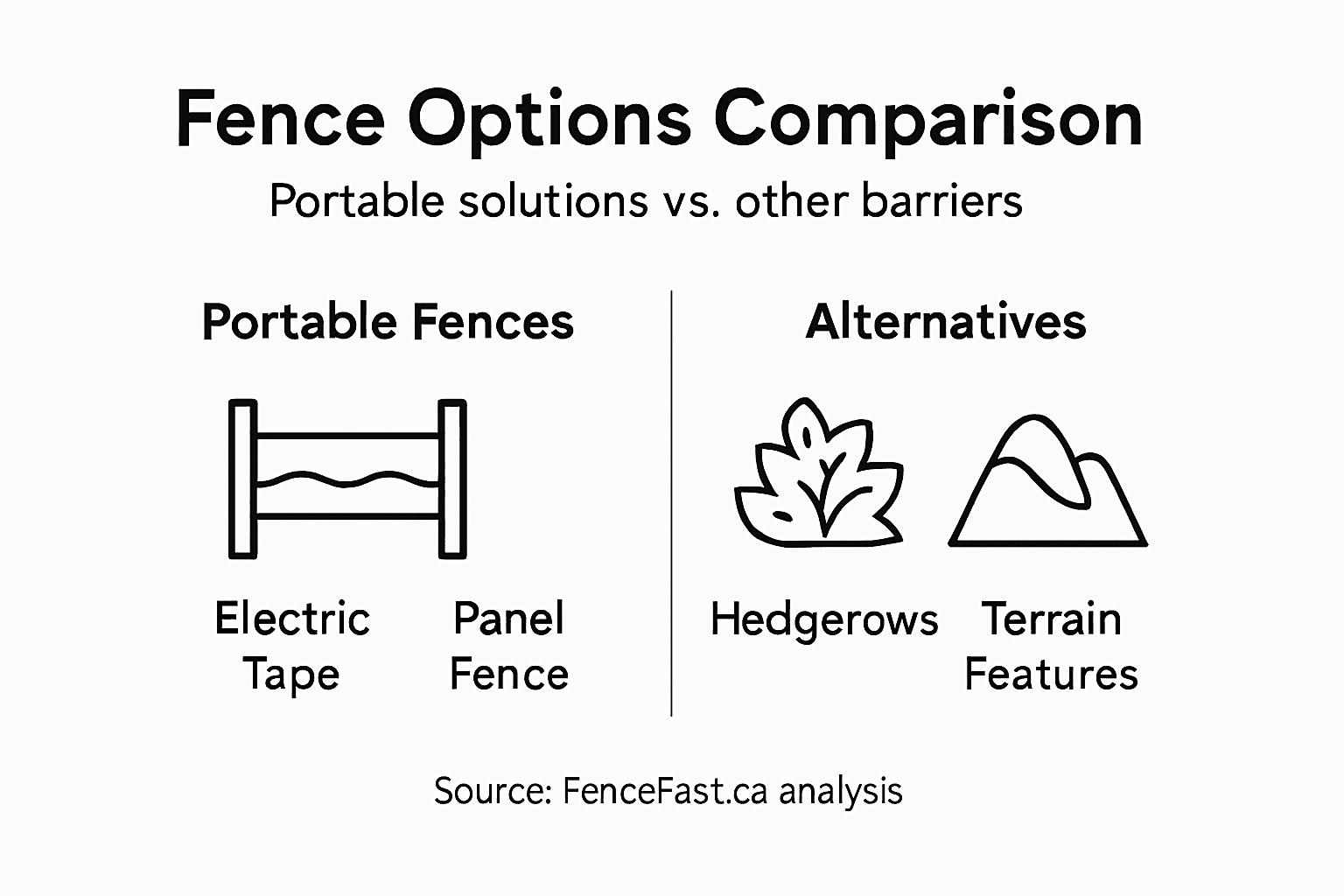
Fencing alternatives extend beyond traditional systems, including natural barriers like hedgerows, terrain features, and strategic land management techniques that can reduce direct fencing expenses.
Technological advancements are progressively making portable fencing more cost-effective. GPS-enabled virtual fencing systems, while expensive initially, offer unprecedented flexibility and potentially lower long-term management costs by reducing manual labor and enabling more precise grazing control.
Below is a summary of cost drivers and value factors for portable horse fencing systems:
| Factor | Cost Impact | Value Benefit |
|---|---|---|
| Material Quality | Higher up-front cost | Increases longevity and safety |
| Design Complexity | Raises installation time | Allows for flexible configurations |
| Technology Integrated | Increases initial expense | Enables remote management |
| Maintenance Needs | Adds recurring costs | Improves long-term reliability |
| Mobility | Reduces long-term expense | Enables frequent pasture changes |
Cost-effective fencing is not about the lowest price, but the most intelligent long-term investment in your agricultural infrastructure.
Pro tip: Calculate total ownership costs over a 5-10 year period, not just initial installation expenses, when selecting your horse fencing solution.
Enhance Your Grazing Control with Portable Horse Fence Solutions from FenceFast.ca
Managing livestock movement with flexibility and safety is a challenge every horse owner faces. The article highlights the importance of portable horse fences for dynamic grazing management, addressing pain points such as easy relocation, high visibility, and protecting sensitive areas without permanent infrastructure. If you want to create adaptive, safe boundaries while avoiding costly and time-consuming permanent fencing installation, FenceFast.ca offers a wide range of lightweight electric fencing systems, accessories, and components designed specifically for your needs.

Take advantage of expert fencing supplies, including energizers, connectors, and solar-powered options to ensure your horses respect boundaries while keeping them safe. Explore our comprehensive product selection and discover practical tools that empower you to implement effective rotational grazing or temporary containment. Visit FenceFast.ca now to start designing your ideal portable horse fencing setup and benefit from nationwide shipping and design consulting tailored to Canadian ranching demands.
Frequently Asked Questions
What is a portable horse fence?
A portable horse fence is a flexible and lightweight fencing solution designed for dynamic grazing management and animal containment, allowing ranchers and horse owners to easily adjust grazing zones and protect specific areas.
How does a portable horse fence differ from a permanent fence?
Unlike permanent fences, which create static barriers, portable horse fences allow for quick reconfiguration to adapt to changing pasture conditions or livestock management needs, often requiring minimal setup and investment.
What are the main types of portable horse fencing systems?
The main types include electric tape fencing, net wire fencing, panel fencing, virtual fencing, and temporary electric rope fencing, each offering unique advantages depending on specific management needs and terrain conditions.
What essential features should I look for when setting up a portable horse fence?
Key features include visibility, flexibility for easy reconfiguration, safety mechanisms to prevent injury, power options like battery or solar energizers, and durability against harsh weather conditions.

