

Electric fence energizer failures are more common than many Canadian farmers realize, with over 30 percent of livestock escapes traced back to issues that could have been fixed early. When your American-built system stops delivering consistent pulses, animal safety and farm productivity are immediately at risk. Understanding where malfunctions begin and what steps to take can help you regain control quickly, minimize stress, and keep your investment secure.
Table of Contents
- Step 1: Gather Essential Tools And Inspect Connections
- Step 2: Test Power Supply And Verify Voltage Output
- Step 3: Identify And Resolve Grounding Issues
- Step 4: Examine Fence Line And Clear Faults
- Step 5: Verify Energizer Performance And Safety
Quick Summary
| Key Point | Explanation |
|---|---|
| 1. Assemble essential tools | Gather wire cutters, voltage testers, insulated gloves, and other necessary equipment before beginning installation. |
| 2. Test voltage output | Verify the energizer’s voltage at the fence terminals, ensuring it meets livestock needs between 4000 to 5000 volts. |
| 3. Check grounding system | Ensure proper grounding with minimal resistance under 500 ohms for optimal performance and safety. |
| 4. Inspect fence line regularly | Conduct thorough inspections to detect issues like wire breaks or vegetation contact that impede functionality. |
| 5. Keep a repair kit handy | Carry tools and spare parts during inspections to address issues immediately, preventing prolonged fence downtime. |
Step 1: Gather Essential Tools and Inspect Connections
Setting up a reliable electric fence energizer starts with careful tool preparation and thorough connection inspection. You will need to systematically collect the right equipment and examine every component for potential issues before powering up your system.
Begin by assembling a comprehensive toolkit that includes wire cutters, voltage testers, insulated gloves, multimeter, electrical tape, and wire connectors. Inspect all wiring and electrical components carefully before installation to prevent potential failures. Check each connector for signs of corrosion wear fraying or damage. Test electrical continuity using your multimeter ensuring clean solid connections that can handle the electrical load of your fence system. Pay special attention to ground rod connections transformer interfaces and any splice points where wires meet.
Ensure you have backup components like spare connectors wire sections and electrical tape in case quick repairs become necessary during installation. Proper preparation minimizes potential downtime and helps maintain a consistent electrical barrier for your livestock.
Pro Tip: Always keep a digital voltage meter in your toolkit to quickly diagnose energizer performance and identify potential electrical system weaknesses before they become critical problems.
Step 2: Test Power Supply and Verify Voltage Output
Verifying your electric fence energizer’s power supply and voltage output is a critical step in ensuring a reliable and effective livestock containment system. This process will help you confirm that your energizer generates the correct electrical pulse to maintain your fence’s integrity.
Testing the pulse voltage and frequency requires a systematic approach. Start by connecting your voltage meter directly to the fence terminals and switch on the energizer. Look for consistent pulse rates typically between 1 and 3 pulses per second. Most agricultural electric fences operate at 4000 to 5000 volts under no load conditions. Check the meter reading carefully ensuring the voltage falls within the recommended range for your specific livestock type and fence length. If the voltage is too low adjust the energizer settings or inspect for potential circuit interruptions.
Evaluate your power source stability whether its battery solar or plug in electrical connection. Weak or inconsistent power can lead to unreliable fence performance and potential animal escape risks. A steady voltage output means your fence will provide a consistent deterrent barrier.
Compare electric fence power sources and their key considerations:
| Power Source | Main Advantage | Major Limitation |
|---|---|---|
| Battery | Portable, easy setup | Needs regular charging |
| Solar | Sustainable energy | Dependent on sunlight |
| Plug-in | Consistent power | Requires nearby outlet |
Pro Tip: Conduct voltage tests at different times of day and under various weather conditions to ensure your electric fence energizer maintains consistent performance.
Step 3: Identify and Resolve Grounding Issues
Proper grounding is the cornerstone of an effective electric fence system ensuring consistent electrical performance and preventing unexpected livestock containment failures. Understanding and resolving grounding issues will help you maintain a reliable barrier that keeps your animals safely contained.

Grounding methods for electric fences require careful attention to detail. Begin by checking your ground rod installation typically requiring three to eight feet of galvanized rod driven deep into moist soil. Measure the ground system resistance using a ground resistance tester ideally aiming for readings under 500 ohms. Poor ground connections can dramatically reduce fence effectiveness making the electrical pulse weak and unreliable. Inspect each ground rod connection for corrosion or damage ensuring tight electrical connections that allow proper current flow. Multiple ground rods spaced at least 10 feet apart can improve overall system performance especially in dry or rocky terrain.
Remember that environmental conditions like soil moisture and composition significantly impact ground system effectiveness. During dry periods you might need to water the ground around your ground rods or add additional rods to maintain optimal electrical conductivity. Regular testing and maintenance of your grounding system will help prevent intermittent fence failures and ensure consistent protection for your livestock.
Pro Tip: Install a separate ground rod for your electric fence system to prevent interference from other electrical grounding circuits and ensure maximum performance.
Step 4: Examine Fence Line and Clear Faults
Inspecting your electric fence line thoroughly is crucial for maintaining a consistent and reliable livestock barrier. This step involves systematically identifying and resolving potential electrical interruptions that could compromise your fence’s effectiveness.
Understanding electrical fault types helps you diagnose and resolve fence line issues more efficiently. Walk the entire fence perimeter methodically checking for vegetation contact broken wires loose insulators or damaged posts. Use a digital voltage tester to identify specific areas where electrical continuity drops. Look for signs of physical damage such as broken wire strands bent posts or cracked insulators. Vegetation growth can create temporary shorts so trim grass weeds and branches that might touch the fence wire. Pay special attention to areas where wildlife or livestock might have damaged the fence structure.
Environmental factors like moisture wind and animal activity can introduce unexpected faults in your electric fence system. During your inspection create a detailed map or note specific locations of potential weakness allowing you to prioritize repairs and track recurring issues. Regular comprehensive fence line examinations will help prevent unexpected livestock escapes and maintain the integrity of your containment system.
Here’s a summary of common electric fence faults and possible causes:
| Fault Type | Likely Cause | Typical Solution |
|---|---|---|
| Low voltage output | Poor grounding | Add ground rods, moisten soil |
| Intermittent pulses | Loose connections | Tighten wires, replace parts |
| No pulse detected | Power supply failure | Check battery or mains source |
| Frequent shorts | Vegetation contact | Clear grass and branches |
Pro Tip: Carry a repair kit with wire cutters splice connectors electrical tape and spare insulators during your fence line inspection to address minor issues immediately.
Step 5: Verify Energizer Performance and Safety
Verifying your electric fence energizer’s performance is critical to ensuring reliable livestock containment and preventing potential system failures. This process involves comprehensive testing of the energizer’s electrical output and safety parameters to maintain optimal fence functionality.
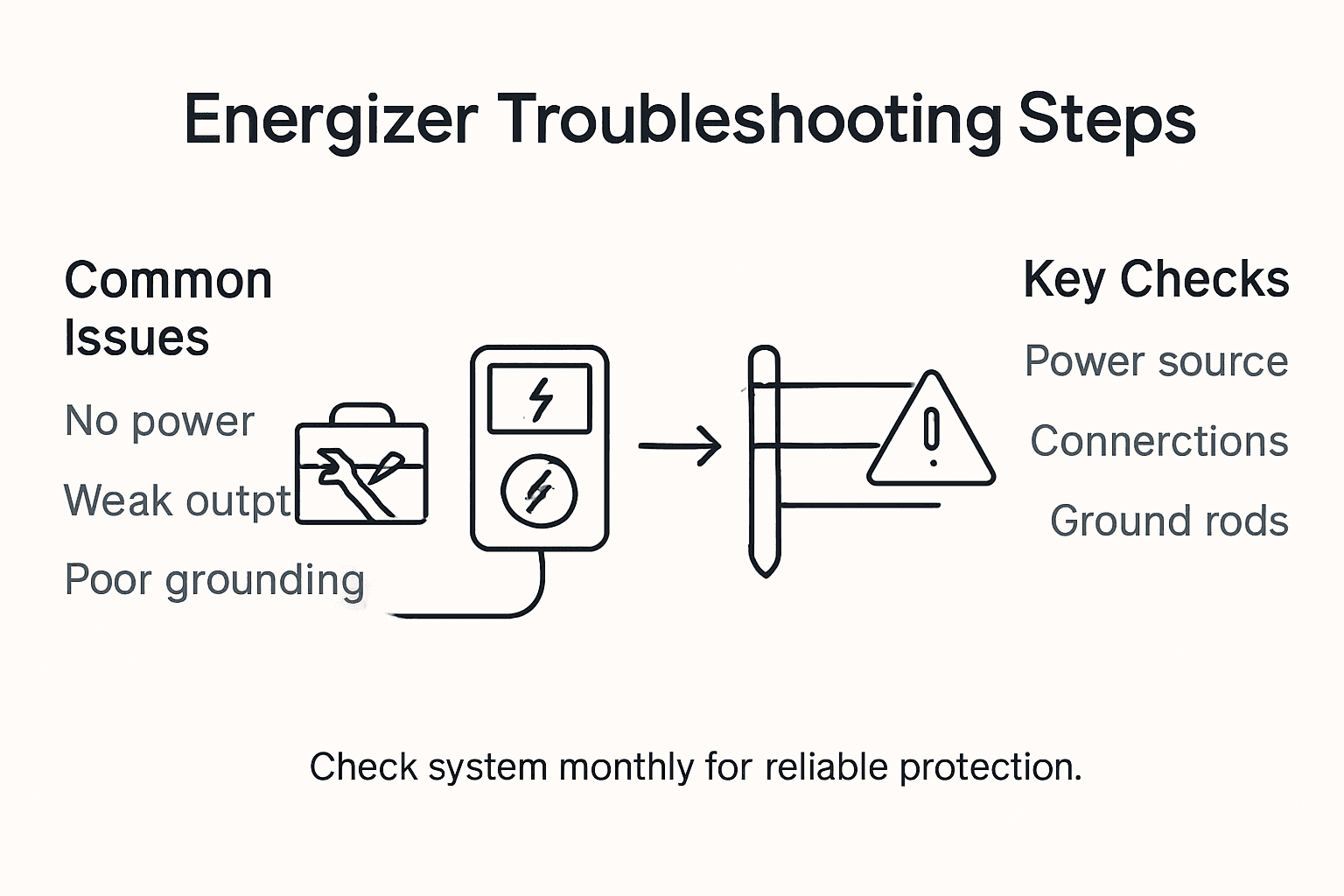
Electric fence energizer specifications require systematic evaluation of pulse characteristics and voltage output. Use a digital voltmeter to measure the fence line voltage ensure it consistently falls within the recommended 4000 to 5000 volt range. Check the pulse rate typically between 1 to 3 pulses per second which creates an effective deterrent for livestock. Listen for the characteristic clicking sound indicating consistent electrical discharge and observe the energizer’s indicator lights. Verify that the ground system connections remain solid and that no significant voltage drop occurs across different sections of the fence line.
Regular performance testing helps identify potential issues before they compromise your fence’s effectiveness. Document your measurements and create a maintenance log tracking voltage readings ground resistance and any observed irregularities. This proactive approach allows you to anticipate and prevent potential failures that could result in livestock escapes or system breakdowns.
Pro Tip: Conduct energizer performance tests during different weather conditions to ensure consistent electrical output and identify any environmental vulnerabilities in your fence system.
Ensure Your Electric Fence Energizer Works Flawlessly With FenceFast.ca
Struggling with unreliable electric fence energizer performance can put your livestock at risk and disrupt your farming operations. Issues like poor grounding, inconsistent voltage output, or hidden fence line faults need quick and effective solutions. At FenceFast.ca, we understand these challenges and offer a full range of specialized electric fencing systems, power supplies, connectors, and repair accessories designed to keep your fence energized and your animals safe.

Explore our selection of electric fencing products and expert resources to solve energizer problems today. Benefit from nationwide shipping, personalized design consulting, and easy online ordering at FenceFast.ca. Dont wait for fence failures to happen. Take action now to protect your investment and livestock with reliable, high-quality fencing solutions from FenceFast.ca.
Frequently Asked Questions
How do I test the voltage output of my electric fence energizer?
To test the voltage output of your electric fence energizer, connect a digital voltmeter to the fence terminals while the energizer is on. Ensure the voltage reads between 4000 and 5000 volts under no load conditions to confirm your system is functioning properly.
What should I check if my electric fence is not working properly?
If your electric fence is not working properly, start by inspecting the entire fence line for any broken wires, loose insulators, or vegetation contact. Clear any obstacles and tighten connections to ensure a reliable electrical flow and prevent interruptions.
How can I improve grounding for my electric fence system?
To improve grounding, make sure your ground rods are at least three to eight feet deep in moist soil and check for corrosion at all connections. Aim for a ground resistance reading below 500 ohms; consider installing additional ground rods spaced at least 10 feet apart if needed to enhance performance.
What maintenance steps should I take for my electric fence energizer?
Perform regular maintenance by checking the voltage output, pulse rate, and ground system connections of your energizer. Create a maintenance log to track your measurements and inspections, updating it every 30 days to catch potential issues early.
How often should I inspect my electric fence line for faults?
Inspect your electric fence line at least once a month to catch any faults or vegetation issues that could impact performance. This routine check will help you maintain a consistent electrical barrier and avoid unexpected livestock escapes.
What can I do if my electric fence energizer shows inconsistent performance?
If your electric fence energizer shows inconsistent performance, first check the power supply and ensure all connections are tight. Test the voltage output and make any necessary adjustments or repairs to maintain a consistent electrical pulse, addressing any identified issues promptly.

