

Protecting livestock from harm is a daily challenge for Canadian farmers. With wolves and other American predators threatening herds, fencing has never been more critical. Yet the costs keep rising and budgets are stretched thin. Over 50 percent of Canadian agricultural operations report needing financial aid to update basic fencing. This guide reveals practical grant options that help farmers secure funding and improve both animal safety and farm productivity.
Table of Contents
- What Are Farm Fencing Grants?
- Types Of Fencing Grant Programs
- Eligibility Criteria For Canadian Farmers
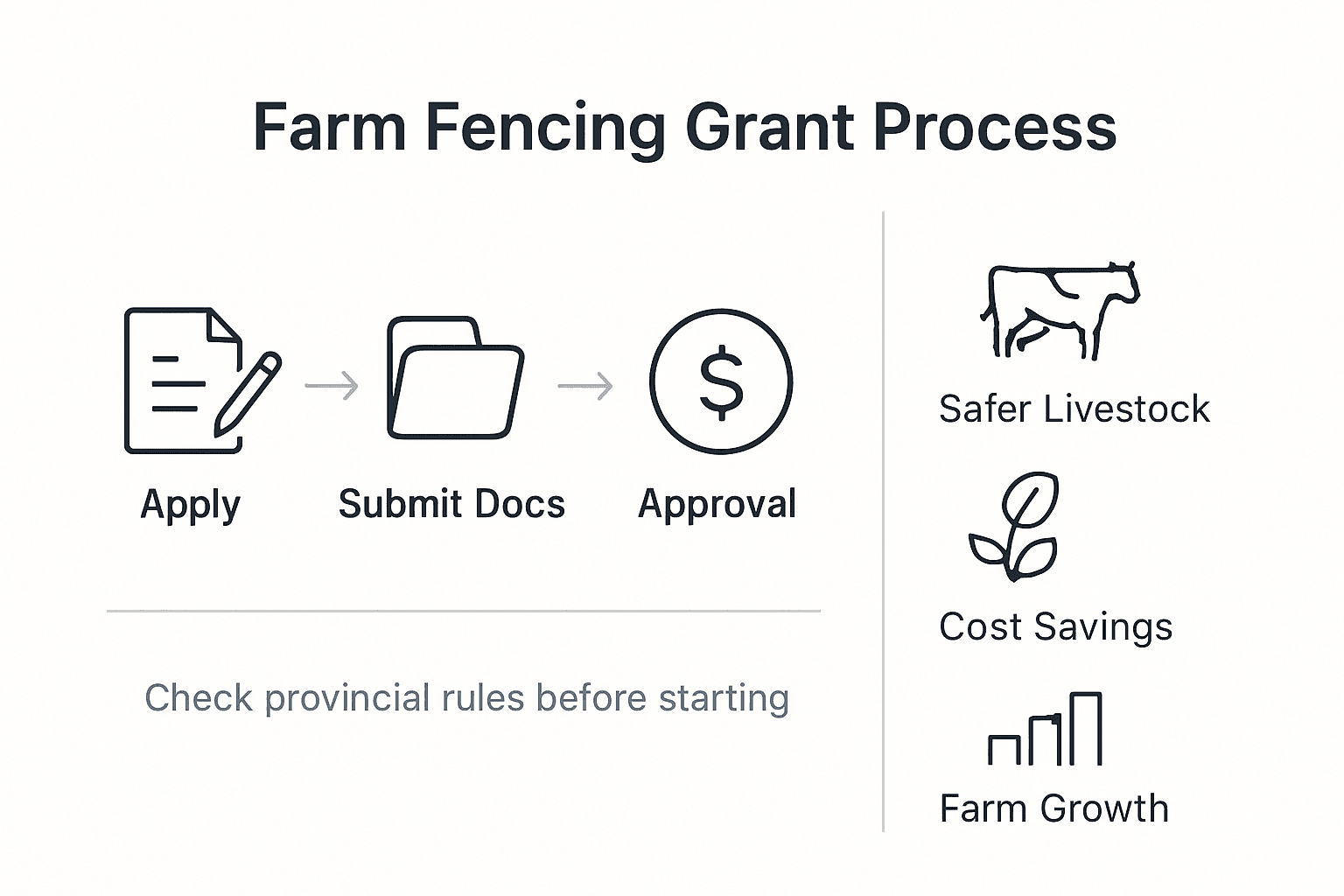
- Application Process And Required Documentation
- Eligible Costs And Funding Restrictions
- Common Pitfalls To Avoid When Applying
Key Takeaways
| Point | Details |
|---|---|
| Farm Fencing Grants Support Agricultural Infrastructure | These grants aid Canadian farmers in funding the installation, upgrading, or maintenance of fencing to protect livestock and investments. |
| Eligibility Criteria Varies by Province | Farmers must review specific provincial requirements, including farm registration and livestock management, to qualify for funding. |
| Comprehensive Documentation is Essential | A thorough project proposal and accurate budget breakdown are critical to successfully navigate the grant application process. |
| Common Pitfalls Can Undermine Applications | Applicants should avoid incomplete submissions and vague descriptions, as these can lead to rejection of funding requests. |
What Are Farm Fencing Grants?
Farm fencing grants represent strategic financial resources designed to support Canadian farmers in protecting their livestock and agricultural investments. These specialized funding programs provide critical monetary assistance to help farmers install, upgrade, or maintain essential fencing infrastructure. By understanding these grants, farmers can secure support for projects that enhance animal management and property protection.
The core purpose of farm fencing grants is multifaceted. They are specifically targeted at addressing critical agricultural infrastructure needs by offering financial relief for expenses related to fencing materials, installation, and maintenance. These grants recognize that robust fencing is not just a physical barrier but a fundamental component of responsible farm management - protecting livestock from predators, preventing animal wandering, and maintaining clear property boundaries.
Farm fencing grants typically cover various aspects of fencing projects, including:
- Purchasing fencing materials like wire, posts, and connectors
- Installing new boundary and pasture division fences
- Upgrading existing fencing systems to meet modern agricultural standards
- Implementing specialized livestock containment solutions
- Supporting ecological fencing that minimizes environmental impact
Most grants are administered through provincial agricultural departments or rural development agencies, with eligibility often tied to factors like farm size, livestock type, and regional agricultural priorities. Farmers must typically submit detailed project proposals demonstrating how their fencing initiative will improve farm operations, animal welfare, and overall agricultural productivity.
Pro tip: Before applying for farm fencing grants, thoroughly document your current fencing infrastructure and prepare a comprehensive project plan that clearly articulates the specific improvements and potential benefits.
Types of Fencing Grant Programs
Fencing grant programs across Canada offer diverse support mechanisms designed to help farmers and agricultural producers enhance their livestock management infrastructure. These programs recognize the critical role that effective fencing plays in agricultural productivity, animal welfare, and property management.
Different provinces and territories provide specialized grant opportunities tailored to specific agricultural needs. Fencing grant programs vary widely in their approach and coverage, with some focusing on specific agricultural sectors or environmental conservation objectives. Farmers can typically find support through several primary categories of fencing grants:
- Livestock Protection Grants: Designed to help farmers install or upgrade fencing that prevents predator attacks and animal wandering
- Conservation Fencing Grants: Supporting projects that protect sensitive ecological areas and wildlife corridors
- Boundary Demarcation Grants: Assisting farmers in establishing clear property lines and managing land boundaries
- Infrastructure Improvement Grants: Funding comprehensive fencing upgrades that enhance overall farm management
- Specialized Livestock Management Grants: Supporting fencing solutions for specific animal types like cattle, sheep, or horses
Each grant program typically requires farmers to submit detailed project proposals demonstrating the practical benefits of their proposed fencing initiative. Eligibility often depends on factors such as farm size, agricultural sector, geographic location, and the specific goals of the fencing project. Provincial agricultural departments and rural development agencies play a crucial role in administering these grant programs, ensuring that funding supports meaningful agricultural improvements.

Here’s a concise summary of key fencing grant program types and their unique benefits:
| Grant Program Type | Primary Benefit | Typical Focus Area |
|---|---|---|
| Livestock Protection Grants | Reduces livestock loss from predators | Pasture and boundary fencing |
| Conservation Fencing Grants | Preserves natural habitats | Sensitive ecological zones |
| Boundary Demarcation Grants | Clarifies property ownership | Land boundary management |
| Infrastructure Improvement Grants | Boosts overall farm productivity | Upgrading outdated fencing |
| Specialized Livestock Management Grants | Tailors fencing for animal needs | Cattle, sheep, or horse operations |
Pro tip: Contact your local agricultural extension office to get the most up-to-date information on specific fencing grant opportunities available in your region.
Eligibility Criteria for Canadian Farmers
Farm fencing grants across Canadian provinces have specific eligibility requirements designed to support agricultural producers who are committed to improving their livestock management and property infrastructure. Understanding these criteria is crucial for farmers seeking financial assistance for their fencing projects.
The primary eligibility factors typically include comprehensive farm management documentation that demonstrates the agricultural significance of the proposed fencing project. Farmers must generally meet several key prerequisites:
- Farm Registration: Possess a valid farm registration number in the respective province
- Land Ownership: Own or have long-term leasehold rights to the agricultural property
- Agricultural Income: Demonstrate a minimum annual agricultural income threshold
- Farm Size: Meet specific acreage requirements that vary by provincial guidelines
- Livestock Management: Maintain a minimum number of livestock or agricultural production units
Each province in Canada has nuanced eligibility requirements that reflect local agricultural priorities. For instance, British Columbia might have different criteria compared to Ontario, with variations in farm size requirements, livestock categories, and specific environmental considerations. Farmers must carefully review provincial agricultural department guidelines to understand the exact qualifications for their specific region.
The application process typically requires comprehensive documentation, including farm business plans, detailed project proposals, land surveys, livestock inventories, and financial statements. Grant reviewers evaluate these submissions based on potential agricultural benefits, ecological impact, and alignment with provincial agricultural development strategies.
Pro tip: Consult with your local agricultural extension office to get precise, up-to-date eligibility requirements specific to your province and farm type.
Application Process and Required Documentation
Navigation of the farm fencing grant application process requires meticulous preparation and a comprehensive understanding of documentation requirements. Farmers must approach this process systematically to maximize their chances of securing financial support for their agricultural infrastructure projects.
The application procedure involves multiple detailed steps that demand careful attention to documentation and technical specifications. Successful applicants typically need to compile a comprehensive application package that demonstrates the strategic importance of their proposed fencing project:
- Project Proposal: A detailed narrative explaining the fencing project’s objectives
- Technical Specifications: Comprehensive drawings and measurements of proposed fencing
- Cost Breakdown: Detailed budget including materials, labor, and installation expenses
- Land Survey Documents: Current property maps and boundary documentation
- Livestock Management Plan: Current inventory and future agricultural management strategy
The application process typically involves multiple stages of review. Provincial agricultural departments will scrutinize submissions based on several key criteria, including agricultural productivity improvements, ecological considerations, and alignment with regional agricultural development goals. Farmers should anticipate a thorough evaluation that may include site visits, additional documentation requests, and potential consultations with regional agricultural experts.
Most grant programs require digital and physical submission of documents, with many provinces now offering online application portals. These platforms streamline the application process but demand precise and complete information. Incomplete or poorly documented applications are frequently rejected, underscoring the importance of thorough preparation and attention to detail.
Pro tip: Create a comprehensive digital and physical file folder with all potential documentation, ensuring you have multiple copies of critical supporting materials before initiating the grant application process.
Eligible Costs and Funding Restrictions
Farm fencing grants provide targeted financial support for agricultural infrastructure, but come with specific guidelines about what expenses can be covered. Understanding these parameters is crucial for farmers seeking to maximize their funding opportunities and comply with provincial grant requirements.
Grant funding typically encompasses a comprehensive range of fencing-related expenses with carefully defined boundaries. Eligible costs generally include:
- Material Expenses: Purchase of fencing components like posts, wire, gates, and connectors
- Installation Costs: Professional labor for fence construction and site preparation
- Site Survey Expenses: Professional assessments and boundary documentation
- Equipment Rental: Specialized machinery required for fencing installation
- Ecological Mitigation: Additional costs related to environmental protection measures
Funding restrictions are equally important to understand. Most provincial grant programs implement specific limitations to ensure responsible allocation of agricultural development resources. These restrictions often include prohibitions on:
- Retroactive funding for already completed projects
- Fencing work performed on non-agricultural lands
- Replacement of fences less than five years old
- Projects lacking clear agricultural or environmental benefit
- Fencing that does not meet specific provincial technical standards
The complexity of grant funding means farmers must carefully document every aspect of their proposed fencing project. Provincial agricultural departments typically require detailed justification for each expense, demonstrating how the proposed fencing will enhance livestock management, improve property boundaries, or contribute to broader agricultural sustainability goals.
Pro tip: Maintain a comprehensive digital and physical record of all project expenses, including quotes, receipts, and professional assessments, to streamline the grant application and reimbursement process.
Common Pitfalls to Avoid When Applying
Successful farm fencing grant applications require strategic preparation and meticulous attention to detail. Many farmers inadvertently undermine their funding opportunities by making preventable mistakes that could easily be avoided with proper planning and understanding.
Applicants frequently encounter significant challenges when navigating the complex grant application landscape, with several common pitfalls threatening their chances of approval. These critical errors can dramatically reduce the likelihood of securing agricultural infrastructure funding:
- Incomplete Documentation: Submitting applications with missing or inadequate supporting materials
- Vague Project Descriptions: Failing to provide clear, specific details about fencing project objectives
- Insufficient Budget Justification: Not thoroughly explaining how proposed expenses align with grant program goals
- Overlooking Local Regulations: Ignoring specific provincial environmental or agricultural requirements
- Missing Deadlines: Submitting applications after critical submission windows
Each provincial agricultural department has unique evaluation criteria, making it essential for farmers to research and understand the specific requirements of their regional grant programs. Many applicants mistakenly assume that a one-size-fits-all approach will suffice, when in reality, each province may have nuanced expectations regarding project scope, environmental impact, and agricultural benefit.
Technical precision is paramount in grant applications. Provincial reviewers closely examine every aspect of the submitted proposal, looking for comprehensive evidence that demonstrates the project’s potential to improve agricultural infrastructure, enhance livestock management, and contribute to broader regional agricultural development objectives.
This table outlines common application pitfalls and strategies for successful approval:
| Common Pitfall | Strategy to Overcome |
|---|---|
| Incomplete documentation | Prepare and review all forms early |
| Vague project descriptions | Clearly detail your project’s impact |
| Missing deadlines | Track deadlines and set reminders |
| Overlooking local regulations | Consult local experts in advance |
| Weak budget justification | Provide detailed cost explanations |
Pro tip: Schedule a preliminary consultation with your provincial agricultural extension office at least two months before the grant application deadline to gain insider insights and confirm all documentation requirements.
Secure Your Farm’s Future with Expert Fencing Solutions
Protecting livestock through reliable fencing is a critical challenge for Canadian farmers seeking to maximize animal safety and farm productivity as highlighted in the grants for farm fencing. From managing boundary demarcation to upgrading fencing infrastructure to modern standards the right materials and equipment can make all the difference in preventing livestock loss and enhancing property management.
At FenceFast.ca you will find everything needed to turn your farm fencing grant project into a successful long-term investment. Our extensive selection includes high-quality fencing components electric fencing systems and livestock management tools tailored specifically for Canadian farm and rural needs. Whether installing new pasture fences or upgrading existing infrastructure our expert product catalog supports the goals outlined in farm fencing grants ensuring your project meets eligibility and funding requirements.
Explore our fencing and livestock management solutions to access reliable products backed by design consulting and nationwide shipping.
Start your fencing project today with FenceFast and take advantage of available government grant programs to enhance your farm’s security and productivity without delay.
Discover how FenceFast can support your fencing grant application and safeguard your livestock with trusted agricultural fencing supplies.

Frequently Asked Questions
What are farm fencing grants?
Farm fencing grants are financial resources designed to assist farmers in protecting their livestock and agricultural investments by supporting the installation, upgrade, or maintenance of fencing infrastructure.
Who is eligible to apply for farm fencing grants?
Eligibility typically requires farmers to possess a valid farm registration number, own or lease agricultural property, demonstrate a minimum annual agricultural income, and maintain a minimum number of livestock.
What types of costs do farm fencing grants cover?
Farm fencing grants generally cover costs for fencing materials, installation, site surveys, equipment rental, and ecological mitigation related to fencing projects.
What are some common mistakes to avoid when applying for farm fencing grants?
Common pitfalls include incomplete documentation, vague project descriptions, insufficient budget justification, overlooking local regulations, and missing application deadlines.

