

Most electric fence escapes in North American goat herds happen because the wrong system is chosen for pasture conditions. Canadian farmers need solutions that keep animals safe without stress or injury, especially with unpredictable predators and challenging terrain. This guide compares american innovations alongside proven practices to help you select humane fencing options that minimize risk and maximize protection for your goats.
Table of Contents
- Electric Fence for Goats Explained
- Types of Electric Fencing Systems
- How Electric Fences Deter Escapes and Predators
- Installation Requirements and Maintenance Steps
- Cost Factors and Common Mistakes to Avoid
Key Takeaways
| Point | Details |
|---|---|
| Effective Containment | Electric fencing provides a quick training method for goats, with most learning boundaries within 12 to 48 hours. Proper installation and maintenance are crucial for optimal performance. |
| Types of Systems | Goat farmers can choose from various electric fencing systems like single-wire and multi-wire configurations to meet specific needs. Solar-powered units are particularly beneficial for remote locations. |
| Predator Protection | Electric fences deter both escapes and predators by delivering unpleasant shocks, creating a psychological barrier that protects livestock. Height and spacing adjustments can enhance security against different predators. |
| Cost Considerations | Initial costs for electric fencing can vary widely depending on materials and installation, but investing in quality components can lead to long-term savings and reduced maintenance. |
Electric Fence for Goats Explained
Electric fences represent a critical component of modern goat management strategies, providing farmers with an effective and efficient method of livestock containment. Unlike traditional wooden or wire fencing, electric fencing delivers a precise deterrent that prevents goats from breaching pasture boundaries while minimizing potential injury risks. Electric netting configurations have emerged as particularly versatile solutions for Canadian goat herds.
The fundamental mechanism of electric fencing involves delivering high-voltage, low-amperage pulses along wire strands that create a psychological and physical barrier for livestock. When a goat contacts the electrified wire, they experience a short, sharp shock that teaches them to avoid future contact. Most goats learn fence boundaries within 12 to 48 hours of initial exposure, making electric fencing an remarkably quick training method. Proper installation requires careful wire spacing, consistent voltage levels, and strategic ground rod placement to ensure maximum effectiveness.
Successful electric fence implementation demands several critical considerations for goat farmers. First, wire height and spacing must accommodate goat physiology - typically requiring 3 to 4 horizontal wires spaced between 6 and 12 inches apart. Goats with horns require extra attention, as they can become more easily entangled in electric netting. Ground conditions, vegetation density, and terrain slope also significantly influence fence performance, necessitating customized design approaches for each specific pasture environment.
Pro tip: Before installing your electric fence, conduct a comprehensive property survey to identify potential terrain challenges and optimal fence line routes that maximize natural landscape features.
Types of Electric Fencing Systems
Goat farmers have multiple electric fencing systems available, each designed to address specific containment and management needs. Electric fence configurations range from simple single-wire designs to complex multi-wire and mesh systems, providing flexible solutions for diverse agricultural environments. The primary types include one-wire, two-wire, all-live wire, and bipolar electric fence configurations, each offering unique advantages for livestock management.
The power source represents a critical differentiator among electric fencing systems. Modern options include plug-in energizers connected to mains electricity, battery-powered units, and increasingly popular solar-powered systems. Solar energizers have gained significant traction among Canadian farmers due to their sustainability and ability to function in remote pasture locations. These systems typically deliver high-voltage, low-amperage pulses designed to create a psychological barrier for livestock, with pulse intervals usually set around one per second.
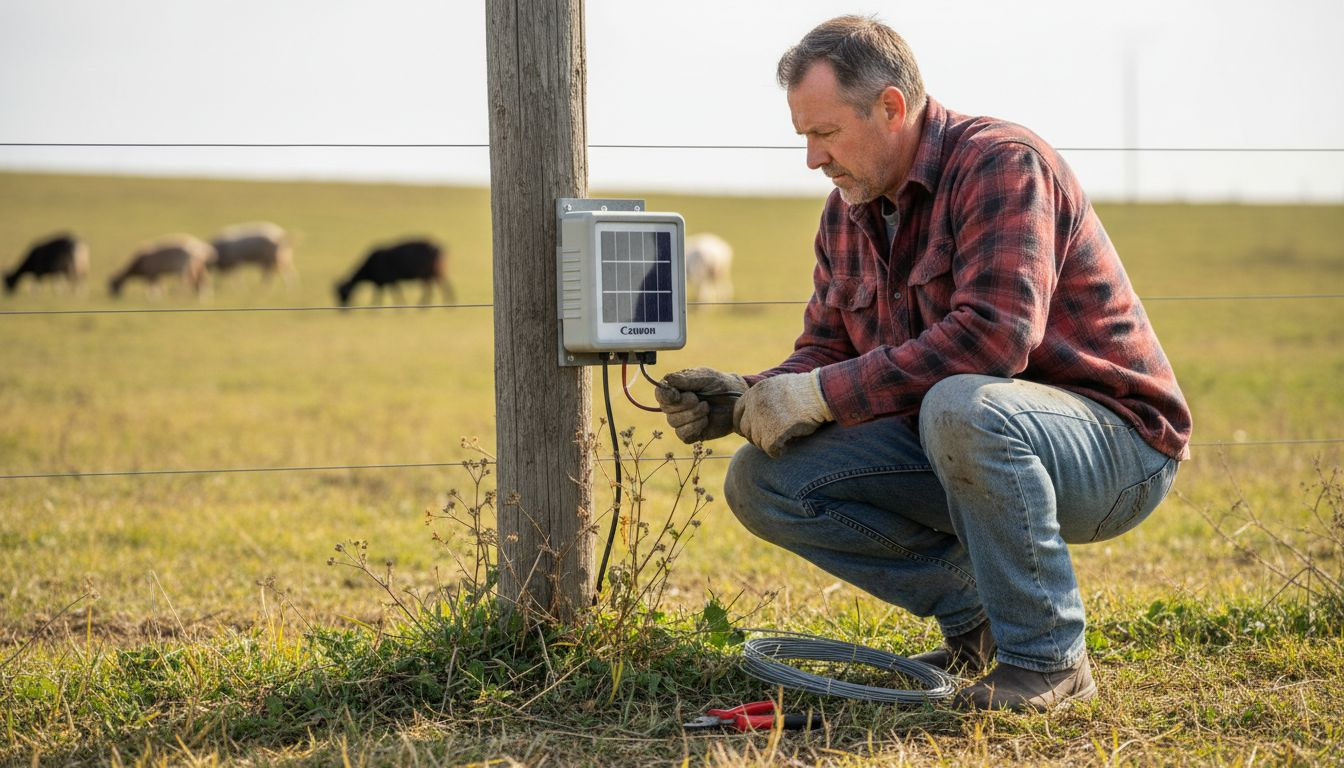
Temporary electric netting presents another valuable option for goat farmers, particularly those managing smaller herds or requiring flexible containment solutions. These systems are especially useful for rotational grazing, predator protection, and managing goats with specific landscape challenges. The mesh design allows for quick setup and relocation, making them ideal for farmers who need adaptable fencing strategies. Wire spacing, voltage levels, and ground conditions must be carefully considered to ensure effective containment and animal safety.
Here is a concise comparison of common electric fencing systems for goats:
| System Type | Ideal Use Case | Advantages | Notable Limitations |
|---|---|---|---|
| Single-wire | Small pastures, easy goats | Low cost, quick setup | Lower deterrence for stubborn goats |
| Multi-wire | Large herds, active goats | Higher security, flexible spacing | More complex installation |
| All-live wire | Predator-heavy areas | Maximum deterrence for intruders | Needs excellent grounding |
| Bipolar configuration | Variable terrain, remote sites | Stable current in poor soil | Energizer compatibility required |
| Electric netting | Rotational grazing, flexible enclosures | Rapid deployment, predator deterrent | Can tangle horned goats |
Pro tip: Conduct a comprehensive property assessment before selecting your electric fencing system, considering terrain, vegetation density, and specific goat herd characteristics to determine the most appropriate configuration.
How Electric Fences Deter Escapes and Predators
Electric fences serve as a sophisticated psychological and physical barrier that effectively prevents goat escapes while protecting herds from potential predators. The fundamental mechanism relies on delivering a short, sharp shock that creates an immediate and lasting deterrence. Goats quickly learn to avoid fence boundaries after experiencing the initial electrical pulse, making these systems remarkably effective for livestock management. Electric fence positioning plays a critical role in ensuring both animal safety and containment effectiveness.
The deterrence mechanism works through a combination of sensory and psychological conditioning. When a goat contacts the electrified wire, they experience a sudden, uncomfortable shock that triggers an immediate retreat response. This aversive conditioning happens within milliseconds, teaching the animal to maintain a safe distance from fence boundaries. The pulse is designed to startle and discourage without causing lasting harm, creating a powerful mental association that prevents future attempts to breach the fence.
Predator protection represents another crucial function of electric fencing for goat farmers. The electrical barrier creates an additional layer of security that deters coyotes, wolves, and other potential threats. The unpredictable and unpleasant shock experienced upon contact makes predators hesitant to attempt crossing, providing an invisible yet highly effective protective shield around the herd. Farmers can further enhance this protection by strategically positioning wires at varying heights to create a comprehensive defensive perimeter that addresses different predator approaches.
Pro tip: Regularly inspect your electric fence system to ensure consistent voltage and remove any vegetation that might compromise the electrical connection, maintaining optimal deterrence for both escapes and predator intrusions.
Installation Requirements and Maintenance Steps
Successful electric fence implementation for goats begins with meticulous site preparation and strategic installation. Electric fence specifications require comprehensive ground clearing, removing debris and vegetation that might interfere with electrical conductivity. Farmers must select properly galvanized wire and robust insulators, ensuring strong corner braces that can withstand significant tension and environmental stress. The initial site assessment determines fence line placement, taking into account terrain contours, existing landscape features, and potential vegetation growth patterns.
The electrical system’s effectiveness depends on precise grounding and consistent voltage maintenance. Ground rods must be strategically placed and deeply driven to ensure optimal electrical conductivity, typically requiring multiple rods connected in series for larger pasture areas. Energizer selection should match the specific pasture dimensions and goat herd size, with power output calibrated to provide consistent shock deterrence. Wire tension, insulator quality, and connection integrity are critical factors that directly impact the fence’s performance and reliability.
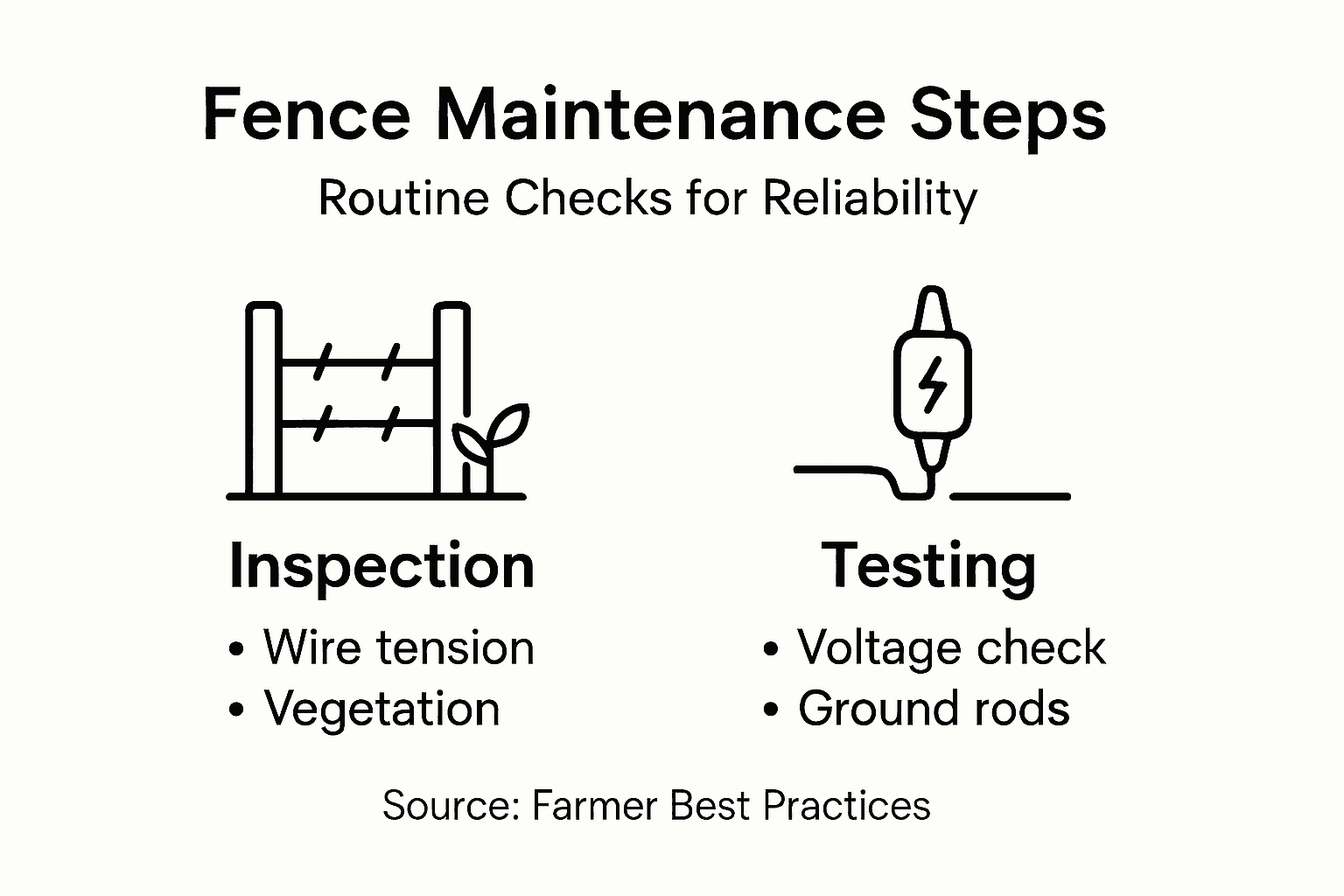
Regular maintenance represents the cornerstone of long-term electric fence functionality. Routine inspections should include comprehensive voltage checks, vegetation management around wire paths, and assessment of potential damage from environmental factors or animal interactions. Farmers must systematically evaluate ground rod connections, replace worn insulators, and repair any wire damage promptly. Additionally, periodic retraining of livestock helps maintain their respect for fence boundaries, ensuring continued effectiveness in preventing escapes and deterring potential predators.
Pro tip: Invest in a reliable voltage tester and create a detailed maintenance log to track your electric fence system’s performance, helping you identify and address potential issues before they compromise livestock safety.
Cost Factors and Common Mistakes to Avoid
Electric fencing for goat management involves strategic financial planning and careful implementation. Goat pasture fencing costs depend on multiple variables, including material quality, energizer specifications, installation complexity, and long-term maintenance requirements. Initial investments range from moderate to substantial, with professional-grade systems potentially costing several hundred to thousands of dollars depending on pasture size and terrain challenges. Farmers must balance upfront expenses against potential long-term savings in livestock protection and reduced escape-related risks.
Several critical mistakes can dramatically increase overall project expenses and compromise fence effectiveness. Improper wire height selection represents a common error that can lead to frequent goat escapes or unnecessary animal injuries. Wire gauge selection must precisely match the specific environmental conditions and goat behavior patterns, with thinner wires prone to breakage and inconsistent electrical conductivity. Inadequate grounding represents another significant issue, potentially reducing shock effectiveness and requiring expensive system redesigns or component replacements.
Budget-conscious farmers should prioritize strategic investments in high-quality components rather than cutting corners. Key cost considerations include energizer quality, wire durability, insulators, and ground rod systems. While initial expenses might seem high, selecting reliable materials prevents frequent replacements and reduces long-term maintenance costs. Professional installation or comprehensive self-education can help mitigate expensive mistakes, with many farmers discovering that careful planning ultimately saves significant money and prevents potential livestock losses.
The following table summarizes electric fence cost considerations and how they impact long-term management:
| Cost Factor | Short-Term Impact | Long-Term Benefit |
|---|---|---|
| Material quality | Higher upfront expense | Reduces replacements, lasts longer |
| Energizer type | Varies by power source | Consistent shock, less downtime |
| Professional installation | Increased initial cost | Fewer errors, less rework |
| Maintenance frequency | Ongoing, minor costs | Prevents major fence failures |
Pro tip: Request detailed quotes from multiple suppliers and factor in a 15-20% contingency budget to cover unexpected installation challenges or necessary system modifications.
Enhance Your Electric Fence Setup for Goats with FenceFast.ca
Managing goat herds safely requires reliable electric fencing solutions tailored to your specific terrain and livestock needs. The article highlights key challenges like choosing the right wire spacing, ensuring consistent voltage, and selecting energizers that work for remote Canadian pastures. We understand how frustrating escape risks and predator threats can be when your fence system does not perform as expected. With FenceFast.ca you gain access to high-quality electric fencing components, including power supplies, solar panels, wires, and accessories designed to meet those exact demands.

Take control of your herd management today by exploring our wide range of electric fencing systems and components crafted for Canadian farmers and ranchers. Whether you need expert design consulting or durable materials to withstand varying landscapes, FenceFast.ca offers the dependable products and knowledge you need to reduce escapes, deter predators, and ensure lasting fence performance. Visit FenceFast.ca now to build a safer, more effective electric fence that protects your goats and your peace of mind.
Frequently Asked Questions
What is the basic function of an electric fence for goats?
Electric fences provide a psychological and physical barrier for goats, delivering a short, sharp shock when they make contact with the wire. This teaches them to avoid the boundaries, effectively preventing escapes and keeping them contained.
How many wires should an electric fence for goats have?
For effective containment, electric fences typically require 3 to 4 horizontal wires. These wires should be spaced between 6 and 12 inches apart to accommodate goat physiology and prevent escapes, especially for horned goats.
What are the common mistakes to avoid when installing an electric fence?
Common mistakes include improper wire height selection, inadequate grounding, and using low-quality materials. These errors can lead to frequent escapes, ineffective shock deterrence, and increased maintenance costs, ultimately compromising the fence’s functionality.
How can I maintain my electric fence for optimal performance?
Regular maintenance includes voltage checks, vegetation management, and inspecting wire connections. It is essential to replace worn components promptly and retrain goats periodically to ensure they respect the fence boundaries.

