

More than half of American goat farmers report escape attempts as their number one fencing headache. When goats push boundaries, a secure fence quickly becomes the most important investment on any property. Knowing which system truly works saves time, money, and frustration. This guide breaks down the features that set high tensile fencing apart, focusing on real advantages for American herds and the unique conditions they face.
Table of Contents
- What Is High Tensile Fence for Goats
- Types of Fencing Wires and Configurations
- Essential Features for Effective Goat Fencing
- Installation Standards and Best Practices
- Common Risks, Mistakes, and Cost Considerations
- Comparing High Tensile With Alternative Goat Fencing
Key Takeaways
| Point | Details |
|---|---|
| Durability and Lifespan | High tensile fencing offers remarkable durability, lasting 30-40 years, with significantly lower maintenance requirements compared to traditional fencing. |
| Effective Containment | This fencing system adapts well to various terrains, ensuring superior animal containment and resilience against environmental stressors. |
| Installation Requirements | Proper installation is crucial, including reinforcing posts and maintaining adequate wire tension to maximize fence performance and longevity. |
| Cost Efficiency | Although initial costs may be higher, high tensile fencing results in lower long-term maintenance expenses, offering a more economical solution for goat farmers. |
What Is High Tensile Fence for Goats
A high tensile fence is a robust livestock containment system specifically engineered to provide superior strength, durability, and flexibility for managing goat herds. Unlike traditional fencing methods, high tensile fencing utilizes specially designed high-strength wire that can withstand significant tension and environmental challenges while providing effective livestock control.
High tensile fencing represents a significant advancement in agricultural perimeter management. The wire used in these systems is manufactured from premium steel with enhanced tensile strength, allowing it to stretch and absorb impact without breaking. This unique characteristic makes it particularly effective for managing livestock boundaries in challenging terrain. Goat farmers appreciate this fencing style because it offers multiple critical advantages:
- Remarkable durability lasting 30-40 years
- Significantly lower maintenance requirements
- Superior ability to withstand animal pressure and environmental stress
- More cost effective compared to traditional wood or welded wire fencing
- Exceptional flexibility for adapting to varied landscape contours
The construction of high tensile fencing typically involves installing strong steel or aluminum posts at strategic intervals, then stretching the high-strength wire between them with precise tension. This design allows the fence to flex and absorb impact, reducing the likelihood of permanent damage from animal collisions or environmental stressors. While initial installation might require more technical expertise than standard fencing, the long-term benefits make it an attractive solution for serious goat producers seeking reliable, low-maintenance perimeter control.
Types of Fencing Wires and Configurations
High tensile fencing for goats comes in several distinct wire configurations, each designed to address specific agricultural requirements and terrain challenges. The primary types include smooth wire, barbed wire, and electric wire systems, which can be strategically combined to create robust perimeter control solutions for livestock management.
Smooth Wire Configurations represent the most basic high tensile fencing approach. These systems typically involve 4-5 horizontal wire strands stretched between sturdy steel or wood posts, with precise tension to prevent sagging or animal penetration. Portable wire fence options demonstrate the versatility of these configurations, allowing farmers to adapt fencing layouts to changing pasture needs.
Electric wire configurations offer an additional layer of security and animal control. These systems incorporate electrified high tensile wires that deliver a mild but effective shock when touched, creating a powerful psychological barrier for goats. Installation typically involves:
- Alternating electrified and ground wires
- Strategic wire spacing (typically 6-8 inches apart)
- Using high-quality electric fence energizers
- Ensuring consistent grounding and voltage
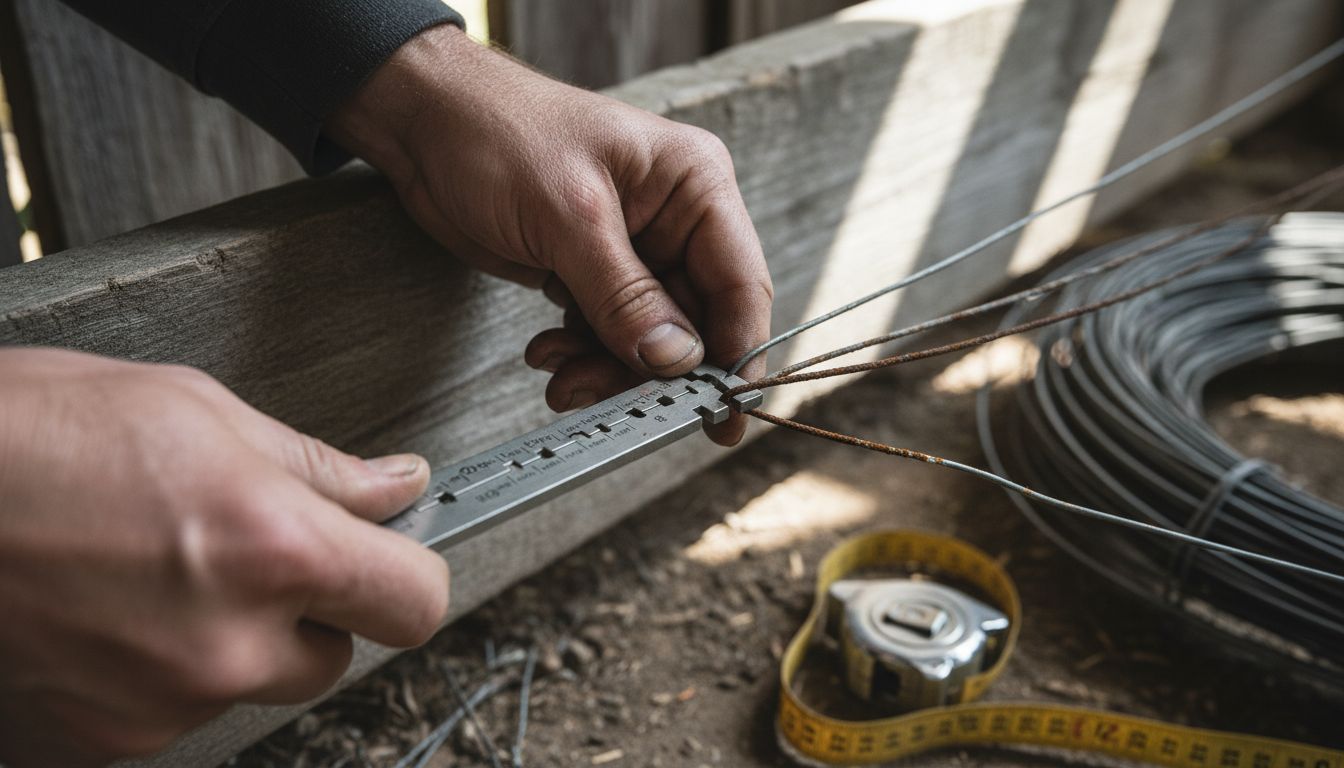
The wire gauge and material composition play critical roles in high tensile fence performance. Most professional goat fencing systems utilize 12.5 gauge high carbon steel wire, which provides optimal strength-to-weight ratio and corrosion resistance. Galvanized coatings further enhance durability, protecting against rust and environmental degradation, and ensuring the fence can withstand decades of agricultural use.
Essential Features for Effective Goat Fencing
Designing an effective goat fence requires careful consideration of several critical features that go beyond simple wire configuration. The primary goal is creating a barrier that prevents escape while ensuring the safety and containment of the herd. Best electric fencing tips for goats highlight the importance of strategic design and intelligent implementation.
Height and Spacing are paramount in goat fencing. Goats are notorious escape artists with remarkable climbing and jumping abilities. Recommended fence specifications typically include:
- Minimum height of 48-54 inches
- Wire spacing no greater than 6 inches apart
- Bottom wire positioned close to ground level
- Smooth top wire to prevent horn entanglement
- Adequate tension to prevent sagging or pushing
Material durability represents another essential feature for long-term fencing success. High tensile wire with galvanized coating provides superior resistance to environmental stressors, preventing rapid deterioration. Professional-grade fencing materials should withstand temperature fluctuations, UV exposure, and potential animal impact without compromising structural integrity.
Additional critical features include robust corner and end post construction, which serve as the foundational anchors for the entire fencing system. These posts must be substantially deeper and more reinforced compared to intermediate posts, typically requiring concrete footing or extra-deep ground installation to maintain consistent wire tension and prevent structural failure under sustained animal pressure.
Installation Standards and Best Practices
Professional installation of high tensile goat fencing requires meticulous planning and precise execution to ensure long-term effectiveness and animal safety. Temporary goat fencing setup techniques provide valuable insights into the foundational principles of successful fence construction.
Pre-Installation Planning is critical and involves several key preparatory steps:
- Conducting thorough property terrain assessment
- Identifying potential environmental challenges
- Measuring exact fence line distances
- Determining appropriate post spacing (typically 8-12 feet apart)
- Selecting compatible wire tension systems
Proper post installation represents the most crucial element of fence durability. Corner and end posts must be substantially reinforced, typically requiring:
- Minimum depth of 3-4 feet underground
- Concrete footer for additional stability
- Angle bracing to counteract lateral wire tension
- Use of pressure-treated wood or premium steel posts
Wire tensioning requires specialized techniques to maintain consistent fence performance. Professional installers recommend using professional-grade tensioning tools and establishing uniform wire tension across all fence sections. This approach prevents sagging, reduces potential weak points, and ensures the fence can withstand significant animal pressure while maintaining its structural integrity.
Common Risks, Mistakes, and Cost Considerations
Navigating the complexities of high tensile goat fencing requires understanding potential pitfalls that can compromise both financial investment and animal safety. 3 Wire Electric Fence for Goats illustrates the nuanced challenges farmers face when implementing livestock perimeter systems.
Cost Breakdown for high tensile goat fencing typically ranges between $3-$7 per linear foot, with total project expenses influenced by several critical factors:
- Material quality and wire gauge
- Terrain complexity
- Total fence line length
- Post type and spacing
- Additional electrical components
- Professional installation versus DIY
Common installation mistakes can significantly undermine fence effectiveness and lead to unexpected expenses. Critical errors include:
- Inadequate post depth and reinforcement
- Improper wire tensioning
- Insufficient ground wire connections
- Neglecting regular maintenance
- Choosing inappropriate wire gauge for terrain
Risk mitigation requires proactive planning and understanding potential failure points. Goat farmers must anticipate challenges like uneven terrain, extreme weather conditions, and the persistent escape tendencies of their livestock. Professional-grade fencing demands careful material selection, precise installation techniques, and ongoing monitoring to ensure long-term performance and animal containment.
Comparing High Tensile With Alternative Goat Fencing
Goat farmers face multiple fencing options, but high tensile wire stands out as a superior solution compared to traditional methods. Smart livestock fencing ideas demonstrate the evolving landscape of agricultural perimeter management, highlighting the advantages of modern fencing technologies.
Comparative Analysis reveals distinct differences between high tensile and alternative fencing approaches:
-
Woven Wire Fencing
- Higher initial installation cost
- Less flexible
- More challenging terrain adaptation
- Shorter lifespan (15-20 years)
-
High Tensile Wire Fencing
- Lower long-term maintenance expenses
- Greater flexibility
- Superior terrain adaptability
- Extended lifespan (30-40 years)
- More effective animal containment
Traditional fencing methods like wooden rail and chain link pale in comparison to high tensile systems. Wood fencing requires frequent maintenance, replacement of rotting posts, and lacks the resilience needed for active goat environments. Chain link, while seemingly sturdy, cannot withstand the persistent pressure and climbing behaviors typical of goats.
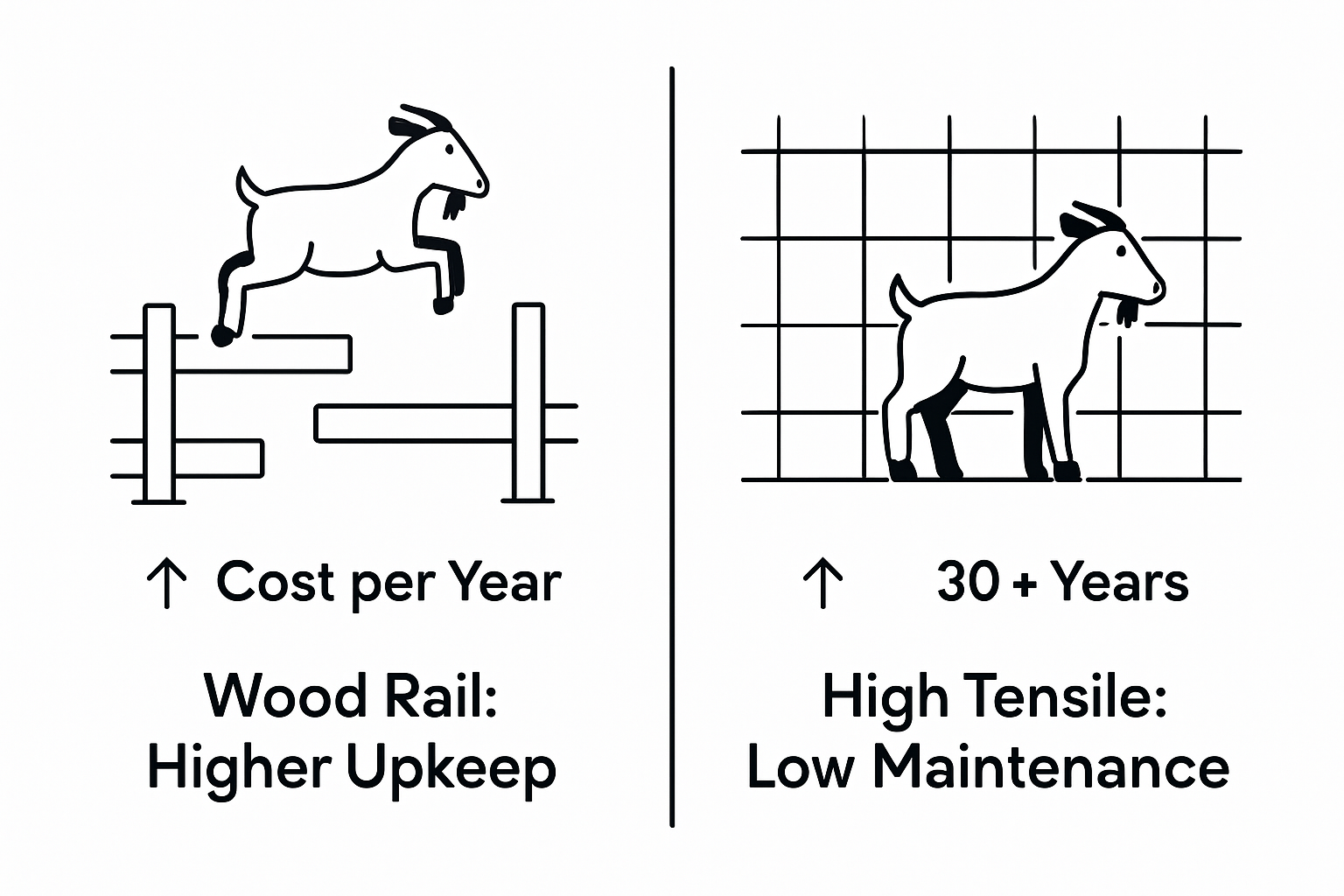
Economic considerations further distinguish high tensile fencing. The initial investment might appear higher, but reduced maintenance costs, exceptional durability, and minimal replacement requirements make it a more financially prudent choice for serious livestock managers. Professional goat farmers increasingly recognize high tensile wire as the most efficient and cost-effective long-term perimeter solution.
Strengthen Your Goat Fencing with Durable High Tensile Solutions
Managing goats requires fencing that resists their agility and escapes while lasting through seasons of harsh Canadian weather. This article highlights common challenges like maintaining precise wire tension, selecting the right gauge, and reinforcing end posts. These pain points can quickly turn your fencing investment into a costly frustration without the proper materials and expertise. With high tensile fencing offering up to 40 years of durability and superior flexibility, it is essential to equip your farm with components that deliver strength and long-term savings.
Discover a wide selection of high tensile wire, reliable posts, tensioners, and electric fence supplies at FenceFast.ca. Whether you are installing a permanent perimeter or setting up temporary fencing, our expert knowledge and quality products empower you to build secure, low-maintenance goat fencing tailored to your terrain and herd behavior. Act now to protect your goats with fencing designed for resilience and peace of mind. Start your project today by exploring our fencing solutions for dependable animal containment and hassle-free maintenance.
Frequently Asked Questions
What is high tensile fencing for goats?
High tensile fencing is a robust livestock containment system designed specifically to manage goat herds effectively. It utilizes high-strength wire that can withstand significant tension and environmental challenges while providing effective livestock control.
What are the advantages of using high tensile fence for goats?
High tensile fences offer remarkable durability lasting 30-40 years, lower maintenance requirements, and superior ability to withstand animal pressure and environmental stress. They are also more cost-effective compared to traditional fencing methods like wood or welded wire.
How should high tensile fencing be installed?
High tensile fencing should be installed with strong steel or aluminum posts spaced strategically, and the high-strength wire must be stretched between them with precise tension. Proper post reinforcement and adequate depth are essential for durability, along with professional-grade tensioning tools.
How does high tensile fencing compare to traditional fencing options?
High tensile fencing is generally more flexible, lower in long-term maintenance expenses, and offers greater terrain adaptability compared to traditional options like woven wire or wood fencing. It has an extended lifespan of 30-40 years, whereas woven wire typically lasts 15-20 years.

