

What are the safest fencing options for horses?
Fencing horses safely comes down to three non-negotiable qualities: visibility, strength, and a design that leaves no room for entrapment. The materials that consistently meet all three are steel board, high-tensile wire (vinyl-coated), V-mesh wire, and polymer-coated wire. University extension programs across the country endorse these options as the foundation of any sound equine fencing plan.
Here is what the safest horse fences share:
- Minimum height of 5 feet for perimeter pastures, per University of Georgia Extension and Wisconsin Extension guidelines; stallions and jumpers need 6 feet
- Bottom clearance sufficient to prevent hoof entrapment but not so high as to allow foals to roll underneath
- **Openings sized to prevent hoof or leg entrapment in paddock and high-contact areas
- Smooth surfaces on the horse side with no exposed nail heads, wire ends, or sharp projections
- High visibility so horses recognize the boundary before impact, not after
- Proper installation from the start, because a fence installed incorrectly becomes a hazard faster than any material failure
Table of Contents
- Steel board fencing is the gold standard for horse safety
- High-tensile wire fencing works well when you modify it for horses
- Mesh wire and polymer-coated wire offer strong, safe alternatives
- Installation details that determine whether a fence is safe or dangerous
- Why fence visibility matters more than raw strength
- Fencefast has what you need to fence your horses right
- Key Takeaways
Steel board fencing is the gold standard for horse safety
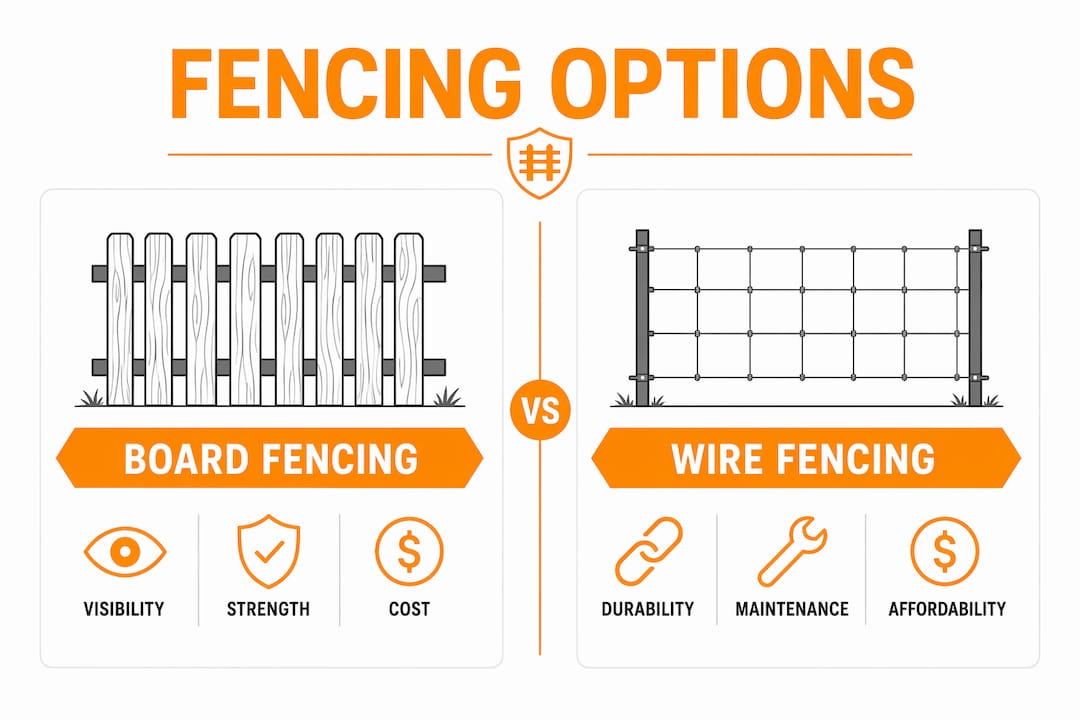
Rail or plank fencing, whether wood, PVC, or vinyl-coated board, is the most visible option available. Horses read it as a solid barrier and are far less likely to challenge or accidentally run into it. When contact does happen, a board fence is unlikely to trap a hoof or slash skin the way wire can.
Steel board fencing takes that concept further with superior strength. The smooth, flat surface eliminates the sharp edges and wire ends that cause lacerations, and the solid visual profile works with a horse’s far-sighted vision to communicate “boundary” clearly from a distance.
Pros:
- Highest visibility of any fencing type
- Smooth surface minimizes laceration risk
- Horses rarely challenge a solid-looking fence
- Durable against leaning, rubbing, and pawing
Cons:
- Most expensive option to install and maintain
- Wood boards require regular painting or treatment
- Boards can splinter under hard impact
Cost is the real trade-off. Rail fencing is the priciest category, but experienced horse owners will tell you that the veterinary bills from a single wire-related injury often exceed the price difference. For high-value horses or paddocks with heavy traffic, the math usually favors the board fence.
High-tensile wire fencing works well when you modify it for horses
Plain high-tensile wire is a cattle fence. For horses, it needs two modifications: vinyl coating and a visible top rail. Vinyl-coated high-tensile wire reduces injury risk and makes individual strands far more visible than bare galvanized steel.
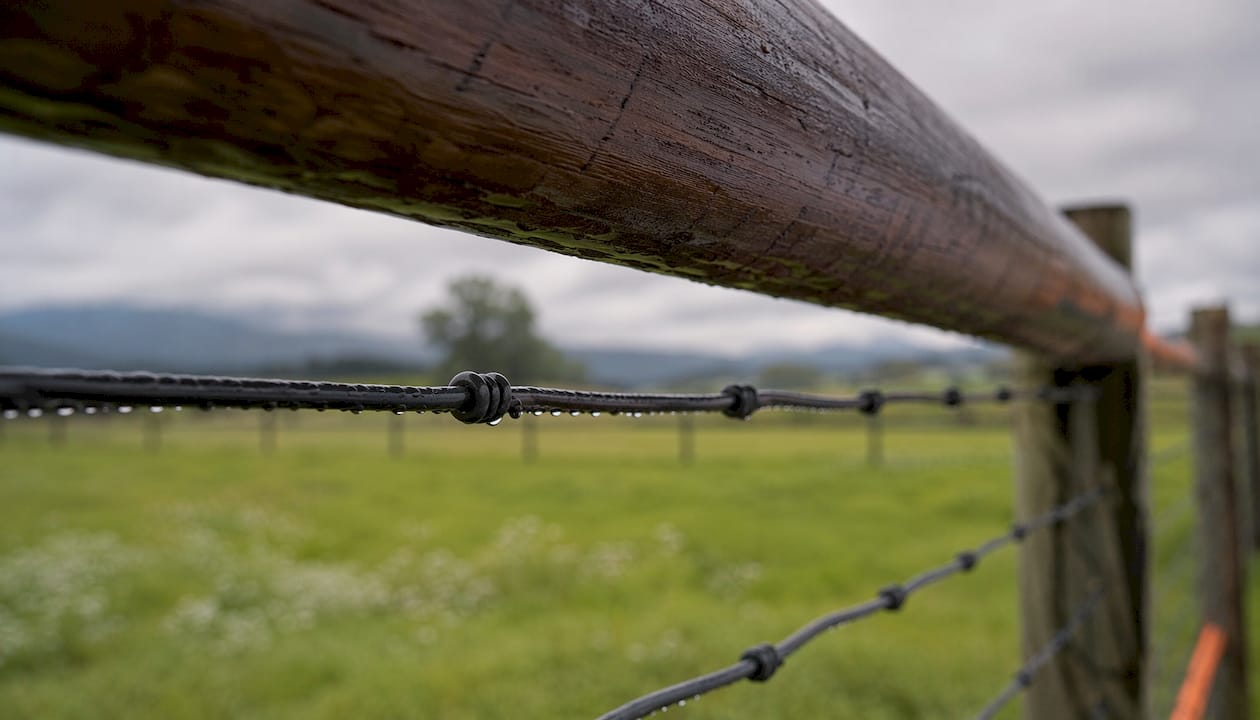
Tension management is the other critical factor. Consistent tensioning around 200 pounds, maintained with in-line ratchet strainers, prevents wire from sagging or snapping under pressure. A slack wire is a leg trap. A wire under proper tension holds its line and gives slightly on impact rather than cutting.
Key installation requirements for horse-safe high-tensile wire:
- Vinyl or polymer coating on all strands
- Top sight rail (board, PVC, or polymer strip) for visibility
- Post spacing tightened to approximately 8 feet near gates and water points
- Ratchet strainers positioned at the friction center on long runs
- No diagonal cross-bracing within horse reach at corners
The cost advantage over board fencing is real, especially on large acreage. The trade-off is ongoing maintenance: tension must be checked seasonally, and any strand that loses tension needs immediate attention.
Mesh wire and polymer-coated wire offer strong, safe alternatives
Mesh wire fences are strong, durable, and widely regarded as among the safest wire options for horses. The key is the opening size. Standard farm woven wire with 4–6 inch openings is a hoof trap. Horse-safe mesh uses openings small enough that hooves cannot pass through at all.
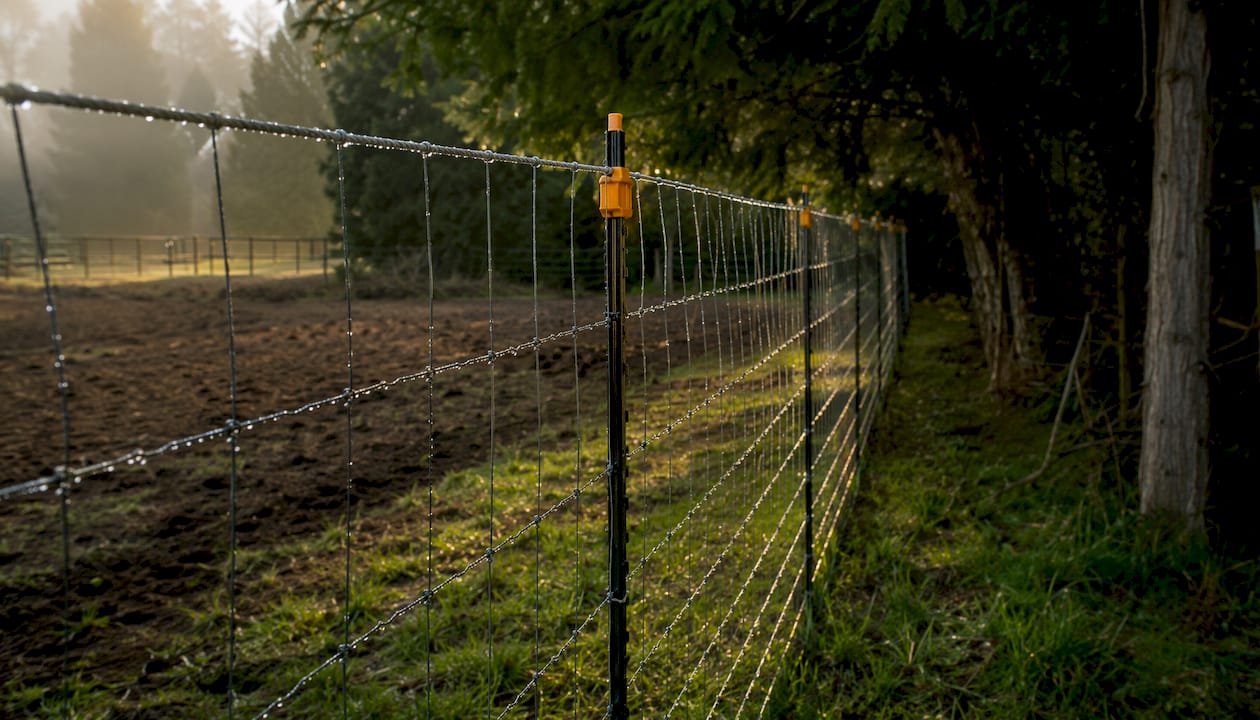
V-mesh wire is the best-known example. Its closely spaced “V” pattern prevents limb entrapment entirely, and the fence has no exposed sharp wire ends. Combined with a top sight rail, it performs nearly as well as board fencing for safety while costing significantly less.
Mesh and polymer-coated wire at a glance:
- V-mesh openings prevent hoof and leg entrapment
- No exposed wire ends to cut skin
- Bottom of fence should sit 6–8 inches off the ground
- A top sight rail improves visibility and deters horses from pushing on the top wire
- Polymer-coated wire adds durability and color contrast for better horse recognition
- Less expensive than board fencing; more expensive than plain woven wire
Polymer-coated wire takes the visibility benefit further. The colored coating makes individual strands stand out against grass and sky, which matters most in low-light conditions when horses are most likely to misjudge a fence line.
Installation details that determine whether a fence is safe or dangerous
Good materials installed badly still injure horses. Fence installation quality directly determines how long a fence stays safe, and the details that get skipped during construction are usually the ones that cause problems later.
Critical installation and safety checklist:
- Height: at least about 5 feet for pastures; paddocks and stallion pens sized to the horse’s wither height plus additional clearance
- Bottom clearance: 6–8 inches off the ground; no higher than 12 inches to keep foals from rolling under
- Post spacing: tighten to approximately 8 feet near gates and water stations; standard spacing works in low-traffic areas
- Corner design: round or angle all corners to prevent horses from being pinned by herd mates
- Gates: steel tubing or pipe, level with fence height, minimum 4 feet wide for horse passage; avoid gaps between gate and post where hooves or foal heads can get caught
- Rails and wire: always fasten to the horse side of posts so a horse’s weight pushes into the post, not away from it
- Electric fencing: never use as a standalone perimeter fence; effective as a supplemental deterrent strand 4–6 inches inside or above the top rail
- Barbed wire: never appropriate for horses under any circumstances; the laceration and entanglement risk is severe
One detail Penn State Extension flags that most guides skip: keep rail spacing to 12 inches or less between strands. For electric fencing, that gap can extend to 18 inches since horses learn to avoid contact. Anything wider on a non-electric fence is an invitation for a horse to push through.
Pro Tip: Run a single strand of electric wire 4–6 inches inside the top rail on any fence where horses habitually lean, scratch, or reach over. It stops the behavior without requiring a full fence replacement.
Why fence visibility matters more than raw strength
Horses are far-sighted animals that scan the horizon for threats. A fence that blends into the background is not just hard to see — it is effectively invisible to a horse moving at speed. University of Georgia Extension research makes the case clearly: solid, visible barriers reduce fence collisions more effectively than fence strength alone.
This is why a painted board fence outperforms plain wire even when the wire is technically stronger. The horse sees the board fence and respects it. The wire fence registers too late, if at all.
Visibility is the first line of defense. A fence a horse can see is a fence it will not run through by accident.
Practical ways to improve fence visibility on any material:
- Add a top sight rail in a contrasting color (white PVC, painted wood, or polymer strip)
- Use vinyl-coated wire in white or yellow rather than galvanized silver
- Paint wooden boards white or a color that contrasts with the pasture background
- Clear vegetation from the fence line so the fence profile stays unobstructed
Pro Tip: When choosing fence color, think about your specific pasture backdrop. A white board fence disappears against snow. A dark green or brown fence vanishes against tree lines. Pick the color that creates the strongest contrast in your specific environment year-round.
Fencefast has what you need to fence your horses right
Getting the materials right is half the battle. Having a supplier who understands equine fencing, carries the right components, and can help you plan the job is the other half.

Fencefast stocks a full range of horse-safe fencing components — wire, connectors, electric fencing systems, posts, and accessories — all sourced for agricultural and rural applications. Whether you are building a new pasture perimeter, upgrading an existing paddock, or adding a supplemental electric strand to an existing fence, Fencefast carries the products that match the safety standards covered in this article. The team brings deep agricultural fencing knowledge to every order, and the safe horse fencing guide on the Fencefast blog gives you additional detail on materials and design decisions before you buy. Browse the full catalog at fencefast.ca and get your horse fencing project started with the right foundation.
Key Takeaways
The single most important principle in horse fencing is visibility first, strength second — a fence your horses can clearly see is one they will rarely challenge or accidentally collide with.
| Point | Details |
|---|---|
| Minimum fence height | Perimeter pasture fences must be at least 5 feet tall; stallion pens and paddocks should reach wither height plus 4–6 inches. |
| Visibility over strength | University of Georgia Extension research shows solid, visible barriers reduce fence collisions more effectively than raw fence strength alone. |
| V-mesh for wire safety | V-mesh wire’s closely spaced pattern prevents hoof and limb entrapment, making it the safest wire option when paired with a top sight rail. |
| Never use barbed wire | Barbed wire causes severe lacerations and entanglement and is never appropriate for horse fencing under any circumstances. |
| Fencefast for your build | Fencefast carries horse-safe fencing components and expert guidance to help you select and install the right fence for your horses. |

