

Many horse owners assume any sturdy fence will keep their animals secure, but this misconception leads to preventable injuries and escapes every year. Horses have unique behavioral traits and physical vulnerabilities that demand specialized fencing solutions, especially in Canada’s harsh climate conditions. This comprehensive guide examines the safest fencing materials available in 2026, comparing durability, visibility, maintenance requirements, and installation best practices. Whether you’re establishing a new paddock or upgrading existing perimeter fencing, understanding these critical factors will help you make informed decisions that protect your horses and property investment.
Table of Contents
- Understanding What Makes Fencing Safe For Horses
- Common Horse Safe Fencing Materials: Benefits And Drawbacks
- Best Practices For Installing And Maintaining Safe Horse Fencing
- Electric Fencing Options For Horses In Canada: Safety And Effectiveness
- Explore FenceFast Solutions For Horse Safe Fencing In Canada
Key takeaways
| Point | Details |
|---|---|
| Material selection impacts safety | Not all fencing materials prevent injury or suit horse behavior and Canadian weather conditions. |
| Visibility prevents contact injuries | Horses need to clearly see fence boundaries to avoid dangerous collisions and entanglement. |
| Electric options require training | Properly installed electric fencing is cost effective but demands horse familiarization and voltage control. |
| Regular maintenance is essential | Seasonal inspections catch weather damage, loose components, and structural weaknesses before injuries occur. |
| Climate affects longevity | Freeze thaw cycles, snow loads, and humidity stress materials differently across Canadian regions. |
Understanding what makes fencing safe for horses
Safe fencing requires materials that prevent injuries, are easily visible to horses, withstand weather, and require manageable upkeep. These four foundational criteria determine whether a fence protects your animals or creates hazards. Injury prevention starts with smooth surfaces and appropriate spacing that won’t trap hooves or allow horses to push through barriers. Visibility matters because horses react instinctively to perceived threats, and a fence they can’t see becomes a collision risk during flight responses.
Durability takes on special importance in Canadian environments where temperature swings stress materials year round. Freeze thaw cycles crack rigid materials, snow accumulation bends posts, and spring humidity accelerates wood rot in poorly treated lumber. Your fencing investment must withstand these conditions while maintaining structural integrity season after season. Maintenance requirements vary dramatically between materials, with some demanding monthly attention and others needing only annual checks.
Horse behavior patterns influence horse safe fencing expert tips because these animals test boundaries through rubbing, leaning, and occasional attempts to reach vegetation beyond their enclosures. Young horses and stallions particularly challenge fence strength through aggressive contact. Materials must absorb impact without shattering, creating sharp edges, or collapsing under pressure. The reactive nature of horses means they’ll bolt at sudden noises or perceived dangers, making fence visibility critical during these panic moments.
Pro Tip: Choose fencing that balances visibility with strength to reduce horse contact injuries, particularly in high traffic areas near gates and water sources where animals congregate and movement patterns increase collision risks.
Key safety factors include:
- Smooth surfaces without protruding nails, splinters, or sharp edges
- Height adequate to discourage jumping while allowing visual connection
- Strength to withstand impact without catastrophic failure
- Spacing that prevents hoof entrapment between rails or wires
- Color contrast that stands out against landscape backgrounds
Common horse safe fencing materials: benefits and drawbacks
Wood, vinyl, and electric fences each offer unique advantages and challenges for safe horse containment. Wood fencing remains popular among traditional horse farms because animals naturally recognize these barriers and rarely challenge them aggressively. The visibility factor ranks exceptionally high, and properly installed wood rails create psychological boundaries horses respect. However, maintenance demands include regular painting or staining to prevent rot, checking for loose boards, and replacing sections damaged by chewing or weathering. Splinter risks emerge as wood ages, particularly in freeze thaw conditions that crack grain patterns.
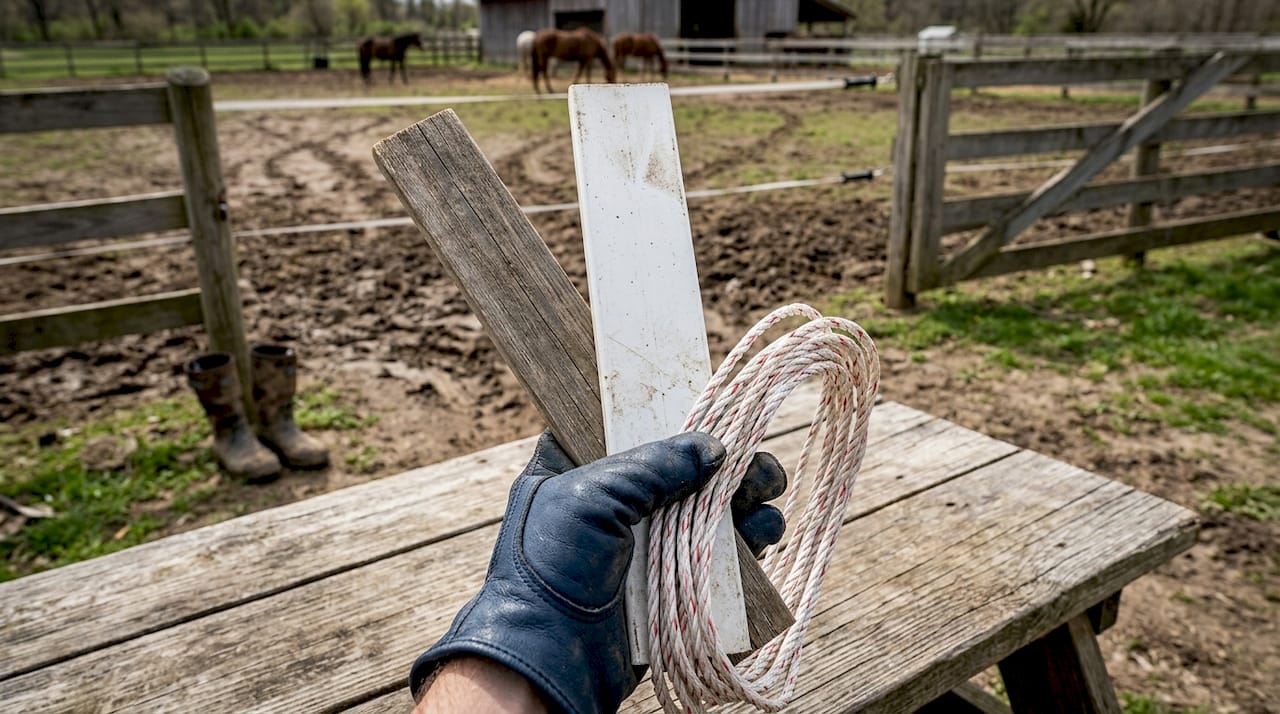
Vinyl fencing eliminates many wood maintenance headaches while providing excellent visibility and smooth surfaces that won’t injure horses on contact. These synthetic materials resist moisture, won’t splinter, and maintain appearance without painting. The drawback involves higher upfront costs and potential brittleness in extreme cold, though modern formulations handle Canadian winters better than earlier versions. Some horses develop chewing habits on vinyl rails, and repairs require replacing entire sections rather than individual boards.
Durability and maintenance differ significantly between fencing materials; electric is cost effective but requires careful setup. Electric fencing options include polywire, rope, and tape configurations that deliver psychological deterrents through mild shocks. Cost effectiveness makes electric fencing attractive for large acreages, and installation flexibility allows temporary paddock divisions or rotational grazing systems. Proper voltage control and grounding prevent dangerous shocks while maintaining effectiveness. Training horses to respect electric boundaries takes patience, and some nervous animals never fully adapt to this containment method.
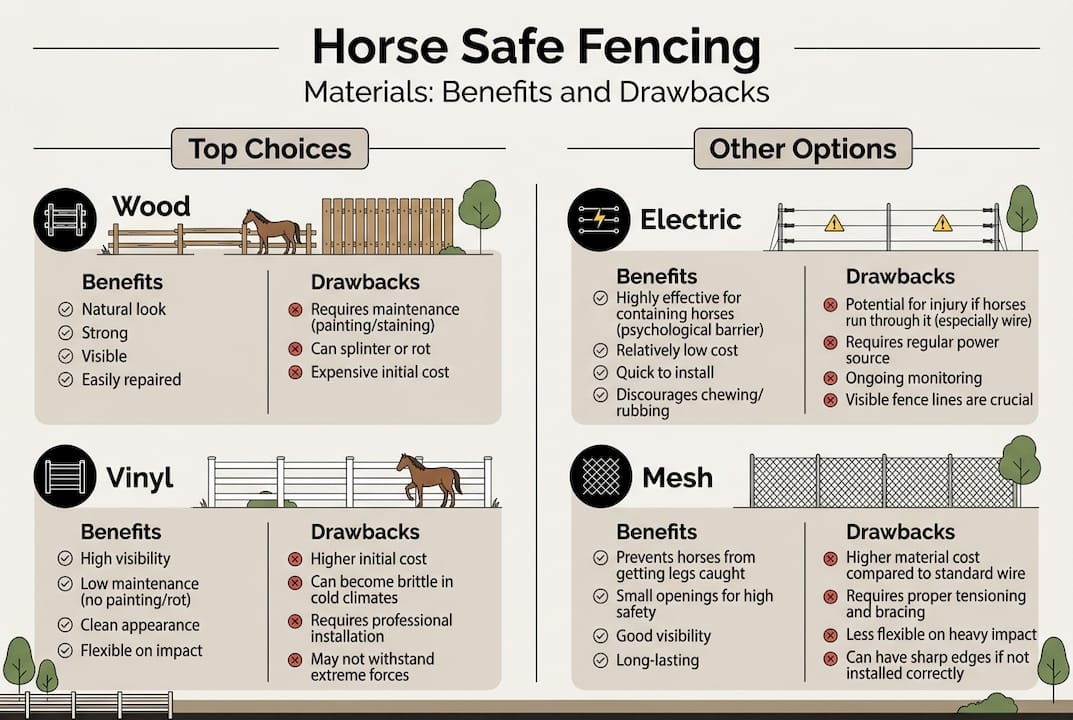
Polywire and mesh products offer budget friendly solutions but present visibility challenges that increase contact risks. White or brightly colored options improve detection, yet these materials lack the substantial presence of solid fencing. Strength limitations mean determined horses can break through, and sagging occurs without proper tension maintenance. Mesh fencing specifically designed for horses uses larger openings that prevent hoof entrapment while providing adequate containment for most animals.
Metal bars and traditional wire create significant injury risks unless specifically engineered for equine use. Barbed wire ranks among the most dangerous options because horses sustain severe lacerations during contact, and panic responses worsen entanglement injuries. Smooth high tensile wire works better but still poses cutting risks if strands break under tension. Metal pipe fencing provides excellent durability and strength but requires powder coating or galvanization to prevent rust in humid climates.
| Material | Visibility | Maintenance | Injury Risk | Cost Range |
|---|---|---|---|---|
| Wood | Excellent | High | Moderate | $8-15/ft |
| Vinyl | Excellent | Low | Low | $12-25/ft |
| Electric tape | Good | Moderate | Low | $2-5/ft |
| Polywire | Fair | Moderate | Moderate | $1-3/ft |
| Metal pipe | Good | Low | Moderate | $10-20/ft |
Pro Tip: Regularly inspect wire tension and integrity to prevent horse injuries, paying special attention to corner posts where stress concentrates and connections weaken first from repeated pulling forces.
Material selection considerations:
- Budget constraints balanced against long term maintenance costs
- Property size and total linear footage requirements
- Horse temperament and testing behavior patterns
- Local climate severity and seasonal weather extremes
- Aesthetic preferences and neighborhood standards
Best practices for installing and maintaining safe horse fencing
Proper installation height and spacing reduce escapes and injury risks, while routine maintenance prevents damage related hazards. Standard recommendations call for fence heights between 4.5 and 5 feet measured from ground level to the top rail or wire strand. This range discourages jumping attempts by most horse breeds while maintaining visual connection to surrounding areas that prevents isolation stress. Larger warmblood breeds or known jumpers may require heights approaching 5.5 feet, particularly along property boundaries where external stimuli trigger flight responses.
Post spacing directly impacts fence stability and longevity because proper intervals distribute load forces and maintain rail or wire tension. Wood and vinyl fencing typically uses 8 foot spacing between posts, while electric fencing can extend to 12 or 15 feet depending on wire type and terrain. Closer spacing in corners and gate areas reinforces high stress points where horses congregate and movement creates additional pressure. Setting posts at least 2.5 to 3 feet deep in concrete footings prevents frost heaving and maintains vertical alignment through freeze thaw cycles.
Inspection schedules should align with seasonal transitions when weather changes stress materials most severely. Monthly walkthroughs identify emerging problems before they escalate into safety hazards or require expensive repairs. Check for broken boards, sagging wires, loose fasteners, rotted posts, and any sharp edges that could injure horses. Vegetation management prevents vines and brush from obscuring fence lines or adding weight that pulls structures out of alignment.
Steps to install a safe horse fence correctly:
- Survey property boundaries and mark fence line with stakes and string to ensure straight runs and proper corner angles
- Dig post holes to appropriate depth using power auger, accounting for frost line depth in your Canadian region
- Set corner and gate posts first with concrete footings, allowing cure time before adding tension
- Install line posts at measured intervals, checking vertical alignment with level before securing
- Attach rails or wire starting from one end, maintaining consistent height and proper tension throughout
- Add visibility markers like flags or reflective tape at regular intervals for low light conditions
- Walk entire fence line checking for protruding fasteners, sharp edges, or gaps that could trap hooves
- Test electric systems with voltage meter to confirm proper current flow and grounding effectiveness
Clearing debris and vegetation requires ongoing attention because accumulated materials create hidden hazards and accelerate deterioration. Remove fallen branches promptly, trim grass and weeds along fence lines, and prevent snow drifts from building against rails or wires. Ice accumulation adds substantial weight to horizontal elements, and removal prevents permanent sagging or post movement.
Pro Tip: Schedule seasonal inspections to address weather related wear and ice damage early, focusing on spring checks after freeze thaw cycles and fall reviews before winter storms arrive to maximize fence performance.
Electric fencing options for horses in Canada: safety and effectiveness
Electric fencing offers a flexible, lower cost solution with proper setup, but must be designed specifically for horse safety. Three primary types serve equine applications with varying benefits. Polywire combines thin metal conductors with synthetic fibers, creating lightweight strands suitable for temporary divisions or rotational grazing. These products install quickly using step in posts and handle curves easily, though visibility remains limited without bright colors. Strength limitations mean polywire serves best as psychological barriers rather than physical containment for aggressive horses.
Electric netting provides semi permanent solutions with built in posts and horizontal strands woven into mesh patterns. This configuration offers better visibility than single wire systems while preventing horses from pushing through openings. Netting works well for establishing paddocks or containing groups in defined areas. Setup requires more time than polywire but less than permanent installations, and portability allows seasonal adjustments.
Electric rope and tape products deliver the most visible electric fencing options through wider profiles that horses easily detect. Tape particularly stands out with bright colors and reflective properties that work in low light conditions. Multiple conductor strands carry current reliably, and the substantial appearance creates stronger psychological barriers. These materials cost more than polywire but reduce contact injuries significantly.
Horse safe voltage levels range from 2000 to 4000 volts with low amperage that creates uncomfortable but not dangerous shocks. Pulse timing matters because intermittent current delivery prevents continuous exposure while maintaining deterrent effects. Modern energizers cycle on and off rapidly, typically delivering pulses every second. This pattern allows horses to break contact after initial shock rather than becoming trapped against live fencing.
Benefits include cost advantages over solid fencing, especially across large acreages where material expenses multiply quickly. Adaptability allows temporary paddock divisions, rotational grazing patterns, and seasonal adjustments without permanent infrastructure changes. Repairs involve simple wire splicing or connector replacement rather than carpentry work or heavy materials. Portability supports changing property uses and experimental layouts before committing to permanent installations.
Risks emerge from improper voltage settings that either fail to deter horses or deliver excessive shocks causing panic. Poor grounding creates inconsistent current flow and unreliable performance that confuses animals about boundary locations. Horses unfamiliar with electric fencing may run through barriers during initial encounters, sustaining injuries from wire contact or collision with posts. Vegetation contact drains current and reduces effectiveness, requiring regular clearing along fence lines.
| Electric Type | Visibility | Cost Per Foot | Installation Time | Best Use Case |
|---|---|---|---|---|
| Polywire | Fair | $1-2 | 1-2 hrs/100ft | Temporary divisions |
| Netting | Good | $3-5 | 3-4 hrs/100ft | Rotational grazing |
| Tape | Excellent | $2-4 | 2-3 hrs/100ft | Permanent perimeter |
| Rope | Good | $2-3 | 2-3 hrs/100ft | Multi strand systems |
Safety tips for electric fence use:
- Test voltage regularly with meter to confirm proper current delivery
- Maintain clear vegetation zones preventing power drain
- Use visible tape or rope rather than thin wire for primary containment
- Train horses gradually by leading them near activated fence
- Install warning signs alerting visitors to electric systems
- Keep energizer protected from weather in weatherproof housing
- Ground system properly with multiple rods in moist soil
- Check connections and insulators monthly for wear or damage
Pro Tip: Use visible tape integrated with electric wire to reduce horse contact injuries, particularly along high traffic areas where animals move quickly and may not notice thin wire configurations during flight responses.
Proper installation starts with electric fence installation guide recommendations for energizer selection based on fence length and vegetation conditions. Solar powered units work well in remote areas without electrical access, though battery backup ensures consistent operation during cloudy periods. Grounding rod installation requires driving multiple rods into consistently moist soil, spacing them at least 10 feet apart for optimal current return. Testing confirms ground system adequacy before connecting fence wires.
Explore FenceFast solutions for horse safe fencing in Canada
Equipping your property with appropriate fencing protects your horses while providing peace of mind through proven containment systems. FenceFast specializes in durable materials engineered for Canadian climate challenges, from coastal humidity to prairie winters. Our product selection includes wood components, vinyl systems, and comprehensive electric fence kits designed specifically for equestrian applications. Expert support helps you navigate material choices, calculate quantities, and plan installations that match your property layout and horse management needs.

Discover specialized netting solutions that combine visibility with effective containment, or explore our complete range at FenceFast.ca where detailed product specifications and installation resources support your fencing project from planning through completion. Nationwide shipping delivers materials directly to your property, and our team stands ready to answer technical questions about Canadian installation requirements.
FAQ
What fencing materials are safest for horses?
Wood and vinyl rank among the safest options due to excellent visibility and low injury risk from smooth surfaces that won’t cut or entangle horses. Electric fencing with proper voltage control and visible tape also provides safe containment when correctly installed. Avoid barbed wire completely and inspect any metal wire fencing regularly for breaks that create cutting hazards.
How high should horse fencing be installed?
Recommended installation height ranges from 4.5 to 5 feet measured from ground level to the top rail or wire strand. This height discourages jumping attempts while maintaining visual connection to surrounding areas. Larger breeds or known jumpers may require heights approaching 5.5 feet, particularly along property boundaries where external stimuli trigger flight responses.
Are electric fences safe for all horses?
Electric fences are safe when properly installed with controlled voltage between 2000 and 4000 volts and adequate grounding systems. Young horses and nervous animals require gradual training to understand boundaries without panic responses. Some horses never fully adapt to electric containment and may need alternative fencing solutions, particularly high strung breeds prone to bolting.
How often should horse fencing be inspected?
Inspect fencing monthly during routine property maintenance and immediately after severe weather events like ice storms, heavy snow, or high winds. Seasonal transition periods demand extra attention because freeze thaw cycles stress materials and reveal damage from winter conditions. Regular checks identify broken components, loose fasteners, and structural weaknesses before they create injury risks or allow escapes.

