

TL;DR:
- Most horse owners overlook how their fencing can cause injuries, leading to unsafe pony enclosures. Steel board fencing offers safer impact absorption, lasting 25 to 50 years with proper installation and maintenance. Regular inspections and pasture management are essential for long-term horse safety and fence durability.
Most horse owners spend hours picking the right breed and zero time thinking about how their fence could hurt that horse. That’s a problem. The wrong fencing material, a poorly set post, or a muddy paddock near the fence line can all lead to serious injuries. This safe horse fencing guide covers everything you actually need: the best horse fencing options by material, installation best practices, paddock management strategies, and maintenance routines that keep horses safe year after year.
Table of Contents
- Key takeaways
- Safe horse fencing guide: choosing the right material
- Installation best practices for horse fence safety
- Pasture management that protects your fence line
- Maintaining horse fence safety over the long term
- Mesh and specialty fencing options worth knowing
- My honest take after years of watching fencing decisions go wrong
- Build a safer horse property with Fencefast
- FAQ
Key takeaways
| Point | Details |
|---|---|
| Material matters more than price | Steel board fencing outlasts wood by decades and flexes on impact instead of splintering. |
| Post depth determines structural safety | Steel board posts need to be set at exactly 43 inches deep to maintain rail integrity. |
| Mud is a hidden fence hazard | Poor footing near fence lines causes slips and injuries; paddock rotation reduces this risk directly. |
| Maintenance is non-negotiable | Bi-annual inspections and rust treatment extend fence life and prevent sharp edges from forming. |
| Gate hardware is often the weakest link | Self-latching gates that work at imperfect angles prevent accidental escapes and handler injuries. |
Safe horse fencing guide: choosing the right material
Walk any rural property and you’ll see wood rail fencing. It’s traditional, it looks good, and horse owners have used it for generations. The problem is that wood splinters on impact. A spooked horse running into a wood rail doesn’t get a controlled bounce. It gets a face full of jagged timber. That’s not a safety feature. That’s a liability.
Here’s how the main fencing materials compare for safety, durability, and cost:
| Material | Cost per linear foot (installed) | Lifespan | Key safety note |
|---|---|---|---|
| Wood rail | $20–$28 | 10–20 years | Splinter risk on impact |
| Steel board | $20–$35 installed | 25–50 years | Flexes and releases rails on heavy impact |
| Vinyl | $15–$25 | 20–30 years | No splinters, but brittle in cold climates |
| Wire mesh | $8–$18 | 15–25 years | Low visibility; requires proper tensioning |
| Electric tape | $2–$6 | 5–10 years | Effective deterrent; not a physical barrier |
Steel board stands out from a safety engineering perspective. Rails flex under 400 to 700 pounds of horizontal pressure before deforming, and under severe impact, they release in a controlled way rather than shattering. That controlled failure is the key difference. Wood fails unpredictably and lethally. Steel board fails safely.
Vinyl is a reasonable middle ground if you’re in a warmer climate, but Canadian winters make vinyl brittle. Splits and cracks appear faster than most owners expect. For a full breakdown of safe fencing materials suited to Canadian conditions, the regional context matters.
Pro Tip: Wire mesh fencing must be tensioned and braced properly at corners. Loose mesh sags over time and creates foot-entrapment hazards that are far more dangerous than most owners realize.
Installation best practices for horse fence safety
You can buy the best fencing material on the market and still end up with an unsafe fence if the installation is wrong. Steel board fencing is the clearest example. Post holes need to be exactly 43 inches deep with a 9-inch diameter, and post spacing must be 115.75 inches on center. Even small deviations accumulate across a fence run and compromise the rail locking system, which can void the warranty and, more critically, create points where rails fail unpredictably.
Follow this installation sequence to avoid the most common costly errors:
- Measure post spacing precisely. Use a measuring tape and chalk marks before you dig a single hole. Do not eyeball it.
- Set posts in concrete. Dry-pack concrete around each post at the correct depth. Rushing this step causes posts to shift over time.
- Check posts for plumb and level. A post that leans even slightly will misalign rail attachment points, creating uneven stress distribution.
- Attach rails from the inside. Rails on the interior face of the posts mean that if a horse pushes against the fence, the pressure goes into the post rather than popping the rail outward.
- Install gates with quality hardware. Self-latching gate hardware that functions even when a gate is slightly misaligned prevents the most common escape scenario: a gate swings open because the latch didn’t catch.
- Cap all hollow posts. This is one most installers skip. Hollow steel posts become nesting spots for black widow and brown recluse spiders. Annual spraying and post caps are the fix.
Recommended horse fence heights vary by breed and use. For most horses, a minimum of 54 to 60 inches is the standard. Stallions and high-spirited horses need 60 to 72 inches. For guidance on electric fence setup as a secondary deterrent layer, height and voltage specifications work together.
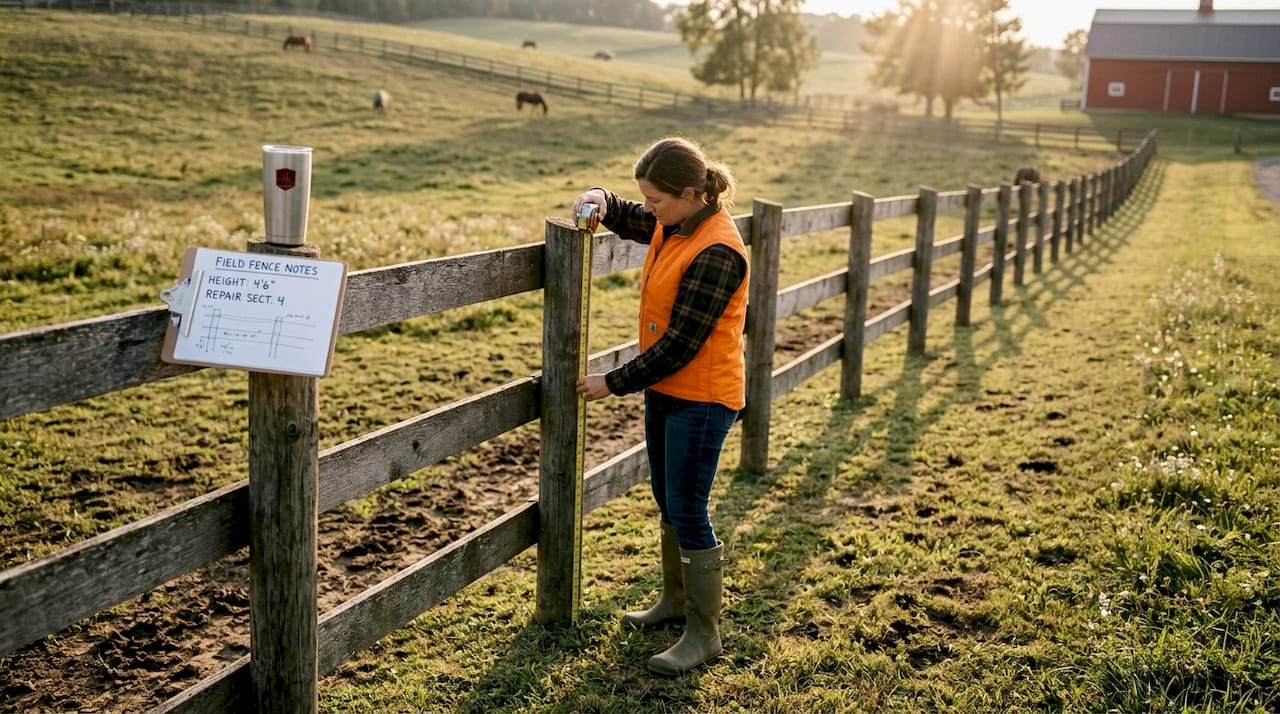
Pro Tip: Before ordering rail fencing materials, walk your entire fence line with measuring tape. Ground undulations change post spacing needs. Order materials only after you have exact measurements.
Pasture management that protects your fence line
Here’s something most fencing guides skip entirely: the ground around your fence is as important as the fence itself. Mud and poor footing near fence lines directly increase the chance that a horse slips into a fence post or panel. Hoof diseases like thrush weaken horses and make them less steady on their feet, increasing that risk further.
Paddock management strategies that reduce fence-related accidents include:
- Rotational grazing. Rotating paddocks every one to two weeks prevents grass from being grazed to mud, which keeps footing stable near fence lines. Paddock rotation setups typically cost $100 to $300 in temporary fencing materials.
- Gravel in high-traffic zones. Gate areas and feeding spots become mud pits fast. Adding a 4-inch compacted gravel layer at these points costs roughly $300 to $1,000 but dramatically improves drainage and hoof health.
- Rubber mats at gates. Mats give horses a stable surface right where they stand most, which is exactly where slips into gate frames happen.
- Drainage grading. If water pools near fence posts, the soil softens and post stability degrades. Grade the ground away from fence lines when possible.
Temporary fencing for rotational grazing plays a direct role in this. Moving horses between paddocks lets overgrazed areas recover and keeps the heaviest foot traffic away from permanent fence lines. The fence itself lasts longer when the ground around it stays firm.
| Management action | Approximate cost | Primary benefit |
|---|---|---|
| Paddock rotation (temp fencing) | $100–$300 | Reduces mud and overgrazing near permanent fences |
| Gravel in high-traffic areas | $300–$1,000 | Improves drainage and hoof health |
| Rubber mats at gate zones | $50–$200 | Prevents slips at high-risk contact points |
| Drainage grading | $500–$2,000 | Stabilizes soil around posts long-term |
Maintaining horse fence safety over the long term
A fence that was installed perfectly in year one can become a hazard by year five if nobody checks it. Maintaining horse fence safety is not glamorous work, but it is the single most overlooked part of horse property management.
Here is a practical maintenance cycle to follow:
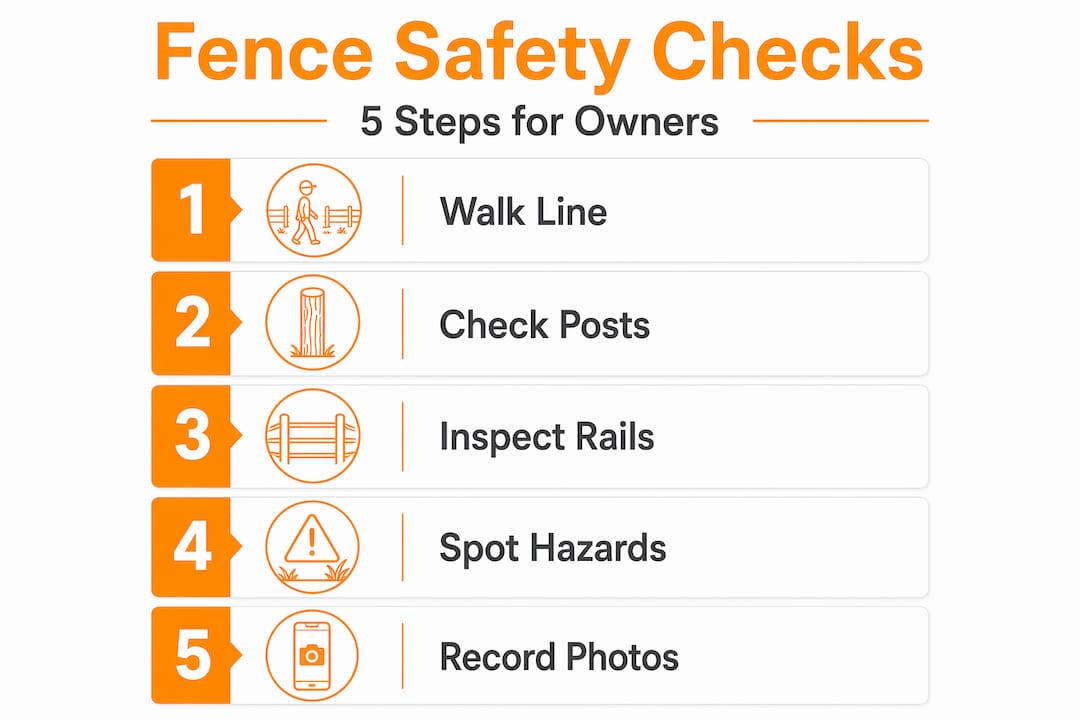
- Bi-annual full inspection. Walk every foot of fence twice a year, spring and fall. Look for rust spots, loose rails, bent posts, and broken wire mesh sections.
- Clean metal surfaces. Use a wire brush to remove loose rust, then wipe down with a diluted vinegar solution. This stops surface oxidation from penetrating deeper into the metal.
- Apply rust-inhibiting paint. After cleaning, apply two thin coats of rust-inhibiting exterior metal paint in spring. This is especially critical in humid climates or areas with heavy snowmelt.
- Lubricate gate hardware. Latches, hinges, and spring mechanisms seize up with seasonal temperature changes. A shot of penetrating lubricant twice a year keeps them functioning reliably.
- Repair chips and scratches immediately. A chipped rail edge or a scratched post is a minor repair today and a laceration risk for your horse tomorrow. Touch-up paint and filler keep small damage from becoming structural damage.
Pro Tip: Take photos of your fence line during each inspection and date them. Side-by-side comparisons make it easy to spot gradual changes in post alignment or rust progression that your eye misses in a single walk-through.
Mesh and specialty fencing options worth knowing
Steel board and wood rail fencing get most of the attention, but metal mesh fencing solves specific problems that traditional options cannot. If your property borders woodland or has deer pressure, a mesh fence does two jobs at once: it contains your horses and keeps wildlife out.
Fixed knot mesh fencing has tensile strength exceeding 1,300 pounds and PVC coatings that extend corrosion resistance up to 30 years. The opening geometry matters for horse safety. Small square openings prevent hoof entrapment. Larger hex web patterns can catch a hoof if a horse paws at the fence.
Key considerations for mesh fencing:
- Install with corner braces and line post spacing no greater than 10 feet to maintain tension without sag.
- Choose black or dark green PVC coated mesh. Dark mesh reduces visual clutter complaints by 40% compared to pale woven wire, and horses judge fence location more accurately against a dark background, which means fewer spooking incidents.
- Pair mesh with a top rail of electric tape or a board rail to improve visibility for the horses at eye level.
- For horse and wire fencing comparisons, the mesh opening size and coating type are the two factors that determine both safety and longevity.
Mesh is not the right choice for every application, but for perimeter fencing on larger properties with wildlife pressure, it offers a combination of durability, safety, and low maintenance that standard board fencing cannot match.
My honest take after years of watching fencing decisions go wrong
I’ve seen horse owners spend $35 per linear foot on premium steel board fencing and then park their horses in a paddock with a drainage problem. Within two seasons, the gate area is a mud pit, horses are slipping near the corner posts, and the owner is blaming the fence manufacturer. The fence is fine. The pasture management is the problem.
The honest truth is that the ground your fence stands on and the footing your horses walk on matter just as much as the material you chose. Safer fencing and yards create fewer incidents for horses and handlers alike, but that safety value never shows up on a single invoice. It shows up over years of avoided vet bills and zero emergency calls.
I’ve also watched owners skip the maintenance cycle entirely because the fence “looks fine.” Surface rust on a steel post looks cosmetic right up until it doesn’t. By the time a post is structurally compromised, you’re replacing it instead of painting it. The bi-annual inspection and two coats of paint in spring is the cheapest insurance you’ll ever buy for a horse property.
My recommendation: budget your fencing project in three parts. Material and installation first. Pasture preparation and drainage second. Annual maintenance third. Most people budget only the first part and then wonder why their fence and their horses are both worse off three years later.
— Juiced
Build a safer horse property with Fencefast

If this guide helped you think differently about horse fencing, Fencefast can help you take the next step. At Fencefast, you’ll find a full selection of steel board fencing components, electric fencing systems, temporary fencing for rotational grazing, and wire mesh options suited to Canadian conditions. Every product is selected with horse safety and durability in mind, and the team has over 26 years of experience helping farmers, ranchers, and horse owners build fences that actually protect their animals. Whether you’re building a new paddock or upgrading an existing fence line, Fencefast offers design consulting and nationwide shipping to get your project done right.
FAQ
What is the safest fencing material for horses?
Steel board fencing is widely considered the safest option because rails flex under impact and release in a controlled way, rather than splintering like wood. It also lasts 25 to 50 years with proper maintenance.
How high should a horse fence be?
Most horse fences should be at least 54 to 60 inches tall, with stallions and high-energy horses requiring 60 to 72 inches to prevent jumping attempts.
How do I prevent mud damage near my horse fence?
Rotating paddocks every one to two weeks and adding compacted gravel in high-traffic areas like gates and feeding zones reduces mud buildup and protects both hooves and fence post stability.
How often should I inspect my horse fence?
A full inspection twice a year, in spring and fall, is the recommended minimum. Each inspection should check for rust, loose rails, bent posts, and gate hardware function.
Can mesh fencing work for horses?
Yes, fixed knot metal mesh with small square openings prevents hoof entrapment and deters wildlife, making it a strong option for perimeter fencing on larger properties. Choose dark PVC coated mesh to improve horse visibility and reduce spooking.

