

Every Canadian rancher knows the frustration of a sagging fence line when managing sprawling pastures. Reliable fencing is not just a matter of convenience but central to keeping livestock safe and contained, especially across challenging Canadian terrain. Gallagher wire strainers stand out as a proven tool for maintaining a taut, stable fence line, offering adjustable tension and rugged durability ranchers can trust season after season.
Table of Contents
- Gallagher Wire Strainer Fundamentals Explained
- Types of Wire Strainers and Choosing Right
- How Gallagher Strainers Prevent Fence Sagging
- Installation Techniques for Optimal Results
- Common Mistakes and Maintenance Tips
Key Takeaways
| Point | Details |
|---|---|
| Wire Strainers Ensure Fence Integrity | Gallagher wire strainers maintain consistent tension across fence lines, preventing sagging and enhancing livestock containment. |
| Proper Selection is Critical | Choose strainers that match the wire gauge and fence type to ensure optimal mechanical advantage and prevent damage. |
| Routine Maintenance is Essential | Regular inspections and tension adjustments are necessary to prevent wire elongation, rust, and other wear issues. |
| Installation Requires Careful Planning | Proper positioning and alignment of strainers during installation ensure long-term durability and effective fence performance. |
Gallagher Wire Strainer Fundamentals Explained
Gallagher wire strainers represent a critical component in maintaining secure and effective livestock fencing across Canadian ranches. These specialized tensioning devices are engineered to solve one of the most persistent challenges in cattle management: keeping fence lines taut, stable, and reliable.
In-line wire strainers allow ranchers to precisely adjust wire tension without compromising fence structural integrity.
The fundamental purpose of a wire strainer is to create consistent tension across multiple wire strands, preventing sagging and maintaining a uniform fence line. Modern Gallagher wire strainers feature innovative design elements like robust metal construction, simple mechanical leverage mechanisms, and compatibility with high-tensile wire systems. These features enable ranchers to quickly adjust wire tension, reducing manual labor and ensuring livestock remain securely contained within designated areas.
Effective wire strainer usage involves understanding key technical aspects. Ranchers should select strainers matching their specific wire gauge and fence type, ensuring proper mechanical advantage and preventing potential wire damage during installation. Most Gallagher wire strainers include integrated ratchet mechanisms that allow incremental tensioning, providing precise control over wire tightness. This allows for gradual adjustments that minimize wire stress while achieving optimal fence performance.
Pro tip: Before installing wire strainers, measure your fence line and calculate anticipated wire tension to select the most appropriate strainer model for your specific livestock management needs.
Types of Wire Strainers and Choosing Right
In livestock fencing, wire strainers come in multiple configurations designed to address specific ranching challenges. Strainer types vary based on mechanical design, tensioning mechanism, and intended wire gauge compatibility. The primary categories include in-line strainers, ratchet-style strainers, and lever-based tension devices, each offering unique advantages for different fencing scenarios.
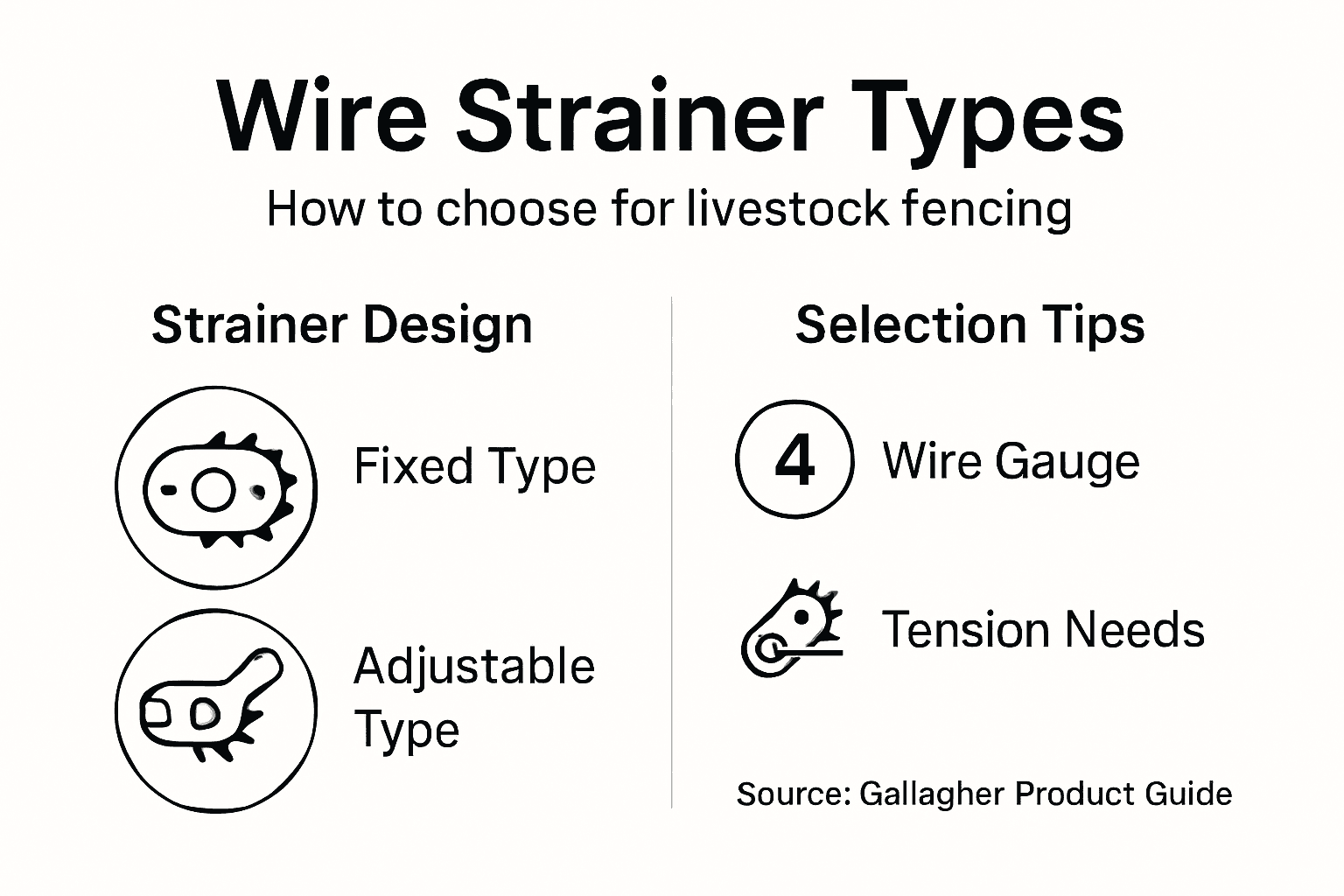
Gallagher wire strainers typically feature two main design approaches: standard fixed-position strainers and adjustable inline models. Fixed-position strainers provide consistent tension for uniform fence sections, while adjustable models allow ranchers to make precise incremental adjustments. Key selection criteria include wire thickness, fence length, terrain complexity, and expected livestock pressure. Ranchers must consider factors like material durability, ease of installation, and compatibility with existing high-tensile wire systems.
Technical specifications play a crucial role in selecting the appropriate wire strainer. Factors such as mechanical advantage, ratchet mechanism quality, and maximum tension capacity determine the strainer’s long-term performance. Strainer engineering guidelines recommend evaluating load-bearing capacity, corrosion resistance, and environmental adaptability when making a selection. Professional-grade strainers often include additional features like rust-resistant coatings, ergonomic handles, and compatibility with multiple wire gauges.
Pro tip: Always test wire strainer tension incrementally and inspect the fence line regularly to ensure consistent wire alignment and prevent unexpected livestock containment failures.
Here’s a quick comparison of common Gallagher wire strainer types and their practical applications:
| Strainer Type | Best Use Case | Tension Adjustment Method | Suitable Wire Gauge |
|---|---|---|---|
| Fixed-position | Straight fence sections | Manual leveraging or ratchet | Medium to heavy |
| Adjustable in-line | Variable terrain or corners | Incremental ratchet control | Light to heavy |
| Lever-based tensioner | Quick temporary repairs | Lever and locking catch | Light to medium |
| Ratchet-style | Frequent tensioning needs | Ratcheting handle mechanism | Medium to heavy |
How Gallagher Strainers Prevent Fence Sagging
Fence sagging represents a critical challenge for Canadian ranchers, potentially compromising livestock containment and overall pasture management. Gallagher wire strainers provide a sophisticated solution to this persistent problem by applying precise, consistent tension across fence lines. Fence installation equipment plays a crucial role in maintaining wire integrity, with strainers acting as the primary defense against gravitational stress and environmental wear.
The mechanical design of Gallagher wire strainers counteracts fence sagging through several innovative mechanisms. These devices utilize advanced ratchet systems that distribute tension evenly, preventing individual wire sections from drooping or becoming slack. By allowing incremental adjustments, ranchers can maintain a uniform fence height that adapts to terrain variations, temperature changes, and seasonal ground movement. This precise tension control ensures that high-tensile wire remains taut, reducing the risk of livestock breaching fence boundaries.
Preventing fence sagging requires more than just initial installation. Gallagher strainers enable ongoing maintenance by providing easy tension regulation mechanisms. Ranchers can quickly identify and correct potential weak points in the fence line, addressing issues before they compromise overall structural integrity. The strainers’ robust construction withstands harsh Canadian weather conditions, from freezing winters to hot summers, ensuring consistent performance across diverse environmental challenges.
Pro tip: Inspect your wire strainers quarterly and adjust tension seasonally to maintain optimal fence performance and prevent progressive wire elongation.
Installation Techniques for Optimal Results
Successful Gallagher wire strainer installation begins with meticulous planning and precise execution. Strainer installation guidelines emphasize the critical importance of proper positioning and attachment to ensure long-term fence integrity. Ranchers must carefully assess terrain, select appropriate mounting points, and prepare the fence line to accommodate the strainer’s mechanical requirements.
The installation process involves several key technical considerations. Ranchers should first clear the installation area of debris and ensure a stable, level surface for mounting. Wire tension must be applied gradually and evenly, using the strainer’s ratchet mechanism to distribute force consistently across the fence line. Proper alignment is crucial, with strainers positioned at strategic intervals to maintain uniform wire tension and prevent potential weak points that could compromise livestock containment.
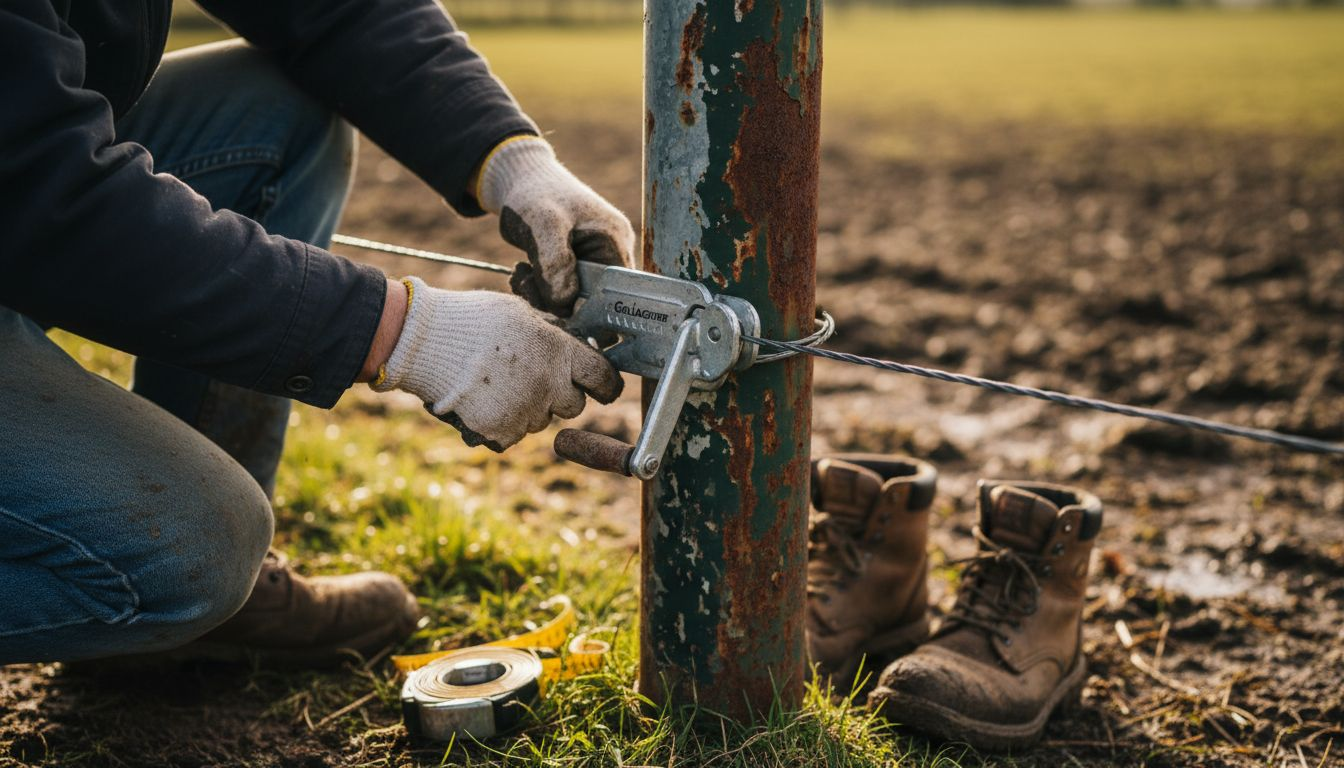
Advanced installation techniques require attention to environmental factors unique to Canadian agricultural landscapes. Seasonal ground movement, temperature fluctuations, and terrain variations demand a flexible approach to wire strainer placement. Professional ranchers recommend using additional support mechanisms like sturdy fence posts and considering local soil conditions when determining strainer placement. This comprehensive approach ensures maximum fence durability and reduces long-term maintenance requirements.
Pro tip: Use a professional-grade tension measuring tool during installation to ensure precise wire tension and prevent over-stretching of high-tensile wire.
Common Mistakes and Maintenance Tips
Ranchers frequently encounter several critical errors when managing Gallagher wire strainers that can compromise fence effectiveness and durability. Strainer maintenance fundamentals highlight the importance of consistent inspection and proactive care. Common mistakes include over-tightening wire, neglecting regular tension checks, and failing to address early signs of corrosion or mechanical wear.
The most significant maintenance challenges stem from environmental exposure and mechanical stress. Canadian ranchers must develop a systematic approach to wire strainer care, focusing on routine visual inspections, lubrication of moving parts, and careful tension monitoring. Rust prevention becomes crucial, especially in regions with significant moisture or salt exposure. Ranchers should clean strainers regularly, removing dirt and debris that could compromise the ratchet mechanism’s smooth operation and potentially cause premature wear.
Preventing long-term damage requires a comprehensive maintenance strategy. This includes documenting each strainer’s installation date, tracking tension adjustments, and replacing components before they reach critical failure points. Professional ranchers recommend creating a seasonal maintenance schedule that aligns with local climate conditions, paying special attention to areas experiencing extreme temperature variations or challenging terrain. Careful documentation helps identify patterns of wear and anticipate potential maintenance needs before they become critical issues.
Pro tip: Create a maintenance log for each wire strainer, recording tension measurements, inspection dates, and any repairs to track long-term performance and predict potential failures.
This summary highlights key maintenance actions and their impact on wire strainer lifespan:
| Maintenance Action | Primary Goal | Impact if Neglected |
|---|---|---|
| Regular inspections | Detect wear and misalignment | Unexpected failures |
| Clean and lubricate parts | Prevent rust and smooth operation | Jamming or premature wear |
| Record adjustments | Track tension changes over time | Missed early deterioration |
| Seasonal tension checks | Adapt for weather changes | Wire loosening or sagging |
Secure Your Livestock Fencing with Trusted Gallagher Wire Strainers
Maintaining tight, reliable fences is essential to protecting your livestock and preserving your ranch’s productivity. The challenges of fence sagging, wire tension control, and durable installation call for high-quality, easy-to-use wire strainers built to withstand tough Canadian conditions. At FenceFast.ca, you will find a wide selection of fencing components and wire strainers designed to deliver precise tension adjustment and long-lasting performance. Our products help you avoid common pitfalls like over-tightening or corrosion while ensuring your fence line stays consistently secure.
Get started today by exploring our fencing solutions and expert resources to enhance your livestock management. Visit FenceFast.ca to shop industry-leading wire strainers and accessories. Take control of your fencing challenges with products tailored to your specific needs. Don’t wait for fence sagging or failures to threaten your operation act now for secure, resilient fencing that keeps your animals safe and your farm thriving.
Frequently Asked Questions
What is the primary function of a Gallagher wire strainer?
The primary function of a Gallagher wire strainer is to create consistent tension across multiple wire strands in livestock fencing, preventing sagging and ensuring a stable, reliable fence line.
How do I choose the right Gallagher wire strainer for my fence?
To choose the right Gallagher wire strainer, consider factors such as wire thickness, fence length, terrain complexity, and expected livestock pressure. Matching these criteria with the strainer’s specifications will ensure optimal performance.
What are the common mistakes made during Gallagher wire strainer maintenance?
Common mistakes include over-tightening wire, neglecting regular tension checks, and failing to address early signs of corrosion or mechanical wear. These can lead to unexpected failures in fence effectiveness.
How can I prevent fence sagging using Gallagher wire strainers?
To prevent fence sagging, ensure proper installation of Gallagher wire strainers by applying even tension, positioning them strategically, and making incremental adjustments as needed. Regular inspections and adjustments help maintain optimal wire tension.

