

Over 500000 American farms rely on electric fence wire to keep cattle safely contained and protect valuable land. For ranchers, this solution is more than a convenience. It solves the challenge of managing herds across vast open spaces without expensive materials or constant repairs. This guide explains how electric fence wire works for cattle, which wire types fit different needs, and what it takes to install, maintain, and manage them for reliable livestock control.
Table of Contents
- What Is Electric Fence Wire For Cattle
- Differences Among Wire Types
- How Conductivity And Durability Vary
- Installation, Spacing, And Energizer Needs
- Risks, Regulations, And Maintenance
Key Takeaways
| Point | Details |
|---|---|
| Electric Fence Wire Benefits | Electric fence wire provides an efficient, low-cost solution for managing livestock and establishing property boundaries, utilizing electrical shocks to deter cattle without the need for substantial physical barriers. |
| Wire Type Variations | Different types of electric fence wire, such as galvanized steel, aluminum, and polywire, offer specific benefits depending on durability, conductivity, and application needs for effective cattle management. |
| Installation Guidelines | Successful installation involves strategic wire height and spacing to ensure effectiveness, along with proper energizer setup to maintain adequate voltage levels for cattle containment. |
| Maintenance and Safety | Regular inspection and maintenance are crucial for ensuring the fence’s functionality and safety; ranchers should adhere to local regulations and implement consistent monitoring practices. |
What is electric fence wire for cattle
Electric fence wire is a specialized agricultural containment solution designed specifically for managing livestock movement and establishing clear property boundaries. Unlike traditional fencing, this innovative system uses electrical conductivity to create a psychological and physical barrier that effectively controls cattle without requiring massive physical infrastructure.
At its core, electric fence wire functions through a simple but powerful principle of delivering a memorable shock that trains livestock to respect boundaries. The wire carries an electrical current between 3,000-5,000 volts, which provides a brief but intense deterrent when an animal makes contact. This shock is not harmful but creates a strong behavioral response that teaches cattle to avoid the fence line.
The versatility of electric fence wire makes it particularly valuable for ranchers and farmers. Across various terrains and property types, this fencing method offers significant advantages:
- Minimal material requirements
- Cost-effective installation
- Flexible deployment options
- Effective predator deterrence
- Quick establishment of livestock boundaries
By combining psychological training with electrical technology, electric fence wire represents a smart, efficient approach to cattle management that goes beyond traditional physical barriers.
Differences among wire types
Electric fence wire for cattle comes in several distinct material variations, each offering unique performance characteristics tailored to specific agricultural needs. Understanding these differences helps ranchers select the most appropriate wire for their livestock management strategy.

The primary wire types include galvanized steel wire, aluminum wire, and polywire, each with specific strengths and limitations. Galvanized steel wire represents the gold standard for permanent electric fencing, providing exceptional durability and low electrical resistance. Its robust construction ensures long-term performance across challenging environmental conditions. Aluminum wire offers superior electrical conductivity but sacrifices some mechanical strength, making it more suitable for specific installation scenarios.
Polywire emerges as a versatile alternative, particularly for temporary or movable fencing solutions. Constructed with multiple thin metal filaments woven into polyethylene, this wire type provides:
- Lightweight and portable design
- Easy installation and repositioning
- Reasonable electrical conductivity
- Cost-effective temporary barrier solution
When selecting electric fence wire, ranchers must balance conductivity, durability, installation requirements, and budget. Each wire type presents a unique combination of electrical and mechanical properties that directly impact fence performance and livestock management effectiveness.
How conductivity and durability vary
Conductivity and durability are critical performance metrics that distinguish electric fence wire types, directly impacting their effectiveness in cattle management. Material composition plays a fundamental role in determining how well a wire transmits electrical current and withstands environmental stress.
Steel wire represents the gold standard for permanent installations, offering exceptional mechanical strength and consistent electrical performance. Smooth steel wire provides low resistance and remarkable durability, making it ideal for long-term livestock containment. In contrast, aluminum wire delivers superior electrical conductivity but sacrifices structural integrity, becoming more susceptible to damage from repeated bending and environmental challenges.
The performance variations among wire types can be compared through key characteristics:
-
Steel Wire
- High mechanical durability
- Consistent electrical transmission
- Minimal signal degradation
- Excellent for permanent installations
-
Aluminum Wire
- Superior electrical conductivity
- Lower mechanical strength
- More prone to environmental wear
- Best for specific short-term applications
-
Polywire
- Lower conductivity
- Limited durability
- Lightweight and portable
- Suitable for temporary fencing
Understanding these nuanced differences helps ranchers select the most appropriate wire type, balancing electrical performance, mechanical resilience, and specific livestock management requirements.
Installation, spacing, and energizer needs
Electric fence installation for cattle demands precision and strategic planning to ensure effective livestock containment. Proper wire placement and voltage management are critical factors that determine the fence’s effectiveness and reliability.
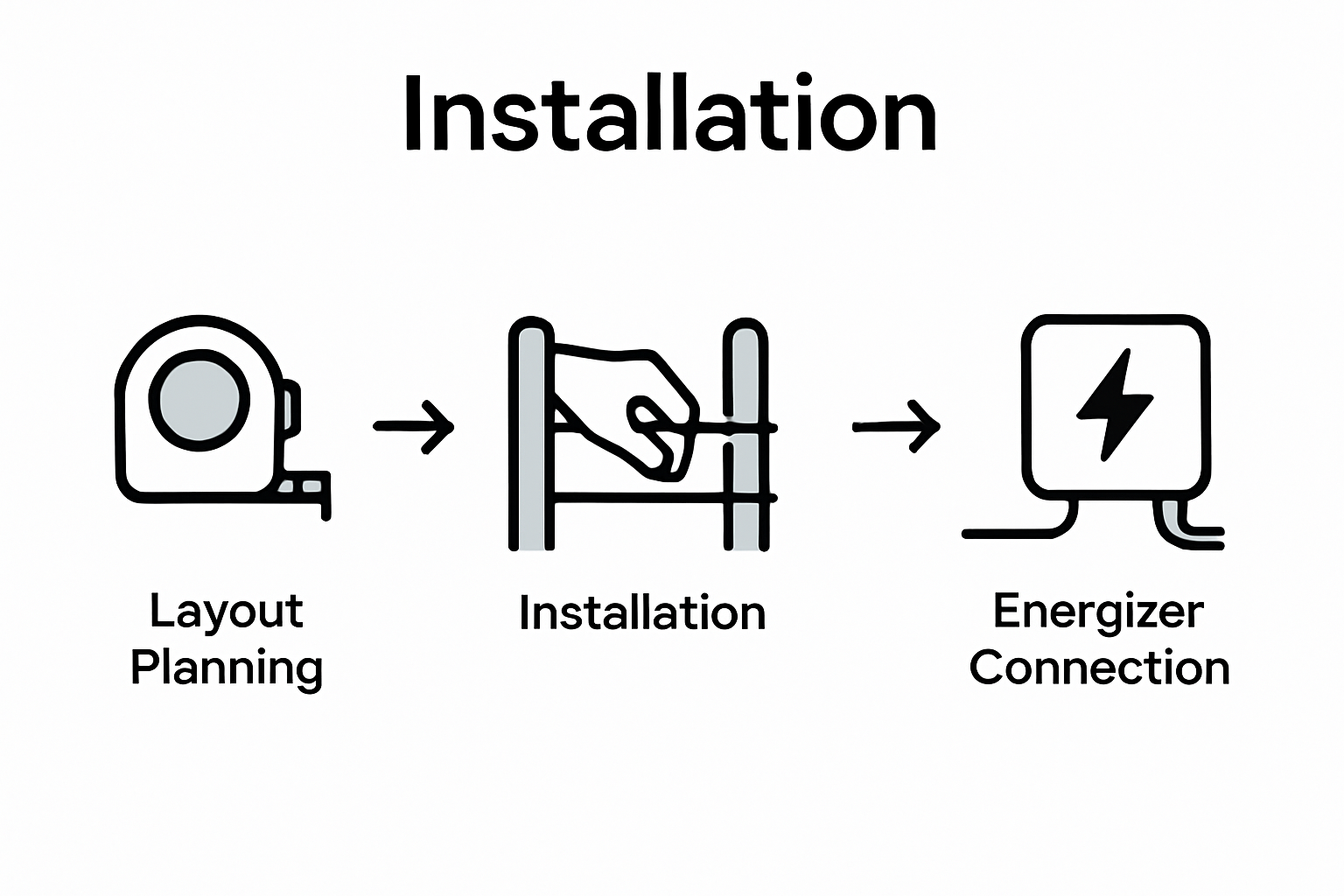
The fundamental considerations for cattle fence installation involve strategic wire height and spacing. Experts recommend positioning the primary wire between 26-32 inches above ground level, with subsequent wires spaced no more than 10 inches apart. This configuration prevents cattle from pushing through or under the fence while maintaining a consistent electrical barrier. Energizer installation requires careful grounding techniques, typically involving multiple ground rods placed in moist soil to ensure optimal electrical transmission.
Key installation requirements include:
-
Wire Height Specifications
- First wire: 26-32 inches from ground
- Subsequent wires: Spaced within 10 inches
- Maintain minimum 5,000 volts during initial training
-
Energizer Connection
- Use 12.5-gauge galvanized insulated lead-out wire
- Install multiple ground rods (6-8 feet long)
- Space ground rods 10 feet apart
- Ensure rods are placed in moisture-rich soil
Successful electric fence installation requires careful planning, precise measurements, and understanding of both electrical principles and cattle behavior. Ranchers must balance technical requirements with practical livestock management strategies to create an effective containment system.
Risks, regulations, and maintenance
Electric fence management involves understanding potential risks, navigating local regulations, and implementing consistent maintenance protocols. Proactive maintenance is critical for ensuring fence effectiveness and livestock safety, requiring ranchers to develop a comprehensive approach to fence monitoring and repair.
Risks associated with electric fencing include potential equipment failure, voltage inconsistencies, and animal injury if not properly configured. Regulatory considerations vary by jurisdiction, but most agricultural regions require electric fences to meet specific safety standards, including minimum and maximum voltage requirements, proper signage, and consistent maintenance records. Ranchers must stay informed about local ordinances that govern electric fence installation and operation.
Key maintenance and risk mitigation strategies include:
-
Regular Inspection Protocols
- Check wire tension monthly
- Test voltage levels consistently
- Inspect insulators for damage
- Clear vegetation near fence lines
-
Safety Considerations
- Post warning signs at fence perimeters
- Maintain voltage between 3,000-5,000 volts
- Train livestock to respect fence boundaries
- Ensure ground connections remain secure
-
Equipment Management
- Replace worn components promptly
- Clean solar panels and energizer systems
- Store backup parts on-site
- Document maintenance activities
Successful electric fence management requires a holistic approach that balances technical precision, regulatory compliance, and proactive maintenance strategies. Ranchers who invest time in understanding and implementing these practices can create safer, more effective livestock containment systems.
Choose the Best Electric Fence Wire for Reliable Cattle Management
Managing cattle effectively requires the right electric fence wire that balances conductivity, durability, and ease of installation. This article highlights the challenges of selecting the ideal wire—whether it is galvanized steel, aluminum, or polywire—each with unique strengths to keep your livestock secure and boundaries clear. If you want a hassle-free solution that supports long-term containment and reduces maintenance, the smart choice starts with high-quality fencing components tailored to your specific needs.

Explore a wide range of premium electric fencing systems and accessories at FenceFast.ca. Benefit from expert advice, durable materials, and nationwide shipping to set up your cattle fence right. Don’t wait until you face costly repairs or livestock escapes. Visit FenceFast.ca today and equip your farm with reliable, effective fencing solutions designed for Canadian ranchers.
Frequently Asked Questions
What are the main types of electric fence wire for cattle?
The main types of electric fence wire for cattle include galvanized steel wire, aluminum wire, and polywire. Each type offers unique benefits and is suited for different applications based on conductivity and durability.
How does the conductivity of electric fence wire affect its performance?
Conductivity plays a crucial role in the effectiveness of electric fence wire. Steel wire offers low electrical resistance and durability, making it ideal for permanent installations. Aluminum wire, while providing superior conductivity, is less durable. Polywire is lightweight and portable but has lower conductivity.
What are the recommended height and spacing for installing electric fence wire?
For effective cattle containment, the first wire should be positioned between 26-32 inches above ground level, with additional wires spaced no more than 10 inches apart. This arrangement helps prevent cattle from pushing through or under the fence.
What maintenance is necessary for electric fences to ensure their effectiveness?
Regular maintenance includes inspecting wire tension monthly, testing voltage levels, checking insulators for damage, and clearing vegetation near fence lines. It’s important to maintain voltage between 3,000-5,000 volts and train livestock to respect the fence boundaries.

