

TL;DR:
- Farm gate security relies on layered measures such as tamper-resistant hardware, layered locks, and smart monitoring to prevent theft. Proper hinge placement, strong chains, and strategic gate positioning create an effective physical barrier, complemented by operational routines and seasonal maintenance. Technology enhances security with cameras, AI systems, and remote access, but must be supported by solid mechanical foundation and disciplined management.
Farm gate security is the first line of defense between your livestock, equipment, and the thieves who target rural properties. Agricultural theft costs Canadian and American farmers millions of dollars each year, and unsecured gates are the most common point of entry. The best gate security tips for farms combine tamper-resistant hardware, layered locking systems, smart monitoring technology, and consistent operational routines. Relying on a single padlock is no longer enough. This guide covers every layer of protection you need, from hinge bolts to AI-powered access control.
1. Gate security tips for farms start with the right hardware
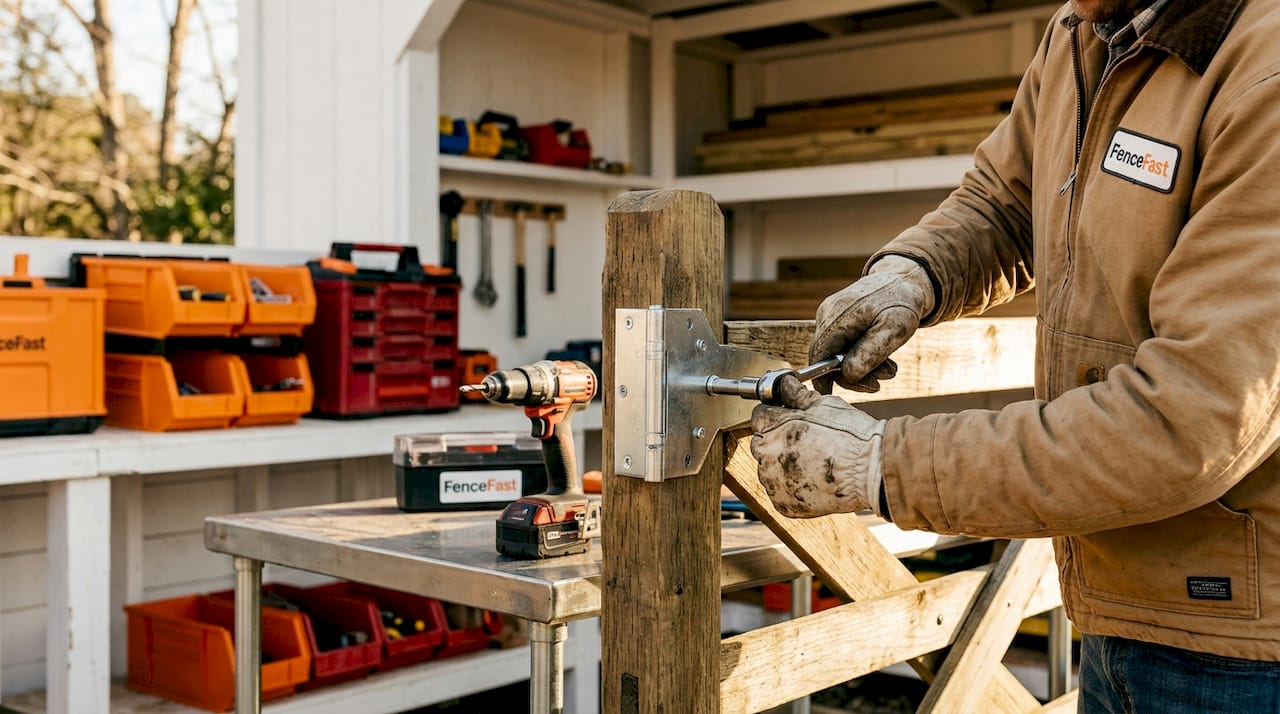
The weakest point on most farm gates is not the lock. It is the hinge. Gate security fails at hinges when hardware can be removed from outside, allowing the entire gate to be lifted free of its post without touching the lock at all. This is the first problem to solve before spending money on anything else.
Galvanized steel hinges and fixings resist corrosion in wet, muddy farm environments where untreated hardware rusts and weakens within a single season. Corrosion is not just cosmetic. A rusted hinge loses structural integrity and becomes a leverage point for anyone trying to force entry.
- Position hinge bolts on the inside of the gate so they cannot be accessed or removed from the road side
- Install anti-lift devices on both hinges to prevent the gate from being lifted off its posts entirely
- Check weight distribution across the gate regularly. Sagging creates gaps and makes the gate easier to force
- Choose locking points positioned away from livestock traffic to avoid snag hazards for animals and equipment
Pro Tip: When replacing gate hardware, choose fixings with a minimum 25-year corrosion warranty. Galvanized or hot-dip coated hardware outlasts standard zinc-plated alternatives by a significant margin in outdoor farm conditions.
2. Locking methods that actually resist forced entry
A padlock is only as strong as the chain it is attached to. Heavy-duty, close-fitting chains reduce the gap available for bolt cutters to gain leverage, which is the single most effective way to improve chain security without spending more on the padlock itself. A loose, looping chain gives an attacker all the room they need.
Hardened shackle padlocks resist cutting and sawing far better than standard models. Look for padlocks rated to at least Grade 4 or higher under EN 12320 standards. The shackle material matters more than the lock body in most forced-entry scenarios.
- Use close-fitting chains wrapped tight around the gate and post with minimal slack
- Choose padlocks with hardened shackles rated for outdoor, high-security use
- Consider combination locks for gates accessed by multiple staff members, eliminating the need to manage physical keys
- Install key card or RFID access systems on high-traffic gates to restrict entry to authorized personnel only
- Add keypad code entry as a backup for electronic systems during power outages
Combining locks with monitoring creates accountability that a lock alone cannot provide. When you know who opened a gate and when, you can identify patterns and catch problems before they become losses.
3. How technology improves gate security beyond mechanical means
Smart technology does not replace mechanical security. It multiplies it. A locked gate with no camera is a deterrent. A locked gate with a visible camera, motion sensor, and remote alert is a system that actively works for you while you sleep.
Security cameras covering gate approaches give you real-time visual monitoring and recorded evidence. Position cameras to capture both the gate itself and the road approach so you can identify vehicles before they reach the property. Motion-activated lighting paired with cameras removes the cover of darkness that opportunistic thieves rely on.
FarmGuard AI integrates RFID, sensors, cameras, and smart locks into a single access management platform designed specifically for agricultural properties. It uses behavior analysis to detect anomalies, such as a gate being opened at an unusual hour, and triggers automated alerts or locking responses. Farms using integrated access control systems like FarmGuard AI saw a 37% reduction in equipment loss and a 40% improvement in policy compliance. Those numbers reflect what happens when access data is tracked and acted on rather than ignored.
Automated gates controlled remotely via mobile devices allow you to lock down the property instantly from anywhere. This is especially useful during calving season, harvest, or any period when contractors are on-site and gate traffic is higher than normal. Centralized dashboards that log every gate event give you an audit trail that is invaluable if a theft or incident does occur.
Pro Tip: Rural connectivity is a real constraint. Before investing in cloud-dependent smart gate systems, confirm your property has sufficient cellular or Wi-Fi coverage at the gate location. Systems with edge processing capabilities work locally even when connectivity drops.
4. Seasonal and operational practices that keep gates secure year-round
Security is not a one-time installation. It is a discipline. Seasonal variations change risk patterns, and farms that treat gate security as a static setup get caught out when conditions shift.
Here is a practical seasonal and operational checklist to follow:
- Winter: Increase perimeter lighting at all gate points. Shorter days reduce natural visibility and create longer windows of darkness that thieves exploit. Confirm every gate is locked at dusk without exception.
- Spring: Inspect all hardware after freeze-thaw cycles. Frost heaving can shift posts and loosen fixings that were tight in the fall.
- Summer: Review access permissions before harvest season. Contractors, seasonal workers, and equipment operators all need temporary access. Document every credential issued.
- Fall: Conduct a full access audit before winter. Revoke credentials for anyone who no longer needs entry. Former employees and contractors with active codes or key cards represent a real insider risk.
- Year-round: Incorporate gate checks into your daily rounds. A five-minute visual inspection catches loose hinges, damaged locks, and signs of tampering before they become a breach.
Regular audits and revoking outdated access are among the most overlooked security measures on working farms. Staff turnover is high in agriculture, and access credentials rarely get updated to match. That gap is where insider threats originate.
Pro Tip: Keep a simple gate log, either paper or digital, that records who has access to each gate and when that access was last reviewed. Review it every 90 days at minimum.
5. How to choose and position farm gates for optimal security
Gate placement affects security before a single lock is installed. A gate positioned flush with the road gives potential thieves the ability to inspect your property, assess your livestock, and test your hardware without ever pulling off the road. That visibility works against you.
Positioning gates near the road limits unnoticed inspection but requires adequate pull-off space for vehicles. The standard recommendation is a three-meter setback from the road edge for gates accessed frequently by trucks or trailers. This allows vehicles to clear the road while the gate is opened, reducing the risk of traffic incidents and giving you space to install a camera with a clear sightline.
| Gate feature | Security benefit |
|---|---|
| Inward-opening gate | Prevents forced entry by pushing; harder to ram open |
| Double-leaf with lockable drop bolts | Secures both leaves independently; eliminates weak center point |
| Loop catches on secondary leaf | Prevents rattling and opportunistic lifting |
| Posts set in concrete | Stops post movement, rot, and leverage attacks on the frame |
| Weather-resistant gate treatment | Extends structural life and maintains hardware integrity |
Setting gate posts in concrete with the correct depth for your soil type is non-negotiable. Clay and chalk soils require deeper footings than sandy ground. A post that moves or rocks under pressure undermines every other security measure attached to it. Choose gates and posts with manufacturer warranties of at least 15 years and confirm they are rated for the weight and wind load of your specific location.
For more on rural fencing best practices, including post installation and material selection, Fencefast has detailed guidance tailored to Canadian farm conditions.
Key takeaways
Effective farm gate security requires layered mechanical hardware, access-controlled locking systems, smart monitoring technology, and consistent seasonal maintenance working together.
| Point | Details |
|---|---|
| Fix hinges first | Internal hinge bolts and anti-lift devices stop gate removal before the lock is ever tested. |
| Use close-fitting chains | Tight chains with hardened padlocks eliminate the leverage space bolt cutters need. |
| Add smart monitoring | Cameras, motion sensors, and systems like FarmGuard AI create accountability and real-time alerts. |
| Audit access regularly | Revoke outdated credentials every season to eliminate insider risk from former staff or contractors. |
| Position gates strategically | A three-meter setback with inward-opening design and concrete-set posts builds security into the structure itself. |
The layer most farmers skip
Most farms I have seen get the lock right and ignore everything else. A hardened padlock on a gate with rusted hinges and no camera is security theater. The lock looks serious. The rest of the setup tells a different story to anyone who takes 30 seconds to look.
The insight that changed how I think about this is simple: gate security is not about the gate. It is about the system around the gate. The hinge, the post, the lighting, the camera angle, the access log, the seasonal check. Each element covers a gap the others cannot. Remove one and you have a gap a determined thief will find.
I have also seen farms invest in expensive smart access systems and then fail to maintain them. Credentials never get revoked. Cameras go offline and nobody notices for weeks. The technology is only as good as the operational discipline behind it. If you are not doing quarterly access audits and daily gate checks, the smartest system on the market will not protect you.
Rural connectivity is the other constraint nobody talks about honestly. Edge-processing systems that work locally without constant cloud connectivity are worth the extra cost on remote properties. Do not buy a system that goes blind every time your internet drops.
Start with the hardware. Fix the hinges. Tighten the chain. Then add monitoring. Then build the operational routine. That sequence works. Skipping to the technology without the mechanical foundation is where most farms waste money.
— Juiced
Secure your farm gates with Fencefast
Fencefast carries durable farm gates, galvanized hardware, electric fencing components, and access control supplies built for Canadian agricultural conditions. Whether you are upgrading a single field gate or securing an entire perimeter, Fencefast has the products and expertise to help you build a system that holds up through every season. From heavy-duty hinges and chain sets to electric gate systems and livestock fencing, every product is selected for real farm use. Explore the full range of farm fencing solutions at Fencefast and get your gates working as hard as you do. Nationwide shipping available across Canada.
FAQ
What is the most effective way to secure a farm gate?
The most effective approach combines internal hinge bolts with anti-lift devices, a close-fitting heavy-duty chain and hardened padlock, and a security camera covering the gate approach. No single measure is sufficient on its own.
How do I stop thieves from lifting my farm gate off its hinges?
Install anti-lift devices on both hinges and position hinge bolts on the inside of the gate so they cannot be accessed from the road side. This prevents the gate from being removed even if the lock is bypassed.
What type of padlock is best for farm gates?
Choose a padlock with a hardened shackle rated to at least EN 12320 Grade 4 for outdoor, high-security use. Pair it with a close-fitting chain to minimize the leverage space available for bolt cutters.
How often should I audit farm gate access permissions?
Conduct a full access audit at least once per season, and immediately after any staff or contractor change. Outdated access credentials are one of the most common sources of unauthorized entry on working farms.
Do smart gate systems work in rural areas with poor connectivity?
Yes, provided you choose a system with edge processing capability that operates locally without relying on continuous cloud connectivity. FarmGuard AI and similar platforms are designed to handle rural connectivity constraints through on-site hardware processing.
Recommended
- Top farm security ideas for Canadian livestock safety – FenceFast Ltd.
- 7 Essential Livestock Fence Safety Tips for Rural Properties – FenceFast Ltd.
- Best practices for rural fencing: Secure your livestock and land – FenceFast Ltd.
- 7 Smart Livestock Fencing Ideas for Farmers and Ranchers – FenceFast Ltd.

