

TL;DR:
- Effective rural fencing depends on matching materials and installation techniques to livestock species, terrain, and climate. Proper post depth below frost lines and well-planned layouts prevent costly failures, while consistent electric fence maintenance ensures livestock safety. Planning and corner reinforcement are essential for long-lasting fences that support daily operations and future expansion.
Effective rural property fencing is the strategic use of species-matched materials and proven installation techniques to secure livestock and manage land efficiently. A fence that works for a cattle operation in Alberta will fail a sheep producer in Ontario within two seasons. The difference comes down to three variables: the animal you’re containing, the terrain you’re working with, and the installation standards you hold yourself to. These rural property fence tips cover all three, with enough specificity to save you money, time, and the headache of rebuilding a fence line that was wrong from the start.
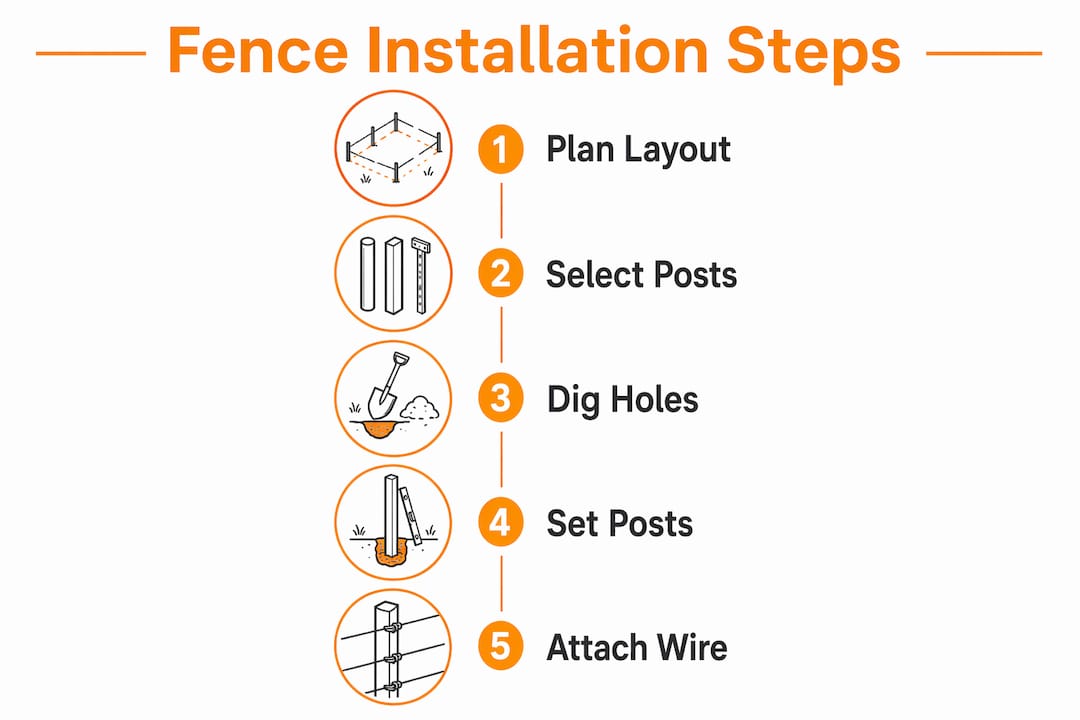
What are the best fencing types for different livestock?
Matching your fence to your livestock species is the single most impactful decision you’ll make on a rural property. Species-specific fencing dramatically reduces escapes and fence damage compared to generic one-size-fits-all designs. The wrong fence doesn’t just fail. It fails expensively, often at the worst possible time.
| Fence type | Best for | Key advantage | Main limitation |
|---|---|---|---|
| Woven wire (field fence) | Sheep, goats, pigs | Tight mesh prevents small animals from pushing through | Higher material cost than barbed wire |
| Barbed wire (3-5 strand) | Cattle | Cost-effective over large acreage | Not suitable for horses or small livestock |
| Board or timber rail | Horses | Highly visible, low injury risk | Requires regular painting and maintenance |
| High-tensile smooth wire | Cattle, deer | Long spans, low maintenance | Requires proper tensioning equipment |
| Electric polywire | Rotational grazing, temporary use | Fast to set up and move | Requires consistent power and training |
Sheep and goats need woven wire with openings no larger than 4 inches by 4 inches. Cattle fencing works well with three to five strands of barbed wire at 12 to 16 foot spacing between posts. Horses are a different problem entirely. They panic and run into fences, so board rail or high-visibility smooth wire is the standard. Barbed wire around horses is a liability you don’t want.
Terrain matters as much as species. Rocky hillsides favor high-tensile wire because it handles ground movement better than rigid woven panels. Flat, open pasture is where barbed wire earns its cost advantage. Wooded or brushy areas often need a combination approach, with woven wire at the base to stop smaller animals and a top strand of barbed or electric wire to deter larger ones.
Pro Tip: If you’re fencing for multiple species on the same property, design your fence for the most demanding animal first. A fence that contains goats will contain cattle. The reverse is never true.
How to install fence posts for durability in any soil
Post installation is where most rural fencing projects succeed or fail. Incorrect footing depth is one of the leading causes of fence failure, and it’s entirely preventable with the right planning before you drive a single post.
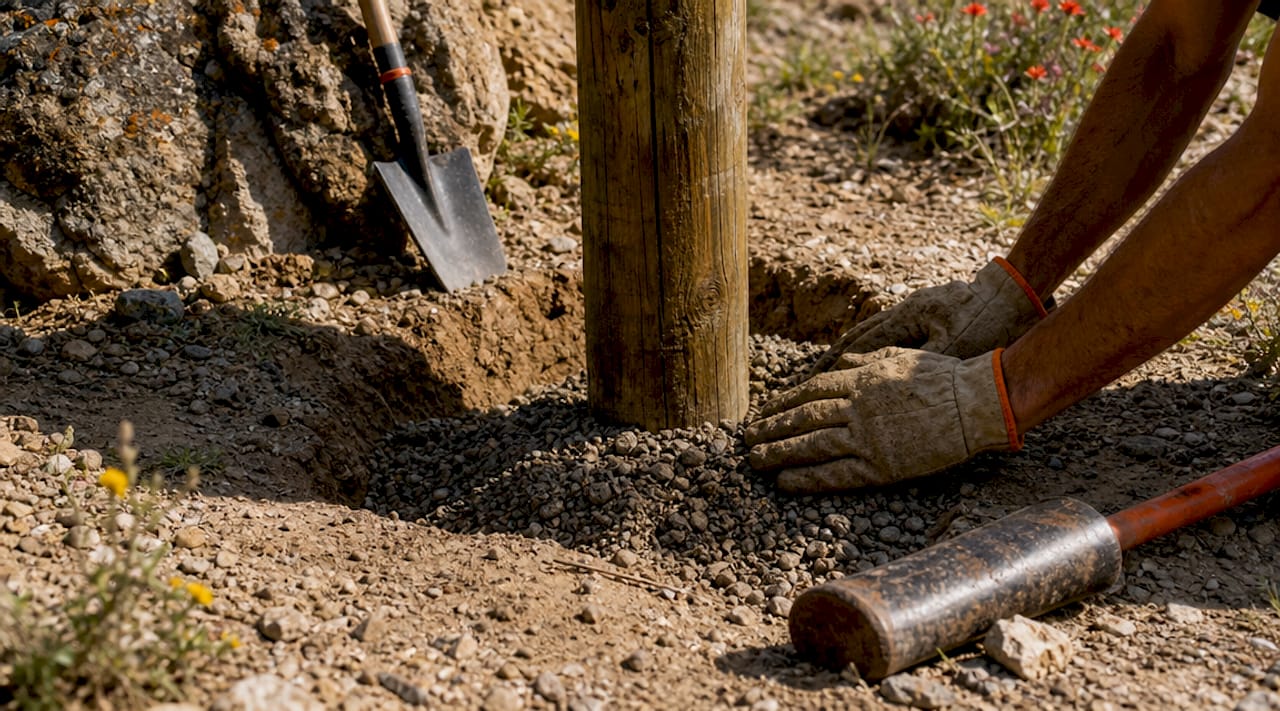
The frost line is your starting point in any northern climate. In Canadian prairie provinces and northern U.S. states, frost penetration can reach 48 inches or deeper. Your post must extend below that depth or seasonal freeze-thaw cycles will heave it out of the ground within a few winters. The table below gives general embedment targets by climate zone.
| Climate zone | Frost depth | Recommended post depth |
|---|---|---|
| Southern/mild (e.g., coastal BC) | 12-18 inches | 24-30 inches |
| Moderate (e.g., southern Ontario) | 24-36 inches | 36-42 inches |
| Northern/severe (e.g., prairies, northern Canada) | 36-60 inches | 48-60 inches |
Post material selection determines how long your fence lasts without replacement. Pressure-treated wood and galvanized steel have different expected lifespans and suit different soil conditions. Pressure-treated wood rated for ground contact (UC4B or higher) handles most rural applications. Galvanized steel T-posts are faster to install and work well for interior cross-fencing but lack the structural strength needed for corners and braces.
Corner and brace assemblies are non-negotiable on any wire fence. A properly built H-brace or diagonal brace post assembly absorbs the tension of hundreds of feet of wire. Without it, your corner posts lean inward within a season and your wire goes slack. The standard H-brace uses two posts set 8 feet apart with a horizontal rail and diagonal wire brace. For high-tensile wire, double-brace assemblies at every corner and gate are the minimum standard.
Pro Tip: In sandy or loose soils, concrete footings on corner posts add years of stability. In clay-heavy soils, concrete can actually trap moisture and accelerate rot in wood posts. Know your soil before you mix a bag.
Electric fencing tips, troubleshooting, and maintenance
Electric fencing works as a psychological barrier, not a physical one. The animal learns to respect the fence after one or two shocks. That means the fence must deliver a reliable, consistent charge every time the animal tests it. Vegetation shorts, inadequate grounding, and bad energizer connections are the three most common reasons electric fences stop working.
Energizer sizing is where most people underestimate their needs. A general rule: 1 joule of output per mile of fence wire for cattle. Add more joules for sheep, goats, or any animal with a heavy coat that reduces conductivity. A fence covering 10 miles of wire with multiple strands needs at least 10 joules of stored energy output, not just peak output listed on the box.
Grounding is the part most people get wrong. Ground rods need at least 3 feet of length per joule of energizer output, spaced 10 feet apart, and installed close to the energizer but away from utility lines. In rocky or dry soils, you may need more rods or angled installation to achieve adequate ground contact. A fence with a powerful energizer and poor grounding delivers almost no shock at the fence line.
Here is a practical troubleshooting sequence to follow before you replace any equipment:
- Walk the fence line and clear any vegetation touching the wire. Grass and weeds are the most common short circuit.
- Test voltage at the energizer output terminal first. If it reads below 4,000 volts, check your ground system before anything else.
- Test voltage at intervals along the fence. A significant drop between the energizer and a distant point indicates a short or break in that section.
- Inspect all connections, insulators, and gate handles for corrosion or physical damage.
- Check that your energizer is properly grounded and that ground rods are fully driven and connected with galvanized wire.
For rotational grazing systems, temporary polywire fencing gives you the flexibility to move paddock boundaries without rebuilding permanent infrastructure. Polywire works well for cattle when the energizer is sized correctly and animals have been trained to respect the fence. You can find detailed setup guidance in Fencefast’s electric fence setup guide and a full troubleshooting walkthrough for when things go wrong.
Common fencing mistakes and how to plan fence lines well
The most expensive fencing mistakes are the ones made before the first post goes in the ground. Poor planning locks you into a layout that fights your terrain, your livestock, and your daily workflow for years. These are the errors that show up most often on rural properties, and how to avoid them.
- Under-specifying for the animal. Using cattle-grade barbed wire for sheep or goats is the most common and costly mistake. Sheep will push through or under a fence that cattle respect completely. Match the fence spec to the most challenging animal on your property.
- Ignoring soil conditions. Clay soils heave posts. Sandy soils let them lean. Rocky ground makes driving posts to proper depth nearly impossible without mechanical equipment. Survey your soil type before choosing post material and installation method.
- Poor post spacing. Spacing line posts too far apart reduces wire tension and allows animals to push through. Post spacing varies from 8 to 20 feet depending on fence type and terrain. Tighter spacing on hills and curves is not optional.
- Skipping seasonal inspections. Timely checks and reinforcement after adverse weather prevent small problems from becoming full fence failures. A post heaved by frost in March becomes an escape point by May.
- Placing gates in the wrong locations. Gates should align with your daily movement patterns. A gate that requires a tractor to make a three-point turn to exit costs you time every single day. Plan gate placement before you set posts.
Future-proofing your fence layout means thinking about where your operation might expand. Leave room for additional cross-fencing to divide paddocks for rotational grazing. Mark your boundary lines with permanent rural property boundary markers before you build, and confirm your fence line against your legal survey. Building on the wrong side of a property line is a dispute you don’t want. You can review livestock fencing regulations in Canada to understand your legal obligations before you break ground.
Key takeaways
Effective rural fencing requires species-matched materials, frost-depth post installation, and consistent electric fence maintenance to protect livestock and prevent costly failures.
| Point | Details |
|---|---|
| Match fence to species | Woven wire for sheep and goats, barbed wire for cattle, board rail for horses. |
| Install posts below frost line | Northern climates require 48 to 60 inches of embedment to prevent heaving. |
| Ground electric fences correctly | Use 3 feet of ground rod per joule of output, spaced 10 feet apart. |
| Inspect after every major weather event | Frost, wind, and ice damage create escape points that compound quickly. |
| Plan gate and fence layout before building | Misplaced gates and fence lines create daily workflow problems that are expensive to fix. |
What I’ve learned after years of watching fences fail
Most fence failures I’ve seen weren’t material failures. They were planning failures. Someone bought the right wire and the right posts, then installed them in the wrong configuration for their soil, their animals, or their climate. The fence looked fine on day one and was a problem by year two.
The advice I give most often is this: spend more time on your corners and braces than on anything else. A fence is only as strong as its anchor points. I’ve watched beautifully built line sections go slack because the corner brace was undersized or the diagonal wire wasn’t tensioned properly. Fix the corners first, and the rest of the fence holds itself.
I also think people underestimate how much a fence needs to work with your daily routine, not just contain your animals. The best fence I’ve ever seen on a working cattle operation had gates in exactly the right places, cross-fencing that matched the paddock rotation schedule, and a maintenance routine built into the weekly workflow. It wasn’t the most expensive fence on the property. It was the most thought-out one.
One more thing: don’t skip the livestock fence safety review before you finalize your design. Injury risks from barbed wire, sharp post caps, and sagging wire are real, and they affect both your animals and the people working around them.
— Juiced
Get the right fencing products from Fencefast
Fencefast carries everything you need to build a fence that lasts, from woven wire and barbed wire to complete Gallagher electric fencing systems and Gallagher eShepherd virtual fencing technology. Whether you’re building a permanent perimeter for cattle, setting up rotational grazing paddocks with polywire, or replacing aging infrastructure on a mixed-species property, Fencefast has the products and the expertise to match your specific situation. As an authorized Gallagher dealer with 26 years of experience serving Canadian farmers and ranchers, Fencefast ships nationwide and offers design consulting for complex projects. Visit Fencefast to browse the full product catalog and get your fencing project moving.
FAQ
What fence type works best for sheep on rural properties?
Woven wire with openings no larger than 4 inches by 4 inches is the standard for sheep containment. Sheep push through or under fences that cattle respect, so tighter mesh and closer post spacing are required.
How deep should fence posts be set in cold climates?
In northern Canadian provinces and cold U.S. states, posts should be set 48 to 60 inches deep to extend below the frost line. Shallower installation leads to heaving and fence failure within a few winters.
Why is my electric fence not delivering a strong shock?
The most common cause is poor grounding or vegetation touching the wire. Check your ground rods first, clear any grass or weeds contacting the wire, then test voltage at intervals along the fence line before replacing the energizer.
How often should I inspect my rural fence?
Inspect your fence at least twice per year, in spring after frost and in fall before winter. Also walk the line after any major storm, as wind, ice, and flooding are the most common causes of sudden fence damage.
Do I need a survey before building a fence on rural property?
Yes. Confirm your fence line against your legal survey before you set a single post. Building on the wrong side of a property boundary creates legal disputes and forces costly rebuilds.
Recommended
- 7 Smart Livestock Fencing Ideas for Farmers and Ranchers – FenceFast Ltd.
- Understanding Electric Fence Basics for Rural Property – FenceFast Ltd.
- 7 Essential Livestock Fence Safety Tips for Rural Properties – FenceFast Ltd.
- Best practices for rural fencing: Secure your livestock and land – FenceFast Ltd.

