

TL;DR:
- Rotational fencing enhances forage use, supports higher stocking rates, and builds soil health through planned rest periods.
- Temporary electric fencing offers cost-effective, flexible solutions that facilitate sustainable grazing and reduce environmental impacts.
If you’re watching your pastures thin out and your cattle graze the same worn patches every season, the problem probably isn’t your land. The benefits of rotational fencing, which the industry commonly calls managed or management-intensive grazing supported by cross-fencing, go well beyond giving grass a break. Done right, a proper fencing system raises stocking rates, rebuilds soil, reduces your feed bill, and lowers your environmental footprint at the same time. This article breaks down what rotational fencing actually delivers, and what it takes to make it work.
Key takeaways
| Point | Details |
|---|---|
| Forage utilization improves fast | Cross-fencing into paddocks reduces waste and raises the stocking rate your land can support. |
| Temporary electric fencing cuts costs | Portable electric setups cost far less than permanent fencing and adapt to your rotation as conditions change. |
| Soil health builds with every cycle | Planned rest periods enabled by fencing improve root depth, water infiltration, and resistance to drought. |
| Emissions drop with adaptive grazing | Adaptive multi-paddock grazing averages 54% lower greenhouse gas intensity than baseline systems. |
| Water access determines success | Paddocks need water within 800 feet, or uneven grazing undermines every other benefit you’ve built. |
1. Benefits of rotational fencing for forage utilization and stocking rates
When cattle graze continuously, they return to the same plants before those plants fully recover. The result is overuse in some spots and waste in others, with total forage productivity dropping year over year. Cross-fencing changes that equation entirely.
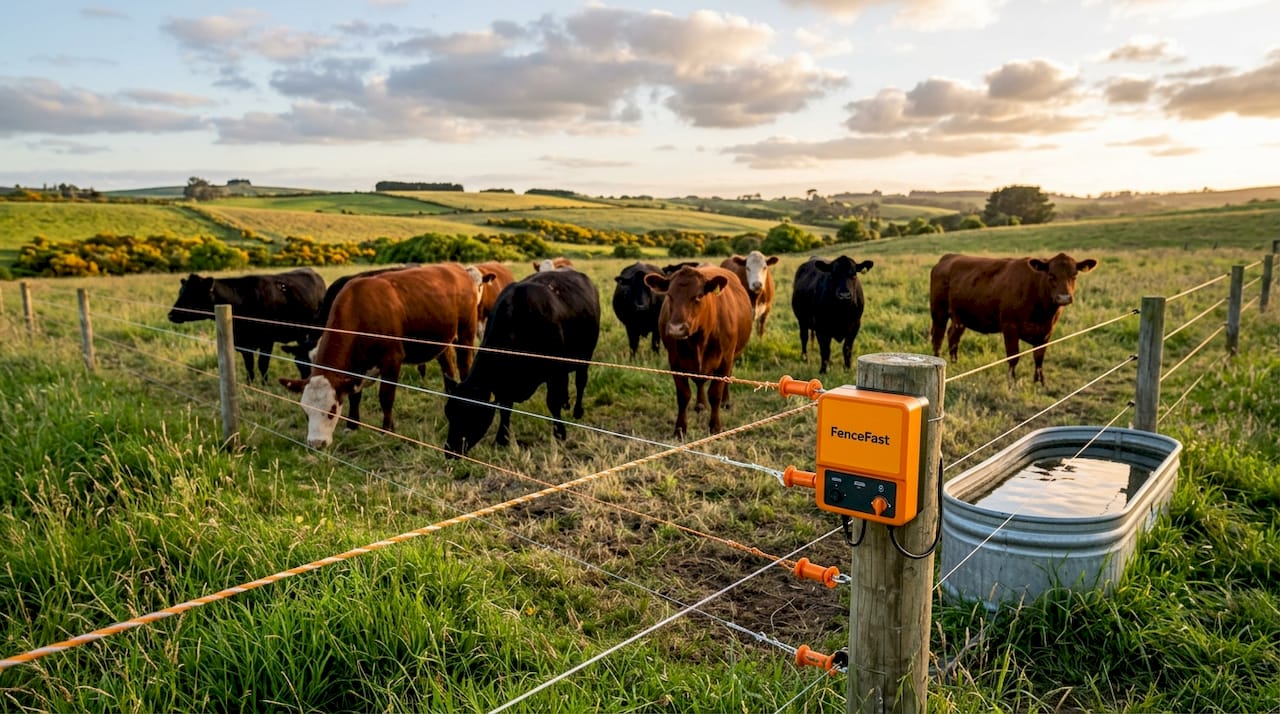
By dividing your acreage into smaller paddocks and controlling when livestock enter and exit each one, you allow plants to recover between grazings. Management-intensive grazing with cross-fencing substantially improves pasture use and raises the stocking rate your land can support compared to continuous grazing. That means more animals per acre without degrading your land base.
The practical mechanics are straightforward. Livestock graze each paddock down to a target residual height, typically 3 to 6 inches, before you move them on. Grazing to residual height targets supports strong regrowth and maintains forage quality across the entire rotation. You get more total dry matter from the same acres.
- Controlled paddock access prevents selective overgrazing
- Rest periods rebuild root reserves and plant density
- Higher forage yield per acre supports more animals without feed supplementation
- Waste from trampling and fouling decreases when animals move frequently
Pro Tip: Count your paddocks before you count your cattle. A minimum of six paddocks gives you a workable rotation, but twelve or more gives you the flexibility to extend rest periods during dry spells without sacrificing stocking density.
2. Why temporary electric fencing makes rotational grazing affordable
Permanent board fencing or woven wire across an entire property is expensive and inflexible. Once it’s in the ground, your paddock layout is fixed regardless of how forage growth changes season to season. Temporary electric fencing solves both problems.
Temporary electric fencing is quick to set up, quick to move, and costs a fraction of permanent alternatives. A single-strand polywire system with step-in posts can divide a large paddock in an afternoon. If drought shortens forage growth and you need to consolidate paddocks, you pull the wire and reset. No tools, no wasted infrastructure.
The key to making it work comes down to three things:
- Consistent voltage. Electric fence works as a psychological barrier, not a physical one. If the voltage drops and cattle learn the fence won’t bite, your rotation falls apart.
- Proper livestock training. Introducing cattle to a temporary electric fence with a hot wire in a controlled setting first saves you from broken fences and lost animals later. Livestock training requirements are a common failure point that operators overlook.
- Regular maintenance. Weeds and grass contacting the wire drain voltage. Walk your lines regularly, especially after rain.
Cost savings from rotational grazing with temporary fencing compound over time. You reduce overgrazing damage that requires reseeding, cut back on hay supplementation as pasture productivity rises, and avoid expensive fence replacements tied to permanent infrastructure.
Pro Tip: Run a dedicated ground rod system at least 6 feet deep and no more than 100 feet from your energizer. A weak ground is the most common reason a fence loses voltage and cattle lose respect for it.
3. How rotational fencing improves soil health over time
Soil improvement is one of the most under-discussed rotational pasture benefits. Farmers focus on the animals, but what’s happening underfoot is just as significant. Planned rest periods allow plant roots to rebuild and penetrate deeper, which restructures the soil from the inside out.
Planned grazing rest periods improve soil aggregation, water infiltration, and resilience against both erosion and drought. When roots grow deeper, they create channels that allow rainwater to penetrate rather than run off. That matters enormously during heavy rain events and extended dry spells.
Here’s what the soil data actually shows:
| Soil Metric | Continuous Grazing | Rotational Grazing |
|---|---|---|
| Water infiltration rate | Low to moderate | Significantly higher |
| Organic matter accumulation | Slow or declining | Steadily increasing |
| Erosion risk during heavy rain | High | Reduced |
| Root depth and density | Shallow, sparse | Deep, dense |
| Drought recovery speed | Slow | Faster with rest periods |
Manure distribution also improves with rotation. When cattle move through paddocks on a regular schedule, they deposit nutrients more evenly across your acreage rather than concentrating waste near water sources and shade. That even distribution feeds the soil biology without the hotspot problems that degrade soil structure in continuous systems.
Fencing is the critical enabler here. Ecological benefits from grazing come from the planned recovery periods, not from the movement itself. Without fencing to enforce those rest periods, cattle will simply return to their favorite spots.
4. Greenhouse gas reduction and climate outcomes
The sustainability case for rotational fencing has gotten much stronger with recent research. Adaptive multi-paddock grazing produces 54% lower greenhouse gas emissions intensity on average compared to baseline systems, while actively building soil organic carbon. That’s not a marginal gain. That’s a structural difference in how your land interacts with the atmosphere.
The mechanism works through two pathways. First, well-managed pastures with deeper root systems sequester more carbon in the soil. Second, healthier pastures produce higher-quality forage, which means livestock convert feed more efficiently and produce less methane per unit of production.
A few important points to understand:
- Not all rotational systems deliver the same climate outcomes. Grazing and rest design choices strongly influence both greenhouse gas results and soil carbon accrual.
- Shorter rest periods with more frequent moves don’t automatically outperform longer rest periods. Match your rotation to actual forage recovery, not a fixed calendar.
- The climate benefits build over years, not seasons. Soil carbon accumulation is a long-term investment in your land’s productivity and value.
These outcomes matter to regulators, buyers, and lenders who are increasingly evaluating farms on sustainability metrics. A properly fenced rotational system gives you documentation of the land management practices behind those results.
5. Practical factors: labor, water access, and cost-share funding
The biggest reason producers abandon rotational grazing isn’t that it doesn’t work. It’s that they set up a system that doesn’t match their labor capacity or infrastructure. Only about 40% of producers use any rotational grazing at all, and a significant share of those see limited results because the rotation frequency doesn’t fit their operation.
Weekly paddock moves represent the sweet spot for most cattle operations. They deliver meaningful benefits without requiring daily labor. More frequent moves yield incremental gains but can push labor demands to unsustainable levels on understaffed farms.
Water infrastructure is non-negotiable. Water access within 800 feet of each paddock prevents uneven grazing patterns where cattle cluster near the water source and overgraze nearby areas. If you design your paddocks without water distribution in mind first, your fencing investment will underperform.
Here’s how the infrastructure investment compares in practical terms:
| Implementation Factor | Without Planning | With Strategic Design |
|---|---|---|
| Labor per rotation | High, irregular | Predictable weekly routine |
| Water infrastructure | Single point, limited paddocks | Distributed lines, all paddocks covered |
| Fencing cost | High upfront permanent | Lower with temporary electric lines |
| Cost-share access | Often missed | USDA EQIP covers up to 75% of eligible costs |
The USDA EQIP program typically covers up to 75% of fencing and water infrastructure costs for qualifying rotational grazing projects, with up to 90% available for beginning or underserved producers. That changes the financial math significantly. Pair that with rotational grazing planning resources that help you map your paddock layout before you buy a single post, and the startup cost barrier drops considerably.
My honest take on what rotational fencing actually requires
I’ve seen a lot of producers invest in fencing and wonder why their pastures aren’t bouncing back the way they expected. The answer almost always comes back to two things: water and expectations.
Water access has to come before fencing design. Not as an afterthought and not as phase two of the project. If your cattle don’t have water within reach of every paddock, they’ll cluster, overgraze, and compact soil right where you least want it. Fix your water distribution first, then lay out your fence lines.
The other honest reality is that rotational fencing rewards patience. You won’t see soil improvements in the first season. Forage yields improve faster, usually within a full growing cycle, but the deeper benefits in soil structure, drought resilience, and emissions reduction take several years to materialize. Producers who quit after one season haven’t failed at rotational grazing. They’ve just stopped before the payoff.
The economics work, but they work on a timeline. The cost savings from rotational grazing accumulate as hay supplementation drops, reseeding costs fall, and stocking capacity grows. Build a system you can actually maintain with your current labor, even if that means fewer paddocks than the textbook recommends. A six-paddock system you stick with beats a twelve-paddock system you abandon in August.
— Juiced
Set up your rotational system with Fencefast
Fencefast carries the electric fencing components, temporary polywire systems, and power supplies that make a working rotational setup possible without the cost of full permanent infrastructure. Whether you’re dividing an existing pasture into paddocks for the first time or adding water-side distribution lines to a larger operation, the right fencing products matter as much as the plan behind them. Fencefast also supports Canadian farmers exploring funding programs that offset the cost of fencing and water infrastructure for rotational grazing. Browse the full catalog or reach out for setup guidance tailored to your acreage and herd size.
FAQ
What are the main benefits of rotational fencing?
Rotational fencing improves forage utilization, increases stocking capacity, builds soil health, and reduces greenhouse gas emissions intensity. It also lowers long-term feed costs by allowing pasture to fully recover between grazing periods.
How does temporary electric fencing work for rotational grazing?
Temporary electric fencing uses a psychological barrier effect. A properly energized wire train livestock to avoid contact, allowing you to subdivide pastures quickly and move livestock on a regular schedule without permanent infrastructure costs.
How many paddocks do you need for rotational grazing?
A minimum of six paddocks is workable for most operations. More paddocks give you flexibility to extend rest periods without reducing stocking density, which becomes especially important during drought or slow forage growth seasons.
Can rotational fencing really reduce greenhouse gas emissions?
Yes. Research shows adaptive multi-paddock grazing averages 54% lower greenhouse gas emissions intensity than conventional systems, while building soil organic carbon over time through deeper root systems and improved pasture health.
What funding is available for rotational fencing projects?
The USDA EQIP program covers up to 75% of eligible fencing and water infrastructure costs for rotational grazing, with up to 90% available for beginning or underserved producers. Canadian producers should also check provincial BMP and OFCAF programs through resources like Fencefast.
Recommended
- Rotational Grazing Fencing: Maximizing Pasture Health – FenceFast Ltd.
- Rotational Grazing Fence: Boosting Pasture Health and Herd Control – FenceFast Ltd.
- Key benefits of farm perimeter fencing for Canadian farmers – FenceFast Ltd.
- Rotational Grazing Explained: Boost Pastures and Livestock Health – FenceFast Ltd.

