

High tension and harsh Canadian weather can put even the toughest fencing systems to the test, leaving many farmers frustrated with insulators that fail just when they’re needed most. Reliable livestock containment starts with components designed for real farm pressure, not just everyday wear. Discover why choosing a reinforced polymer insulator with embedded metal support can transform fence safety and reduce costly repairs, helping you keep animals secure year-round on rural properties.
Table of Contents
- Defining High Tensile Fence Insulators and Misconceptions
- Types of High Tensile Fence Insulators Explained
- Key Features for Durable Electric Fencing
- Proper Installation and Common Pitfalls
- Comparing Insulator Alternatives for Rural Properties
Key Takeaways
| Point | Details |
|---|---|
| High Tensile Insulators Offer Superior Performance | Unlike standard insulators, high tensile options are engineered with reinforced materials and metal inserts to withstand extreme tension and harsh weather conditions. |
| Understanding Material Composition Is Key | High tensile insulators differ significantly in construction, making them crucial for livestock containment systems due to their durability and longevity. |
| Misconceptions Can Lead to Poor Choices | Recognizing common misconceptions about insulators can help farmers make informed purchasing decisions and avoid unnecessary costs. |
| Proper Installation Is Essential | Correct installation techniques are vital for ensuring consistent tension and preventing failures in the fencing system. |
Defining High Tensile Fence Insulators and Misconceptions
High tensile fence insulators are specialized components designed for high-tension fencing systems that demand durability under extreme conditions. Unlike standard plastic or ceramic insulators used in low-tension fences, these insulators feature reinforced polymer compounds and internal metal inserts that prevent wire slipping, cracking, or rotation under mechanical stress.
Think of them as the difference between a regular gate hinge and industrial-grade equipment. Standard insulators work fine for light-duty applications, but they’ll fail quickly when you’re dealing with the constant tension of high tensile wire carrying current through livestock containment systems.
What Actually Makes Them High Tensile
The key distinction lies in construction and material science. High tensile insulators incorporate reinforced engineering plastics with embedded metal components that absorb and distribute pressure evenly across the wire connection point.
Core features that set them apart:
- Reinforced polymer compounds that resist cracking under stress
- Internal metal inserts preventing wire rotation and slippage
- Superior mechanical strength compared to basic plastic models
- Extended lifespan in harsh Canadian weather conditions
- Engineered grip points that maintain consistent wire tension
These insulators are engineered to withstand extreme mechanical stress that would destroy conventional options, making them essential for modern livestock fencing.
Here’s how high tensile fence insulators compare to standard insulators in key areas:
| Attribute | High Tensile Insulators | Standard Insulators |
|---|---|---|
| Material Composition | Reinforced polymers, metal inserts | Basic plastics or ceramics |
| Performance Under Tension | Maintains wire grip and alignment | Susceptible to slipping and cracking |
| Weather Resistance | Engineered for extreme temperatures | Limited durability in harsh climates |
| Typical Lifespan | 10+ years in field conditions | 3-5 years under stress |
| Initial Cost | Higher upfront investment | Lower, but frequent replacement needed |
Common Misconceptions
Farmers often hold several mistaken beliefs about these insulators that lead to poor purchasing decisions. Understanding the truth saves money and prevents fence failures.
Misconception 1: “They’re just thicker regular insulators.”
Not true. The difference isn’t just size or thickness—it’s material composition and engineering. High tensile insulators use completely different polymer formulations and internal reinforcement strategies.
Misconception 2: “Any insulator works with high tensile wire.”
Wrong. Standard insulators cannot handle the tension levels. They’ll eventually slip or break, leaving your fence compromised and your livestock at risk.
Misconception 3: “They cost way too much to justify.”
Yes, they cost more upfront. But they last 2-3 times longer and prevent costly wire failures and animal escapes. The math works out in your favor over time.
Misconception 4: “Brand doesn’t matter.”
Quality varies significantly. Poorly manufactured insulators fail prematurely regardless of price. FenceFast.ca stocks reliable options that hold up through Canadian seasons.
High tensile insulators are an investment in farm safety and fence longevity, not just another fencing component.
Misunderstanding these insulators often leads to repeated fence repairs and preventable livestock incidents. Proper selection from the start eliminates these problems.
Understanding how post insulators function in electric fencing systems helps clarify why tensile-rated components matter for your setup.
Pro tip: When upgrading your electric fence, replace all insulators simultaneously rather than mixing old and new components, which creates weak points where tension distributes unevenly.
Types of High Tensile Fence Insulators Explained
High tensile fence insulators come in several distinct types, each engineered for specific applications and fence configurations. Selecting the right type prevents premature failure and ensures your electric fencing system performs reliably across Canadian weather conditions.
Tube Insulators for Stock Panels
Tube insulators are the workhorses of livestock containment systems. They mount directly onto stock panels and hold wire in a cylindrical design that distributes tension evenly across the connection point.
These insulators excel when you’re running wire through multiple panel sections on your property. The tube design prevents wire slippage that occurs with flat designs under constant mechanical stress.
Key advantages:
- Cylindrical grip reduces wire rotation and movement
- Simple installation on standard stock panels
- Consistent performance across temperature changes
- Reliable isolation of electrical current from the post
Corner Insulators
Corner insulators absorb the concentrated tension that builds up at fence junctions and direction changes. Without proper corner support, wire tension creates stress points that eventually fail.
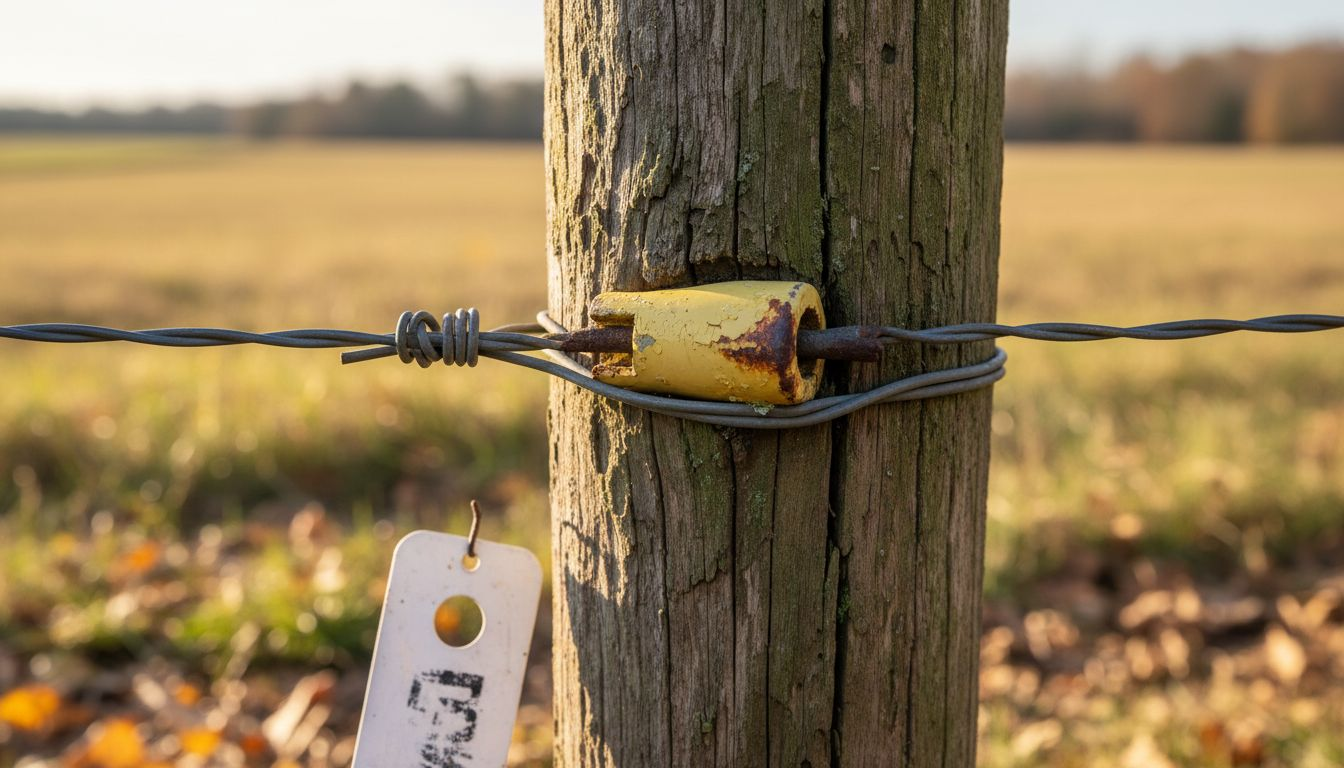
Corners represent the weakest points in any fence line. Corner insulators redirect and dissipate this tension to prevent snapping or slipping at these critical angles.
Use corner insulators whenever your fence line changes direction, whether you’re building a rectangular paddock or navigating property boundaries with multiple turns.
End and Post Insulators
End insulators secure wire at terminal points and transitions. Post insulators mount directly to wooden or metal posts and hold wire parallel to the post surface.
Different insulator types serve different mounting needs depending on your post material and fence design. Post insulators for wooden posts differ from those designed for metal posts in their fastening mechanisms.
Post insulators typically feature screw-down designs that clamp wire firmly without crushing it, maintaining consistent tension throughout your fence system.
Material Considerations
Insulator materials dramatically affect lifespan and performance in Canadian conditions. Heavy-duty plastics offer corrosion resistance and flexibility, while ceramic composites provide superior electrical isolation and durability under extreme temperature swings.
Material breakdown:
- Heavy-duty plastics: Cost-effective, lightweight, excellent in wet climates
- Ceramic composites: Superior electrical performance, brittle in extreme cold
- Reinforced polymers: Balanced durability and cost, handles freeze-thaw cycles
Choose plastics for high-moisture regions. Select ceramic composites when electrical isolation is your priority. Use reinforced polymers for general-purpose applications across variable Canadian climates.
Your insulator choice must match both your post material and your regional climate exposure for maximum lifespan.
Each insulator type requires proper installation specific to its design. Mismatched components create weak points where your fence system fails unexpectedly during critical containment situations.
Pro tip: Buy all insulators from the same quality manufacturer for your entire fence line—mixing brands and types creates inconsistent tension distribution that leads to premature failures at weak connection points.
This summary highlights optimal insulator choices by post material and climate:
| Post Material | Ideal Insulator Type | Best Climate Suitability |
|---|---|---|
| Wood | Reinforced plastic or ceramic | Moist or dry, variable temps |
| Metal | Polymer with metal insert | Wet, freeze-thaw regions |
| Fiberglass | Heavy-duty plastic | All climates, flexible usage |
| Concrete | Ceramic composite | Stable, dry climates |
| Stock Panel | Tube insulator | Mixed climates, high mechanical load |
Key Features for Durable Electric Fencing
Durable electric fencing depends on insulators with specific engineering features that prevent failure under Canadian weather extremes and livestock pressure. Understanding what separates quality insulators from mediocre ones saves you money and prevents costly fence repairs.
Internal Metal Reinforcement
The most critical feature is internal metal support embedded directly into the polymer body. This prevents wire slipping and rotation under constant tension from livestock or environmental stress.
Think of it like comparing a cardboard tube to a steel-reinforced tube. The metal insert absorbs the shearing forces that would normally bend or crack plain plastic. Insulators with bend-head steel cores locked into polymer bodies provide the enhanced grip needed for consistent long-term performance.
UV and Weather Resistance
Canadian summers and winters demand insulators that won’t crack or degrade from sun exposure and temperature swings. Quality high tensile insulators resist UV degradation and maintain flexibility through freeze-thaw cycles.
Poor quality insulators become brittle in cold and crack under mechanical stress. Look for premium polymer formulations specifically engineered to handle extreme temperature fluctuations without compromising grip strength.
Flared Base Design
A flared base prevents rotation on posts, maintaining consistent wire angle and tension alignment. Without this feature, insulators gradually twist, creating slack in your fence line and allowing livestock through.
The flared design distributes pressure across a wider post surface, reducing point-contact stress that leads to insulator failure and post damage over time.
ASTM F1856 Certification
Look for ASTM F1856 certified insulators that meet rigorous standards for high-voltage loads and environmental stressors. This certification confirms insulators can handle ice accumulation, wind pressure, and temperature extremes without electrical failure.
Certification matters because it guarantees the insulator performs safely under predictable stress conditions common across Canadian farms.
Cold-Forged Steel Inserts
Cold-forged steel inserts grip wire more effectively than standard fasteners. They won’t loosen over time and maintain consistent tension throughout seasons of use.
Quality feature checklist:
- Embedded metal support throughout polymer body
- Proven UV and weather resistance ratings
- Flared base preventing rotation on posts
- ASTM F1856 certification for safety standards
- Cold-forged steel gripping surfaces
- Mechanical strength surviving impacts from livestock
Superior insulators combine reinforced construction with proven environmental durability, ensuring consistent performance year after year.
When comparing insulators, focus on these engineered features rather than price alone. Cheap insulators fail within a season, forcing expensive replacement and creating safety gaps in your containment system.
Pro tip: Test insulator grip strength before installation by attempting to rotate the wire manually—quality insulators require significant force to move the wire, while inferior ones spin easily.
Proper Installation and Common Pitfalls
Correct installation of high tensile insulators determines whether your fence system performs reliably or fails within months. Small mistakes during setup create weak points that compromise animal containment and electrical safety.
Foundation: Tension and Alignment
Proper installation starts with understanding consistent tensioning across your entire fence line. Wire tension must be uniform from end to end, with no slack sections that allow livestock contact.
Using inline strainers maintains tension and prevents wire loosening over time. Install strainers at regular intervals and adjust them seasonally as temperature fluctuations affect wire contraction and expansion.
Misaligned insulators create uneven tension distribution. This concentrates stress on certain points, leading to premature insulator cracking and wire detachment. Always mount insulators parallel to the fence line.
Critical Installation Steps
Follow this sequence for proper insulator installation:
- Position insulators at the correct height and angle
- Secure firmly without over-tightening, which crushes wire or cracks plastic
- Test wire tension with consistent hand pressure across multiple sections
- Verify electrical continuity with a multimeter
- Recheck all connections after first month of operation
Common Pitfall #1: Over-Tensioning Wire
Tightening wire beyond recommended levels doesn’t improve containment. It stresses insulators, stretches wire prematurely, and causes failure points at tension connections.
Your wire should be tight enough that livestock cannot move it by pressing against the fence, but not so tight that it hums when plucked. This balance prevents catastrophic failure.
Common Pitfall #2: Mixing Insulator Types
Using different insulator brands and materials on the same fence line creates inconsistent grip strength and tension distribution. This leaves weak points where insulators slip or rotate.
Install identical insulators throughout your entire system for predictable, uniform performance across all sections.
Common Pitfall #3: Ignoring Electrical Shorts
Vegetation touching the fence, metal objects contacting wire, or improper grounding causes electrical shorts that reduce fence effectiveness. Livestock can push through a fence with reduced electrical charge.
Inspect your entire fence monthly for vegetation contact and remove any branches or growth touching the wire.
Common Pitfall #4: Improper Post Mounting
Insulators must match your post material. Wooden posts require different mounting methods than steel or fiberglass posts. Mismatched insulators don’t grip securely.
Installation mistakes to avoid:
- Mounting insulators at inconsistent heights
- Using wrong fastener sizes for your post type
- Over-tightening fasteners, which cracks polymer
- Installing insulators too close to post corners where stress concentrates
- Failing to use washers, which distribute pressure evenly
Proper installation takes time upfront but prevents expensive repairs and dangerous gaps in your containment system.
Most fence failures trace back to installation shortcuts, not defective products. Taking care during setup pays dividends through years of reliable performance.
Pro tip: After installing your fence, walk the entire perimeter weekly for the first month while monitoring livestock behavior—this reveals weak points before they become critical failures requiring costly repairs.
Comparing Insulator Alternatives for Rural Properties
Rural property owners face multiple insulator choices, each with distinct advantages and limitations. Your selection depends on budget constraints, climate conditions, post materials, and livestock type.
Plastic Insulators: Flexibility and Value
Plastic insulators offer the best combination of cost-effectiveness and performance for most Canadian farms. They resist UV degradation, maintain flexibility through temperature swings, and install easily on wooden or fiberglass posts.
Plastic performs exceptionally well in high-moisture regions where corrosion would damage ceramic alternatives. They’re lightweight, durable, and ideal for temporary or rotational grazing systems requiring frequent relocation.
The main drawback is reduced longevity compared to ceramic options. Expect 5-7 years of reliable service before degradation becomes noticeable.
Ceramic Insulators: Superior Electrical Performance
Ceramic insulators excel in high-voltage applications and provide exceptional electrical isolation. They outlast plastic by decades and maintain performance consistency throughout their lifespan.
Ceramic works best in dry climates with moderate temperature fluctuations. However, they become brittle in extreme cold and can crack if impacted by livestock or falling branches.
The higher upfront cost and fragility during installation make ceramic suitable for permanent, high-value fencing installations rather than everyday farm applications.
Tube and Corner Insulators: Application-Specific Solutions
Specialized insulators like tube and corner designs address specific structural challenges in rural fencing. Tube insulators work best for stock panels and multiple-wire configurations, while corner insulators prevent tension concentration at direction changes.
These specialized types enhance fence safety and minimize voltage loss at critical points. Combining them with standard post insulators creates a balanced system.
Comparing Your Options
| Insulator Type | Cost | Lifespan | Best For | Climate |
|---|---|---|---|---|
| Plastic | Low | 5-7 years | Rotational grazing, budget projects | Wet regions, variable temps |
| Ceramic | High | 15+ years | Permanent pastures, high voltage | Dry climates, stable temps |
| Tube | Moderate | 7-10 years | Stock panels, multiple wires | Mixed climates |
| Corner | Moderate | 7-10 years | Fence junctions, steep terrain | Mixed climates |
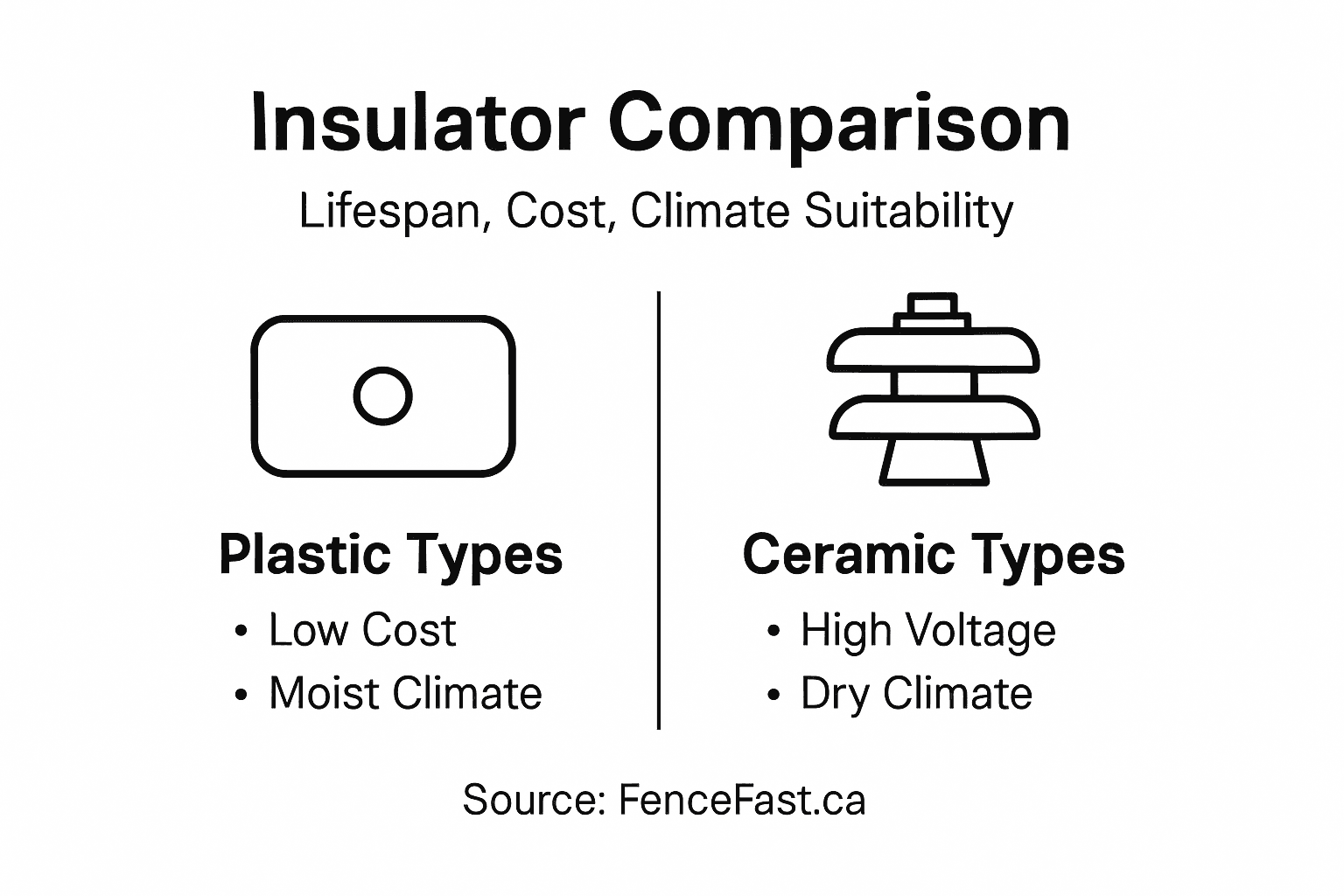
Making Your Decision
For most Canadian farmers, plastic insulators provide the best value. They balance affordability with durability across variable weather conditions. Invest in ceramic only if you’re building permanent pastures that will remain unchanged for decades.
Consider your specific situation: rotational grazing? Buy plastic. Permanent stallion paddock? Invest in ceramic. High-moisture property? Plastic. High-elevation property with extreme cold? Plastic handles freeze-thaw better.
Choose insulators based on your specific application, not just cost—the wrong choice creates expensive maintenance and containment failures.
Mixing insulator types works if you match them correctly by post material and application. However, consistency simplifies replacement and reduces weak points in your fence system.
Pro tip: Calculate total cost of ownership by dividing insulator price by expected lifespan in years—plastic at $2 lasting 6 years costs 33 cents annually, while ceramic at $8 lasting 20 years costs 40 cents, making the choice clearer for your budget situation.
Strengthen Your Farm Safety with High Tensile Fence Insulators
Protecting your livestock and maintaining durable fencing is crucial for every Canadian farmer and rancher. This article highlights the importance of using high tensile fence insulators engineered to withstand harsh weather and constant mechanical stress without slipping or breaking. If you are dealing with fence failures due to inadequate insulators or want to upgrade your system with reinforced polymer compounds and metal inserts, the right components could mean fewer costly repairs and a safer environment for your animals.
At FenceFast.ca, we understand these challenges and offer a comprehensive selection of premium fencing supplies designed specifically for high-tension fencing needs. From electric fencing systems to specialized insulators that match your post materials and climate conditions, we provide durable solutions that ensure your fencing system holds strong season after season.
Don’t risk your livestock’s safety or your investment with subpar fence components. Explore our expert-curated products at FenceFast.ca today and find the perfect high tensile insulators and accessories to boost your farm’s security and fence longevity. Take the first step toward worry-free containment by upgrading your fencing setup now and experience the difference quality makes.
Frequently Asked Questions
What are high tensile fence insulators?
High tensile fence insulators are durable components specifically designed for high-tension fencing systems. They are made from reinforced polymer compounds and include internal metal inserts to prevent wire slippage, cracking, or rotation under mechanical stress, ensuring the wire stays intact under high tension.
How do high tensile fence insulators differ from standard insulators?
High tensile insulators are constructed with enhanced materials that provide superior mechanical strength and prolonged lifespan compared to standard insulators. They incorporate reinforced polymers and embedded metal components, allowing them to maintain wire grip and alignment under extreme conditions, whereas standard insulators may fail under high tension.
What is the lifespan of high tensile fence insulators?
High tensile fence insulators typically have a lifespan of 10 years or more under field conditions, significantly outlasting standard insulators, which usually last about 3 to 5 years. This extended durability makes them a cost-effective choice in the long run.
Why are proper installation and tension important for high tensile fence insulators?
Proper installation and consistent tension are crucial as they ensure uniform pressure across the fence line. Incorrect installation can lead to weak points where insulators may slip or crack, compromising the integrity of the fence and increasing the risk of livestock breaches. Ensuring the right tension prevents excessive wear and tear on the insulators, enhancing their effectiveness and lifespan.
Recommended
- High Tensile Electric Fence Insulators: Ensuring Secure Containment – FenceFast Ltd.
- T Post Electric Fence Insulators: Safe Containment Options – FenceFast Ltd.
- Electric Fencing Insulator: Securing Livestock Safely – FenceFast Ltd.
- 7 Best T Post Insulators for Safer Electric Fencing – FenceFast Ltd.

