

Managing livestock and protecting crops on Canadian farms demands fencing that adapts quickly to changing needs. Traditional fixed fencing systems lock you into rigid pasture layouts, require days of labor to install, and still allow livestock escapes that cost time and money. Portable outdoor fencing transforms farm management by cutting setup time in half and reducing escape rates by up to 70%. This guide walks you through selecting durable materials, installing electrified systems safely, and maintaining portable fences that withstand harsh Canadian weather while giving you the flexibility to rotate grazing areas, protect seasonal crops, and respond instantly to livestock management challenges.
Table of Contents
- Why Portable Outdoor Fencing Matters For Canadian Farmers
- Choosing The Right Materials For Durability And Weather Resistance
- Installation Essentials For Performance And Safety
- Managing And Maintaining Your Portable Outdoor Fence
- Explore Portable Outdoor Fencing Products From FenceFast Ltd
Key takeaways
| Point | Details |
|---|---|
| Setup efficiency | Portable fencing reduces installation time by over 50% compared to traditional fixed systems |
| Livestock control | High-tensile electrified fencing cuts escape rates by up to 70% through effective deterrence |
| Weather durability | UV-resistant materials and high-tensile steel withstand Canadian snow, rain, and sun exposure |
| Maintenance requirements | Weekly inspections and post-weather checks ensure optimal performance and animal safety |
| Flexible farm management | Portable systems adapt instantly to rotational grazing and crop protection needs |
Why portable outdoor fencing matters for Canadian farmers
Fixed perimeter fencing dominated Canadian farms for generations, but modern livestock operations demand faster, more adaptable solutions. Traditional post and wire systems require extensive planning, heavy equipment, and multiple workers spending days digging holes and stretching wire. Once installed, these permanent structures limit your ability to adjust pasture rotation schedules or respond to changing crop protection needs.
Portable fencing revolutionizes farm management through speed and flexibility. Portable livestock fence solutions using polywire materials allow a single person to set up temporary enclosures in hours rather than days. Research shows 68% of Canadian mixed livestock farmers use polywire to reduce setup time by over 50% compared to conventional fencing methods. This efficiency translates directly into labor cost savings and the ability to implement rotational grazing strategies that improve pasture health.
Livestock control improves dramatically with properly installed portable electric systems. Studies from the University of Saskatchewan demonstrate that portable fencing reduces livestock escape rates by up to 70% when farmers use high-tensile electrified wire with adequate voltage. Animals learn quickly to respect the psychological barrier created by electric fencing, making physical strength less critical than with traditional barbed wire that cattle can push through during panic situations.
The flexibility advantage extends beyond grazing management. Portable electric fences for livestock let you create temporary lanes for moving animals between pastures, establish buffer zones around newly seeded areas, and protect vegetable gardens from deer and other wildlife. You can reconfigure layouts weekly to match forage availability, weather conditions, and seasonal management goals without abandoning previous infrastructure investments.
Traditional fencing challenges that portable systems solve include:
- Inability to adjust pasture sizes based on herd numbers or forage growth rates
- High labor costs for installation requiring multiple workers and specialized equipment
- Permanent structures that prevent crop rotation flexibility and land use changes
- Difficulty creating temporary paddocks for weaning, breeding groups, or medical isolation
- Limited options for protecting high-value crops during critical growth periods
Dynamic livestock control becomes possible when you can move fence lines in minutes. Rotational grazing systems that boost pasture productivity by 25% or more require frequent paddock adjustments that fixed fencing makes impractical. Portable systems give you the control to implement intensive grazing management without the capital investment and inflexibility of permanent infrastructure.
Choosing the right materials for durability and weather resistance
Material selection determines whether your portable fence survives Canadian winters or fails during the first heavy snow. Not all portable fencing products withstand temperature swings from minus 40 degrees Celsius in January to plus 30 in July, combined with intense UV exposure during long summer days. Choosing durable fencing materials requires understanding how different components perform under these extreme conditions.
High-tensile steel wire and UV-resistant components are crucial for withstanding Canadian weather conditions according to Alberta Agriculture and Forestry guidelines. High-tensile wire maintains consistent tension across temperature fluctuations, preventing the sagging that occurs with standard wire when temperatures drop. This consistency keeps voltage levels stable and ensures animals continue to respect fence boundaries throughout winter months.
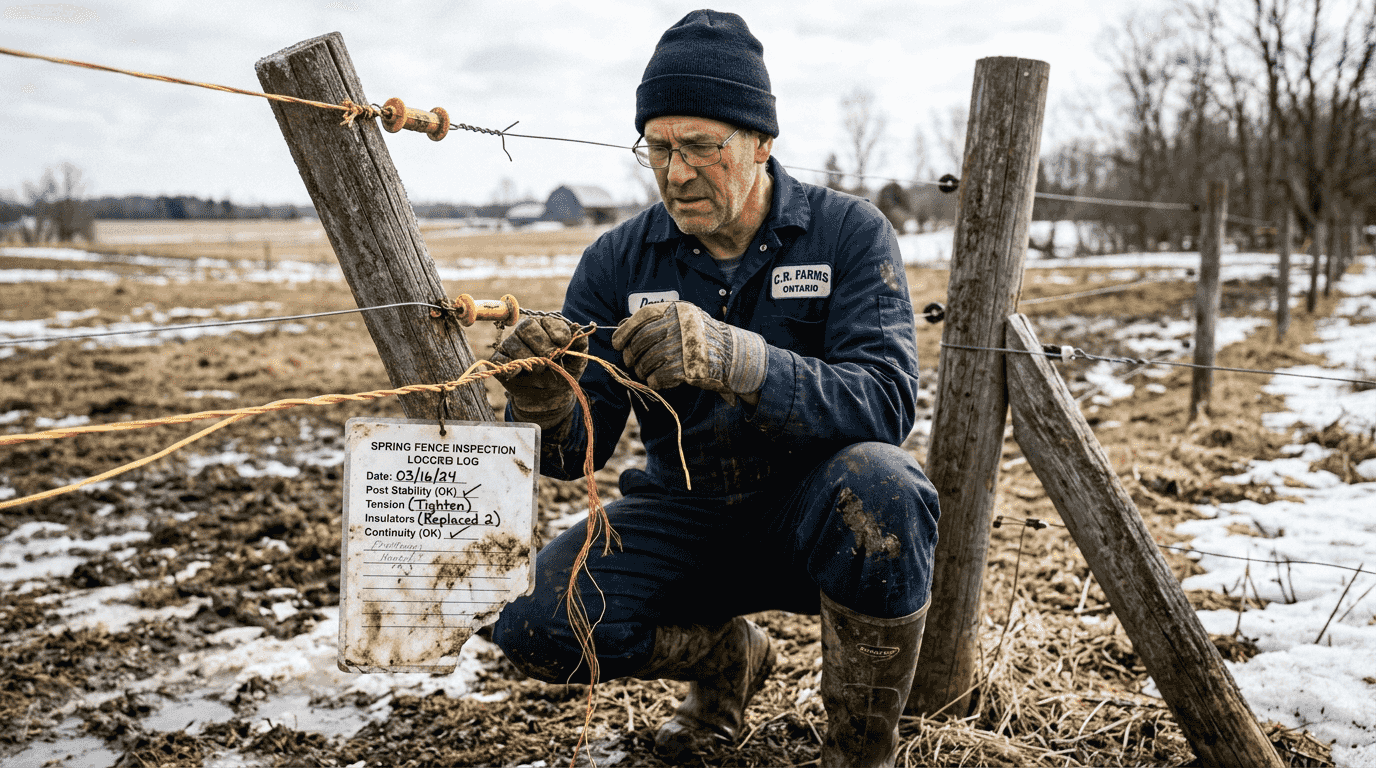
UV degradation destroys plastic components faster than any other weather factor in Canadian agriculture. Polywire conductors, post insulators, and connector housings all contain plastics that break down under sunlight exposure. Quality manufacturers add UV stabilizers to their formulations, but you must verify these specifications before purchasing. Cheap imported products often fail within two seasons because they lack adequate UV protection for Canadian latitudes where summer daylight extends 16 hours or more.
| Material Type | Lifespan | Weather Resistance | Cost | Maintenance Needs |
|---|---|---|---|---|
| High-tensile steel wire | 15-20 years | Excellent in all conditions | Moderate | Annual tension checks |
| Polywire with UV protection | 5-8 years | Good with proper care | Low | Replace when conductors break |
| Polytape | 3-5 years | Fair, degrades faster | Low | Frequent replacement |
| Fiberglass posts | 10-15 years | Excellent, won’t rot | Moderate | Minimal, check flexibility |
| Plastic step-in posts | 3-5 years | Good with UV stabilizers | Very low | Replace cracked units |
Wire gauge and conductor count directly impact fence effectiveness. Polywire products range from three to nine conductors, with higher counts providing better electrical conductivity and visibility for livestock. Six-conductor polywire offers the best balance of performance and cost for most Canadian cattle operations. Horses require more visible options like polytape because they respond better to visual barriers than cattle do.
Post materials matter as much as wire selection. Fiberglass posts flex under impact without breaking, making them ideal for areas where animals might run into fences. Steel posts provide maximum durability but conduct electricity, requiring careful insulator installation. Plastic step-in posts work well for temporary applications but become brittle in extreme cold unless manufactured with cold-weather additives.
Key material selection factors include:
- Wire tensile strength rated for at least 200 pounds to prevent breakage
- UV stabilizers in all plastic components for minimum five-year outdoor life
- Galvanized or stainless steel hardware to prevent rust in wet conditions
- Insulator materials that maintain properties from minus 40 to plus 40 degrees Celsius
- Conductor materials (copper, aluminum, or stainless steel) appropriate for your voltage requirements
Pro Tip: Inspect UV-exposed components like polywire and plastic insulators every spring before turnout. Look for brittleness, cracking, or color fading that indicates material breakdown. Replacing degraded components before they fail prevents livestock escapes and eliminates emergency repairs during busy seasons.
Installation essentials for performance and safety
Proper installation determines whether your portable electric fence delivers effective livestock control or becomes a frustrating maintenance burden. Proper installation, including grounding and wire tension, is critical to fence performance and animal safety according to the Canadian Agricultural Safety Association. Even premium materials fail when installed incorrectly, leaving gaps in coverage that animals exploit.
Grounding systems form the foundation of electric fence performance. When an animal touches an electrified wire, current flows through its body into the ground, then back to the energizer through ground rods to complete the circuit. Inadequate grounding prevents sufficient current flow, reducing shock intensity below the threshold needed to deter livestock. Canadian soil conditions vary dramatically, with sandy soils requiring more ground rods than clay or loam.
Follow this electric fence installation guide sequence for reliable portable fence setup:
- Install ground rod system first, driving three six-foot galvanized rods at least 10 feet apart in moist soil away from other grounding systems
- Connect ground rods with insulated wire rated for underground burial, creating a continuous ground circuit
- Set corner and end posts firmly, ensuring they resist wire tension without leaning or pulling out
- String wire at appropriate heights for your livestock species, maintaining consistent height throughout the run
- Tension wire properly using inline tensioners, keeping polywire taught but not stretched beyond manufacturer specifications
- Install energizer in a protected location with easy access for maintenance and monitoring
- Test voltage at multiple points along the fence line using a proper fence tester, not a screwdriver or other improvised methods
- Verify ground system adequacy by testing voltage drop under load conditions
Wire height and spacing requirements vary by species. Cattle need a single wire at nose height (approximately 30 inches) for perimeter control, while horses often require two wires at 20 and 40 inches to prevent reaching under or jumping over. Pigs demand wires closer to ground level, typically at 6 and 12 inches, because they root under fences rather than jumping them.
Voltage requirements differ based on fence length and animal type. Cattle respect fences delivering 3,000 to 4,000 volts, while horses and pigs need 4,000 to 5,000 volts for reliable control. Longer fence runs require more powerful energizers to maintain adequate voltage at distant points. Calculate your energizer needs based on total fence length, including planned expansions, rather than just initial installation.
Connection quality determines system reliability. Every splice, joint, and connector introduces resistance that reduces voltage transmission. Use proper fence connectors designed for your wire type rather than twisting wires together or using hardware store electrical connectors. Corrosion at connection points causes most portable fence failures, so choose stainless steel or heavily plated copper connectors.
Pro Tip: Mark your ground rod locations with visible posts or flags so you can find them after snow cover or vegetation growth. Testing ground system performance requires accessing these rods, and losing track of their location wastes time during troubleshooting.
Safety considerations extend beyond livestock control. Improperly installed electric fences can injure people, particularly children unfamiliar with farm hazards. Post warning signs at fence entry points, use appropriate energizers rated for livestock (not security applications), and never connect electric fences to household current. Install cutoff switches at strategic locations so you can quickly de-energize sections during emergencies or maintenance.
Managing and maintaining your portable outdoor fence
Routine maintenance separates reliable portable fencing systems from frustrating failures that allow livestock escapes. Regular inspection and maintenance, especially of grounding systems, ensure optimal fence performance and animal safety according to University of Guelph livestock management specialists. Neglected fences develop faults that reduce voltage, create shock hazards, and ultimately fail to contain animals.
Weekly inspection routines should cover these critical areas:
- Walk the entire fence line checking for broken wires, damaged insulators, or leaning posts
- Test voltage at the furthest point from the energizer using a proper digital fence tester
- Clear vegetation touching wires, as plant contact drains voltage and can ground out the entire system
- Examine energizer function, verifying the unit clicks regularly and indicator lights show normal operation
- Check ground rod connections for corrosion or looseness that increases resistance
- Verify gate handles and connectors maintain good electrical contact without excessive wear
Seasonal maintenance intensifies during spring and fall transitions. Before turning livestock onto pasture in spring, conduct a complete system evaluation including voltage testing under load conditions. Connect a temporary ground to the fence wire and verify your energizer maintains adequate voltage, indicating sufficient ground system capacity. Fall maintenance focuses on preparing systems for winter storage or continued cold-weather operation.
| Fence Type | Maintenance Ease | Expected Lifespan | Primary Maintenance Tasks |
|---|---|---|---|
| Polywire portable | Easy | 5-8 years | Weekly voltage checks, vegetation control, annual wire replacement |
| High-tensile permanent | Moderate | 15-20 years | Seasonal tension adjustment, insulator inspection, vegetation management |
| Polytape temporary | Very easy | 3-5 years | Frequent replacement, daily visual inspection, vegetation control |
| Electric netting | Moderate | 5-7 years | Post integrity checks, conductor continuity testing, careful handling |
Vegetation management prevents most portable fence failures. Grass, weeds, and crop residue touching electrified wires create current leakage that drains voltage below effective levels. A fence reading 6,000 volts at the energizer might deliver only 1,500 volts at distant points when vegetation contact exists. Mow or spray herbicide along fence lines before vegetation reaches wire height, and establish maintenance schedules that prevent regrowth contact.
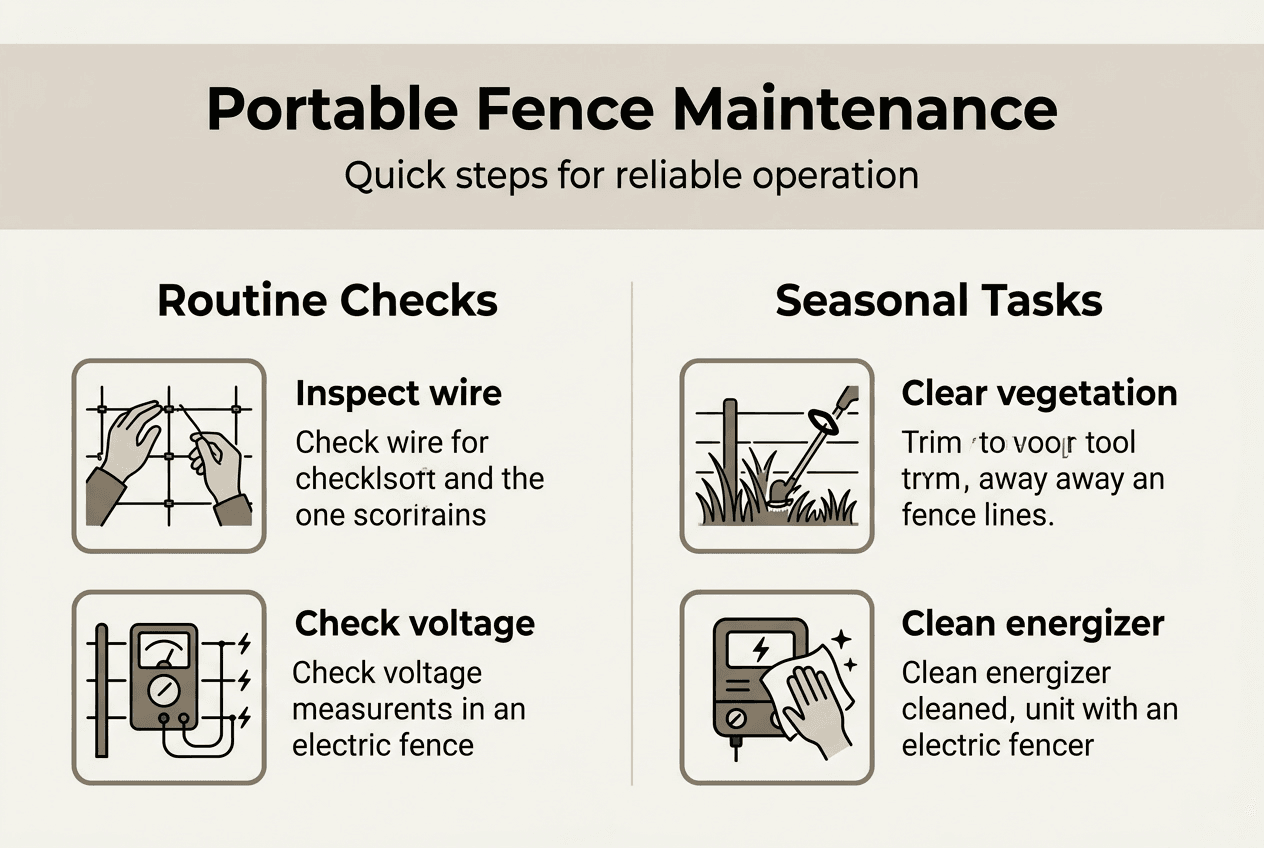
Energizer maintenance extends beyond simple battery replacement. Solar-powered units require panel cleaning to maintain charging efficiency, particularly in dusty farm environments or after pollen-heavy spring seasons. Check battery terminals for corrosion monthly, cleaning with a wire brush and applying protective spray. Store spare batteries properly during off-seasons to maintain capacity for reliable spring startup.
Grounding system degradation occurs gradually and often goes unnoticed until fence effectiveness drops noticeably. Corrosion at rod connections, soil drying around rods, and physical damage from cultivation equipment all reduce ground system performance. Annual testing using the temporary ground method identifies problems before they cause livestock control issues. Add additional ground rods if voltage drop exceeds 10% under load conditions.
Pro Tip: Schedule portable fence maintenance inspections immediately after severe weather events and whenever you move fence sections. Wind can loosen connections, lightning strikes can damage energizers, and heavy snow can break wires. Moving portable fences creates wear at connection points that develops into failures if not addressed promptly.
Winter operation requires special attention in Canadian climates. Snow accumulation can bury lower wires, reducing effectiveness or creating short circuits when ice bridges form between wires and ground. Raise wire heights before winter or plan to clear snow from fence lines after major storms. Battery performance drops significantly in extreme cold, so increase battery capacity by 50% for reliable winter operation or switch to AC-powered energizers where electricity is available.
Troubleshooting voltage problems follows a systematic approach. Start at the energizer, verifying proper operation and adequate power supply. Test voltage progressively along the fence line to identify where voltage drops occur. Common fault locations include gates, wire splices, and areas with vegetation contact. Use a quality digital fence tester rather than relying on shock sensation, as human perception varies and provides no quantitative measurement.
Explore portable outdoor fencing products from FenceFast Ltd.
Implementing the portable fencing strategies covered in this guide requires quality equipment designed for Canadian agricultural conditions. FenceFast Canada specializes in portable outdoor fencing solutions that combine durability with the flexibility modern livestock operations demand. Their product selection includes everything from basic polywire and step-in posts to complete electrification systems with solar energizers and monitoring equipment.

The Patriot Pet and Garden Electric Fence Accessory Kit provides essential components for getting started with portable electric fencing, including connectors, insulators, and testing equipment. For operations requiring advanced monitoring, the Gallagher i-Series Fence Monitor delivers real-time voltage alerts to your smartphone, eliminating surprise failures. FenceFast’s experienced team understands Canadian farming challenges and can recommend specific products matched to your livestock species, farm size, and management goals. Their nationwide shipping ensures you receive quality fencing supplies regardless of your location across Canada.
FAQ
What types of portable outdoor fencing are best for mixed livestock farms in Canada?
Electrified high-tensile wire fencing offers the best combination of flexibility and livestock control for Canadian mixed farms. This system works effectively for cattle, horses, sheep, and goats when installed at appropriate heights for each species. Portable electric netting provides an alternative for smaller livestock like sheep and poultry, offering quick setup and excellent predator protection.
How often should I maintain and inspect my portable electric fence?
Inspect portable electric fences at least weekly during active use, checking voltage levels, wire condition, and vegetation contact. Increase inspection frequency to every few days after severe weather events including heavy rain, strong winds, or significant snow accumulation. Monthly ground system testing ensures adequate performance throughout the grazing season.
Can portable fencing withstand harsh Canadian weather?
Properly constructed portable fencing using high-tensile steel wire and UV-resistant plastic components performs reliably through Canadian temperature extremes, snow, rain, and intense summer sun. Material quality determines longevity, with premium products lasting five to eight years under harsh conditions. Regular maintenance and proper winter storage of removable components extends system life significantly beyond cheaper alternatives.
What are common mistakes to avoid when installing portable outdoor fencing?
Inadequate grounding causes most portable electric fence failures, as insufficient ground rod capacity prevents proper current flow through livestock. Loose wire tension reduces effectiveness and increases maintenance needs as sagging wires contact vegetation more easily. Skipping regular voltage testing allows problems to develop unnoticed until livestock escape. Using improper connectors creates high-resistance joints that drain voltage and fail prematurely under weather exposure.
Recommended
- Agricultural fencing in Canada: choosing durable solutions – FenceFast Ltd.
- Solar powered electric fence guide for Canadian farmers 2026 – FenceFast Ltd.
- Portable fencing solutions for sheep farmers Canada 2026 – FenceFast Ltd.
- Wildlife friendly fence design guide for Canadian farmers – FenceFast Ltd.

