

Finding a reliable way to contain livestock can be a constant challenge when managing pasture across the wide Canadian landscape. Secure boundaries must protect your animals, adapt to changing needs, and remain safe for every herd. Portable electric fencing technology delivers controlled shocks that deter livestock from crossing lines, all while providing the flexibility to move and reconfigure your setup quickly. Discover how these systems blend safety with smart land management, offering practical solutions for every Canadian farm and ranch.
Table of Contents
- Defining Portable Electric Fences And Key Concepts
- Types Of Portable Electric Fences Compared
- Core Features And How Portable Fences Work
- Livestock Applications And Real-World Use Cases
- Setup, Maintenance, And Safety Guidelines
- Costs, Mistakes, And Permanent Fence Comparisons
Key Takeaways
| Point | Details |
|---|---|
| Portable Electric Fences | A versatile livestock management solution that combines electrical technology with mobility for effective animal containment. |
| Key Components | Essential elements include an energizer, conductive wires, temporary support posts, and a grounding system for optimal functionality. |
| Cost-Effectiveness | Portable electric fences offer significant upfront savings compared to permanent fencing, with lower installation and maintenance costs. |
| Safety and Maintenance | Regular testing, maintenance, and proper setup are crucial for ensuring safe and effective operation of portable electric fences. |
Defining Portable Electric Fences and Key Concepts
Portable electric fences represent a dynamic and flexible livestock management solution designed to provide secure, adaptable animal containment across diverse agricultural settings. These innovative systems combine electrical technology with mobility, enabling farmers to create temporary or movable boundary lines with minimal infrastructure requirements.
At its core, a portable electric fence functions by delivering brief, controlled electrical pulses through conductive wires or tapes, creating a psychological and physical barrier for livestock. Electric fence technology is engineered to produce short, high-voltage shocks that discourage animals from crossing designated boundaries without causing lasting harm.
Key components of a portable electric fence system typically include:
- Energizer/Charger: The power source generating electrical pulses
- Conductive Wires or Tapes: Lightweight conducting materials
- Temporary Support Posts: Lightweight, easily deployable fence supports
- Grounding System: Ensures proper electrical circuit completion
- Battery or Solar Power Source: Enables remote and flexible operation
The fundamental principle behind electric fencing involves creating an electrical circuit that completes when an animal contacts both the energized wire and the ground. This momentary connection triggers a brief, startling shock that trains animals to respect fence boundaries without inflicting significant pain. Modern portable systems are designed with safety and humane animal management as primary considerations.
Pro tip: Always test your portable electric fence’s voltage and grounding before deployment to ensure consistent and safe livestock containment.
Types of Portable Electric Fences Compared
Portable electric fences come in several distinct configurations, each designed to meet specific livestock management needs across Canadian agricultural landscapes. Electric fence designs vary significantly in material, structure, and deployment flexibility, offering farmers multiple options for temporary animal containment and pasture management.
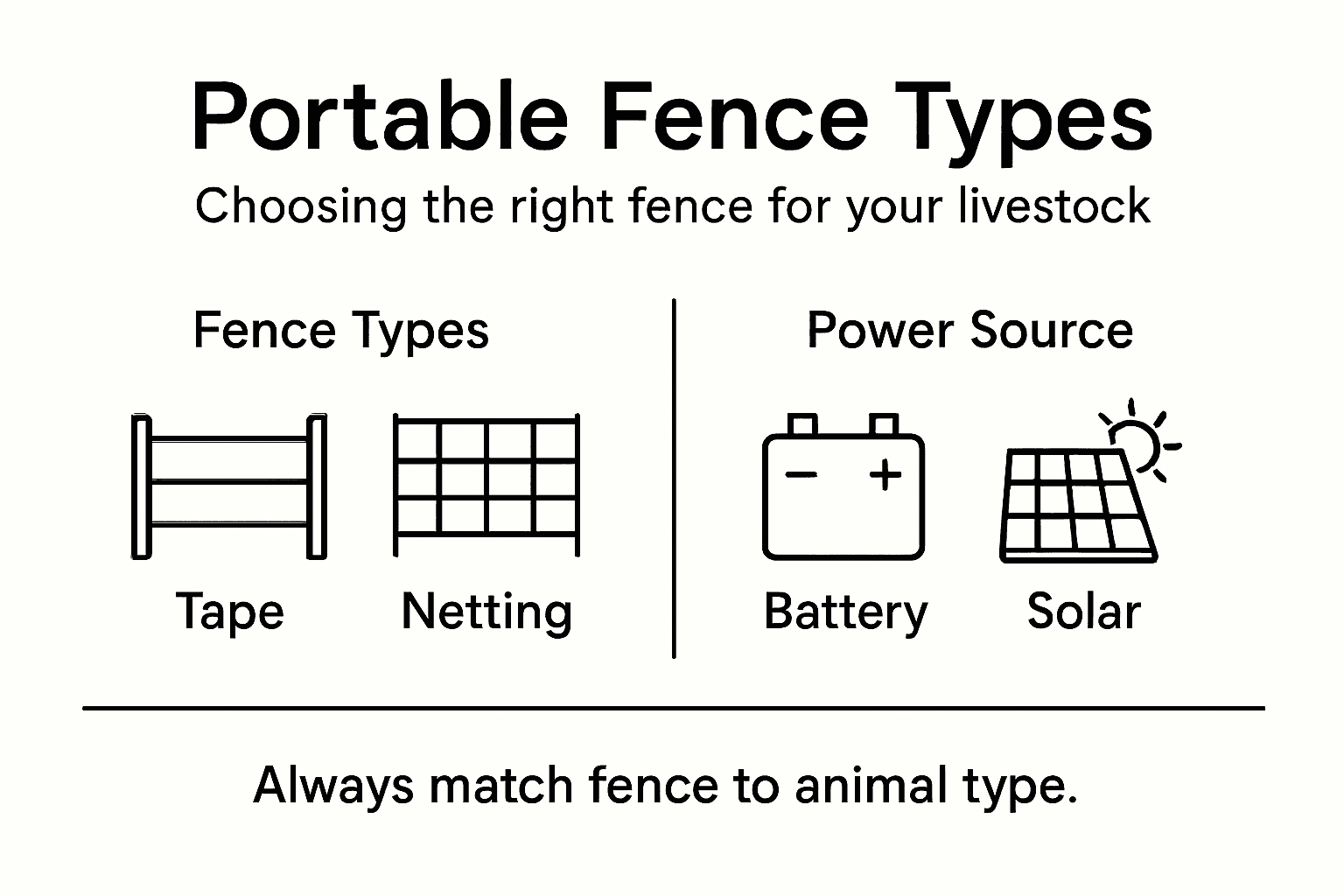
The primary types of portable electric fences include:
-
Polywire Fences: Lightweight and highly versatile
- Best for smaller livestock
- Easy to install and relocate
- Ideal for temporary pasture divisions
-
Electric Netting: Multi-strand barrier system
- Provides visible containment
- Effective for medium-sized animals
- Includes integrated conductive grid
-
Panel Fences: Sturdier temporary solution
- Combines mesh or metal panels with electrified wires
- Suitable for larger animals
- More robust construction
Power sources for these portable systems also differ, ranging from battery-powered energizers to solar-charged units. Each type offers unique advantages depending on terrain, livestock species, and duration of use. Battery units provide maximum mobility, while solar options offer extended operation in remote locations without requiring frequent recharging.
Here’s a comparison of portable electric fence types and their ideal applications:
| Fence Type | Best Livestock | Key Benefit |
|---|---|---|
| Polywire | Sheep, Goats | Quick setup and relocation |
| Electric Netting | Poultry, Small Ruminants | High visibility and security |
| Panel Fence | Cattle, Horses | Strong containment |
The effectiveness of a portable electric fence depends not just on its design, but on proper installation and consistent maintenance.
Selection criteria for choosing the right portable electric fence include animal type, pasture size, terrain complexity, and anticipated movement frequency. Farmers must carefully evaluate their specific requirements to determine the most appropriate fence configuration.
Pro tip: Rotate your portable electric fence sections periodically to prevent soil compaction and promote even pasture grazing.
Core Features and How Portable Fences Work
Portable electric fences represent a sophisticated livestock management solution that combines electrical engineering with practical agricultural needs. Electric fence components work together to create a dynamic, flexible barrier that provides humane animal control across diverse farming environments.
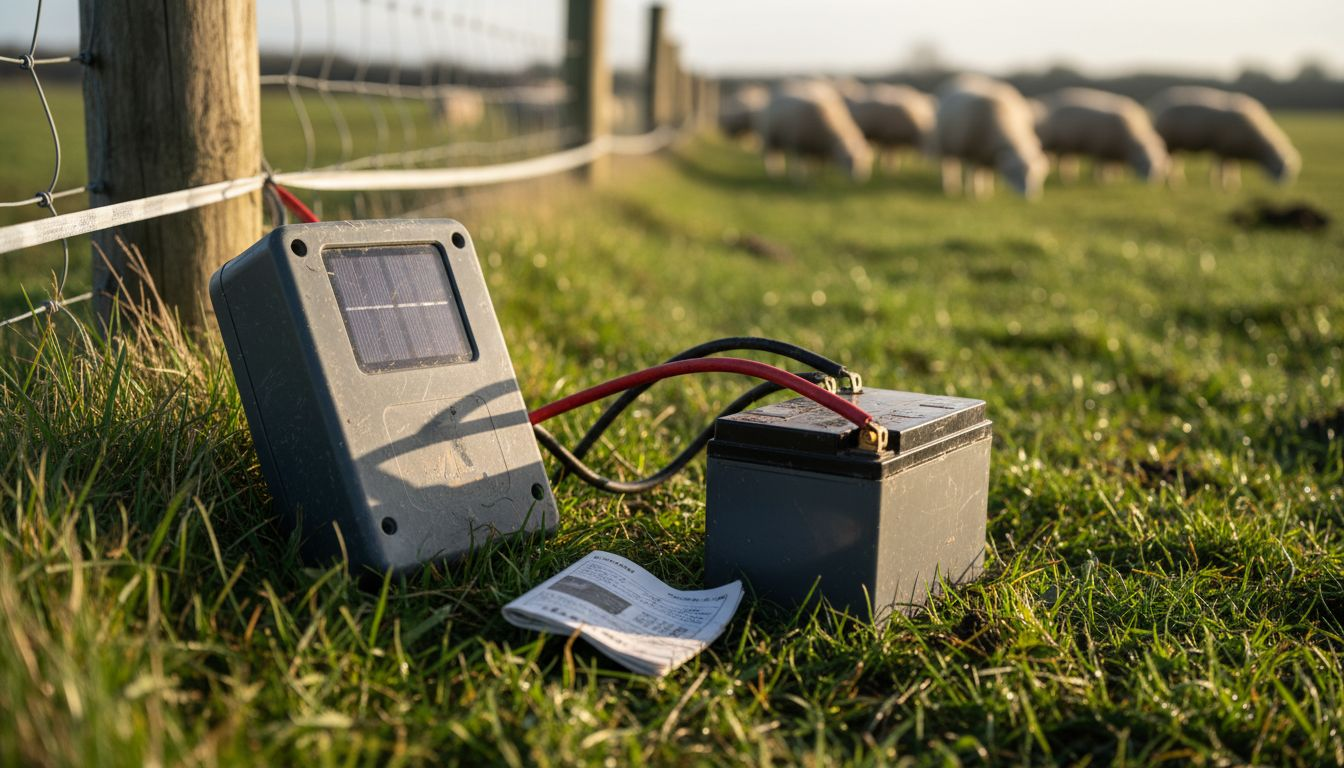
The core components of a portable electric fence system include:
-
Energizer/Charger: The electrical pulse generator
- Delivers controlled high-voltage pulses
- Can be battery, solar, or AC-powered
- Determines shock intensity and frequency
-
Conductive Wires: Transmission medium for electrical pulses
- Typically polywire, polytape, or steel wire
- Lightweight and easily deployable
- Designed for quick installation and relocation
-
Support Posts: Structural framework
- Lightweight and portable
- Include integrated insulators
- Made from fiberglass or plastic materials
-
Grounding System: Electrical circuit completion mechanism
- Ensures effective shock delivery
- Prevents electrical system malfunction
The operational principle of portable electric fences is fundamentally psychological. When an animal contacts the electrified wire, it completes an electrical circuit that delivers a brief, startling shock. This experience conditions the animal to avoid the fence, creating a barrier that relies more on learned behavior than physical restraint.
The effectiveness of a portable electric fence depends on precise engineering and proper installation, not just electrical power.
Power sources for these systems have evolved to provide maximum flexibility. Modern portable electric fences can utilize battery-powered energizers for remote locations, solar charging for extended operation, or traditional AC power sources. This versatility allows farmers to implement livestock control solutions in virtually any environment.
Pro tip: Test your portable electric fence’s voltage regularly and replace batteries or solar components before they approach maximum discharge.
Livestock Applications and Real-World Use Cases
Portable electric fences have revolutionized livestock management by providing farmers with unprecedented flexibility in animal control and pasture management. Rotational grazing strategies enable agricultural producers to optimize land use, improve animal nutrition, and maintain sustainable farming practices.
Key livestock applications for portable electric fences include:
-
Cattle Management
- Subdivide large pastures into smaller grazing sections
- Implement rotational grazing techniques
- Control herd movement without permanent infrastructure
-
Small Ruminant Control
- Secure sheep and goat paddocks
- Protect against predator intrusion
- Create temporary breeding or lambing zones
-
Poultry Protection
- Establish mobile chicken ranges
- Prevent predator attacks
- Manage flock movement between grazing areas
-
Predator Deterrence
- Create protective barriers around livestock
- Prevent wildlife intrusion
- Safeguard animals in vulnerable areas
The versatility of portable electric fences allows farmers to adapt quickly to changing environmental conditions and livestock needs. By enabling rapid reconfiguration of grazing spaces, these systems support more dynamic and responsive agricultural management strategies.
Effective portable electric fencing transforms pasture management from a static process to a fluid, responsive approach.
Beyond traditional livestock applications, these fences prove invaluable in specialized scenarios like temporary animal quarantine, emergency containment, and creating safe zones during veterinary procedures. Their lightweight design and quick deployment make them an essential tool for modern, adaptive farming practices.
Pro tip: Map out your pasture rotation strategy in advance and pre-plan portable fence locations to maximize grazing efficiency and minimize setup time.
Setup, Maintenance, and Safety Guidelines
Successful portable electric fence implementation requires careful attention to setup and maintenance protocols. Farmers must understand the intricate balance between electrical system performance, animal safety, and operational efficiency to create an effective livestock management solution.
Critical setup steps include:
-
Energizer Selection
- Match energizer power to fence length
- Consider number of wire strands
- Evaluate power source options
-
Grounding Installation
- Use multiple ground rods for consistent conductivity
- Ensure proper rod depth and soil contact
- Check ground system resistance regularly
-
Wire and Post Configuration
- Maintain consistent wire tension
- Use appropriate insulators
- Keep wires clear of vegetation
-
Safety Signage
- Post clear warning signs
- Indicate electrical hazard zones
- Use high-visibility markers
Maintenance is crucial for long-term portable electric fence reliability. Regular inspections help prevent performance degradation and potential safety issues. Farmers should conduct systematic checks of wire integrity, energizer output, and ground system effectiveness.
Consistent maintenance transforms a portable electric fence from a temporary solution to a reliable livestock management tool.
Safety guidelines demand proactive management. Low-impedance energizers with short-duration pulse systems minimize electrical risks. Handlers must receive proper training about electrical fence interaction, understanding that prevention and awareness are key to avoiding accidental shocks.
Pro tip: Invest in a digital voltage tester to quickly and accurately monitor your portable electric fence’s performance and identify potential issues before they become critical.
Costs, Mistakes, and Permanent Fence Comparisons
Portable electric fences offer a cost-effective alternative to traditional permanent fencing, with significantly lower initial investment and greater operational flexibility. Electric fence cost comparisons reveal that farmers can expect substantial savings in both material and labor expenses when implementing portable electric solutions.
Key cost and comparison considerations include:
Below is a summary of common setup errors and their real-world impact:
| Mistake | Potential Problem | Management Solution |
|---|---|---|
| Undersized energizer | Weak shocks, escapes | Match energizer to fence size |
| Poor grounding | Inconsistent operation | Install deeper ground rods |
| Excess vegetation | Energy leaks, fence failure | Keep wires free of weeds/grass |
| No visible markers | Accidental livestock contact | Add flags or bright tape to wire |
-
Material Expenses
- Portable electric fences: Under $1.25 per linear foot
- Permanent woven wire fencing: Several dollars per linear foot
- Significant upfront cost reduction
-
Installation Factors
- Minimal labor requirements
- Quick setup and relocation
- Reduced long-term maintenance costs
-
Operational Flexibility
- Easy pasture rotation
- Adaptable to changing livestock management needs
- Lower capital investment
-
Common Implementation Mistakes
- Inadequate energizer sizing
- Poor grounding techniques
- Neglecting vegetation management
- Insufficient fence visibility
Permanent fencing systems provide durability and long-term boundary definition, but lack the dynamic adaptability of portable electric alternatives. Farmers must carefully evaluate their specific operational requirements, balancing initial costs with long-term management needs.
Portable electric fences transform livestock management from a rigid to a responsive agricultural strategy.
Unlike permanent fences, portable electric solutions allow rapid reconfiguration of grazing areas, enabling more sophisticated pasture management techniques. This flexibility can lead to improved land utilization, better animal nutrition, and more efficient agricultural practices.
Pro tip: Calculate your potential savings by comparing the total lifetime cost of portable electric fencing against traditional permanent fence installations.
Take Control of Your Livestock with Flexible Portable Electric Fence Solutions
Managing livestock effectively requires reliable, adaptable fencing systems that match your specific farm needs. If you want to avoid common challenges like weak shocks, poor grounding, and time-consuming installations mentioned in the article Portable Electric Fences Flexible Livestock Control, FenceFast.ca offers a comprehensive range of high-quality portable electric fencing products designed for quick setup and safe, efficient animal containment across Canadian farms

Explore our selection of energizers, conductive wires, support posts, and solar power options tailored to livestock species such as cattle, sheep, goats, and poultry. Take advantage of expert advice, helpful tools, and nationwide shipping to ensure your fencing system performs flawlessly. Start transforming your pasture management today by visiting FenceFast.ca and discover how easy and affordable portable electric fencing can be by browsing our full catalog at FenceFast.ca now
Frequently Asked Questions
What are portable electric fences and how do they work?
Portable electric fences are dynamic livestock management solutions that use electrical technology to create temporary boundaries. They deliver controlled electrical pulses through conductive wires, providing a psychological barrier for livestock to discourage crossing the fence line.
What types of livestock can benefit from portable electric fences?
Portable electric fences can effectively manage various livestock types, including cattle, sheep, goats, poultry, and horses. Each type of fencing system is designed to meet specific needs based on the size and behavior of the animals.
How do I set up a portable electric fence?
To set up a portable electric fence, select the appropriate energizer, install grounding rods, configure the conductive wires with proper tension, and use lightweight support posts. Ensure all components are placed correctly and test the system’s voltage before use.
What are the maintenance tips for portable electric fences?
Regular maintenance for portable electric fences includes checking the energizer output, ensuring proper grounding, inspecting wire integrity, and removing any vegetation that may interfere with the fence’s operation. Consistent inspections help maintain optimal performance and livestock safety.

