

Over 60 percent of American farmers now rely on portable fence systems to improve flexibility and control in managing livestock and land. For many rural operations, finding solutions that adapt to changing needs is critical for both productivity and sustainability. This guide highlights how portable fencing delivers cost-effective options, helping American producers make smarter choices for grazing, land use, and long-term farm health.
Table of Contents
- Defining Portable Fence Systems And Uses
- Comparing Types: Electric, Mesh, And Panel Fencing
- Essential Features For Agricultural Applications
- Installation, Maintenance, And Safety Guidelines
- Common Mistakes And How To Avoid Them
- Cost Considerations And Alternative Solutions
Key Takeaways
| Point | Details |
|---|---|
| Flexibility in Management | Portable fence systems allow farmers to quickly adjust grazing areas, enhancing pasture health and land utilization. |
| Cost-Effectiveness | Hi-tensile electric fencing is a budget-friendly option, significantly cheaper than traditional permanent structures. |
| Technology Integration | Modern systems incorporate GPS and wireless communication to optimize livestock movement management. |
| Maintenance Importance | Regular inspections and maintenance are crucial to prevent failures and ensure the longevity of portable fencing systems. |
Defining Portable Fence Systems and Uses
Portable fence systems represent a critical innovation in agricultural management, offering farmers unprecedented flexibility in livestock control and land utilization. Unlike traditional permanent fencing, these dynamic solutions allow ranchers to quickly reconfigure grazing areas, manage pasture rotation, and respond rapidly to changing environmental conditions. Managed grazing systems can incorporate both fixed and portable fence strategies, enabling more sophisticated land and animal management approaches.
At their core, portable fence systems are designed to create temporary boundaries using lightweight, movable components that can be quickly assembled, relocated, and reconfigured. These systems typically utilize electric or lightweight mesh materials that provide a psychological barrier for livestock. As agricultural experts note, temporary electric fencing does not create a physical barrier but establishes a psychological boundary that effectively controls animal movement without permanent infrastructure.
Key characteristics of portable fence systems include:
- Lightweight and easy to transport
- Quick installation and removal
- Adaptable to various terrain and farm layouts
- Minimal ground disturbance
- Cost-effective alternative to permanent fencing
- Supports intensive grazing management techniques
Portable fence solutions are particularly valuable for farmers practicing rotational grazing, managing seasonal livestock movements, or needing flexible subdivision of existing pastures. By enabling precise control over grazing patterns, these systems help improve pasture health, optimize land usage, and support more sustainable agricultural practices.
Pro Tip: Always inspect portable fence components before each use to ensure electrical conductivity and structural integrity, preventing potential livestock escape or injury.
Comparing Types: Electric, Mesh, and Panel Fencing
Farmers have multiple portable fencing options, each with distinct advantages and cost considerations. Comprehensive fencing comparisons reveal significant variations in installation expenses, durability, and functional effectiveness across different fencing types. Electric fencing, mesh fencing, and panel fencing represent the primary portable solutions for modern agricultural operations.
Electric fencing offers the most economical approach, with installation costs ranging dramatically based on configuration. According to research, hi-tensile electric fence systems can cost as little as $0.95 to $1.25 per linear foot, making them significantly more affordable than traditional alternatives. These systems provide a psychological barrier that effectively controls livestock movement without requiring substantial physical infrastructure.
Key characteristics of portable fencing types include:
-
Electric Fencing
- Lowest cost per linear foot
- Minimal ground disturbance
- Quick and easy installation
- Highly adaptable to terrain
-
Mesh Fencing
- Provides physical containment
- Suitable for smaller livestock
- Moderate installation complexity
- Better predator protection
-
Panel Fencing
- Maximum mobility
- Instant setup capabilities
- Robust construction
- Ideal for temporary enclosures
The selection of portable fencing depends on specific farm requirements, livestock types, budget constraints, and management goals. Electric and mesh options offer more flexibility, while panel systems provide rapid deployment and maximum structural integrity. Farmers must carefully evaluate their unique operational needs when choosing between these portable fencing solutions.
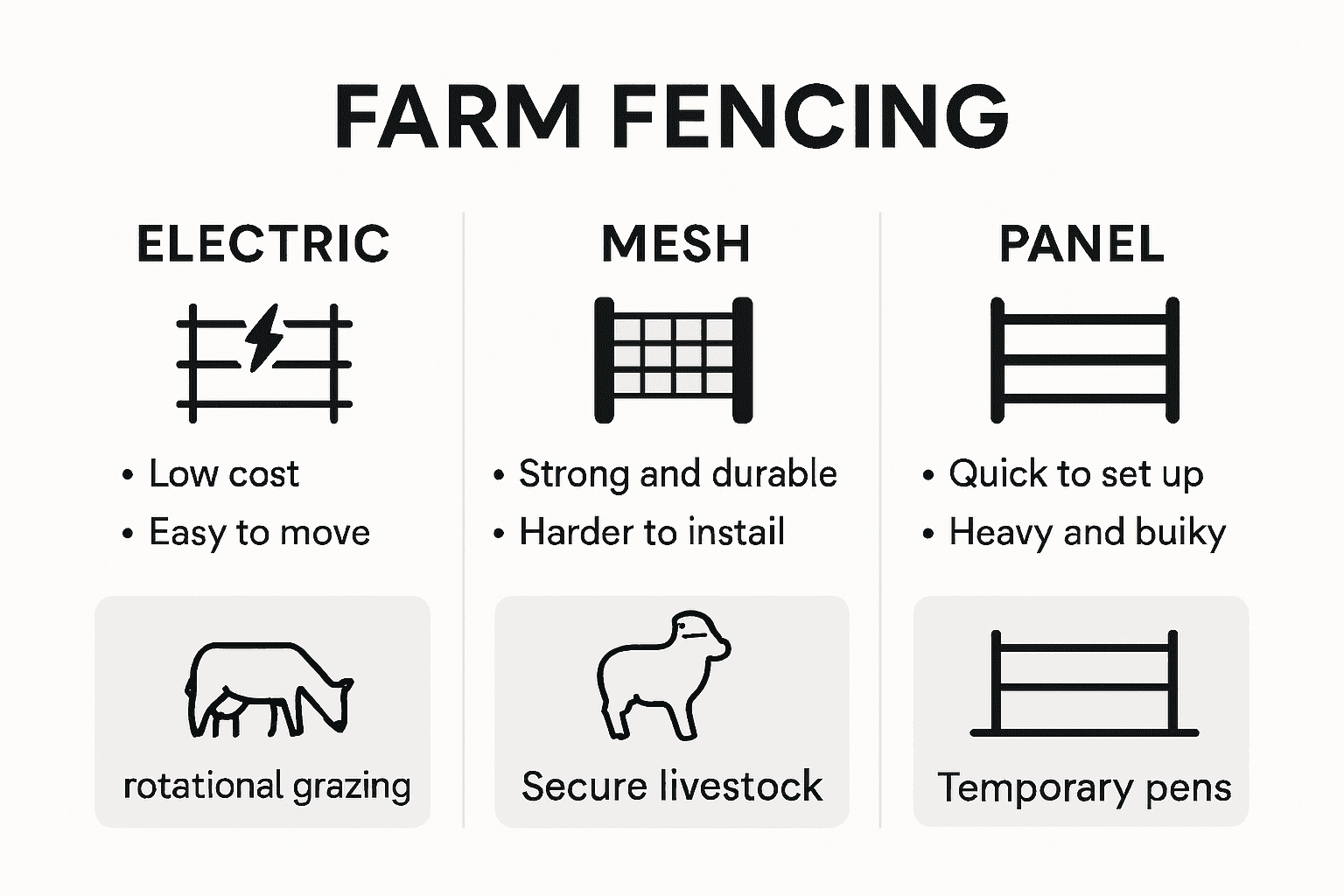
Here’s a concise comparison of major portable fencing types and their ideal applications:
| Fence Type | Best Use Case | Primary Benefit | Typical Limitation |
|---|---|---|---|
| Electric | Large pastures, temp divisions | Rapid installation, flexibility | Needs routine maintenance |
| Mesh | Small animal enclosures | Secure for small livestock | Moderate setup complexity |
| Panel | Corrals, short-term holding | Extremely easy to move | Heaviest, higher up-front cost |
Pro Tip: Conduct a comprehensive site assessment before selecting your portable fencing type, considering terrain, livestock behavior, and long-term maintenance requirements.
Essential Features for Agricultural Applications
Portable fence solutions must address multiple critical requirements for modern agricultural operations. Electric fencing technologies offer significant advantages, including cost-effectiveness, adaptability to challenging terrain, and enhanced predator protection. The most advanced portable fencing systems integrate multiple features that go beyond simple livestock containment.
Key technological innovations are transforming portable fencing capabilities. Virtual fencing systems now utilize GPS coordinates and sophisticated communication technologies to create invisible barriers that guide livestock movement. These advanced systems typically include:
-
Mobility Components
- Lightweight materials
- Easy transportation
- Quick assembly mechanisms
- Minimal ground impact
-
Technology Integration
- GPS tracking
- Wireless communication
- Real-time monitoring capabilities
- Automated boundary management
-
Durability Factors
- Weather-resistant materials
- Corrosion protection
- Sustained electrical performance
- Long-term structural integrity
Effective agricultural fencing must balance technological sophistication with practical usability. Modern portable fence solutions are designed to provide farmers maximum flexibility, allowing rapid reconfiguration of grazing areas, efficient livestock management, and enhanced property security. The integration of smart technologies enables more precise and responsive agricultural land management strategies.
Pro Tip: Conduct a comprehensive system evaluation before investing, considering your specific livestock types, terrain characteristics, and long-term operational requirements.
Installation, Maintenance, and Safety Guidelines
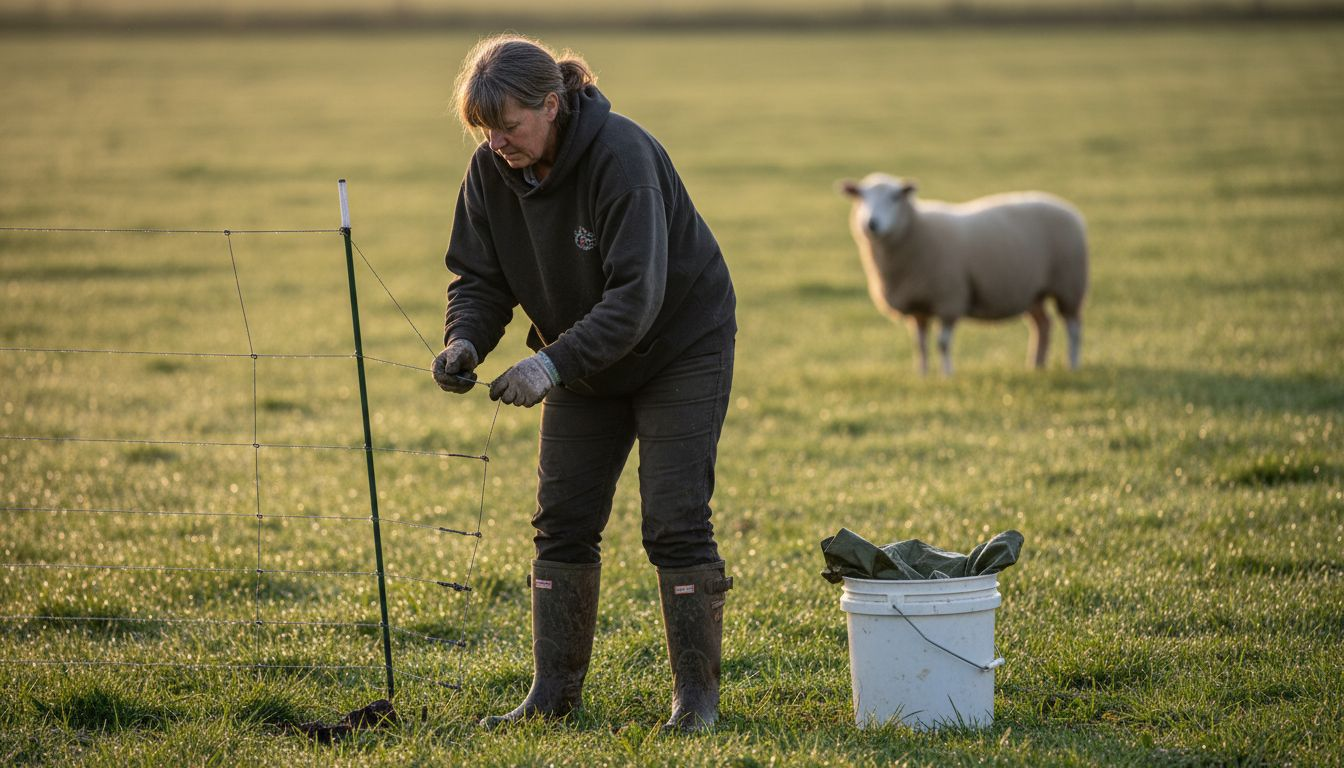
Successful portable fencing implementation requires a strategic approach that balances flexibility and reliability. Effective managed-grazing fencing systems demand adaptable interior fencing that can accommodate changing environmental conditions and livestock management needs. Farmers must develop comprehensive installation strategies that prioritize both functionality and safety.
Temporary electric fencing creates a critical psychological barrier for livestock control, requiring precise implementation techniques. Critical installation considerations include:
-
Pre-Installation Assessment
- Terrain evaluation
- Soil composition analysis
- Livestock movement patterns
- Potential environmental challenges
-
Safety Protocols
- Grounding system verification
- Voltage consistency checks
- Insulator integrity assessment
- Regular electrical system maintenance
-
Maintenance Requirements
- Periodic tension adjustment
- Corrosion prevention
- Electrical component inspection
- Replacement scheduling
Proper portable fencing installation involves more than simply erecting barriers. Farmers must develop a holistic approach that considers animal behavior, terrain characteristics, and long-term system sustainability. This means integrating flexible design principles that allow rapid reconfiguration while maintaining consistent performance and safety standards.
Pro Tip: Implement a quarterly comprehensive inspection routine, checking electrical conductivity, structural integrity, and potential wear points to prevent unexpected system failures.
Common Mistakes and How to Avoid Them
Portable fencing success hinges on understanding and preventing common implementation errors that can compromise system effectiveness. Electric fencing requires meticulous maintenance to ensure long-term performance, with farmers often overlooking critical details that significantly impact functionality and durability.
Frequent Portable Fencing Mistakes include:
-
Improper Grounding
- Inadequate ground rod installation
- Insufficient ground rod length
- Poor electrical conductivity
- Inconsistent ground system design
-
Material Selection Errors
- Choosing inappropriate wire gauges
- Using low-quality insulators
- Neglecting corrosion-resistant components
- Overlooking terrain-specific material requirements
-
Maintenance Negligence
- Skipping regular voltage checks
- Ignoring tension adjustments
- Delaying component replacement
- Failing to inspect wear points
Temporary electric fencing offers remarkable flexibility for strategic livestock management, but this advantage can be quickly negated by fundamental implementation mistakes. Successful farmers recognize that portable fencing is not just about installation, but about creating a dynamic, responsive system that adapts to changing agricultural needs.
Pro Tip: Develop a comprehensive maintenance checklist that includes monthly electrical system evaluations, annual component assessments, and immediate repair protocols for any detected system weaknesses.
Cost Considerations and Alternative Solutions
Understanding the financial implications of portable fencing requires a comprehensive analysis of initial investment and long-term operational expenses. Comprehensive fence comparisons reveal significant cost variations across different fencing technologies, with farmers needing to balance upfront costs against durability and maintenance requirements.
Fencing Cost Breakdown illustrates the economic landscape:
-
Permanent Fencing Options
- Board fence: $9.00 - $10.00 per linear foot
- Barbed wire (5 strand): $1.55 - $2.25 per linear foot
- Woven wire: $2.00 - $4.50 per linear foot
-
Portable Fencing Alternatives
- Hi-tensile electric fence: $0.95 - $1.25 per linear foot
- Flex netting electric: $0.90 - $1.15 per linear foot
- Poly wire: As low as $0.20 per linear foot
Detailed cost comparisons demonstrate the economic advantages of alternative fencing solutions, with portable and electric options presenting substantial savings compared to traditional permanent structures. These innovative solutions offer farmers unprecedented flexibility in managing livestock and land resources while minimizing long-term capital expenditure.
Farmers must consider not just initial installation costs, but also ongoing maintenance expenses, potential land use optimization, and the strategic advantages of adaptable fencing systems. The most cost-effective approach often involves a hybrid strategy that combines permanent boundary fencing with flexible interior management solutions.
The table below summarizes key factors to consider for long-term cost efficiency in portable fencing:
| Factor | Impact on Cost | Management Implication |
|---|---|---|
| Installation Expense | Initial investment | Choose affordable systems for flexibility |
| Maintenance Frequency | Ongoing cost factor | Schedule regular checks to avoid failures |
| Material Durability | Affects replacement | Invest in corrosion-resistant components |
| Terrain Adaptability | Influences usage | Select flexible systems for varied land |
Pro Tip: Conduct a comprehensive five-year cost analysis that includes installation, maintenance, replacement, and potential productivity gains before selecting your fencing strategy.
Enhance Your Farm’s Flexibility with Expert Portable Fence Solutions
Managing dynamic grazing areas and adapting quickly to changing pasture conditions can be challenging without the right fencing tools. This article highlights how portable fence systems deliver the flexibility farmers need through lightweight materials, quick installation, and electric fencing options that form effective psychological boundaries. If you want to avoid common pitfalls like improper grounding or costly maintenance issues, investing in high-quality components and reliable animal management tools is essential.

Discover a wide range of fencing components, electric fence systems, and livestock management supplies at FenceFast.ca. Our selection supports all your portable fencing needs with products designed for durability and ease of use, helping you optimize pasture rotation and livestock control. Take advantage of expert design consulting and nationwide shipping to get your project started today. Visit our main website now to explore affordable solutions and bring more agility to your farm’s fencing strategy.
Frequently Asked Questions
What are portable fence systems used for in agriculture?
Portable fence systems are used for managing livestock control, land utilization, and pasture rotation. They allow farmers to quickly reconfigure grazing areas, respond to environmental changes, and practice rotational grazing for improved pasture health.
How do electric fencing systems work to control livestock?
Electric fencing systems create a psychological barrier for livestock. They use electrical currents to deter animals from crossing the fence line, allowing farmers to manage movement without needing permanent structures.
What are the key differences between electric, mesh, and panel fencing types?
Electric fencing is the most cost-effective and flexible option, suitable for large pastures. Mesh fencing provides physical containment and is better for smaller livestock. Panel fencing is easy to set up and move but can be more expensive and heavier.
What are some common mistakes to avoid when using portable fencing?
Common mistakes include improper grounding, using inadequate materials, and neglecting regular maintenance. Maintaining proper voltage, checking tension, and inspecting components regularly are essential for effective system performance.

