

Overseeing a herd across vast Canadian pasture brings unique challenges that go far beyond what most American guides suggest. Keeping cattle contained while deterring wildlife demands fast, adaptable solutions that stand up to diverse weather and rugged landscapes. With over 60 percent of ranchers now using temporary fencing for rotational grazing, knowing the core options and their advantages could make the difference between thriving livestock and costly setbacks.
Table of Contents
- Temporary Cattle Fencing Basics Explained
- Main Types of Temporary Cattle Fencing
- How Rotational Grazing Systems Work
- Installation and Maintenance Essentials
- Costs, Safety Risks, and Common Mistakes
Key Takeaways
| Point | Details |
|---|---|
| Temporary Fencing Flexibility | Temporary cattle fencing allows ranchers to adaptively manage livestock and pasture through easy relocation and installation. |
| Material Selection Importance | Choosing the right materials for fencing, such as high tensile wire or portable electric options, impacts durability and cost-effectiveness. |
| Rotational Grazing Benefits | Implementing rotational grazing can enhance pasture health and optimize animal nutrition by strategically managing cattle movement. |
| Cost Considerations | Initial costs for temporary fencing can vary; a comprehensive cost-benefit analysis is essential to consider maintenance and safety risks. |
Temporary Cattle Fencing Basics Explained
Temporary cattle fencing represents a flexible and strategic solution for Canadian ranchers seeking adaptive livestock management techniques. These fencing systems provide critical infrastructure for controlling animal movement, protecting pasture boundaries, and implementing rotational grazing strategies across diverse agricultural landscapes. Understanding livestock fencing fundamentals requires examining multiple considerations beyond simple physical barriers.
The core principles of temporary cattle fencing revolve around two primary approaches: physical barriers and psychological deterrents. Physical barriers typically involve portable panel systems, lightweight wire mesh, or temporary electric wire configurations that can be quickly installed and relocated. Psychological barriers, most commonly electric fencing, leverage animals’ natural behavioral responses to prevent boundary crossings without requiring substantial infrastructure investment. These systems use mild electric pulses that teach cattle to respect designated perimeters without causing significant stress or injury.
Successful temporary fencing implementation demands careful material selection and strategic placement. Key considerations include terrain complexity, potential predator threats, herd size, and grazing rotation requirements. Portable electric fence systems often provide the most versatile solution, allowing ranchers to quickly subdivide pastures, manage grazing intensity, and protect vulnerable sections of agricultural land. High tensile wire, polywire, and portable electric netting represent popular options that balance durability, mobility, and cost effectiveness.
Pro Tip for Ranchers: Always perform a comprehensive site survey before installing temporary fencing, examining ground conditions, potential environmental challenges, and specific herd behavioral patterns to ensure optimal fence placement and effectiveness.
Main Types of Temporary Cattle Fencing
Temporary cattle fencing solutions encompass a diverse range of materials and designs tailored to meet the specific management needs of Canadian ranchers. Comprehensive livestock fencing strategies reveal several primary categories that offer unique advantages for pasture management and animal containment.
The first category includes portable electric fencing systems, which provide remarkable flexibility for rotational grazing and pasture management. These systems typically feature lightweight wire or tape configurations that can be quickly deployed and relocated. Electric net fencing represents another innovative subcategory, offering comprehensive perimeter control with integrated vertical and horizontal conductors that effectively contain cattle while deterring potential predators. High tensile wire options provide additional durability and can be configured as semi-permanent installations that balance mobility and strength.
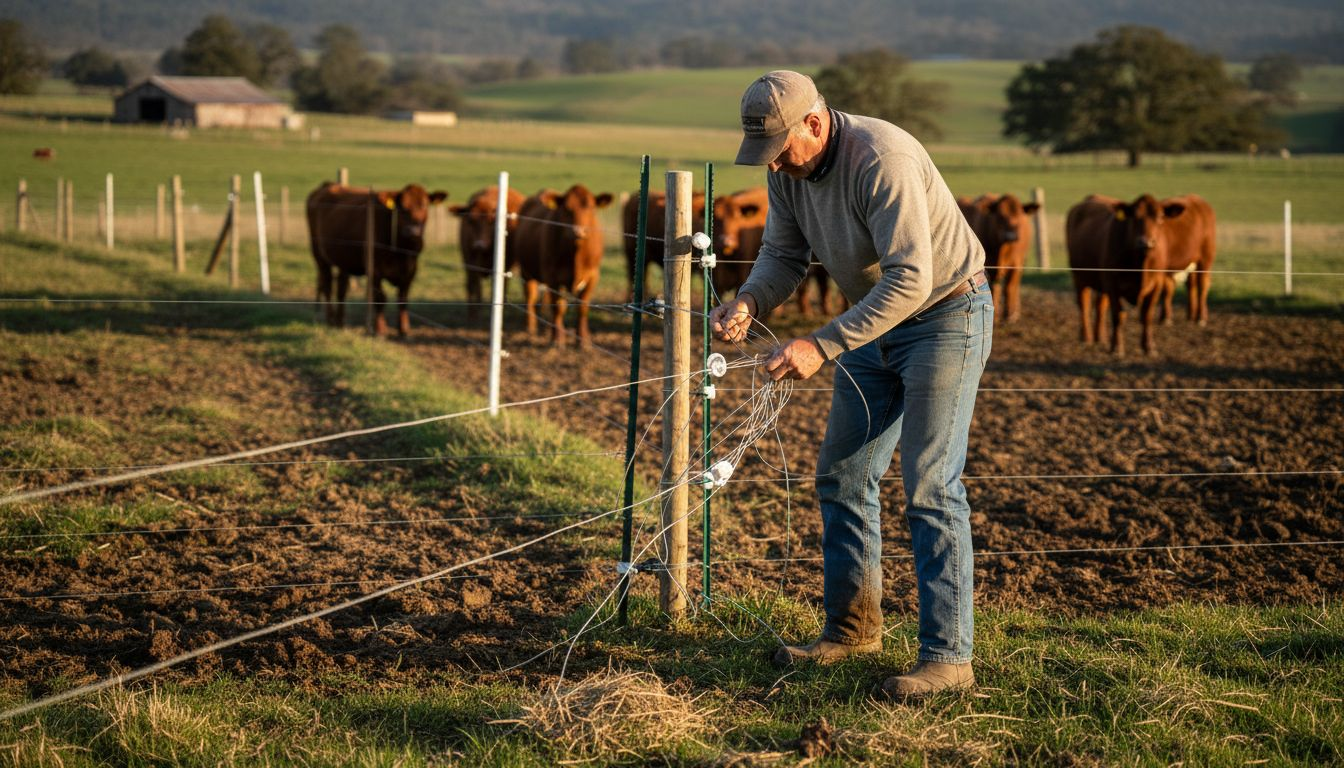
Non-electric temporary fencing alternatives include panel systems and lightweight mesh wire configurations. Portable metal panels offer robust containment for smaller herds or specific management scenarios like sorting and handling. Lightweight wire mesh fencing provides an economical solution for ranchers seeking cost-effective boundary management, with options ranging from simple wire strands to more complex woven configurations designed to withstand significant animal pressure. Each fencing type presents distinct advantages related to installation speed, material costs, durability, and specific agricultural requirements.
Pro Tip for Ranchers: Evaluate your specific pasture conditions, herd characteristics, and seasonal challenges before selecting a temporary fencing system to ensure maximum effectiveness and return on investment.
Here’s a comparison of main temporary cattle fencing types and their specific advantages:
| Fencing Type | Best Use Case | Durability | Relocation Speed |
|---|---|---|---|
| Portable Electric Wire | Rotational grazing, flexible herd control | Moderate | Very high |
| Electric Netting | Predator deterrence, secure perimeters | Moderate | High |
| High Tensile Wire | Semi-permanent setups, large herds | High | Moderate |
| Portable Metal Panels | Sorting pens, small herd containment | High | Low |
| Lightweight Mesh Wire | Cost-effective boundaries, temporary pasture strips | Low | Very high |
How Rotational Grazing Systems Work
Rotational grazing represents a sophisticated livestock management approach that optimizes pasture health, animal nutrition, and land productivity. Comprehensive rotational grazing strategies involve systematically moving cattle between multiple paddocks, allowing each section periodic rest and regeneration while maintaining consistent nutritional intake for the herd.
The core mechanics of rotational grazing depend on precise paddock design and strategic movement scheduling. Ranchers typically divide larger pasture areas into smaller, interconnected sections using temporary fencing systems that can be easily reconfigured. These paddocks are carefully sized to match herd requirements, with cattle moved based on grass height, recovery time, and nutritional density. Grazing duration in each paddock varies typically between 3-7 days, ensuring grass is not overgrazed while providing animals consistent access to fresh forage. Water access, shade provisions, and smooth animal transitions between sections represent critical infrastructure considerations.
Successful implementation requires careful monitoring and adaptive management. Advanced rotational systems incorporate sophisticated tracking of grass growth rates, soil health indicators, and herd performance metrics. Some ranchers utilize technology to precisely measure grazing impact, tracking parameters like forage biomass, recovery periods, and nutritional content. These data driven approaches enable ranchers to optimize pasture productivity, reduce feed costs, and improve overall herd health by mimicking natural grazing patterns and preventing landscape degradation.
Pro Tip for Ranchers: Start with smaller, more manageable paddock configurations and gradually expand your rotational grazing system as you develop expertise in monitoring grass recovery and herd movement patterns.
Installation and Maintenance Essentials
Temporary cattle fencing requires a strategic approach to installation that balances efficiency, durability, and animal safety. Comprehensive livestock fencing installation techniques emphasize the critical importance of proper foundation and systematic implementation to ensure long-term performance and herd containment.
The installation process begins with meticulous site preparation and precise equipment selection. Corner bracing represents the fundamental structural element of any temporary fencing system, providing critical stability for electric and non-electric configurations. Ranchers must carefully select materials that withstand local environmental conditions, considering factors like soil composition, terrain complexity, and potential animal pressure. Electric fence systems demand additional considerations, including grounding mechanisms, power supply reliability, and consistent voltage maintenance. Portable fencing configurations require robust yet lightweight materials that can be quickly deployed and reconfigured without compromising structural integrity.
Routine maintenance represents an equally crucial aspect of temporary cattle fencing management. Systematic inspection protocols should include regular checks of wire tension, electrical conductivity, post alignment, and potential damage from environmental factors or animal interactions. Advanced ranchers utilize digital tracking systems to monitor fence performance, recording voltage levels, identifying potential weak points, and scheduling proactive maintenance interventions. Seasonal adjustments become critical, with winter conditions potentially requiring specialized insulation strategies and summer heat demanding additional durability considerations for fencing components.
Pro Tip for Ranchers: Develop a comprehensive maintenance log that tracks fence performance, repair history, and seasonal modifications to optimize your temporary fencing investment and prevent unexpected system failures.
Below is a summary of common installation and maintenance mistakes, with their potential impact:
| Common Mistake | Consequence | Prevention Tip |
|---|---|---|
| Skipping site survey | Poor fence placement, escapes | Survey terrain and herd paths |
| Inadequate corner bracing | Fence collapse, instability | Use strong bracing materials |
| Ignoring voltage checks | Ineffective electric deterrent | Test voltage frequently |
| Not recording repairs | Undetected recurring failures | Maintain detailed maintenance logs |
| Neglecting seasonal adjustments | Fence damage or loss of function | Adapt fence to weather changes |
Costs, Safety Risks, and Common Mistakes
Cattle ranchers must carefully navigate the financial and safety considerations associated with temporary fencing systems. Comprehensive livestock fencing risk assessments reveal that strategic planning can significantly mitigate potential economic and operational challenges.
The economic landscape of temporary cattle fencing involves complex calculations beyond initial material costs. Installation expenses typically range from $1.50 to $3.50 per linear foot, depending on terrain complexity, fencing type, and electrical requirements. Common financial pitfalls include underestimating maintenance costs, choosing inappropriate materials for specific environmental conditions, and failing to account for seasonal infrastructure adjustments. Electric fencing systems demand additional investment in power supplies, grounding equipment, and periodic voltage testing, which can increase total system costs by 25-40% compared to traditional wire configurations.
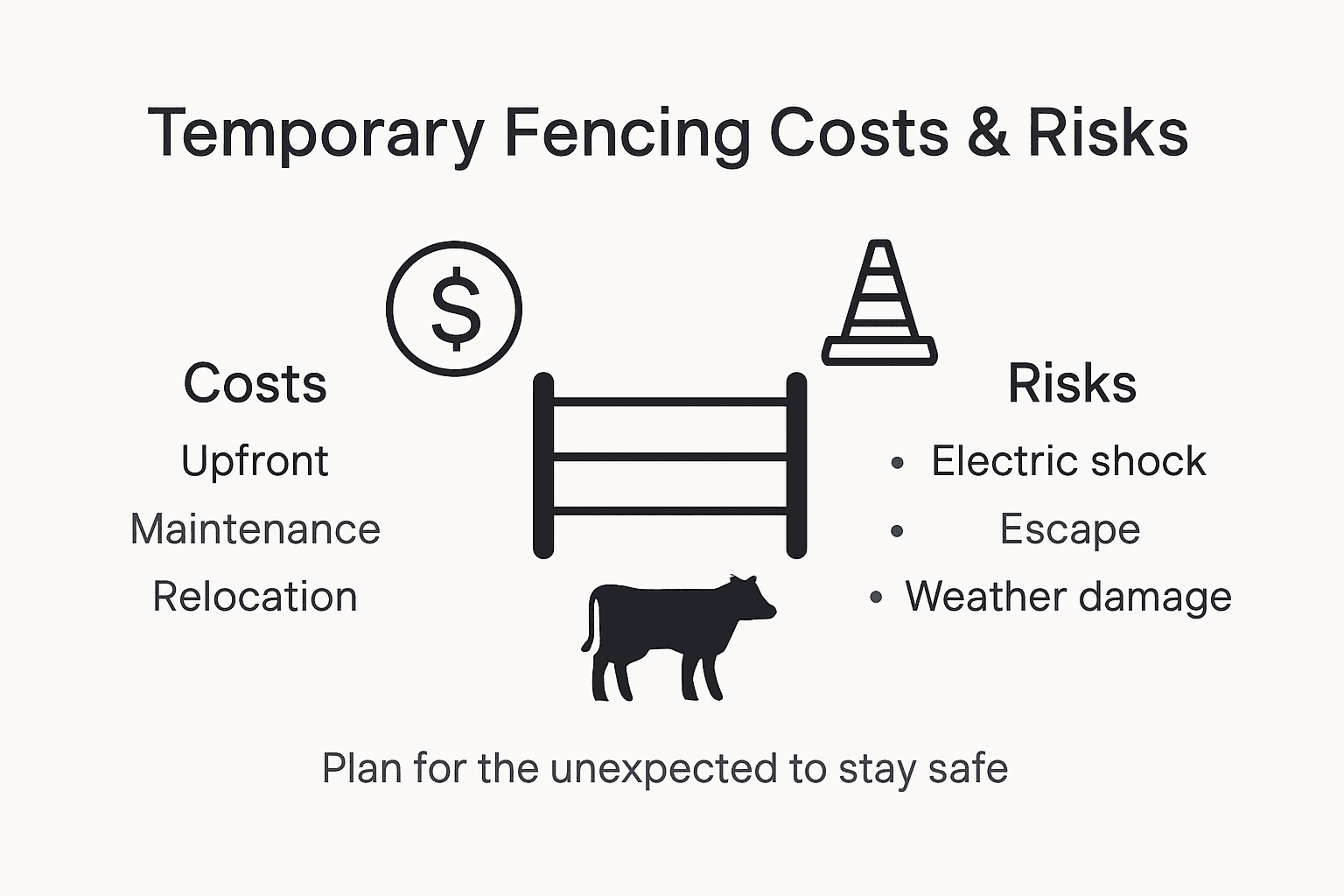
Safety risks represent another critical dimension of temporary cattle fencing management. Potential hazards include electrical system failures, inadequate grounding mechanisms, voltage inconsistencies, and structural weaknesses that could lead to animal escape or injury. Ranchers must implement rigorous inspection protocols, checking for wire damage, maintaining proper tension, and ensuring consistent electrical performance. Wildlife interaction poses additional challenges, with improperly designed fencing potentially causing unintended animal entrapment or injury. Advanced safety strategies involve using wildlife-friendly design principles, incorporating visual markers, and selecting materials that minimize potential harm to both livestock and local fauna.
Pro Tip for Ranchers: Conduct a comprehensive cost-benefit analysis before implementing any temporary fencing system, factoring in long-term maintenance expenses, potential animal safety improvements, and specific pasture management objectives.
Take Control of Your Pastures with Reliable Temporary Cattle Fencing Solutions
Managing herd movement and optimizing pasture health require temporary cattle fencing systems that are both durable and easy to install. This article highlights the challenges ranchers face such as selecting the right materials, ensuring electrical fence reliability, and implementing effective rotational grazing techniques. At FenceFast.ca, we understand these pain points and deliver a wide range of fencing components including portable electric fencing supplies, high tensile wire, and corner bracing materials designed to withstand Canadian environmental conditions and support your livestock management goals.

Enhance your cattle containment and pasture rotation strategies today with expert fencing products and accessories tailored for ranchers across Canada. Explore our comprehensive selection of electric fencing systems, power supplies, and animal management tools at FenceFast.ca. Don’t wait to improve animal safety and pasture productivity. Visit FenceFast.ca now to find everything you need for effective temporary cattle fencing and start building stronger, adaptable fencing solutions.
Frequently Asked Questions
What are the main types of temporary cattle fencing?
The primary types of temporary cattle fencing include portable electric fencing, electric netting, high tensile wire, portable metal panels, and lightweight mesh wire. Each type offers unique advantages depending on the specific needs for pasture management and animal containment.
How does rotational grazing work with temporary fencing?
Rotational grazing involves moving cattle between multiple paddocks to allow rest and regeneration of pasture. Temporary fencing can be used to create these paddocks, enabling ranchers to manage grass height and ensure consistent access to fresh forage for their herd.
What materials are best for temporary cattle fencing?
Materials such as high tensile wire, polywire, electric netting, and portable metal panels are commonly used for temporary cattle fencing. The best choice depends on factors such as terrain, herd size, and specific management goals.
How do I maintain temporary cattle fencing?
Maintenance involves regular checks of wire tension, electrical conductivity, post alignment, and potential damage. Keeping a detailed maintenance log can help track fence performance and ensure prompt repairs are made to avoid issues with animal containment.

