

Most American electric fencing systems can cost twice as much to install if you overlook efficient planning or local solutions. For Canadian cattle ranchers and farmers looking to maximize their investment, every dollar saved on fencing can directly improve herd safety and grazing management. By learning how to assess, plan, and build durable electric fences suited to your unique landscape, you can raise livestock with less stress and avoid common pitfalls that drain both time and budget.
Table of Contents
- Step 1: Assess And Plan Your Fencing Layout
- Step 2: Gather Materials And Prepare The Site
- Step 3: Install Fence Posts And Electrified Wire
- Step 4: Connect Power Supply And Safety Components
- Step 5: Test And Verify Electric Fence Performance
Quick Summary
| Key Insight | Explanation |
|---|---|
| 1. Conduct a property survey | Map features like terrain, water, and grazing patterns to create an effective fencing layout. |
| 2. Prepare your site thoroughly | Clear vegetation and properly mark post locations to facilitate installation and ensure stability. |
| 3. Use quality materials | Choose durable posts and reliable electric wire to enhance the longevity and effectiveness of your fence. |
| 4. Regularly test fence performance | Periodically check voltage levels and inspect for issues to maintain consistent cattle containment. |
| 5. Implement safety measures | Install features like grounding systems and warning signs to protect both livestock and people from electric shocks. |
Step 1: Assess and plan your fencing layout
Preparing a strategic electric fence layout requires careful evaluation of your property and cattle management needs. By thoughtfully analyzing your land, you will create an efficient fencing system that supports optimal livestock movement and pasture utilization.
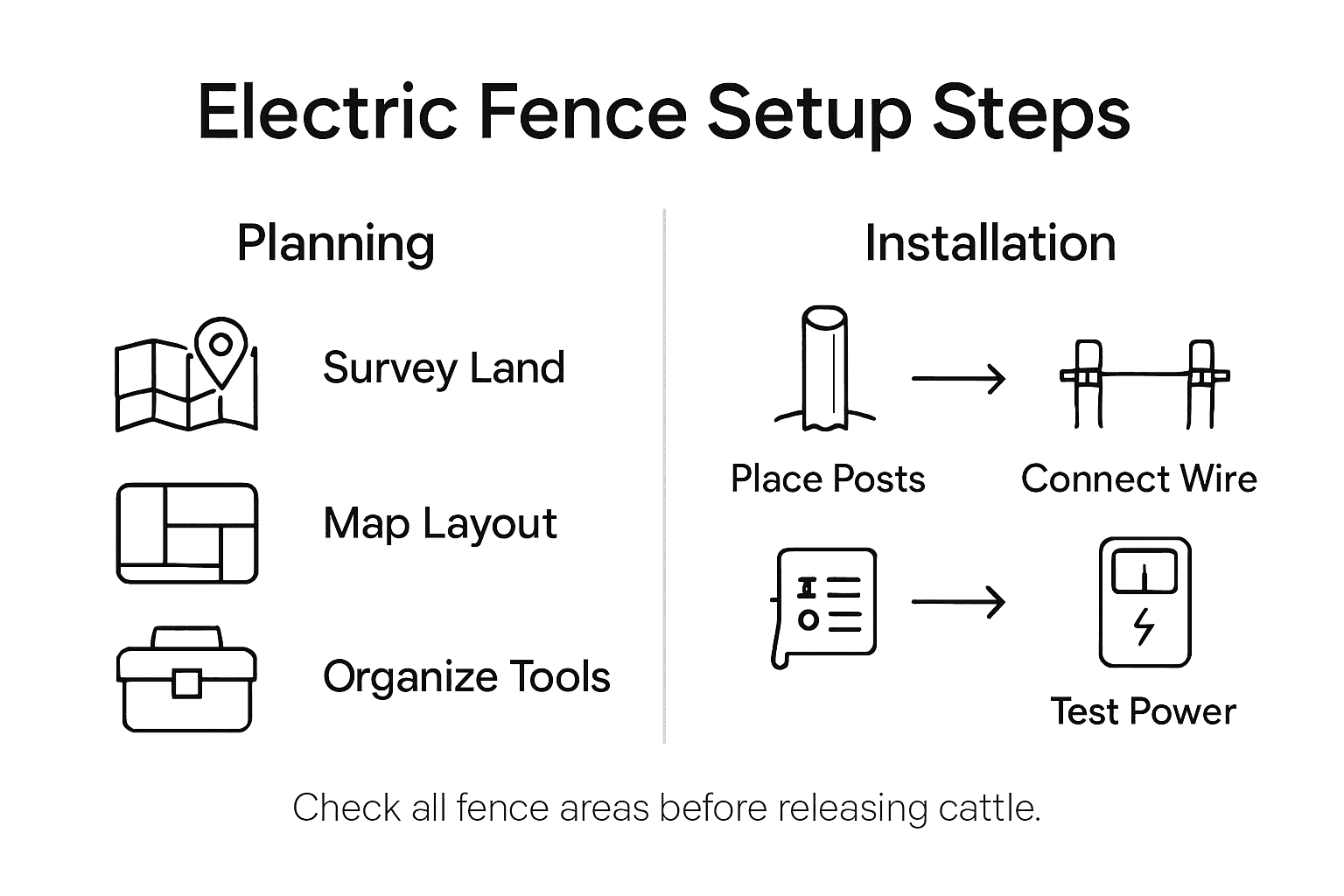
Start by conducting a comprehensive property survey that maps out critical elements like terrain features, water access points, grazing patterns, and potential landscape obstacles. Professional livestock fencing guides recommend analyzing land size and herd requirements to determine the most effective fence configuration. Measure your total pasture area and divide it into logical sections that allow for rotational grazing. Consider the number of cattle you plan to manage, their breed characteristics, and expected movement patterns. Sketch a rough diagram showing potential fence lines, gate locations, and transition corridors that will facilitate smooth stock movement.
Your layout should integrate strategic elements like centralized water access, shade zones, and efficient corridors connecting different pasture sections. Look for natural boundaries such as tree lines or slight elevation changes that might reduce overall fencing requirements. Evaluate the terrain for potential challenges like rocky ground, steep slopes, or wet areas that could complicate post installation. These considerations will help you design a flexible fencing system that adapts to your specific agricultural landscape.
Here is a summary of key fencing layout elements to consider when planning your system:
| Element | Why It Matters | Impact on Livestock Management |
|---|---|---|
| Water Access | Ensures hydration at all times | Reduces cattle stress and wandering |
| Shade Zones | Protects cattle from heat | Improves animal health |
| Natural Boundaries | Minimizes fencing material needs | Simplifies layout, lowers costs |
| Terrain Challenges | Influences post installation and safety | Prevents future maintenance issues |
| Grazing Corridors | Enables logical livestock movement | Supports rotational grazing plans |
Pro tip: Create a digital or physical map of your property before purchasing any fencing materials to minimize costly mistakes and optimize your initial investment.
Step 2: Gather materials and prepare the site
In this crucial stage, you will collect all necessary materials and prepare your land for electric fence installation. Proper preparation ensures a smooth and efficient fencing project that will protect and manage your cattle effectively.
Essential tools for farm fence building include specific equipment designed for electric livestock containment. Begin by assembling key materials such as fence posts, electric wire or tape, insulators, corner braces, grounding rods, and an energizer compatible with your property size and cattle requirements. Select posts made from sturdy materials like treated wood or steel that can withstand outdoor conditions. Choose high-quality electric wire specifically rated for cattle fencing, which typically requires stronger voltage and more durable construction compared to other livestock barriers.
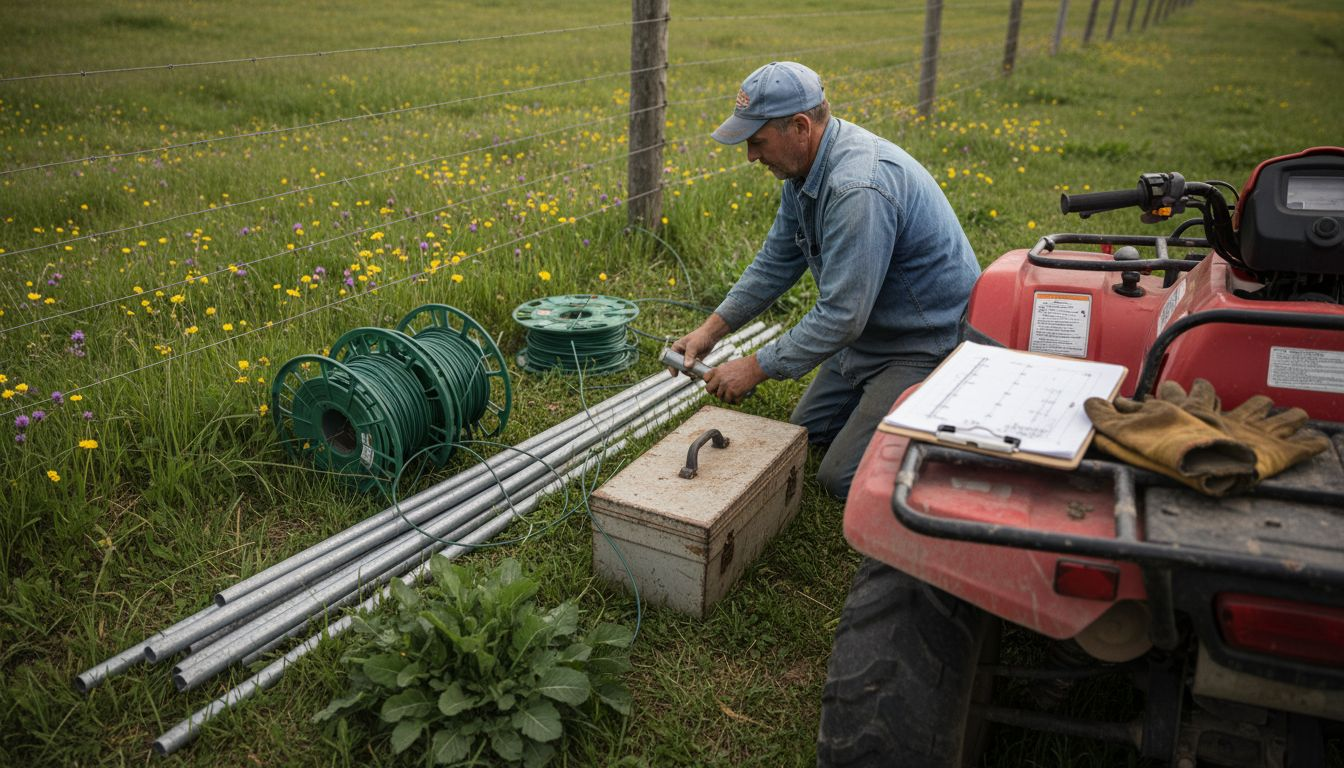
Prepare your site by clearing vegetation and creating a clean work area along your planned fence line. Remove rocks, stumps, and debris that might interfere with post installation. Mark your exact post locations using stakes and string to ensure straight lines and consistent spacing. Check ground conditions to confirm you can securely drive or dig posts depending on your terrain. Consider soil moisture, rocky ground, and potential seasonal variations that might impact post stability. Verify local regulations and utility locations before any digging to prevent accidental infrastructure damage.
Pro tip: Organize all your materials near the work site before beginning installation to minimize unnecessary trips and maintain workflow efficiency.
Step 3: Install fence posts and electrified wire
Installing fence posts and electrified wire requires precision and careful planning to create an effective cattle containment system. This stage transforms your preparation into a functional electric fence that will protect and manage your livestock.
Electric fence installation techniques emphasize the importance of proper post placement and wire configuration. Begin by driving your corner and end posts deeper and more securely than line posts, using a post driver or mechanical auger to ensure stability. Space line posts consistently between 30 and 50 feet apart, maintaining straight alignment using string lines as a guide. For cattle fencing, install multiple wire strands at different heights to prevent animals from going under or over the fence. Typically, you will want three to four electrified wire strands spaced approximately 12 to 18 inches apart, with the lowest wire positioned about 12 inches from ground level.
As you thread the electrified wire, use high quality insulators designed to prevent electrical grounding and maintain consistent voltage. Electric fence insulators for steel posts can provide additional guidance on proper installation techniques. Connect each wire strand carefully to the energizer, ensuring tight connections and minimal resistance. Test the voltage at multiple points along the fence to confirm uniform electrical coverage. Pay special attention to gate areas, using insulated handle connections that allow safe human passage while maintaining livestock containment.
Pro tip: Use a voltage tester to check electrical continuity immediately after installation and periodically throughout the season to ensure consistent fence performance.
Step 4: Connect power supply and safety components
Connecting your electric fence power supply and safety components is a critical step that ensures reliable livestock containment and protects your investment. This process involves carefully integrating electrical components to create a safe and effective fencing system.
Professional electric fence component guidelines emphasize the importance of proper energizer selection and installation. Choose an energizer that matches your fence length and livestock type, typically providing 2000 to 5000 volts for cattle containment. Position the energizer in a dry, protected location near a power source, using either solar, battery, or electrical plug in options. Install a robust grounding system by driving three galvanized ground rods at least 6 feet long into moist soil, spacing them 10 feet apart and connecting them with heavy gauge wire. This ensures efficient electrical current distribution and minimizes potential voltage loss.
Compare energizer types for cattle fencing reliability and flexibility:
| Energizer Type | Power Source | Suitable For | Key Advantage |
|---|---|---|---|
| Plug-in | Electrical outlet | Permanent installations | Consistent high power output |
| Battery | Portable batteries | Temporary or remote areas | Flexibility, no grid required |
| Solar | Solar panels & battery | Off-grid, sunny regions | Sustainable, low maintenance |
Implement critical safety components to protect your fencing system from environmental challenges. Install lightning diverters to prevent electrical surges from damaging your energizer during storms. Use insulated underground cables for gate areas to maintain consistent electrical connectivity while allowing safe human and animal passage. Consider adding warning signs to alert people about the electrified fence and prevent accidental contact. Regularly test fence voltage using a reliable meter, ensuring consistent electrical output between 2000 and 4000 volts to effectively contain your cattle.
Pro tip: Purchase a digital voltage tester with automatic shut off to protect your equipment and provide precise readings during routine fence maintenance.
Step 5: Test and verify electric fence performance
Testing and verifying your electric fence performance is essential to ensure reliable cattle containment and maintain the safety of your livestock management system. This critical step confirms that your carefully constructed fence operates at optimal electrical standards.
Electric fencing operational procedures recommend comprehensive voltage testing using specialized digital meters. Begin by checking voltage levels across multiple fence segments, targeting the standard 3,500 to 5,500 volts required for effective cattle control. Systematically test each wire strand, starting at the energizer and moving toward distant fence sections. Look for consistent voltage readings that indicate proper electrical flow. Pay close attention to potential interference sources like vegetation contact, damaged insulators, or ground system inefficiencies that could compromise fence performance.
Conduct thorough diagnostics by walking the entire fence line and using your voltage meter to identify potential weak points. Check for voltage drops that might signal grounding issues, wire breaks, or short circuits. Inspect insulators for cracks, examine wire connections for corrosion, and clear vegetation that could ground the fence. Troubleshooting electric fences can provide additional guidance for resolving common electrical performance problems. Verify that warning signs are visible and that gate handles function correctly. Repeat these tests seasonally and after significant weather events to maintain consistent fence reliability.
Pro tip: Record your voltage test results in a logbook to track performance trends and quickly identify potential maintenance needs.
Build a Strong Electric Fence with Confidence and Ease
Designing and installing an electric fence for cattle can be challenging. From planning your layout with careful attention to water access and natural boundaries to selecting the right energizer and insulators, each decision impacts your livestock’s safety and pasture management. You want a fencing solution that is reliable, effective, and tailored to your unique property and herd needs.
At FenceFast.ca, we understand these critical pain points and offer a comprehensive range of electric fencing supplies, including sturdy posts, quality wires, energizers, and safety components designed specifically for cattle. Our expert resources and easy-to-navigate product catalog help you gather everything needed for your fencing project in one place so you can focus on creating a secure environment for your cattle.

Take control of your livestock management today. Visit FenceFast.ca to explore our detailed fencing components and electric power supplies. Benefit from nationwide shipping and expert advice to ensure your fence performs flawlessly season after season. Start building your perfect electric fence now and protect your investment with confidence.
Frequently Asked Questions
How do I assess my property for an electric fence layout?
Begin by conducting a comprehensive survey of your land, mapping out key features like terrain, water access, and grazing patterns. Create a rough diagram showing potential fence lines and gate locations to ensure effective livestock movement.
What materials do I need to gather before building an electric fence for cattle?
You will need fence posts, electric wire or tape, insulators, corner braces, grounding rods, and an energizer. Organize your materials near the work site to streamline the installation process and reduce unnecessary trips.
How should I install the fence posts for the electric fence?
Drive corner and end posts deeper for extra stability and space line posts consistently between 30 and 50 feet apart. Use string lines to ensure straight lines and maintain accurate spacing during installation.
What voltage should my electric fence energizer provide for cattle?
For effective cattle containment, your energizer should typically provide between 2,000 to 5,000 volts. Select an energizer based on the length of your fence and ensure it is positioned in a dry location close to a power source.
How can I test the performance of my electric fence after installation?
Use a digital voltage meter to check the voltage across multiple fence segments, aiming for 3,500 to 5,500 volts. Conduct thorough diagnostics by walking the fence line to identify any weak points or grounding issues, and repeat these tests regularly to ensure consistent performance.

