

Most farmers assume fencing automatically harms wildlife, but that’s not the full story. Thoughtful fence design can protect your livestock while supporting healthy wildlife populations. Across Canada, hundreds of thousands of miles of fencing create barriers that disrupt animal movement, yet strategic design choices can dramatically reduce these impacts. This guide shows you how to build fences that safeguard your operation without sacrificing wildlife conservation, proving these two goals aren’t mutually exclusive when you apply the right techniques.
Table of Contents
- Understanding The Impact Of Traditional Fencing On Wildlife
- Key Features Of Wildlife Friendly Fence Designs
- Strategic Fence Placement And Additional Wildlife Considerations
- Balancing Livestock Protection With Wildlife Conservation
- Explore Wildlife-Friendly Fencing Solutions At FenceFast Ltd
Key takeaways
| Point | Details |
|---|---|
| Wildlife friendly designs reduce injuries | Proper wire spacing and smooth bottom wires prevent animal entanglement and maintain migration routes. |
| Strategic placement minimizes fragmentation | Aligning fences with natural contours preserves habitat connectivity while protecting livestock. |
| Visual markers prevent bird collisions | Adding reflective or colored markers to fences can reduce bird strikes by up to 80%. |
| Predator resistance works with wildlife access | Combining protective features with passage openings balances livestock security and conservation. |
| Lower long-term maintenance costs | Wildlife friendly fences reduce damage and livestock stress, cutting maintenance expenses by approximately 15%. |
Understanding the impact of traditional fencing on wildlife
Traditional fencing creates serious obstacles for wildlife across North America. Fences obstruct migration routes, fragment habitats, and cause wildlife injury or death when animals attempt to cross barriers. These structures physically block animals from accessing critical resources like water, food, and breeding grounds. When wildlife can’t move freely, populations become isolated and genetic diversity declines.
The scale of this problem is staggering. Hundreds of thousands of miles of fences create extensive barriers to animal movement in the Western US, and Canada faces similar challenges. Deer, elk, pronghorn, and other large mammals suffer the most visible impacts, but smaller species experience disruption too. Animals attempting to jump or crawl through poorly designed fences frequently become entangled in barbed wire, leading to severe injuries or death.
Habitat fragmentation represents perhaps the most insidious effect. When fences divide landscapes into smaller patches, they:
- Prevent seasonal migrations that animals depend on for survival
- Isolate breeding populations, reducing genetic health
- Block access to winter range or summer feeding areas
- Increase vulnerability to predators and environmental stressors
These connectivity issues compound over time. A single fence might seem insignificant, but cumulative barriers across a region create impassable networks that fundamentally alter wildlife behavior and population dynamics. Understanding these impacts makes clear why wildlife fencing farm protection requires thoughtful design rather than standard approaches.
Traditional fencing practices developed without considering wildlife needs, but modern farmers can choose designs that serve both agricultural and conservation goals simultaneously.
The good news? Recognizing these problems is the first step toward implementing solutions that work for everyone.
Key features of wildlife friendly fence designs
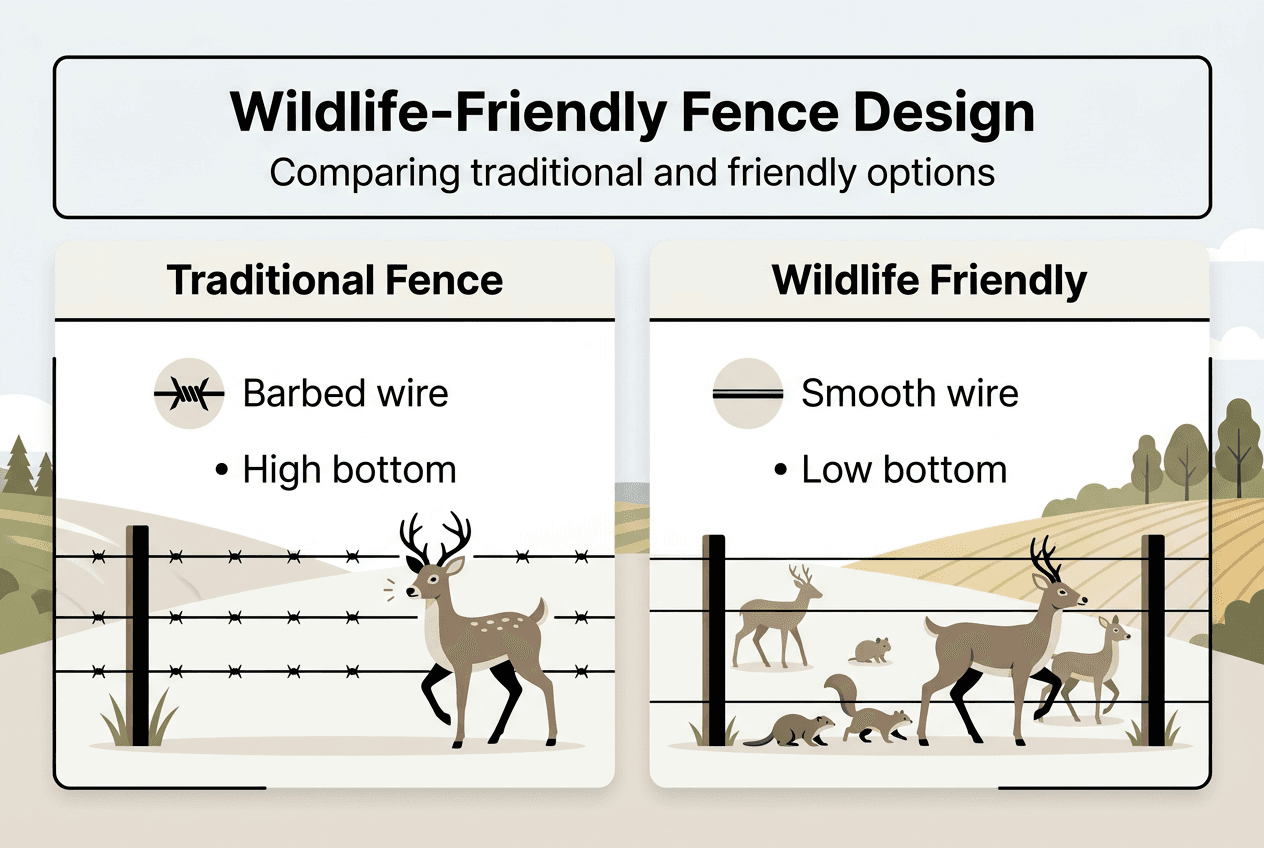
Specific design modifications transform standard fences into wildlife compatible barriers. The most critical feature involves using smooth bottom wires with better spacing, which reduces injury by up to 80%. Smooth wire eliminates the sharp barbs that snag animals, while proper spacing allows wildlife to pass underneath or through fence lines safely.
Wire spacing makes an enormous difference. Standard fences often place wires too close together, forcing animals into dangerous crossing attempts. Wildlife friendly designs typically use these specifications:
- Bottom wire 16 to 18 inches above ground for ungulates
- 12-inch spacing between bottom two wires
- Top wire no higher than 42 inches for most applications
- Reduced total wire count compared to traditional designs
These measurements accommodate deer, elk, and pronghorn while still containing livestock effectively. Smaller wildlife like foxes, coyotes, and badgers benefit from the increased ground clearance.
Predator-resistant features don’t have to compromise wildlife passage. Predator-resistant fence designs significantly reduce livestock predation from wolves, coyotes, and bears while maintaining some wildlife compatibility. These fences use tighter spacing in vulnerable areas near livestock holding pens but incorporate wildlife-friendly sections along perimeter boundaries where predator pressure is lower.
Pro Tip: Install wildlife-friendly gates or let-down sections in fence lines that cross known animal trails. These temporary openings allow seasonal migration without permanent gaps in your livestock containment.
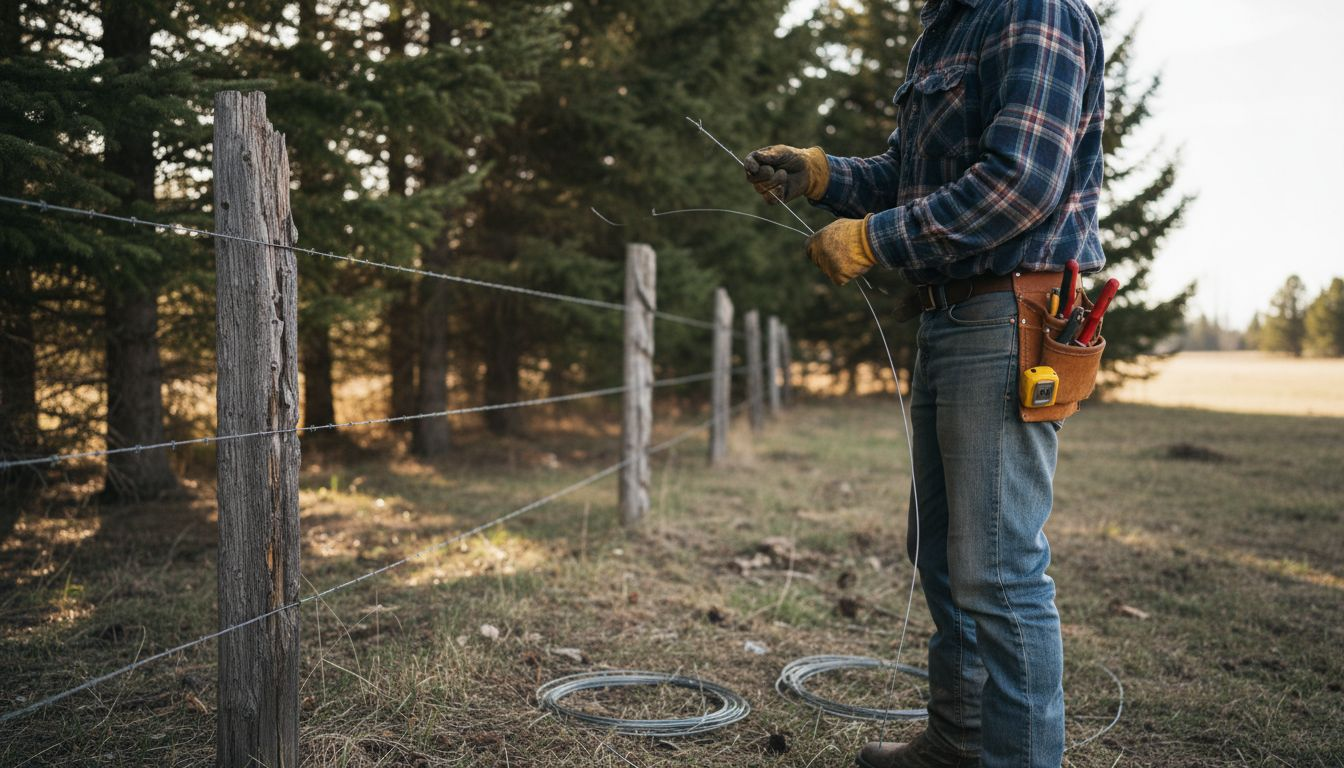
Material selection matters too. High-tensile smooth wire provides durability without the injury risk of barbed options. Electric fencing offers another solution, creating psychological rather than physical barriers that wildlife can cross when necessary. The table below compares key design elements:
| Feature | Traditional Fence | Wildlife Friendly Fence | Benefit |
|---|---|---|---|
| Bottom wire | Barbed, 12 inches high | Smooth, 16-18 inches high | Allows safe passage underneath |
| Wire spacing | 6-8 inches between wires | 12 inches between bottom wires | Reduces entanglement risk |
| Total height | 48-54 inches | 42 inches maximum | Easier for animals to jump |
| Wire type | 4-5 barbed strands | 3-4 smooth strands | Eliminates snagging injuries |
Understanding wildlife friendly fencing principles helps you select appropriate features for your specific situation. Regional wildlife populations and predator pressures should guide your choices. Areas with significant wolf or bear activity need more robust predator-resistant fence configurations than regions where coyotes are the primary concern.
The combination of smooth wires, proper spacing, and strategic height creates fences that protect your livestock investment while respecting the wildlife that share your landscape.
Strategic fence placement and additional wildlife considerations
Where you place fences matters as much as how you build them. Fences placed perpendicular to wildlife trails disrupt movement, while alignment with natural contours mitigates fragmentation. Before installing new fencing, observe animal movement patterns on your property throughout different seasons. Game cameras reveal trails you might otherwise miss.
Follow these placement strategies to minimize wildlife disruption:
- Align fences parallel to ridgelines and natural terrain features that already guide animal movement
- Avoid placing barriers directly across valleys or drainage corridors that serve as travel routes
- Leave gaps or install wildlife-friendly crossing structures where fences must intersect major trails
- Consider topography when planning fence lines, using natural barriers like steep slopes to reduce total fencing needs
- Coordinate with neighboring landowners to maintain regional connectivity
Landscape features provide valuable guidance. Rivers, streams, and forest edges naturally channel wildlife movement. Positioning fences to work with these features rather than against them preserves connectivity while still defining your property boundaries and pasture divisions.
Bird collisions represent another significant wildlife impact that simple additions can prevent. Visual markers on fences reduce collisions by up to 80%, making previously invisible barriers obvious to flying birds. Attach white or colored flagging, reflective tape, or commercial bird diverters at regular intervals along top wires. These markers are especially important near wetlands, forests, or other high-value bird habitats.
Pro Tip: Replace visual markers annually, as weather degrades their visibility. Schedule marker replacement during spring before peak nesting season when bird activity increases dramatically.
Seasonal considerations affect fence design decisions too. In regions with heavy snowfall, winter snow depth can bury bottom wires, eliminating the ground clearance that allows wildlife passage. Account for typical snow accumulation when setting wire heights, or plan for seasonal fence modifications in critical areas.
The table below compares fence placement approaches:
| Placement Strategy | Advantages | Disadvantages | Best Use Case |
|---|---|---|---|
| Perpendicular to trails | Shorter fence runs, lower material costs | Blocks wildlife movement, increases collisions | Low wildlife activity areas |
| Parallel to trails | Maintains connectivity, reduces conflicts | May require longer fence runs | High wildlife traffic zones |
| Following contours | Works with terrain, natural appearance | Complex installation, variable materials | Hilly or mountainous properties |
| Grid pattern | Simple planning, uniform pastures | Ignores wildlife patterns completely | Intensive livestock operations |
Migration timing influences fence impacts significantly. Elk and deer move to lower elevations in winter, creating concentrated pressure on fences during specific months. Creating wildlife corridors practical steps include identifying these seasonal patterns and designing fences that accommodate predictable movements.
Remember that wildlife fencing protecting property doesn’t mean choosing between your operation and conservation. Strategic placement creates win-win solutions that serve both purposes effectively when you invest time in planning before installation begins.
Balancing livestock protection with wildlife conservation
Protecting livestock from predators while maintaining wildlife-friendly features requires thoughtful compromise. Predator-resistant fencing reduces livestock losses with designs compatible with wildlife passage when you apply zone-based approaches. High-security fencing around calving areas, lambing paddocks, and nighttime holding pens provides maximum protection where livestock are most vulnerable. Perimeter fences can incorporate more wildlife-friendly features since predators typically target concentrated, confined animals rather than dispersed herds.
Electric fencing offers flexible solutions for this balance. A properly charged electric fence creates a psychological barrier that deters predators without the physical obstruction of woven wire or barbed designs. Wildlife can cross electric fences when necessary, though they quickly learn to avoid them. Key applications include:
- Temporary pasture divisions that you can move seasonally
- Nighttime predator deterrent around vulnerable stock
- Reinforcement of existing fence lines in high-risk areas
- Perimeter protection that allows wildlife passage during low-risk periods
Cost considerations influence every fencing decision. Initial installation of wildlife-friendly designs may cost slightly more due to specific wire types and spacing requirements. However, wildlife friendly fencing long-term costs are lower by approximately 15% due to reduced maintenance needs. Fences that accommodate wildlife movement experience less damage from animals attempting to cross, and livestock exhibit lower stress levels when wildlife interactions decrease.
Pro Tip: Document wildlife and livestock interactions during your first year with new fencing. This baseline data helps you identify problem areas requiring modification and demonstrates what’s working well.
Regional customization is essential. A fence design perfect for Alberta cattle operations may fail completely for British Columbia sheep ranchers facing different predator pressures and wildlife species. Consider these local factors:
- Primary predator species and their behavior patterns
- Dominant wildlife species requiring accommodation
- Seasonal migration timing and intensity
- Terrain and vegetation affecting visibility and access
- Climate impacts like snow depth and freeze-thaw cycles
The most successful operations integrate multiple strategies rather than relying on fencing alone. Guardian animals, range riders, and strategic livestock management complement well-designed fences to create comprehensive protection systems.
Smart livestock fencing balances immediate security needs with long-term sustainability, recognizing that healthy wildlife populations indicate healthy landscapes that support productive agriculture.
Smart livestock fencing ideas extend beyond basic barrier functions. Modern approaches view fences as landscape management tools that shape both livestock and wildlife behavior. Agricultural fencing durable solutions prioritize longevity and adaptability, allowing you to modify designs as you learn what works best on your specific property.
The investment in wildlife-friendly fencing pays dividends beyond reduced maintenance costs. Properties that support diverse wildlife populations often qualify for conservation programs, tax incentives, and ecosystem services payments. These financial benefits can offset initial design costs while contributing to broader conservation goals.
Balancing livestock protection with wildlife conservation isn’t about perfection. It’s about making informed choices that incrementally improve outcomes for both your operation and the wildlife that share your land.
Explore wildlife-friendly fencing solutions at FenceFast Ltd.
Implementing wildlife-friendly fence designs becomes straightforward when you have access to the right materials and expert guidance. FenceFast specializes in fencing solutions tailored for Canadian farmers and ranchers who want to balance livestock protection with wildlife conservation. Our product selection includes smooth wire options, electric fencing components, and specialized materials that support the design principles covered in this guide.
The electric fence accessory kit provides everything you need to add flexible predator deterrent zones to your property. Electric systems work exceptionally well for temporary divisions and seasonal modifications that accommodate wildlife movement patterns. For areas requiring physical barriers against smaller nuisance animals while protecting crops and gardens, electric fence netting offers portable solutions that you can relocate as needs change throughout the growing season. Browse our complete range of fencing products designed specifically for Canadian agricultural conditions in 2026.
FAQ
What is wildlife friendly fencing?
Wildlife friendly fencing uses specific design features that allow safe animal movement while protecting livestock and property. These fences incorporate smooth wires, proper spacing, and appropriate heights that let wildlife pass underneath or jump over barriers without injury. The goal is maintaining ecosystem connectivity and reducing habitat fragmentation while still serving agricultural purposes effectively.
How does fence design reduce animal injuries?
Proper wire spacing and smooth bottom wires allow animals to pass safely underneath or through fence lines without becoming entangled. Traditional barbed wire creates snagging points that trap wildlife, while smooth wire eliminates this risk. Wildlife-friendly gates and let-down sections in high-traffic areas provide safe crossing points that reduce injury risk by up to 80% compared to standard designs.
Can I protect livestock and support wildlife simultaneously?
Predator-resistant fencing combined with wildlife-friendly elements successfully balances both goals when you use zone-based approaches. High-security fencing around vulnerable areas like calving paddocks provides maximum protection, while perimeter fences incorporate features that allow wildlife passage. Tailoring your design based on local predator and wildlife species improves effectiveness and reduces conflicts between conservation and agricultural objectives.
Are wildlife friendly fences cost-effective long term?
Initial installation costs may run slightly higher due to specific materials and design requirements, but maintenance expenses decrease by approximately 15% over the fence’s lifespan. Reduced damage from wildlife attempting to cross barriers lowers repair needs significantly. Additionally, decreased livestock stress from fewer wildlife conflicts can enhance productivity and health, offsetting initial investment through improved operational efficiency and reduced veterinary costs.

