

Managing cattle and sheep across sprawling Canadian pastures demands flexible solutions that keep animals secure and grazing controlled. Temporary electric fence posts offer a practical answer to rotational grazing and predator management, providing lightweight, quick-to-install frameworks that adapt to changing herd patterns. As you look for portable systems that fit your terrain and livestock type, discover how these posts help create effective, moveable boundaries, making your day-to-day operations more efficient and reliable.
Table of Contents
- What Are Temporary Electric Fence Posts?
- Key Types And Material Differences
- How Temporary Fence Posts Work
- Essential Setup And Placement Tips
- Costs, Durability, And Buying Considerations
- Avoiding Common Mistakes In Field Use
Key Takeaways
| Point | Details |
|---|---|
| Temporary Electric Fence Posts Provide Flexibility | They allow for rapid placement and repositioning, crucial for dynamic livestock management. |
| Material Choice Impacts Performance | Select posts based on livestock type and terrain for optimal functionality and durability. |
| Proper Installation is Essential | Adhere to guidelines regarding spacing, grounding, and tension to ensure effective fencing. |
| Regular Maintenance Avoids Issues | Conduct monthly inspections to maintain electrical integrity and structural stability. |
What Are Temporary Electric Fence Posts?
Temporary electric fence posts are portable support structures designed specifically for creating flexible, movable livestock containment systems. Unlike traditional permanent fencing, these specialized posts provide farmers and ranchers with a dynamic solution for managing grazing patterns and animal movements across pasture lands.
These innovative posts serve multiple critical functions in livestock management, functioning as essential components of an adaptable electric fencing system. They typically feature lightweight, easy-to-install designs that allow rapid deployment and repositioning to meet changing agricultural needs.
Temporary electric fence posts come in several primary styles, each tailored to different agricultural environments:
- Step-in posts: Featuring integrated foot platforms for easy ground insertion
- Ring-top posts: Designed with circular tops for smooth wire or tape threading
- Plastic composite posts: Lightweight and resistant to weathering
- Fiberglass reinforced posts: Offering superior durability and electrical conductivity
The core purpose of these posts is creating psychological barriers that train livestock to respect designated boundaries. By supporting lightweight conductors like polywire or polytape and working in conjunction with energizers, these posts deliver mild electrical pulses that condition animals to avoid crossing fence lines.
Pro tip: When selecting temporary electric fence posts, choose models that match your specific livestock type and terrain to ensure optimal performance and ease of installation.
Key Types and Material Differences
Temporary electric fence posts come in various materials and designs, each with unique characteristics tailored to specific agricultural needs. Synthetic and composite materials dominate the market, offering farmers versatile solutions for livestock management across different terrains and environmental conditions.
The primary types of temporary electric fence posts can be categorized by their material composition and installation method:
-
Plastic Posts
- Lightweight and affordable
- Excellent electrical insulation properties
- Resistant to rust and corrosion
- Best for short-term or rotational grazing setups
-
Fiberglass Posts
- Superior durability
- Excellent electrical conductivity
- Withstand harsh weather conditions
- More expensive but longer-lasting
-
Composite Material Posts
- Blend of multiple materials
- Enhanced strength and flexibility
- Designed for versatile agricultural environments
- Balance between cost and performance
Temporary electric fence post materials are engineered to provide specific advantages for livestock management. The selection depends on factors like terrain, livestock type, climate conditions, and expected duration of use.
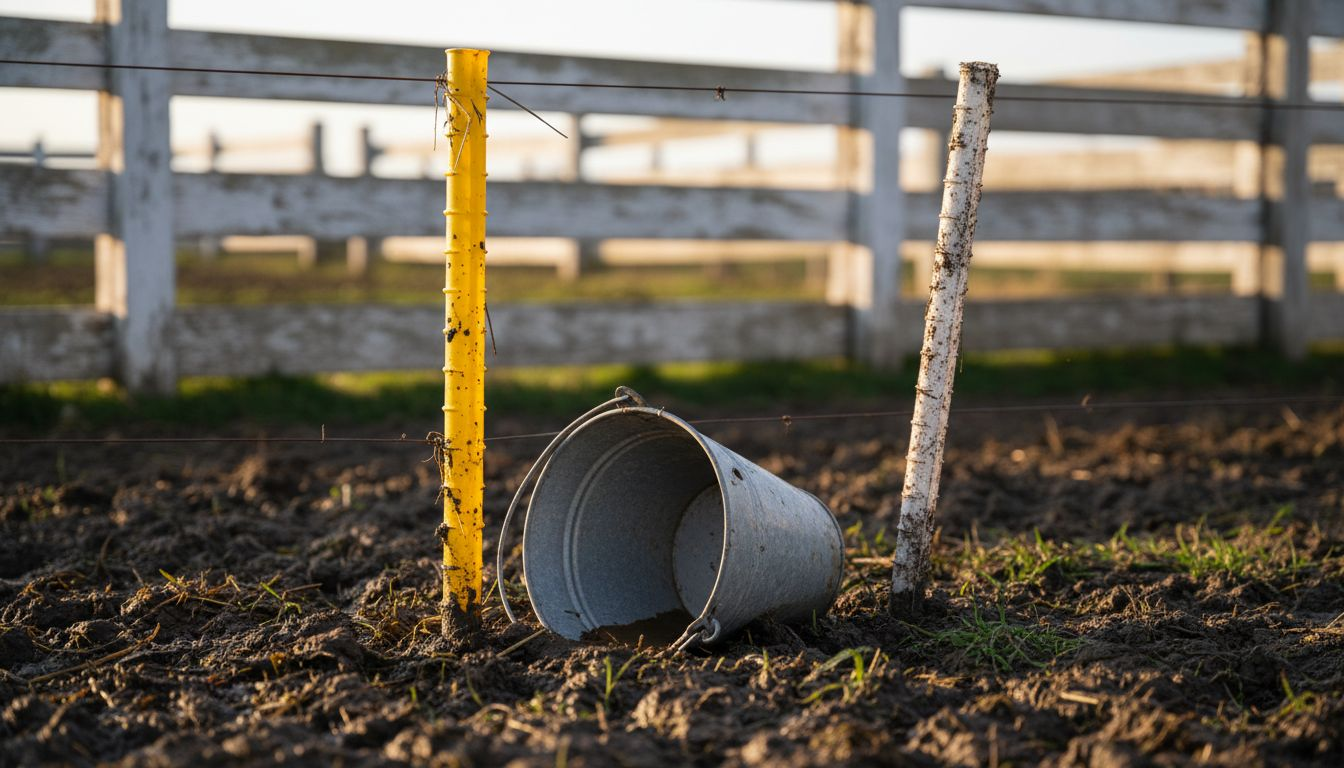
Each material offers distinct benefits. Plastic posts excel in lightweight portability, fiberglass posts provide robust durability, and composite posts offer a sophisticated compromise between performance and cost-effectiveness.
Pro tip: Consider your specific farm environment and livestock requirements when selecting temporary electric fence post materials to maximize performance and longevity.
Here’s a quick comparison of temporary electric fence post materials and their ideal use scenarios:
| Material Type | Best For | Strengths | Potential Limitations |
|---|---|---|---|
| Plastic | Rotational grazing setups | Lightweight, affordable | Shorter lifespan, brittle |
| Fiberglass | Harsh environments | High durability, conductivity | Higher cost, can splinter |
| Composite | Mixed livestock, rugged terrain | Flexible, long-lasting | Most expensive, heavier |
How Temporary Fence Posts Work
Temporary electric fence posts function as sophisticated livestock management tools that create psychological and physical barriers for animal containment. Electrical circuit principles enable these posts to effectively control and guide livestock movement across pasture lands.
The fundamental working mechanism involves several key components:
-
Structural Support
- Anchor electrified wire or tape
- Maintain consistent fence height
- Prevent sagging or misalignment
- Position conductors strategically
-
Electrical Insulation
- Prevent current loss through post material
- Direct electrical pulse through wire
- Protect against short-circuiting
- Ensure consistent shock delivery
-
Grounding System
- Complete electrical circuit
- Enable shock transmission
- Connect wire, animal, and ground
- Provide effective deterrence
Electric fence posts work through a precise electrical interaction. When an animal touches the electrified wire, the circuit completes between the wire, animal body, and ground, delivering a brief but memorable shock that trains animals to respect fence boundaries.
The shock’s psychological impact is crucial. It creates a learned response that prevents future fence crossing, making temporary electric fence posts an intelligent livestock management solution that goes beyond physical restriction.
Pro tip: Regularly inspect your temporary fence posts to ensure proper electrical conductivity and structural integrity for maximum effectiveness.
Essential Setup and Placement Tips
Temporary electric fence posts require strategic placement to maximize livestock control and fence effectiveness. Temporary electric fencing basics emphasize the importance of precise post positioning and consistent installation techniques.
Key considerations for optimal temporary fence post setup include:
-
Post Spacing
- Space posts 20-50 feet apart
- Closer spacing on uneven terrain
- Wider spacing on flat ground
- Adjust based on wire tension requirements
-
Corner and Tension Management
- Use sturdy corner posts for stability
- Install additional bracing at direction changes
- Maintain consistent wire tension
- Prevent sagging or loose connections
-
Terrain Adaptation
- Consider ground composition
- Adjust post depth for different soil types
- Use longer posts in soft or sandy areas
- Ensure firm ground contact
Proper grounding techniques are critical for creating an effective electrical barrier. The grounding system must provide consistent voltage delivery and prevent potential system failures.
Successful temporary fence installation requires careful planning, understanding animal behavior, and adapting to specific environmental conditions. Each post placement decision impacts the overall effectiveness of your livestock management strategy.
Pro tip: Always test your electric fence system thoroughly before full deployment to ensure consistent voltage and proper animal containment.
The table below summarizes practical tips for maximizing effectiveness with temporary electric fence posts:
| Setup Factor | Expert Guidance | Common Error to Avoid |
|---|---|---|
| Post Spacing | Adjust for terrain and wire tension | Spacing posts too far apart |
| Grounding System | Use multiple solid ground rods | Using insufficient grounding |
| Wire Tension | Maintain consistent tightness | Allowing fence to sag |
| Inspection Routine | Check monthly for faults and wear | Neglecting regular checks |
Costs, Durability, and Buying Considerations
Temporary electric fence posts represent a significant investment in livestock management, with costs and durability varying widely across different materials and designs. Temporary electric fencing equipment requires careful evaluation to balance initial expenses with long-term performance.
The primary material categories for temporary fence posts include:
-
Plastic Posts
- Lowest initial cost
- Lightweight and easy to transport
- Shorter operational lifespan
- Best for short-term or occasional use
-
Fiberglass Posts
- Mid-range pricing
- Excellent electrical conductivity
- Moderate durability
- Resistant to weather degradation
-
Composite Posts
- Highest upfront cost
- Superior longevity
- Enhanced strength and flexibility
- Best for frequent repositioning
Electric fence durability factors extend beyond material selection. UV stabilization, impact resistance, and compatibility with existing fencing systems play crucial roles in long-term performance and overall value.
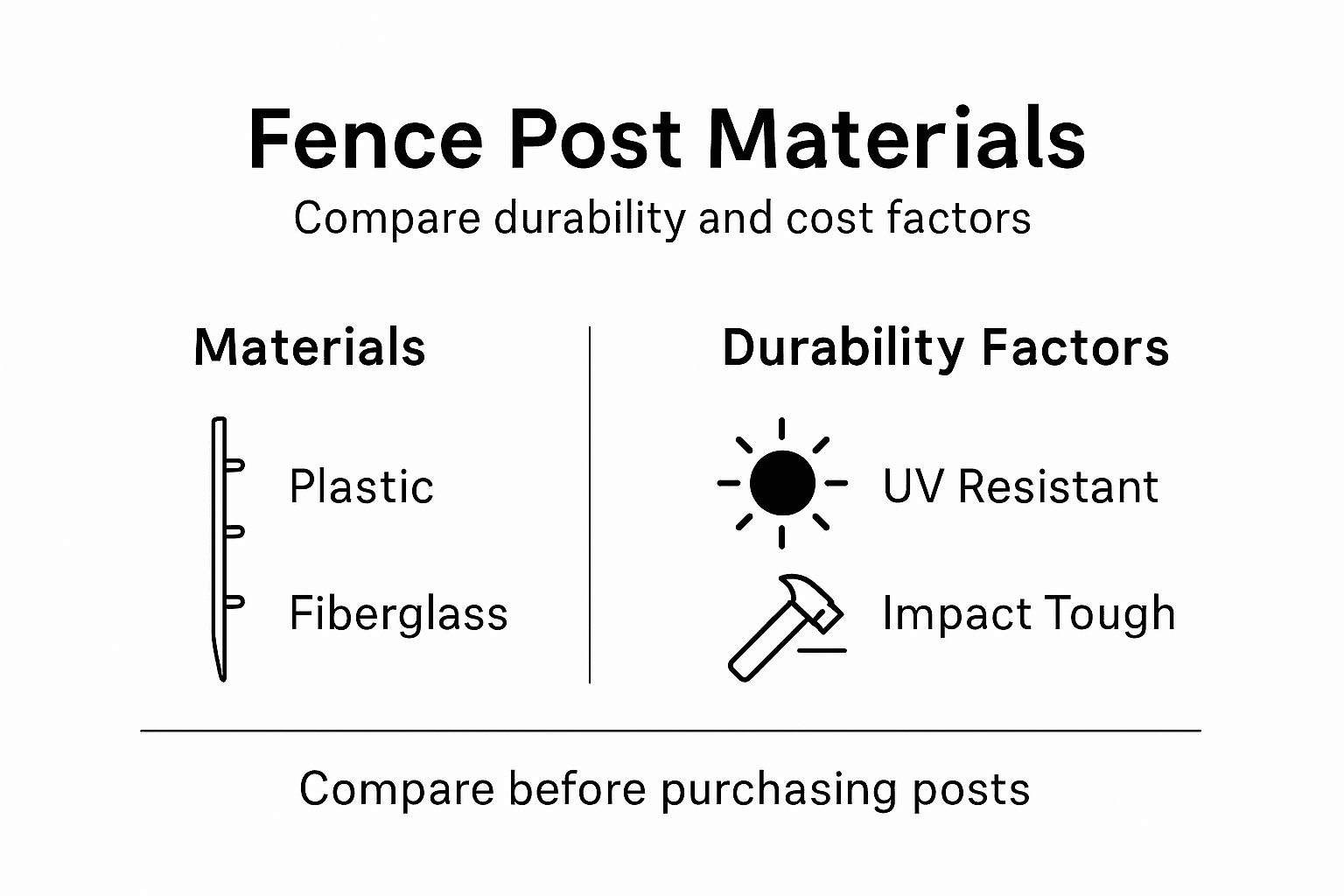
Farmers should consider multiple factors beyond initial price, including ease of installation, weight for transportation, resistance to breaking, and specific environmental conditions where the posts will be used.
Pro tip: Calculate the total cost of ownership by considering replacement frequency, not just the initial purchase price of temporary electric fence posts.
Avoiding Common Mistakes in Field Use
Temporary electric fencing basics reveal critical insights into preventing performance failures with temporary electric fence posts. Understanding and mitigating common mistakes can significantly improve livestock management effectiveness.
Key mistakes to avoid during temporary fence installation and maintenance include:
-
Grounding Errors
- Insufficient ground rod installations
- Poor ground rod connections
- Inadequate soil moisture around ground systems
- Failing to test electrical circuit continuity
-
Placement Mistakes
- Inconsistent post spacing
- Unstable ground positioning
- Neglecting terrain variations
- Improper wire tension management
-
Electrical System Failures
- Underrated energizer capacity
- Using non-insulated posts
- Ignoring voltage fluctuations
- Skipping regular system inspections
Effective fence maintenance requires proactive monitoring and understanding potential system vulnerabilities. Each component plays a crucial role in maintaining an effective livestock barrier.
Successful temporary electric fence deployment demands careful planning, consistent maintenance, and a comprehensive understanding of both electrical systems and animal behavior patterns.
Pro tip: Conduct monthly comprehensive system checks to identify and address potential electrical and structural weaknesses before they compromise your fence’s effectiveness.
Enhance Your Livestock Control with Reliable Temporary Electric Fence Posts
Managing livestock effectively means overcoming challenges such as finding durable and easy-to-install temporary electric fence posts that deliver consistent electrical pulses and hold up across varied terrain. If you want to avoid common pitfalls like poor grounding or sagging wires while ensuring your animals respect boundaries, then choosing the right materials and components is critical. With solutions tailored for rotational grazing, harsh weather, and flexible fencing needs, you can protect your herd and optimize pasture management without hassle.

Explore a wide range of premium electric fencing supplies and livestock management tools at FenceFast.ca. Our Canadian-focused inventory includes everything from sturdy posts and energizers to connectors and animal health supplies designed to simplify installation and improve fence performance. Take the next step for your farm or ranch today by visiting FenceFast.ca, where expert knowledge and quality products combine for smarter, hassle-free livestock control.
Frequently Asked Questions
What are temporary electric fence posts used for?
Temporary electric fence posts are portable structures used to create flexible livestock containment systems, allowing farmers to manage grazing patterns effectively across pasture lands.
How do temporary electric fence posts function?
These posts support lightweight conductors like polywire or polytape and work with energizers to deliver mild electrical pulses, conditioning livestock to respect designated boundaries.
What materials are temporary electric fence posts made from?
Temporary electric fence posts can be made from plastic, fiberglass, and composite materials, each offering unique strengths, such as lightweight portability or superior durability against harsh weather conditions.
What are common mistakes to avoid during the installation of temporary electric fence posts?
Common mistakes include inconsistent post spacing, improper grounding techniques, neglecting terrain variations, and failing to test the electrical circuit continuity, which can all lead to ineffective livestock containment.

