

Managing cattle and horses in Canada brings unique challenges that every farmer knows well. Effective livestock containment hinges on more than just stringing wires and posts. The right electric fence rods transform ordinary fencing into a reliable control system, minimizing escapes and preventing damage. This guide tackles common misconceptions, explains rod types, and highlights the importance of durability and safety for dependable livestock control.
Table of Contents
- Electric Fence Rods Defined And Misconceptions
- Types Of Electric Fence Rods And Their Uses
- Key Features For Cattle And Horse Fencing
- Installation, Maintenance, And Safety Practices
- Cost Considerations And Common Installation Errors
Key Takeaways
| Point | Details |
|---|---|
| Electric Fence Rod Functionality | Electric fence rods create a grounding pathway that allows an electric shock to deter boundary crossing by livestock without causing permanent harm. |
| Material Selection Impact | Choosing the right rod material (Copper-coated steel, Galvanized steel, Stainless steel) affects conductivity, corrosion resistance, and cost, tailored to specific farming needs. |
| Customized Voltage Levels | Different livestock species require customized voltage settings; Cattle often need higher voltage ranges compared to horses, emphasizing the importance of proper installation. |
| Installation and Maintenance Importance | Careful installation, regular maintenance, and professional assessment ensure safety and effectiveness of the electric fence system over time. |
Electric Fence Rods Defined and Misconceptions
Electric fence rods are specialized metal components designed to complete the electrical circuit in livestock fencing systems, providing a critical safety and control mechanism for agricultural operations. Unlike traditional fencing, these rods transform boundary markers into active deterrent systems that effectively manage animal movement and containment.
At their core, electric fence rods function by creating an electrical grounding pathway that enables the electric pulse to complete its circuit. The mechanism relies on a simple but ingenious principle: when an animal touches the electrified wire, the rod provides a return path for the electrical current, creating a brief but memorable shock that discourages boundary crossing.
Common misconceptions about electric fence rods often stem from misunderstandings about their purpose and operation:
- They are NOT designed to cause permanent harm
- The shock is a deterrent, not a punishment
- Proper installation is crucial for effectiveness
- Different animals require different voltage settings
The voltage and shock intensity of electric fence systems vary significantly. What might be a mild deterrent for a large horse could be overwhelming for smaller livestock. This is why professional assessment and careful rod placement become critical components of an effective fencing strategy.
Pro tip: Always consult a local agricultural specialist to determine the most appropriate electric fence rod configuration for your specific livestock and terrain.
Types of Electric Fence Rods and Their Uses
Electric fence rods come in various materials and designs, each tailored to specific agricultural and livestock management needs. The primary types include copper-coated steel, galvanized steel, and stainless steel ground rods, each offering unique characteristics for different environmental conditions and fencing requirements.
Copper-coated steel rods are particularly popular among Canadian farmers due to their excellent conductivity and corrosion resistance. These rods are typically designed for ground rod installation in varied soil conditions, providing a reliable electrical pathway for fence systems. The copper coating ensures superior grounding performance, which is critical for maintaining consistent electrical flow across livestock enclosures.
The selection of electric fence rods depends on several key factors:
- Soil composition and moisture levels
- Climate and potential corrosion risks
- Length of fence run
- Types of livestock being contained
- Specific terrain challenges
Galvanized steel rods offer an economical alternative, providing decent durability and resistance to rust. These rods work well in areas with moderate environmental conditions and are typically less expensive than their copper-coated counterparts. Stainless steel rods represent the premium option, offering maximum corrosion resistance and longevity, though at a higher initial investment.
Here’s a comparison of popular electric fence rod materials used in agricultural fencing:
| Rod Material | Conductivity | Corrosion Resistance | Typical Cost |
|---|---|---|---|
| Copper-coated steel | Excellent | High | Medium |
| Galvanized steel | Good | Moderate | Low |
| Stainless steel | Very good | Maximum | High |
Proper rod selection is not just about conducting electricity - it’s about creating a reliable, long-lasting livestock management solution.
Pro tip: Measure your specific ground conditions and consult with a local agricultural specialist to select the most appropriate electric fence rod for your unique farming environment.
Key Features for Cattle and Horse Fencing
Designing electric fencing for cattle and horses requires a nuanced approach that balances animal behavior, safety, and containment effectiveness. Livestock control strategies must account for the unique characteristics of different animal species and their specific environmental needs.
For cattle, electric fencing typically involves multiple wire strands with carefully calculated spacing and voltage levels. Voltage range is critical, with most effective systems operating between 2000 and 5000 volts. Horses require a more delicate approach, often using one or two electrified wires that prevent chewing and pushing while maintaining visibility and safety.
Key features for effective livestock fencing include:
- Multiple wire strand configurations
- Appropriate voltage levels for specific livestock
- Smooth steel wire or polywire materials
- Solid and stable mounting posts
- High-quality insulators to prevent electrical shorts
- Comprehensive grounding systems
- Consideration of animal-specific behavioral traits
Effective electric fencing is about understanding animal psychology as much as electrical engineering.
The technical specifications vary significantly between cattle and horses. Cattle typically require higher voltage ranges around 3500-5500 volts for reliable containment, while horses are more sensitive to fence visibility and precise wire height placement. Proper installation considers not just electrical performance, but also the psychological barriers that prevent livestock from challenging the fence.
This table summarizes key differences when designing electric fencing for cattle versus horses:
| Parameter | Cattle Fencing | Horse Fencing |
|---|---|---|
| Wire strands | Multiple | One or two |
| Voltage range | 3500-5500 volts | 2000-5000 volts |
| Wire material | Smooth steel/polywire | High-visibility polywire |
| Installation focus | Strength and containment | Safety and visibility |
Pro tip: Consult with a local agricultural specialist to calibrate your electric fence precisely for your specific livestock species and terrain conditions.
Installation, Maintenance, and Safety Practices
Proper electric fence rod installation requires meticulous planning and technical precision to ensure livestock safety and system reliability. Electric fence ground rod basics underscore the critical nature of creating a comprehensive electrical grounding system that protects both animals and infrastructure.
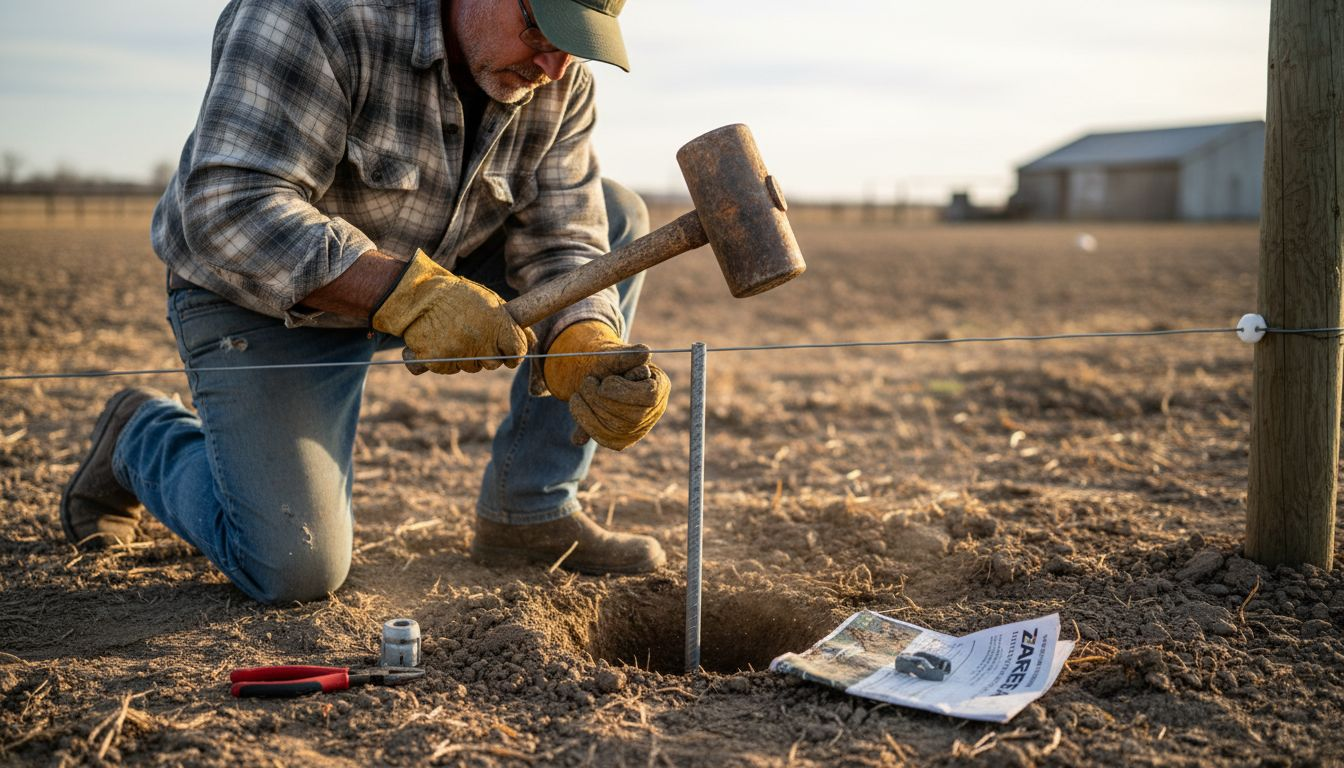
The installation process involves several strategic steps that demand careful attention to electrical and environmental details. Grounding system effectiveness depends on multiple factors, including soil composition, moisture levels, and rod placement. Professional installers recommend using multiple ground rods spaced strategically to ensure consistent electrical performance across different terrain conditions.
Key installation and maintenance practices include:
- Selecting appropriate ground rod materials
- Testing soil conductivity before installation
- Maintaining minimum recommended ground rod depths
- Checking electrical connections regularly
- Inspecting rod integrity for corrosion or damage
- Ensuring proper rod spacing and connectivity
- Monitoring voltage levels consistently
Effective electric fencing is a precise balance between electrical engineering and agricultural expertise.
Safety considerations extend beyond initial installation. Regular maintenance checks are crucial for preventing potential electrical hazards and ensuring livestock containment. This includes periodic testing of voltage levels, inspecting insulators for damage, and verifying ground rod connections remain secure and corrosion-free. Canadian farmers must remain vigilant about environmental factors that could compromise fence performance, such as soil moisture changes and seasonal temperature variations.
Pro tip: Invest in a professional ground rod testing meter to accurately assess your electric fence system’s electrical performance and identify potential weak points before they become critical issues.
Cost Considerations and Common Installation Errors
Electric fence rod installations require careful financial planning and technical expertise to ensure cost-effectiveness and long-term reliability. DIY versus professional installation presents Canadian farmers with complex economic considerations that extend far beyond initial material expenses.
The cost spectrum for electric fence installations varies dramatically depending on several critical factors. Material quality plays a significant role in determining both upfront expenses and long-term performance. Professional installations typically cost more initially but can provide superior electrical safety, warranty coverage, and potentially longer system lifespan compared to do-it-yourself approaches.
Common installation errors that impact overall project costs include:
- Inadequate ground rod spacing
- Incorrect rod material selection
- Poor electrical connection techniques
- Insufficient ground rod depth
- Neglecting soil conductivity testing
- Using mismatched energizer and fence specifications
- Overlooking environmental degradation factors
Cutting corners on installation can lead to exponentially higher repair and replacement costs.
Financial considerations extend beyond simple material purchases. Farmers must factor in ongoing maintenance expenses, potential livestock protection costs, and the potential economic impact of fence system failures. Proper installation requires balancing initial investment with long-term reliability, considering factors like terrain complexity, livestock type, and regional environmental challenges.
Pro tip: Request multiple professional quotes and compare their detailed breakdown of installation costs, warranty terms, and long-term maintenance recommendations before making a final decision.
Secure Your Livestock with Reliable Electric Fence Rod Solutions
Managing effective electric fencing is critical for livestock safety and control. This article highlights challenges such as choosing the right electric fence rods, matching voltage levels to specific animals, and ensuring proper grounding and installation to prevent costly failures. Canadian farmers and ranchers understand the importance of using durable materials like copper-coated steel rods and maintaining consistent electrical flow to protect cattle and horses. Whether you are concerned about corrosion resistance or want to reduce livestock stress with correctly calibrated voltages, these solutions directly impact your farm’s success.
FenceFast.ca offers a complete range of electric fencing supplies engineered to meet these exact needs. From quality ground rods and high-visibility polywire to insulated connectors and power supplies, our selection helps you build a reliable electric fence system tailored to your livestock and terrain.

Ensure your fencing meets the highest standards by exploring expert advice and top-grade products at FenceFast.ca. Start today with our trusted electric fence rods and accessories and enjoy peace of mind that your livestock containment is safe and effective. Take the next step toward smarter livestock control and discover our full catalog at electric fencing supplies and get professional design consulting for your unique setup.
Frequently Asked Questions
What are electric fence rods and how do they work?
Electric fence rods are metal components essential for completing the electrical circuit in livestock fencing systems. They provide a return pathway for electrical current, delivering a brief shock to deter animals from crossing boundaries.
What should I consider when selecting electric fence rods for my livestock?
When choosing electric fence rods, consider the soil composition, moisture levels, climate conditions, the length of your fence run, and the types of livestock being contained. These factors influence the effectiveness and longevity of your fencing system.
How important is proper installation of electric fence rods?
Proper installation is crucial for the effectiveness and safety of electric fence systems. Key practices include ensuring the correct material selection, spacing, grounding techniques, and regular maintenance to avoid electrical hazards and ensure reliable livestock containment.
What are the differences in electric fencing requirements for cattle versus horses?
Cattle typically require multiple wire strands and higher voltage levels (3500-5500 volts) for containment, while horse fencing often uses one or two electrified wires that prioritize visibility and safety, operating within a voltage range of 2000-5000 volts.

