

Start with a living property management plan, then put your money where the risk is highest: perimeter fencing, water access, and passable main roads. Everything else, from outbuilding paint to pasture aesthetics, can wait. Walk the fence line, secure the main gate, test the well pump, grade the driest stretch of your main access road, and pick one low-effort monetization idea to test this season.
TL;DR:
- Focus on fixing fence gaps, water sources, and main roads during initial inspections, as they are critical for livestock safety and property access.
- Implement a simple, regularly updated management plan with maps, infrastructure inventories, and measurable goals to adapt quickly to changing conditions.
- Prioritize routine maintenance of fences, water systems, roads, and buildings, scheduling inspections seasonally to prevent costly repairs.
- Use fencing options strategically, combining permanent wire with electric or temporary panels to optimize grazing flexibility and containment.
- Build neighbor relationships by clarifying responsibilities for shared fences, access roads, and water rights to prevent disputes and ensure smooth ongoing management.
Table of Contents
- Priority Action Checklist for a First Walk-Through
- How to Build a Living Property Management Plan
- Infrastructure Essentials: Fences, Water, Roads, and Buildings
- Seasonal Maintenance Routines That Actually Stick
- Fencing and Livestock Containment Ideas Worth Considering
- Monetization and Land-Use Ideas Worth Testing
- Costs, Timelines, and Regulatory Checks Before You Start
- Wildlife and Pest Control Management
- Soil Health and Land Preservation Techniques
- Emergency Preparedness and Disaster Response Planning
- Technology and Tools for Efficient Rural Property Management
- Community and Neighbor Relations Management
- What Good Stewardship Actually Looks Like
- Get Professional Help With Fencing and Virtual Fencing Setup
- Useful Guides for Building Your Own Plan
- Sources
- FAQ
Priority Action Checklist for a First Walk-Through
Before you fix anything, walk the whole property with a notebook, your phone camera, and a basic map (even a printed satellite image works). You’re not solving problems yet. You’re finding out how many you actually have.
Start at the main entrance and follow your primary access road to the house or barn, then loop the perimeter fence line. Note anything that looks like it could fail in the next storm, not just what looks bad. A leaning corner post rarely matters as much as a sagging gate or a spot where wire has gone slack enough for a calf to push through.
- Photograph every gap, downed panel, or rusted-through wire strand you find on the fence line.
- Mark GPS points or drop pins for water sources, wells, and any low spots where the road washes out.
- Rate each issue as urgent, seasonal, or cosmetic, and jot a rough repair cost next to it.
- Check that your main gate latches and locks properly, since it’s your first line of defense against wandering livestock and uninvited visitors.
Three things almost always deserve first-priority fixes: fence gaps that could let animals out (or predators in), your primary water source, and the main road that gets you or emergency responders to the property.
Pro Tip: Take the same photo from the same spot every season. A rotting post you photograph in March looks dramatically different by August, and that visual record makes it easy to justify repair spending to yourself or a partner.
How to Build a Living Property Management Plan
A property management plan only works if you actually open it more than once. Skip the 40-page binder. Build something you’ll update in ten minutes after a walk-through.
The plan needs five things to earn its keep:
- A scaled map showing boundaries, fence lines, water sources, roads, buildings, and septic or well locations. NSW’s guidance on property plans recommends this as the starting point for prioritizing both maintenance and risk.
- An infrastructure inventory listing every fence segment, gate, culvert, and structure, with condition notes and service dates.
- Ecological and land-use notes, covering soil type, tree cover, water features, and how you actually use each section (grazing, hay, wildlife, storage).
- Measurable goals, like “repair 400 feet of perimeter fence by June” instead of “improve the fence.”
- A short SWOT pass, weighing strengths, weaknesses, opportunities, and threats to generate a prioritized action list rather than a wish list.
Oregon State University Extension’s land steward planning guide offers templates for exactly this kind of zoned, goal-driven document, and it’s worth adapting rather than building from scratch.
Monitoring closes the loop. Log service dates, weather damage, and anything unusual you notice on walk-throughs, then review the plan every quarter and after any major storm. Outcome-based planning, moving through a cycle of plan, monitor, and adapt, keeps the document useful instead of static, according to The Nature Conservancy’s ranch management planning framework.
Infrastructure Essentials: Fences, Water, Roads, and Buildings
These four systems carry almost all of your property’s functional value. Neglect any one of them and the cost of the eventual fix multiplies.
Fences fail at predictable points: gates, corner posts, and anywhere tension has gone slack. Check corner post integrity before anything else, since a failed corner can take down an entire run of wire. Spot repairs, replacing a broken insulator or resetting one post, cost far less than rebuilding a collapsed section later.
Water systems need a routine, not a reaction. Check pump pressure and flow monthly, test well water annually for bacteria and mineral content, and inspect freeze protection on exposed lines before the first hard frost. If you rely on an automatic waterer, test the float and alarm system, since a stuck valve can drain a tank or flood a paddock overnight.
Roads and access get worse in silence. Watch for standing water after rain, which signals a drainage problem before it becomes a washout. Grade high-traffic ruts before winter, and check culverts for debris that blocks flow and undermines the roadbed.
Outbuildings protect equipment you can’t easily replace. Check roof lines for sagging or missing shingles, inspect foundations for water intrusion, and set up rodent control before feed and wiring become damaged.
- Fence: check tension quarterly, replace insulators as they crack, prioritize gates and corners.
- Water: monthly pump check, annual water test, pre-winter freeze prep.
- Roads: grade after spring thaw, clear culverts twice a year, watch for pooling.
- Buildings: roof and foundation check twice yearly, rodent bait stations year round.
Pro Tip: Keep a simple infrastructure log with GPS tags for well and septic locations and line runs. When a pipe fails at 2 a.m. or a contractor shows up who’s never been on your land, that log saves hours.
Seasonal Maintenance Routines That Actually Stick
Rural property management works better as a rhythm than a to-do list you clear once and forget. The tasks below scale up or down depending on acreage and how much you’re doing yourself versus contracting out.
- Spring: Inspect fence lines for winter damage, service equipment before planting or grazing season, check culverts and road drainage after thaw, and test irrigation systems before you need them.
- Summer: Monitor water levels and pump performance during peak demand, mow or brush-hog fire breaks and fence lines, and handle any pasture reseeding while growing conditions are strong.
- Fall: Winterize water lines and outdoor faucets, stock firewood or heating fuel, clear gutters and roof debris, and finish any fence repairs before frozen ground makes post-setting difficult.
- Winter: Check on livestock water access daily in freezing conditions, monitor roof loads after heavy snow, and use slower months to update your property plan and price out spring projects.
On smaller acreages, most of this is doable solo with a weekend or two per season. Above roughly 50 acres, or with livestock, most owners start contracting out road grading, well service, and major fence rebuilds while keeping daily checks in house.
A basic log, even a shared spreadsheet or a notebook by the door, tracking service dates, warranty expirations, and inspection notes turns guesswork into a record you can hand to a contractor or an insurance adjuster without scrambling for memory.
Fencing and Livestock Containment Ideas Worth Considering
Fencing choice depends on what you’re actually solving for: perimeter security, rotational grazing flexibility, or short-term containment.
Permanent woven or high-tensile wire fencing remains the standard for property boundaries and predator exclusion. It costs more upfront but needs the least ongoing labor. Electric fencing works well for internal cross-fencing and rotational paddocks, since it’s cheaper per foot and easier to reconfigure as your grazing plan changes. Temporary panels make sense for short-term containment, sorting pens, or quarantine areas where permanence isn’t the goal.
Rotational grazing paddocks work best when fencing and water access are designed together rather than as an afterthought. Adaptive grazing plans that coordinate paddock layout with water points reduce daily labor and protect pasture health over time. FenceFast’s guide to fencing for rotational grazing walks through layout options for exactly this kind of setup.
Virtual fencing has moved from novelty to real option for cattle operations. GPS-enabled collars paired with app-based herd management let you redraw paddock boundaries without moving a single wire, which is a genuine advantage on rented or irregularly shaped land. It requires solar charging infrastructure and a base station, and it works best as a complement to some perimeter wire rather than a full replacement.
- Permanent wire: highest upfront cost, lowest daily labor, best for boundaries.
- Electric cross-fencing: lower cost, flexible, ideal for rotational paddocks.
- Temporary panels: fastest to deploy, best for short-term or sorting needs.
- Virtual fencing: no wire moves, needs solar power and app management, best paired with some physical perimeter.
Pro Tip: If you’re weighing virtual fencing, start with a single paddock before converting your whole grazing rotation. It lets you learn the app’s boundary controls and your herd’s response before committing the budget.
Monetization and Land-Use Ideas Worth Testing
Not every income idea needs a business plan. Some just need a weekend to try.
On the low-effort end: short-term camping listings during hunting or fishing season, day-use parking for nearby events, small pasture leases to a neighboring rancher who’s short on grazing land, or a handful of beekeeping hives that need almost no daily attention once set up. These generate modest but real income with minimal upfront investment.
Higher-commitment options take more planning but pay more. Hunting leases can bring steady seasonal income if your land has habitat worth leasing. Specialty crops (lavender, cut flowers, market vegetables) work on smaller acreage but demand real labor. Hay contracting turns unused pasture into cash if you have or can rent equipment. Conservation payment programs and emerging carbon programs pay for keeping land in a specific ecological state, though enrollment and verification processes vary widely by program and region.
Before committing to any of these, run a basic sanity check: add up realistic setup costs, expected annual revenue, and ongoing labor hours, then compare that against what you’d earn doing nothing. Most small monetization projects, like a pasture lease or a few camping sites, break even within one to two seasons. Higher-investment projects like specialty crops often need three or more years before they pencil out.
- Low effort: camping sites, event parking, small pasture leases, beekeeping.
- Higher commitment: hunting leases, specialty crops, hay contracting, conservation payments.
- Sanity check: setup cost + annual labor hours vs. realistic revenue, before you commit.
Costs, Timelines, and Regulatory Checks Before You Start
Small fence repairs typically run a few hundred dollars in materials for a short section; full perimeter rebuilds cost dramatically more depending on wire type and terrain. Well pump service calls generally run a few hundred dollars, while road grading costs vary widely by length and how much base material needs replacing. Get multiple contractor quotes before any project over a few thousand dollars, since pricing on rural labor and materials swings widely by region and season.
Before you break ground on anything permanent, contact your county planning office to confirm zoning and setback rules, check with your local water authority on well permitting, and review your deed for easements or shared-access agreements that could affect fence placement or road use. FenceFast’s overview of zoning laws for rural fencing is a useful starting point for fence-specific rules.
- Phase big upgrades over two or three seasons instead of one large spend.
- Get at least two contractor quotes for anything over a few thousand dollars.
- Ask about cost-share programs before assuming you’ll cover the full bill. The Natural Resources Conservation Service lists federal programs that sometimes fund infrastructure upgrades.
- Confirm easements and access rights before finalizing any fence or road plan.
Wildlife and Pest Control Management
Wildlife on rural land is usually an asset until it isn’t. Deer pressure on fence lines, coyotes near livestock, or rodents in feed storage all call for different responses, and treating them all as “pest problems” wastes effort.
Start by identifying what’s actually causing damage before setting traps or calling for removal. Deer browsing damage looks different from rabbit damage, and fence intrusions from predators leave different signs than intrusions from your own escaped livestock. A trail camera near problem areas answers this faster than guesswork.
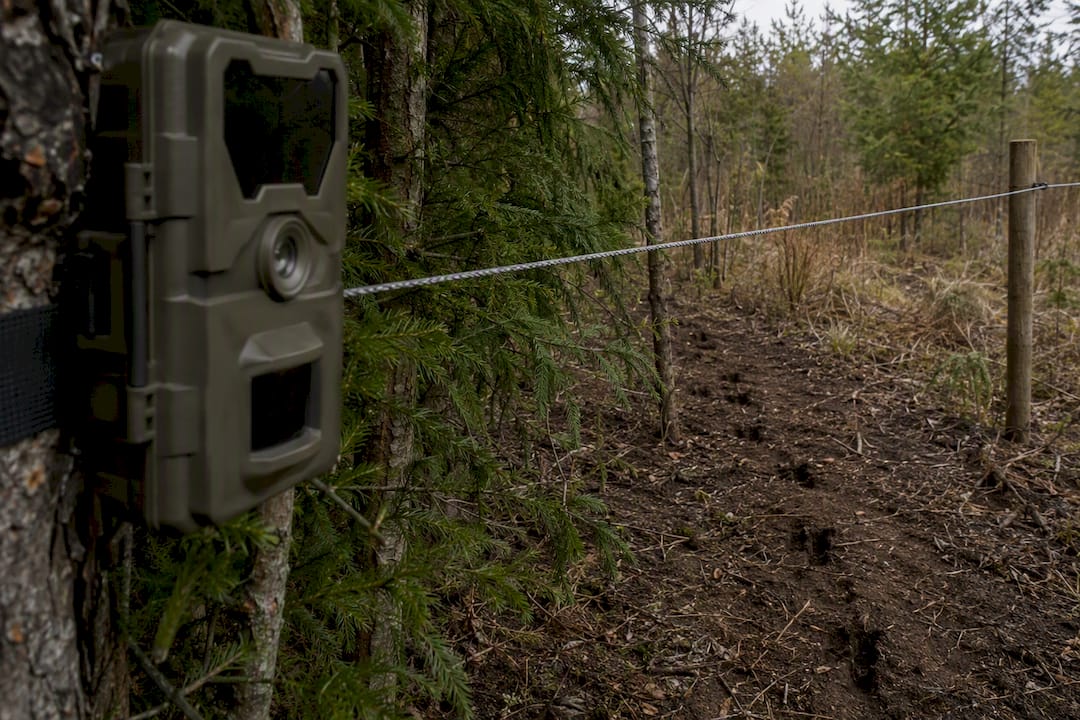
For livestock predation risk, secure fencing matters more than any deterrent product. Tight wire tension and well-maintained gates keep out more predators than noise devices or lights, which tend to lose effectiveness once animals get used to them. If you’re managing cattle near predator-heavy terrain, virtual fencing’s ability to redraw boundaries quickly can help you move herds away from a known problem area without a physical fence rebuild.
Rodent control around outbuildings and feed storage deserves a standing routine rather than a reaction to visible damage. Bait stations, sealed feed containers, and clearing brush piles near buildings cut rodent pressure significantly before it becomes a wiring or feed-loss problem.
Many owners genuinely value wildlife habitat as part of why they own rural land in the first place, and that priority shows up consistently in rural landowner surveys. Balancing habitat value against crop or livestock protection often means fencing off vulnerable areas rather than removing wildlife altogether.
Soil Health and Land Preservation Techniques
Soil health rarely shows up on a walk-through checklist, but it drives almost everything else on the property, from pasture productivity to how fast your roads erode after rain.
Rotational grazing does double duty here: moving livestock before they overgraze a paddock lets grass roots recover, which holds soil in place better than continuously grazed pasture ever does. If you already run cross-fencing for rotational grazing, you’re already doing soil preservation work without extra effort.
Cover crops on any land you till, even a small vegetable plot, protect bare soil from wind and water erosion during off-seasons. On pasture, avoid mowing or grazing too short, since exposed soil between sparse grass invites erosion and weed pressure.
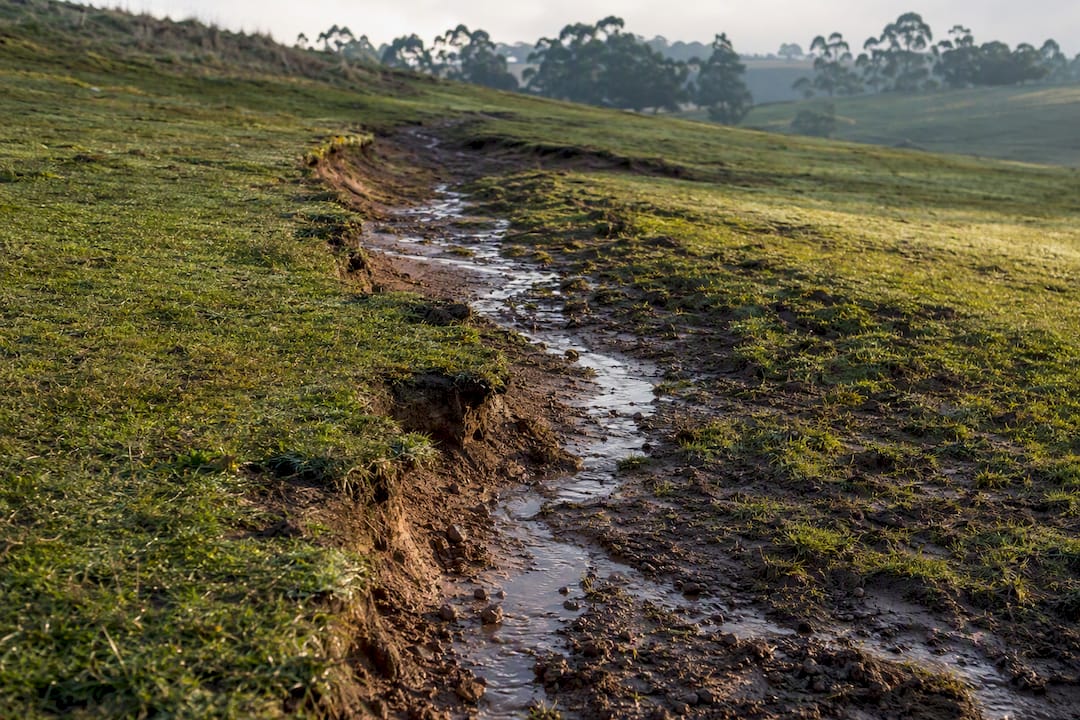
Watch drainage patterns across the property, not just on roads. Gullies that form in pasture or field edges after storms signal water is moving faster than the soil can absorb it, which strips topsoil over time. Simple fixes like diversion berms or strategic tree plantings along slopes slow that water down before it becomes a bigger problem.
Soil testing every two to three years tells you what’s actually happening below the surface rather than guessing from plant appearance alone. It’s inexpensive relative to the cost of correcting a nutrient deficiency or pH problem after it’s already hurt a season’s growth.
Emergency Preparedness and Disaster Response Planning
Rural properties face a different emergency profile than suburban ones: longer response times, more isolated infrastructure, and often more at stake in livestock and equipment. Planning for that gap matters more than any single piece of gear.
Start with access. Emergency responders need a way to find your buildings and water sources fast, so a printed map at the main gate or a shared digital pin location saves critical minutes during a fire or medical emergency. This is where your property plan’s infrastructure map earns its keep twice over.
Build a basic emergency kit that covers water shutoff locations, backup power for well pumps during outages, and a stocked first-aid kit sized for the number of people and animals on site. If you’re in a wildfire-prone or flood-prone region, know your evacuation route for livestock in advance, not during the event. Moving cattle or horses under panic conditions is far harder than moving them on a calm day for a drill.
Keep a physical, offline copy of key documents (insurance policies, well and septic records, property boundary maps) somewhere accessible during a power outage or evacuation. Digital backups help, but they’re useless if you can’t charge a device.
Review your plan after every real event, even a minor one. A near-miss during a windstorm or an ice-caused road closure tells you exactly where your response plan has gaps, and that’s cheaper information than learning it during the next major event.
Technology and Tools for Efficient Rural Property Management
You don’t need a full smart-farm setup to get real value from technology. A handful of tools solve most of the recurring headaches on rural land.
GPS mapping apps, even free consumer versions, replace the guesswork of describing “the fence near the creek” to a contractor. Combined with your property plan’s map, they turn vague directions into exact coordinates. Soil moisture sensors and simple weather stations help you time irrigation and hay cutting instead of relying on instinct, which matters most on larger acreage where a wrong guess costs real money.
For livestock operations, app-based herd management paired with GPS collars gives you real-time location data and the ability to redraw grazing boundaries remotely, without walking fence line in bad weather. This is the same technology behind virtual fencing systems, and its value compounds as herd size grows, since checking on cattle by app takes minutes compared to a truck circuit of the property.
Trail cameras solve two problems at once: wildlife monitoring and basic perimeter security, flagging unexpected activity near remote gates or fence lines. Cloud-based photo storage and a simple shared spreadsheet for maintenance logs cost little and beat trying to remember service dates from memory months later.
The goal isn’t to add technology for its own sake. Add a tool only when it replaces a task that currently costs you time, fuel, or guesswork, and skip anything that just adds another screen to check.
Community and Neighbor Relations Management
Rural land rarely exists in isolation, even when the nearest house is a mile away. Shared roads, boundary fences, water rights, and grazing arrangements all depend on relationships that outlast any single transaction.
Boundary fence maintenance is the most common friction point between rural neighbors. Many regions have specific legal rules about shared fence costs and responsibilities, so it’s worth confirming your local requirements before assuming a 50/50 split is standard, or before doing repair work you expect a neighbor to pay half of. A quick conversation before starting work prevents most disputes that would otherwise fester for years.
Shared access roads deserve a similar upfront conversation. If multiple properties use the same driveway or easement road, agree in writing on maintenance responsibilities and cost-sharing before the first major repair bill arrives, not after.
Water rights and irrigation ditches carry some of the oldest and most contentious rural disputes, often rooted in decades-old agreements nobody wrote down clearly. If your property shares any water source or ditch access with neighbors, get the arrangement documented, even informally, while relationships are good.
Good neighbor relations also pay off during emergencies. A neighbor who knows your gate code or livestock routine can be the difference between a minor problem and a serious one when you’re away and something goes wrong. That kind of trust builds slowly, through small courtesies like keeping shared gates closed and warning neighbors before spraying or burning, not through grand gestures.
What Good Stewardship Actually Looks Like
Most rural property advice assumes you have unlimited weekends and a full budget. You don’t, and pretending otherwise leads to abandoned plans and half-finished projects. The owners who manage land well aren’t the ones with the most detailed spreadsheet. They’re the ones who fix the fence gap before the aesthetic problem, and who update the plan instead of starting a new one every January.
Scale your effort to where you actually are in life and what your budget allows this season, not what a perfect version of the property would require. A plan you revise twice a year beats a binder you wrote once and never opened again.
— Juiced
Get Professional Help With Fencing and Virtual Fencing Setup
Some of the priorities covered here, corner post integrity, gate security, rotational paddock layout, are easier to get right with the correct hardware from the start rather than fixing a rushed installation twice. Seeking professional assistance is the practical next step for rural owners who want to move from planning to building without guessing on materials or specs.
Available stock includes fence hardware, electric fencing components, and virtual fencing equipment, such as GPS-enabled collars, base stations, and app tools for remote paddock management. Authorized dealers also offer design consulting for owners planning fencing layouts or rotational grazing conversions, and provide guidance on accessing programs that help offset virtual fencing adoption costs.
If your walk-through turned up a fence line that needs real materials rather than a patch job, start by browsing the fence equipment collection or reach out through the Fencefast homepage for a design consultation before your next project season begins.
Useful Guides for Building Your Own Plan
For a deeper template on mapping and goal-setting, see Oregon State University Extension’s land steward guide and NSW’s property planning guidance for step-by-step planning frameworks.
Sources
- Making a property plan — NSW Government
- From vision to reality: Creating a land steward property management plan — Oregon State University Extension
- Ranch Management Planning — The Nature Conservancy (IRMP Guide)
- Country Acres: A Guide to Buying and Managing Rural Property (G3309) — University of Wisconsin Extension
FAQ
What are the 5 P’s of property management?
Rural property management doesn’t follow a single standardized “5 P’s” framework the way commercial property management sometimes does; the more useful approach for rural land is planning, prioritizing infrastructure, protecting water and fencing, preserving soil, and preparing for emergencies.
What type of property manager makes the most money?
Income varies widely by region and property type, but rural landowners who combine steady income streams (hay contracting, hunting leases, pasture rentals) with active land management tend to see the strongest returns relative to properties managed passively.
What is the most profitable thing you can do with land?
There’s no universal answer, since profitability depends heavily on location, soil, and market access, but higher-commitment options like specialty crop production, hay contracting, and hunting leases generally outperform low-effort options like short-term camping in raw income, though they also demand more capital and labor.
What are the three main types of property managers?
For rural land, this generally breaks down into owner-operators who manage the property themselves, hired ranch or farm managers who run daily operations for absentee owners, and specialized consultants who handle specific systems like fencing design or grazing planning.
How often should I update my property management plan?
Review and adjust your plan at least quarterly, and always after a major storm, fence failure, or change in land use, since an outdated plan stops reflecting the actual condition of your infrastructure.

