

Building wood fences is more than simple installation—tool choice greatly impacts efficiency and durability. Canadian farmers seek tools that withstand local climate and soil, reducing labor and boosting fence lifespan. This guide covers critical selection criteria, essential tools, comparisons, top brands, and economic considerations for wood fence building.
Table of Contents
- Selection Criteria For Wood Fence Building Tools
- Essential Wood Fence Building Tools
- Manual Vs Powered Fencing Tools: Pros, Cons, And Use Cases
- Brand Recommendations And Tool Quality For Canadian Farmers
- Cost, Accessibility, And Additional Innovations
- Summary Comparison And Situational Recommendations
- Build Stronger Fences With Fencefast Tools
- FAQ
Key Takeaways
| Point | Details |
|---|---|
| Durability and efficiency | Selecting durable, efficient tools suited to Canadian conditions reduces project time by 25%. |
| Powered vs manual | Electric staplers speed installation compared to manual options, driving over 200 staples per hour. |
| Top brands | DeWalt and Milwaukee offer reliable cordless drills with strong warranties and Canadian service centers. |
| Corrosion resistance | Choosing galvanized staples ensures long-lasting fences resistant to rust. |
| Government support | Government rebates can cover up to 50% of fencing tool costs, aiding budget management. |
Selection Criteria for Wood Fence Building Tools
Durability to withstand Canadian outdoor conditions is critical when selecting tools for wood fence building. Winter cold, summer heat, rain, and humidity test equipment limits constantly. Tools must resist rust, handle temperature swings, and maintain performance across seasons.
Efficiency in reducing labor speeds up large-scale projects significantly. Farmers using tool kits specifically designed for fencing report 25% less project time and 15% fewer tool-related errors. This efficiency translates to lower costs and faster fence completion, essential when working against weather windows.
Cost balance between upfront price and tool lifespan must be considered. Cheap tools often fail prematurely, requiring replacement mid-project. Quality tools cost more initially but deliver better value over years of use.
Brand reputation and warranty ensure long-term support. Brands with Canadian service centers provide faster repairs and parts access. Strong warranties protect your investment when tools fail unexpectedly.
Safety features and ease of use protect workers and enhance productivity. Ergonomic designs reduce fatigue during long workdays. Safety switches and guards prevent accidents on the farm.
Tools must suit specific soil types and livestock on your operation. Hard clay demands powerful drills with high torque. Softer soil allows lighter equipment. Your livestock fence needs determine fence strength requirements, which in turn affects tool selection. Large cattle operations need robust fastening tools, while smaller animals like goats require different fence specifications.
Pro Tip: Test tools in your actual field conditions before committing to bulk purchases. Soil hardness, moisture levels, and terrain variations affect tool performance dramatically.
Key selection factors include:
- Weather resistance for Canadian climate extremes
- Power output matching your soil type
- Warranty coverage and service availability
- Ergonomic design for extended use
- Compatibility with existing equipment
- Safety certifications for farm use
Essential Wood Fence Building Tools
Post hole diggers provide consistent hole depth, saving time and effort. Post hole diggers reduce hole digging time by up to 50% compared to manual shoveling. Manual models work well for small projects while powered augers handle large-scale installations efficiently. Choose digger size based on your post diameter requirements.
Cordless power drills with adjustable torque are versatile for drilling and fastening. They drive screws, drill pilot holes, and handle various bit sizes. Look for models with multiple speed settings and clutch adjustments to prevent wood splitting. Lithium-ion batteries provide consistent power throughout the charge cycle.
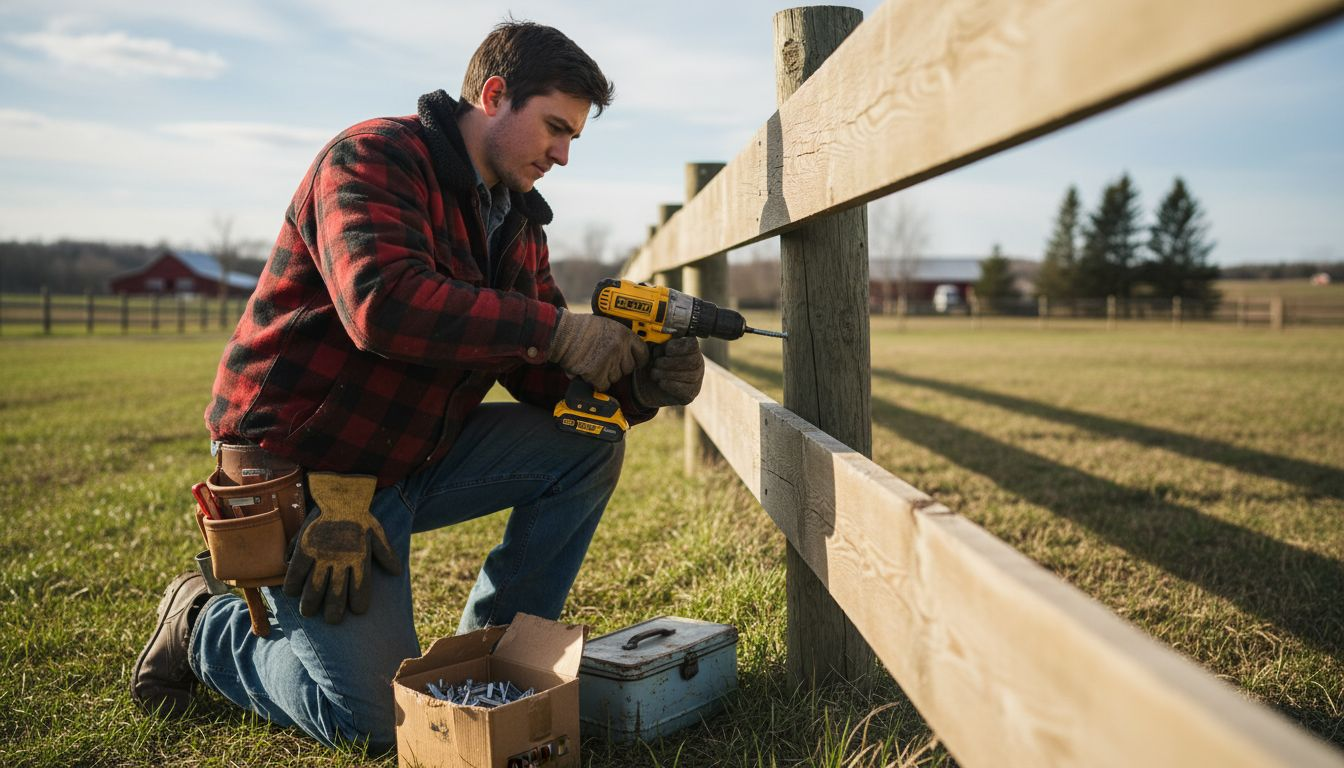
Manual and powered staplers serve different project scales and precision needs. Manual staplers excel in tight spaces where control matters most. Electric staplers dramatically increase speed for long fence runs. Both types require proper staple size selection matching your wire and wood dimensions.
Fence post pullers assist with fence maintenance and repairs. Removing old posts without damaging surrounding fence sections saves time and materials. Quality pullers provide mechanical advantage, reducing physical strain when extracting weathered posts from hard ground.
Galvanized steel fencing staples prevent corrosion and enhance fence longevity. Standard staples rust quickly in Canadian weather, weakening fence connections within years. Hot-dip galvanized staples resist moisture and maintain holding strength for decades. Size selection depends on wire gauge and wood hardness.
Pro Tip: Keep spare batteries charged and ready when using cordless tools. Cold Canadian winters drain battery power faster, so store batteries in warm locations between uses.
Essential tool categories include:
- Digging tools for post hole preparation
- Fastening tools for wire and board attachment
- Measuring tools for accurate layout
- Cutting tools for wire and wood trimming
- Leveling tools for proper post alignment
- Safety equipment for personal protection
For comprehensive installation guidance and complete tool lists for fence building, review resources covering each project phase from planning through completion.
Manual vs Powered Fencing Tools: Pros, Cons, and Use Cases
Manual staplers are cost-effective and precise for small repairs or tight spots. They cost significantly less than powered alternatives, with quality models under $50. You control each staple placement exactly, preventing overdriving in delicate areas. Manual tools require no batteries or maintenance beyond occasional lubrication.
Powered staplers significantly increase speed, ideal for large-scale projects. Electric staplers can drive over 200 staples per hour compared to 50-70 with manual staplers. This speed advantage makes them essential for new fence construction across acres of property. Battery-powered models eliminate cords, providing mobility across remote fence lines.
Cordless drills differ in battery life and torque affecting task performance. Premium models offer 60+ minutes of continuous drilling in hardwood posts. Lower-end drills may struggle with pilot holes in dense lumber. Torque ratings above 400 inch-pounds handle most fencing applications comfortably.
Manual tools require less maintenance but demand more physical effort. No motors mean fewer failure points and simpler repairs. However, driving hundreds of staples manually exhausts workers quickly. Physical fatigue increases error rates and slows progress substantially.
Cost varies with upfront investment and long-term efficiency. Manual tools cost less initially but take longer to complete projects. Powered tools require higher upfront spending but reduce labor hours significantly. Calculate your break-even point based on fence length and frequency of projects.
Physical effort and accessibility impact tool choice for remote locations. Small farm fence projects often occur far from power sources. Battery tools provide freedom but need charging infrastructure. Manual tools work anywhere but increase worker fatigue.
| Tool Type | Speed | Cost | Best Use Case |
|---|---|---|---|
| Manual Stapler | 50-70/hour | $30-$80 | Repairs, tight spaces, precision work |
| Electric Stapler | 200+/hour | $200-$500 | Large installations, new construction |
| Corded Drill | Medium | $80-$150 | Shop work, fixed locations |
| Cordless Drill | Medium-High | $150-$400 | Field work, remote locations |
Tool selection considerations:
- Project scale determines tool power needs
- Budget constraints affect upfront investment
- Physical capability influences manual vs powered choice
- Access to electricity impacts corded tool viability
- Frequency of use justifies premium tool purchases
Brand Recommendations and Tool Quality for Canadian Farmers
DeWalt and Milwaukee cordless drills are top picks in Canadian farms for durability and power. Both brands withstand harsh agricultural conditions reliably. DeWalt cordless drills have 20% longer battery life while Milwaukee models offer 10-15% higher maximum torque. This performance difference helps match tools to specific needs.
Both brands offer warranties and service centers across Canada. DeWalt provides three-year limited warranties on most cordless tools. Milwaukee offers five-year warranties on select models. Canadian service centers in major cities ensure quick repairs when needed.
Customer feedback highlights brand reliability under harsh weather. Farmers report DeWalt tools functioning reliably below -20°C. Milwaukee tools receive praise for dust and moisture resistance in barn environments. Both brands design products for professional trade use, exceeding hobby-grade tool standards.
Pricing tiers suit budgets from premium to mid-range. Entry-level DeWalt kits start around $150, while professional Milwaukee sets reach $600. Mid-range options between $250-$350 provide excellent value for most farm operations. Consider refurbished tools from authorized dealers for budget savings.
Brands produce agricultural-grade materials designed for fencing applications. Hardened steel chucks resist wear from constant bit changes. Rubberized grips maintain control in wet conditions. Metal gearboxes outlast plastic alternatives significantly.
Choosing certified quality brands reduces tool failures and downtime. Unknown brands may cost less but often lack parts availability. When a tool fails mid-project during limited weather windows, reliable brands with local support become invaluable. Quality tools maintain resale value better too.
Brand selection factors:
- Warranty length and coverage terms
- Service center proximity for repairs
- Battery system compatibility across tools
- Tool weight and ergonomic design
- Maximum torque for your soil conditions
- Cold weather performance ratings
For detailed fence installation tool guidance covering brand comparisons and application-specific recommendations, explore resources matching tools to fence types and farm conditions.
Cost, Accessibility, and Additional Innovations
Government programs can cover up to 50% of fencing tool costs in Canada. Provincial agricultural development programs often include equipment subsidies. Check with local agricultural offices about current funding opportunities. Application processes typically require project plans and cost estimates.
Specialized fencing tool kits are available online with improved efficiency. Complete kits include coordinated tools eliminating compatibility concerns. Online retailers ship across Canada, reaching remote farms traditional stores cannot serve. Bulk purchasing through agricultural cooperatives often provides additional discounts.
Solar-powered gate openers enhance remote farm operations. These accessories reduce manual labor for daily livestock movements. Solar panels maintain battery charges without grid connections. Integration with modern fence systems improves overall efficiency.
Regular tool maintenance extends lifespan and performance. Clean tools after each use, removing dirt and moisture. Lubricate moving parts monthly during active seasons. Store tools indoors protecting them from temperature extremes and precipitation.
Wearing gloves, eye protection, and masks significantly reduces injury risks. Proper safety gear reduces injury risk by 60% during fence construction. Leather gloves protect hands from wire cuts and splinters. Safety glasses prevent eye injuries from flying debris. Dust masks reduce respiratory irritation when cutting treated lumber.
Investing in proper safety gear benefits both health and productivity. Injured workers slow project completion and incur medical costs. Quality safety equipment costs minimal amounts compared to injury expenses. OSHA-rated gear provides certified protection levels.
Additional considerations:
- Tool insurance covers theft and damage
- Extended warranties protect expensive investments
- Training programs improve tool usage efficiency
- Rental options suit infrequent projects
- Group purchases through cooperatives reduce costs
- Seasonal sales offer significant discounts
For comprehensive livestock fencing advice including tool selection, maintenance practices, and safety protocols, review resources covering complete fence system planning and implementation.
Summary Comparison and Situational Recommendations
Small-scale repairs favor manual tools for precision and cost savings. A $50 manual stapler and basic drill handle minor fence fixes efficiently. These projects rarely justify expensive powered equipment purchases. Manual tools provide adequate speed for small sections.
Large-scale new construction benefits from powered staplers and premium drills to save labor. Farmers using fencing tool kits designed for their projects saw 15% fewer tool-related errors. Investing $500-$800 in quality powered tools pays back quickly on multi-acre installations. Labor time savings often exceed tool costs within the first project.
Battery-powered tools suit remote locations without grid power. Cordless drills and electric staplers eliminate extension cord limitations. Multiple batteries ensure continuous operation throughout workdays. Solar chargers can maintain batteries in completely off-grid locations.
Choosing tools aligned with soil hardness and livestock ensures durability. Heavy clay soils demand high-torque drills above 500 inch-pounds. Sandy soils allow lighter equipment. Cattle operations require robust fastening tools due to fence strength needs. Lighter livestock allow less powerful alternatives.
Balancing cost with durability maximizes return on investment. Tools lasting 10+ years justify higher initial costs. Calculate cost per project year rather than upfront price alone. Premium tools often cost half as much per year compared to cheap alternatives.
| Tool Category | Small Repairs | Medium Projects | Large Construction |
|---|---|---|---|
| Staplers | Manual ($30-$80) | Manual or battery ($100-$200) | Battery-powered ($300-$500) |
| Drills | Corded basic ($80-$120) | Cordless mid-range ($200-$300) | Premium cordless ($350-$600) |
| Post Diggers | Manual ($40-$100) | Manual or gas ($150-$300) | Gas-powered auger ($500-$1500) |
| Expected Time | 1-2 days | 3-7 days | 2+ weeks |
Pro Tip: Buy one quality cordless drill system and expand with additional bare tools. Battery compatibility across tool lines saves money while building a complete toolkit gradually.
Situational recommendations:
- First-time projects: rent expensive tools to test before buying
- Annual maintenance: invest in mid-range manual tools
- Professional contractors: buy premium powered equipment
- Hobby farms: balance cost with occasional use needs
- Rocky soil: prioritize torque over battery life
- Wet climates: choose rust-resistant tool construction
Build Stronger Fences with FenceFast Tools
FenceFast offers specialized, durable fence installation equipment designed for Canadian farms. Our product selection matches the efficiency and durability criteria featured throughout this guide, ensuring you get tools that perform reliably in Canadian conditions.

Explore expert advice and purchase premium fence installation tools tailored for your livestock management needs. From staplers and fasteners to complete tool kits, FenceFast provides everything required to build and maintain quality wood fences efficiently. Our team understands Canadian agricultural demands and stocks products proven in field conditions across the country.
FAQ
What are the best tools for small-scale wood fence repairs?
Manual staplers and corded drills provide precision and affordability for small repairs. They allow for greater control where space is limited. For comprehensive guidance on essential fence building tools, review resources covering both manual and powered options.
How do I maintain my wood fence building tools for longevity?
Regular cleaning and lubrication prevent rust and wear on moving parts. Store tools in dry places and replace worn parts timely to maintain performance. Always wear protective gloves, eye protection, and masks when working, as proper safety gear reduces injury risk by 60% during fence construction.
Are there government rebates available for fencing tools in Canada?
Yes, some government programs offer up to 50% rebates on approved fencing tools and equipment. Check local agricultural funding sites and provincial agricultural development offices for current programs. Application processes typically require project plans and cost documentation.
Should I choose battery or corded drills for fence building?
Battery-powered drills offer mobility for remote fence lines without power access. Corded drills provide unlimited runtime for shop work or locations near electricity. Consider your typical work locations and project duration when deciding between power sources.
How do I select staple size for wood fence construction?
Match staple length to your wire gauge and wood thickness combined. Staples should penetrate wood at least 0.75 inches beyond wire diameter. Galvanized staples resist corrosion significantly better than standard steel options in Canadian weather conditions.
Recommended
- 7 Removable Fencing Ideas: 68% Faster Setup for Farms – FenceFast Ltd.
- Perimeter Fence Installation Guide for Farms and Rural Sites 2025 – FenceFast Ltd.
- How to Build a Fence: Step-by-Step Guide for Rural Properties 2025 – FenceFast Ltd.
- 7 Eco-Friendly Fencing Materials for Sustainable Farms – FenceFast Ltd.

