

To keep pasture productive through drought, protect root reserves by leaving 4 to 6 inches of stubble, switch to slower rotations, and diversify your forage base, adding warm-season annuals as emergency supplements when the perennial stand falls short. If growth can’t keep pace with demand, move stock to a sacrifice area and start feeding stored hay before you strip the good paddocks bare. Extension agronomists across the Midwest and Plains back this exact sequence.
TL;DR:
- Maintain residual stubble height between 4 and 6 inches to protect carbohydrate reserves and ensure quick regrowth during drought.
- Use deeper-rooted species like tall fescue and orchardgrass for drought resilience and consider warm-season annuals such as sorghum-sudangrass or pearl millet as quick forage sources.
- Keep soil covered, avoid tillage, and apply fertilizers based on soil tests to preserve soil moisture and improve drought tolerance.
- Regularly monitor pasture conditions and set clear forage shortfall triggers to move stock promptly to sacrifice areas before severe deterioration occurs.
- Utilize portable fencing and strategic infrastructure to implement flexible grazing rotations that optimize pasture use and prevent soil and forage damage.
Table of Contents
- Pasture Management Practices to Protect Stands During Drought
- Forage Selection and Seeding Options for Drought Resilience
- Soil Health and Water-Conserving Practices
- Monitoring, Decision Triggers, and Stocking Adjustments
- Emergency Forage and Alternative Feed Options
- Recovery and Renovation After Drought
- Fencing and Infrastructure That Make Managed Rotations Possible
- A Week-One Drought Checklist Worth Following
- Get the Fencing to Make Drought Rotation Actually Work
- Where This Guidance Comes From
- Sources
Pasture Management Practices to Protect Stands During Drought
Grass survives drought through its roots, not its leaves. When you graze below 4 to 6 inches of residual height, you cut into the carbohydrate reserves stored in the crown and upper root zone. That reserve is what regrows the plant after rain. Strip it too far, and the plant spends weeks rebuilding instead of producing forage. Shade from taller stubble also cuts soil surface temperature and slows evaporation, which matters more than most ranchers assume in a dry July.
Measuring stubble is simple: grab a grazing stick or just a ruler, check several spots per paddock, and pull animals once the average residual hits your 4 to 6 inch floor. During drought, that means slowing rotations, not speeding them up. Extend rest periods to about 30 days or longer, depending on how slow regrowth is running.
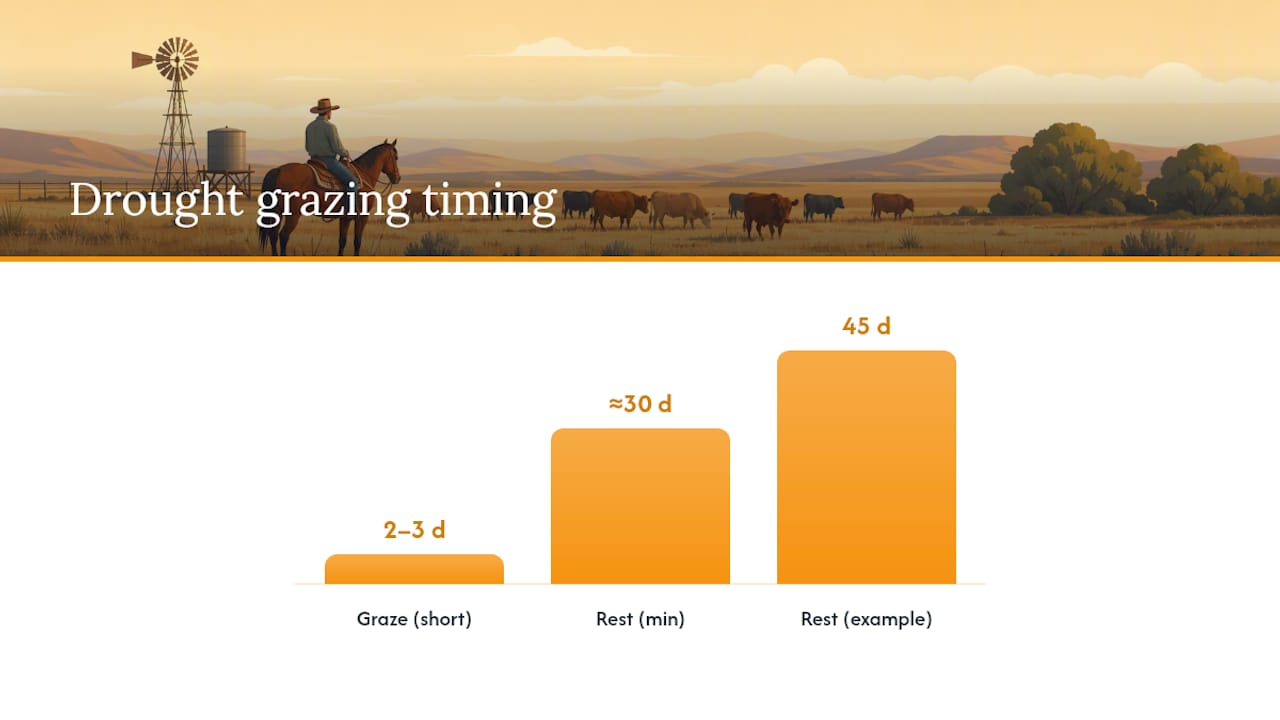
A short drought rotation might look like this: graze a paddock for two to three days, then rest it 45 days while cycling through three or four backup paddocks. That pace only works if you have enough subdivisions to rotate through.
Once forage supply drops below what the herd needs, set up a sacrifice area and start feeding stored forage there instead of grazing your best ground into the dirt.
- Unroll hay bales rather than using a single ring feeder to spread trampling impact.
- Rotate feeding sites every few days to avoid concentrated hoof damage and manure buildup.
- Choose a sacrifice paddock with the poorest soil and the least regrowth potential.
Stop grazing a paddock the moment stubble hits 4 inches or plants stop regrowing between visits. Those are your two hard stop signals, not calendar days.
Pro Tip: Walk your worst paddock first, not your best one. If it’s already below 4 inches, the rest of your rotation schedule needs adjusting today, not next week.
Read more in FenceFast’s pasture management guide.
Forage Selection and Seeding Options for Drought Resilience
Species choice determines how much punishment your pasture can absorb. Tall fescue and orchardgrass root deeper than shallow species like perennial ryegrass, pulling moisture from soil layers that shallow-rooted grasses never reach. If you’re establishing new stand or overseeding thin ground, these two deserve priority over ryegrass in dry-climate grazing plans.
When the perennial base can’t keep up, warm-season annuals fill the gap fast:
- Sorghum-Sudangrass — vigorous regrowth, good tonnage, needs nitrate testing before feeding.
- Pearl millet — lower nitrate risk than sorghum-Sudan, holds quality well into late summer.
- Foxtail millet — quick establishment, shorter growing window than the others.
- Teff — fine stems, good palatability, best on lighter soils.
These annuals can produce harvestable biomass in roughly 8 weeks once soil temperatures reach 60 to 65°F, which is the real trigger for planting, not the calendar date.
Interseeding into a thin but living stand is usually smarter than full renovation. Full termination and reseeding makes sense only when the perennial base has died out or weed pressure has taken over. Terminating a struggling but recoverable stand to chase a quick annual crop is a common mistake that costs a full growing season of perennial production.
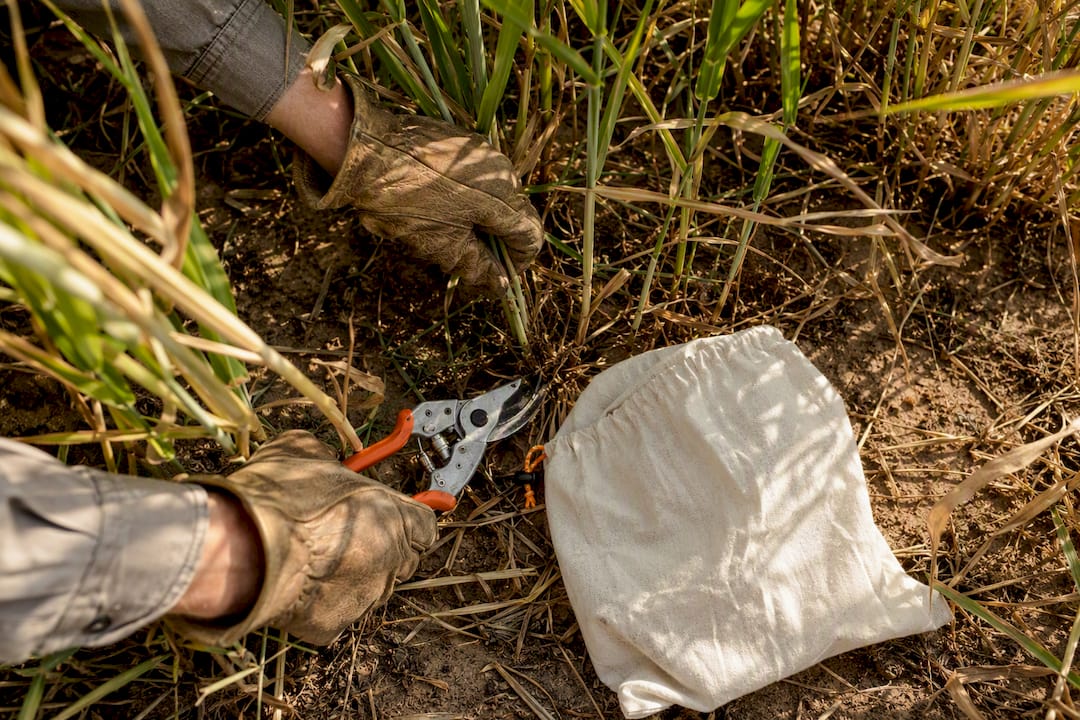
Before turning cattle onto sorghum-Sudan, pearl millet, or other nitrate-prone species, pull a sample and test it. Drought-stressed plants concentrate nitrates in the lower stem, and that risk doesn’t go away just because the forage looks green and healthy.
Soil Health and Water-Conserving Practices
Soil, not the grass itself, is your real drought buffer. Higher organic matter and consistent ground cover hold water that would otherwise run off or evaporate, and that stored moisture is what carries a stand through a dry stretch without collapsing.
A few low-cost habits protect that buffer:
- Keep bare ground covered. Every exposed patch loses moisture faster and invites weeds.
- Skip unnecessary tillage. Disturbed soil dries out and loses structure quickly.
- Maintain soil pH at 5.5 or higher, per extension recommendations, so nutrient uptake keeps working under stress.
- Base any fertilizer application on an actual soil test rather than a routine schedule.
- Leave extra stubble height and control weeds early rather than clipping pastures just to tidy them up.
None of this requires new equipment. It requires resisting the urge to mow, till, or graze tight when conditions are already working against you.
Monitoring, Decision Triggers, and Stocking Adjustments
Drought decisions go bad when they’re reactive instead of scheduled. Walk pastures on a fixed cadence, weekly at minimum during active drought, and log stubble height, ground cover, soil cracking, and any toxic weeds that tend to show up when desirable species thin out.
- Measure available forage with a grazing stick, then calculate remaining grazing days at your current stocking rate.
- Set a shortfall trigger, commonly a 20 to 30 percent drop below expected forage availability, that automatically prompts action rather than a wait-and-see approach.
- Move stock to the sacrifice area once that trigger is hit, before residual height falls below the 4 to 6 inch floor.
- Reassess herd size if hay costs or availability make feeding through the shortfall impractical. Selling or leasing off pairs early usually beats scrambling for hay in October.
- Keep records of each check so you can compare year over year and refine your triggers. Your local extension office can help calibrate these numbers to your region.
Check the rotational grazing planning guide for a template you can adapt to your own paddock counts.
Emergency Forage and Alternative Feed Options
When perennial pasture can’t cover the gap, timelines matter more than variety. Small grains like oats seeded in late summer can produce grazing forage in as little as 6 weeks, while brassicas typically need closer to 8 weeks. Warm-season annuals need soil temperatures around 60 to 65°F to establish reliably, which usually means late spring or early summer planting depending on your region.
Leasing idle cropland or grazing crop residues after harvest can stretch a forage budget without new seeding. Residue quality varies widely though, and cattle often need supplemental protein to use it efficiently.
- Test any nitrate-prone annual before feeding or grazing it, especially after a stressful growth period.
- Mix higher-nitrate forage with clean hay to dilute intake risk rather than feeding it straight.
- Secure off-farm hay early in the season. Prices climb and supply tightens fast once regional shortages become obvious.
Recovery and Renovation After Drought
Rain fixes moisture, not damage. Soil test before applying fertility, since drought-stressed ground often reads differently than it did the prior season, and applying nitrogen too early on a still-stressed stand wastes money.
- Interseed thin but living stands rather than tearing them up completely.
- Reserve full renovation for paddocks where perennial cover is genuinely gone.
- Match new species to soil depth and regional rainfall patterns rather than repeating whatever failed last time.
- Restock in phases, watching closely for bloat risk if legumes rebound faster than grasses in the mix.
- Build a written recovery plan with your local extension office so this drought informs next year’s stocking decisions instead of getting forgotten by spring.
Fencing and Infrastructure That Make Managed Rotations Possible
None of this works without the ability to actually move animals fast. Subdivision fencing is what turns a slow, drought-appropriate rotation from a good idea into something you can execute daily.
- Keep water access within roughly 600 feet of any paddock so animals aren’t walking long distances and compacting travel lanes.
- Place feeding areas to spread manure and reduce trampling concentration, similar to sacrifice-area management.
- Use portable posts and reels to reconfigure paddocks in an afternoon as pasture conditions shift week to week.
Targeted temporary fencing is a genuinely low-cost way to multiply the effect of managed grazing during a dry year. Products and consulting services are available to help set this up, covered in more detail below.
A Week-One Drought Checklist Worth Following
Most drought damage happens in the first two weeks, before anyone admits how bad it’s getting. Here’s what to do immediately: scout every paddock and measure stubble, designate a sacrifice area before you need it, inventory stored hay, set up temporary subdivisions if you don’t already have them, test any suspect nitrate-prone forage, and call your local extension office for regional guidance.
The counterintuitive part is resisting the instinct to speed up rotations when grass looks stressed. Slower is correct here. The second habit worth building is leaning on a diverse forage mix instead of one dominant species. A stand built on tall fescue, some legumes, and a warm-season annual backup rides out uneven rainfall far better than a monoculture ever will.
— Juiced
Get the Fencing to Make Drought Rotation Actually Work
Fast paddock changes are the difference between a drought plan on paper and one you can run in the field, and that comes down to having enough temporary fence on hand before you need it.
Fencefast’s Fence Equipment collection covers the posts, reels, and power supplies that let you subdivide pasture and rest paddocks longer without buying permanent infrastructure you’ll reconfigure again next season. The Fence Tools & Fasteners line covers the connectors and hardware that keep setup quick when you’re moving fence weekly instead of once a year. Design consulting services can help map paddock counts and water access to actual acreage when planning a rotation overhaul for next season. Browse the current fencing lineup and get a layout sorted before the next dry spell forces the decision for you.
Where This Guidance Comes From
- Crops and Soils Extension — residual height and drought grazing rules.
- University of Nebraska CropWatch — annual forage timelines.
- USDA NRCS — grazing management and recovery planning.
Sources
- Managing pastures in drought conditions — Crops and Soils Extension
- Consider growing summer annual forages to replenish feed supplies — University of Nebraska CropWatch
- Forage species and drought resilience — University of Nebraska Extension publication
- Forage alternatives for livestock in drought years — Michigan State University Extension

