

TL;DR:
- Effective pasture management combines height-based grazing, adequate rest, and soil fertility practices to enhance productivity. Consistent use of fencing technology, such as portable electric and virtual fences, provides flexible area control and better grazing distribution. Regular soil testing and strategic weed control ensure long-term pasture health and increased land resilience.
Pasture management techniques are the integrated practices used to optimize forage growth, maintain soil health, and maximize livestock productivity through controlled grazing and deliberate pasture care. Farmers and ranchers who apply these methods consistently see measurable gains in forage availability, animal performance, and long-term land productivity. Sources including Colorado State University Extension, Illinois Extension, and BeefResearch.ca have documented specific, evidence-based thresholds that take the guesswork out of grazing decisions. This article breaks down those techniques by category so you can apply them directly to your operation.
What are the essential pasture management techniques every farmer should know?
Effective grazing management starts with four non-negotiable practices: rotational grazing, stocking rate control, forage height monitoring, and weed management. Skip any one of these and the others lose their effectiveness.
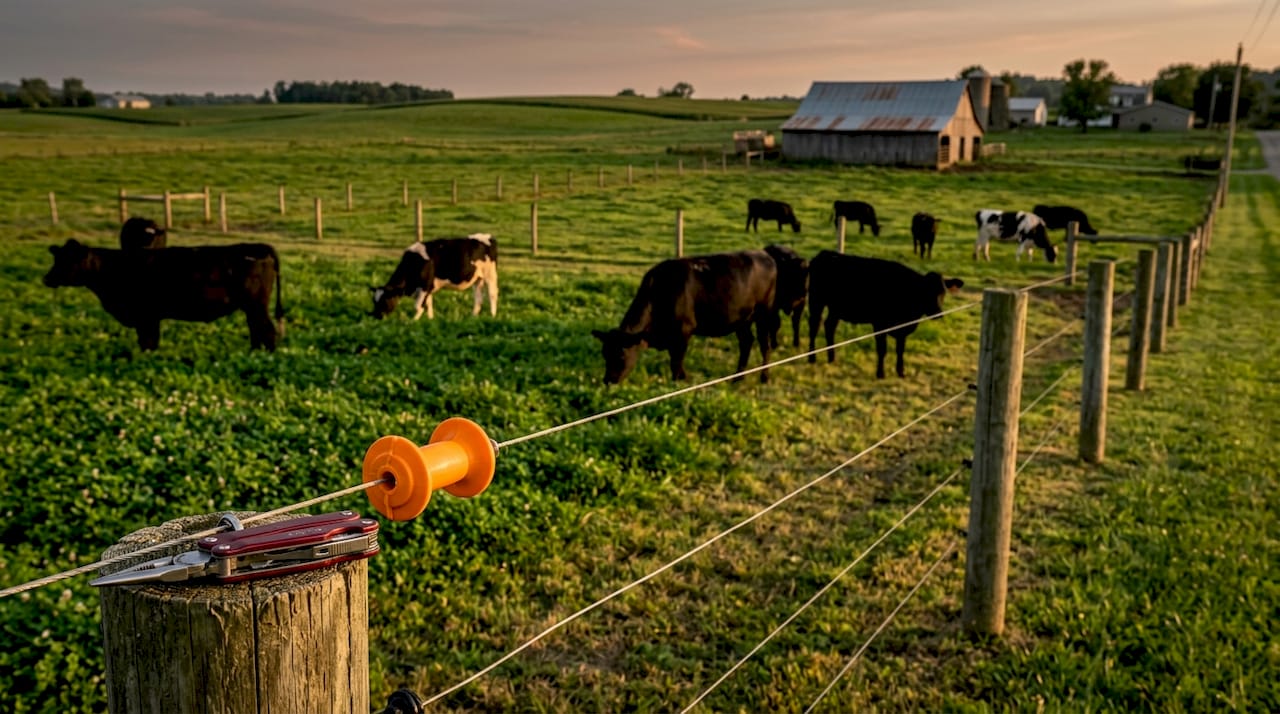
Rotational grazing divides your pasture into multiple paddocks. Livestock graze one paddock for a short period, typically 5 to 10 days, while the remaining paddocks rest for 70 to 120 days depending on the season and forage species. The rest period matters more than the grazing period. Recovery time is the primary driver of improved range condition and forage resilience in rotational systems. Skipping adequate rest is the most common mistake ranchers make when first adopting this approach.
Stocking rate management is equally critical. A well-managed horse pasture requires at least 2 acres per 1,000-pound animal. That means five horses at 1,000 pounds each need roughly 10 acres of quality pasture. Exceeding this threshold degrades forage stands faster than they can recover, compounding soil compaction and weed pressure simultaneously.
Forage height monitoring replaces calendar-based grazing with biology-based decisions. Colorado State University Extension recommends species-specific height targets for every grazing entry and exit decision. Tall fescue, for example, should be grazed starting at 5 inches and never below 3 inches. Switchgrass entry is at 8 inches with a 6-inch exit floor. These thresholds protect root reserves and speed recovery.
Weed control closes the loop. Mowing, hand-pulling, and targeted herbicide application keep invasive species from crowding out productive forage. If weeds cover more than 80% of a paddock, reseeding is more cost-effective than attempting to reclaim the stand through management alone.
- Start grazing tall fescue at 5 inches; exit at 3 inches
- Start grazing switchgrass at 8 inches; exit at 6 inches
- Rotate livestock every 5 to 10 days per paddock
- Reseed paddocks with more than 80% weed coverage
- Apply the “take half, leave half” principle as a baseline for residual biomass
Pro Tip: Mark forage height targets on a simple laminated card and attach it to your ATV or truck. Checking height before moving livestock takes 60 seconds and prevents weeks of recovery time lost to overgrazing.
How do soil health and fertility impact pasture productivity?
Soil fertility is the foundation every forage stand grows from. Without adequate pH, phosphorus, and potassium, even the best grazing schedule produces diminishing returns. Soil testing at program milestones such as years one and five gives you the data to make targeted amendments rather than guessing at fertilizer rates. NRCS programs in the U.S. and equivalent Canadian programs often cover testing costs, making this one of the lowest-cost, highest-return investments available to you.
Legumes like alfalfa, clover, and sainfoin deserve a place in most pasture mixes. They fix atmospheric nitrogen and return it to the soil, reducing synthetic fertilizer inputs while improving forage protein content. A well-established legume stand can supply 100 to 200 pounds of nitrogen per acre annually, depending on species and stand density.
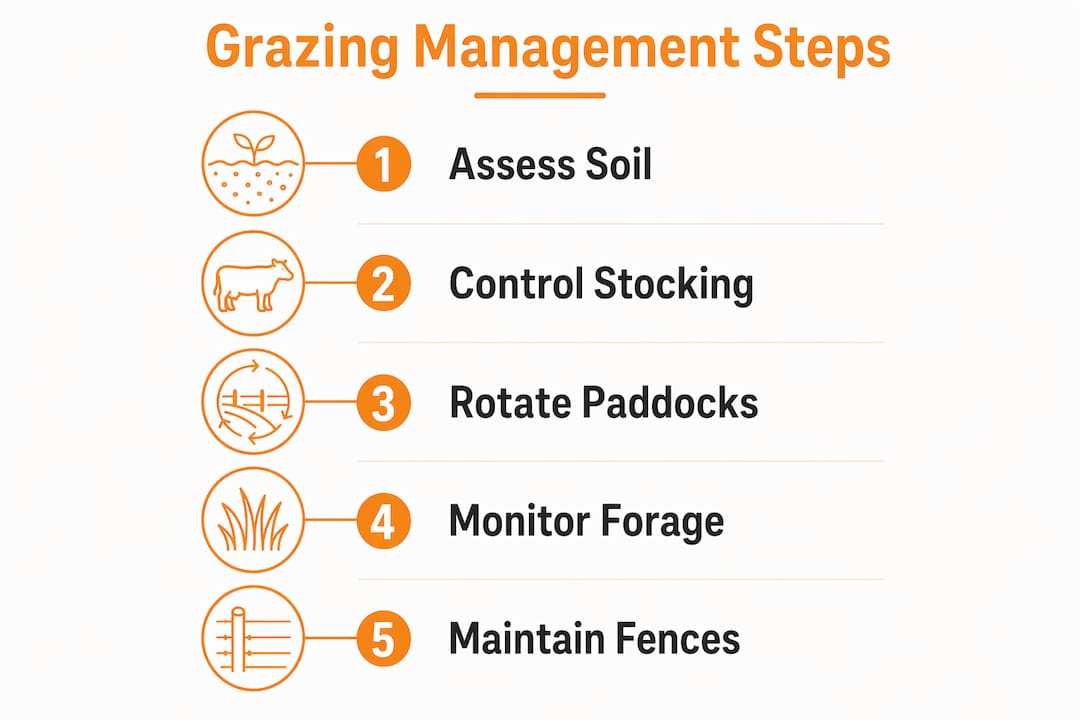
Here is a practical sequence for improving soil health in an existing pasture:
- Pull soil samples from multiple paddock zones and submit for pH, phosphorus, potassium, and organic matter analysis
- Apply lime if pH falls below 6.0 to unlock nutrient availability
- Broadcast phosphorus and potassium based on test results, not standard rates
- Overseed with legumes where forage stands are thin or nitrogen-deficient
- Drag paddocks after grazing to break up manure pats and distribute nutrients evenly
| Practice | Benefit | Frequency |
|---|---|---|
| Soil testing | Guides targeted amendments, reduces input waste | Years 1 and 5 minimum |
| Lime application | Corrects pH, unlocks phosphorus availability | As indicated by test results |
| Legume overseeding | Fixes nitrogen, improves forage protein | Every 3 to 5 years or after stand thinning |
| Manure dragging | Distributes nutrients, reduces parasite habitat | After each grazing rotation |
Pro Tip: Request a forage quality analysis alongside your soil test. Knowing the energy and protein content of your existing stand tells you whether your soil fertility program is actually translating into animal performance.
What grazing management strategies optimize forage use and livestock performance?
Timing and distribution are the two variables most ranchers underestimate. Illinois Extension research confirms that delaying spring turnout until forages reach 8 inches prevents permanent stand damage and reduces weed pressure from bare soil exposure. Turning cattle or horses out onto 3-inch spring growth feels productive but sets the stand back by weeks and opens the door to broadleaf weed invasion.
Maintaining at least 4 inches of stubble height throughout the grazing period protects root carbohydrate reserves. Roots are the engine of regrowth. Strip those reserves by grazing too short and recovery slows from weeks to months.
Animal distribution is a frequently overlooked lever. Livestock naturally congregate near water and shade, creating overgrazing pressure in those zones while underutilizing distant paddock areas. Placing salt and mineral blocks away from water sources pulls animals into underused areas and distributes grazing impact more evenly. Water should remain accessible within 600 to 800 feet of all paddock areas to avoid the opposite problem of animals refusing to travel.
- Delay spring turnout until forages reach 8 inches
- Maintain 4 inches of stubble height throughout grazing
- Place salt and mineral blocks away from water sources
- Adjust rotation length based on forage growth rate, not the calendar
- Use sacrifice paddocks during wet periods to protect the rest of the system
| Grazing system | Best use case | Key limitation |
|---|---|---|
| Continuous grazing | Low-density, extensive operations | High overgrazing risk near water and shade |
| Rotational grazing | Most cattle and horse operations | Requires fencing investment and monitoring |
| Strip grazing | High-value forage crops, dairy operations | Labor-intensive daily moves |
Pro Tip: During rapid spring growth, shorten your rotation intervals to 3 to 5 days per paddock. Forages can outpace your rotation schedule in April and May, leading to mature, stemmy growth that livestock reject.
Lush spring growth also carries a nutritional risk worth noting. High-sugar, rapidly growing forages can trigger grass tetany in cattle and laminitis in horses. Illinois Extension recommends supplementing with energy-focused feeds during this window to balance the nutritional profile and protect reproductive performance.
How can farmers adapt pasture management during drought?
Drought is the condition that exposes every weakness in a pasture management system. The single most damaging response is continuing to graze stressed pastures because “the animals need to eat.” That decision trades short-term convenience for years of stand recovery.
Penn State Extension is direct on this point: resting drought-stressed pastures and waiting for grasses to reach 6 to 8 inches before resuming grazing is the minimum threshold for protecting stand integrity. Grazing below that height after drought removes the leaf area plants need to photosynthesize and rebuild root reserves.
Here is a drought response sequence that protects both your pasture and your herd:
- Move livestock to dry lots or sacrifice paddocks immediately when pasture growth stalls
- Reduce stocking rate by selling or relocating animals that exceed your reduced carrying capacity
- Increase the area allocated per animal if dry lots are not available
- Wait for confirmed regrowth of 6 to 8 inches before returning to any paddock
- Apply fertilizer and reseed bare areas once soil moisture returns
One additional risk specific to drought: non-structural carbohydrates accumulate in grasses during moisture stress and spike again after the first significant rain. For metabolically sensitive animals such as horses prone to laminitis, high carbohydrate accumulation in post-drought forage creates a genuine health hazard. Test forage before returning sensitive animals to pasture after a drought breaks.
Pro Tip: Designate your sacrifice paddock before drought hits, not during it. Choose the paddock with the least productive soil or the most weed pressure. Protecting your best paddocks during drought pays dividends for years.
What are the best pasture rotation methods and fencing strategies?
Rotational grazing only works if your fencing system makes it practical to move animals efficiently. The fencing infrastructure you choose determines how many paddocks you can manage and how quickly you can adjust to changing forage conditions.
Permanent fencing defines the outer boundary and major paddock divisions. Portable electric fencing handles the internal subdivisions that change with the season. This combination gives you a fixed framework with flexible interior management. Rotational grazing fencing systems, including portable electric options, enable precise grazing control and measurable improvements in pasture health over time.
| Fencing type | Cost | Flexibility | Best application |
|---|---|---|---|
| Permanent woven wire | High upfront | Low | Outer perimeter, permanent paddock divisions |
| Portable electric | Low upfront | High | Internal paddock subdivision, seasonal adjustments |
| Virtual fencing | Medium to high | Very high | Large acreage, remote paddock management |
Virtual fencing technology, such as Gallagher eShepherd, uses GPS-enabled neckbands and app-based boundary control to move and contain livestock without physical wire. This is particularly effective for large acreage operations where installing permanent subdivisions is cost-prohibitive. You can read more about virtual fencing for pasture health and how it integrates with rotational grazing systems.
Paddock design also affects grazing distribution. Long, narrow paddocks push animals to graze more uniformly from entry to exit. Square paddocks concentrate use near the gate and water source. Fencing design is a pasture management decision, not just an infrastructure one.
What I’ve learned from watching ranchers get this wrong
The most common failure I see is ranchers who adopt rotational grazing on paper but continue making grazing decisions by the calendar. They move animals every 14 days regardless of what the forage looks like. Some paddocks get grazed at 10 inches, others at 4. The system produces inconsistent results and the rancher concludes that rotational grazing “doesn’t work on my land.”
The fix is simple but requires discipline: graze by height, not by date. Keep a notebook or use a phone app to log entry height, exit height, and days grazed for every paddock. After one full season, patterns emerge that tell you exactly how your land responds to grazing pressure across different weather conditions. That data is worth more than any generic recommendation.
Soil testing is the other practice that gets deferred indefinitely. Ranchers know they should do it. They plan to do it next spring. Five years pass and they are still applying the same fertilizer rate their neighbor uses, with no idea whether it matches their soil’s actual needs. Test the soil. The cost is trivial relative to the fertilizer you will stop wasting.
Weed control and proper fencing investment are the two areas where cutting corners costs the most over time. A paddock overrun with thistle or burdock is not a grazing resource. It is a liability that spreads to adjacent paddocks. Invest in the fencing that makes rotation practical, control weeds before they set seed, and your pasture system will compound in productivity year over year.
— Juiced
How Fencefast can help you implement rotational grazing
Putting these grazing management strategies into practice requires the right fencing infrastructure, and that is exactly where Fencefast delivers for Canadian farmers and ranchers.
Fencefast carries permanent fencing components, portable electric fencing systems, and Gallagher eShepherd virtual fencing technology, giving you options at every scale and budget. Whether you are subdividing an existing pasture into four paddocks or managing a large acreage operation with GPS-controlled grazing boundaries, Fencefast has the products and the expertise to support your system. As an authorized Gallagher dealer with 26 years of experience, Fencefast also provides design consulting and guidance on government funding programs that can offset fencing costs. Visit Fencefast to explore fencing solutions built for rotational grazing and pasture management across Canada.
FAQ
What is the “take half, leave half” grazing principle?
The “take half, leave half” principle means removing no more than 50% of forage biomass during each grazing event, leaving sufficient leaf area for rapid regrowth and root reserve recovery. It serves as a practical baseline that should be adjusted based on forage species and regional conditions.
When should I delay spring turnout?
Illinois Extension recommends waiting until forages reach 8 inches before turning livestock onto spring pasture. Grazing earlier damages root systems, reduces stand density, and creates bare soil that weeds exploit quickly.
How do I manage pasture during a drought?
Move livestock to dry lots or sacrifice paddocks immediately, reduce stocking rates, and wait for 6 to 8 inches of regrowth before returning animals to any paddock. Reseed bare areas and apply fertilizer once soil moisture returns.
How many paddocks do I need for rotational grazing?
A minimum of four paddocks allows one paddock to be grazed while three rest, which supports adequate recovery time. More paddocks, typically six to eight, give you greater flexibility to adjust rotation length based on forage growth rates and seasonal conditions.
How often should I test my pasture soil?
Test at a minimum in year one to establish a baseline and again in year five to assess the impact of your management program. More frequent testing every two to three years is justified if you are applying significant amendments or transitioning to a new forage system.
Key takeaways
Effective pasture management requires combining height-based grazing decisions, adequate rest periods, soil fertility management, and flexible fencing infrastructure to build a system that improves year over year.
| Point | Details |
|---|---|
| Graze by height, not by date | Use species-specific thresholds like 5 inches for tall fescue entry and 3 inches for exit. |
| Rest periods drive recovery | Rotational systems need 70 to 120 days of rest per paddock to rebuild forage stands. |
| Test soil before amending | Soil testing in years one and five prevents fertilizer waste and guides targeted amendments. |
| Drought demands immediate action | Move livestock to sacrifice areas and wait for 6 to 8 inches of regrowth before returning. |
| Fencing enables flexibility | Portable electric fencing and virtual fencing let you adjust paddock size as forage conditions change. |
Recommended
- Rotational Grazing Explained: Boost Pastures and Livestock Health – FenceFast Ltd.
- 6 Best Grazing Rotation Schedules for Cattle Ranchers – FenceFast Ltd.
- Rotational Grazing Fence: Boosting Pasture Health and Herd Control – FenceFast Ltd.
- Temporary Livestock Fencing Guide for Effective Grazing – FenceFast Ltd.

