

TL;DR:
- Effective pasture management balances livestock grazing with forage growth to maintain ground cover and soil health. Using rotational grazing, proper rest periods, and soil testing ensures productive and resilient pastures year-round. Proper fencing and water placement promote even livestock distribution and prevent overgrazing.
Pasture management is defined as the practice of balancing livestock grazing with forage production to maintain healthy ground cover, soil fertility, and long-term land productivity. The most effective pasture management strategies combine the “take half, leave half” principle, rotational grazing techniques, and calendar-based soil care to keep forage vigorous across every season. Farmers who apply these pasture management tips consistently see measurable gains in livestock condition, reduced weed pressure, and land that holds its carrying capacity year after year. Neglecting any one of these pillars accelerates pasture degradation faster than most ranchers expect.
What are the best pasture management tips for productive grazing?
Effective pasture management techniques rest on three non-negotiable principles: grazing balance, adequate rest periods, and maintained soil fertility. Strip away any one of these and the other two begin to fail. The “take half, leave half” standard is the clearest expression of grazing balance. It means livestock remove roughly 50% of available forage, leaving enough leaf area for the plant to photosynthesize and recover quickly.
Rest periods are equally non-negotiable. Plants grazed repeatedly without recovery lose root mass, thin out, and get replaced by weeds. Soil fertility ties directly into how fast forage recovers after each grazing event. A paddock with poor pH or low phosphorus grows back slowly, which compresses your rotation and forces you to graze too soon.
These three principles work as a system. Violate one and you create pressure on the other two. The best pasture management best practices treat them as inseparable.
How does rotational grazing improve pasture productivity and livestock health?
Rotational grazing is the practice of moving livestock through a series of paddocks in sequence, giving each paddock a defined rest period before livestock return. Continuous grazing, by contrast, allows animals to selectively graze the same plants repeatedly. That selective pressure depletes the most palatable species first and opens the door to weed invasion, permanently reducing carrying capacity if left uncorrected.
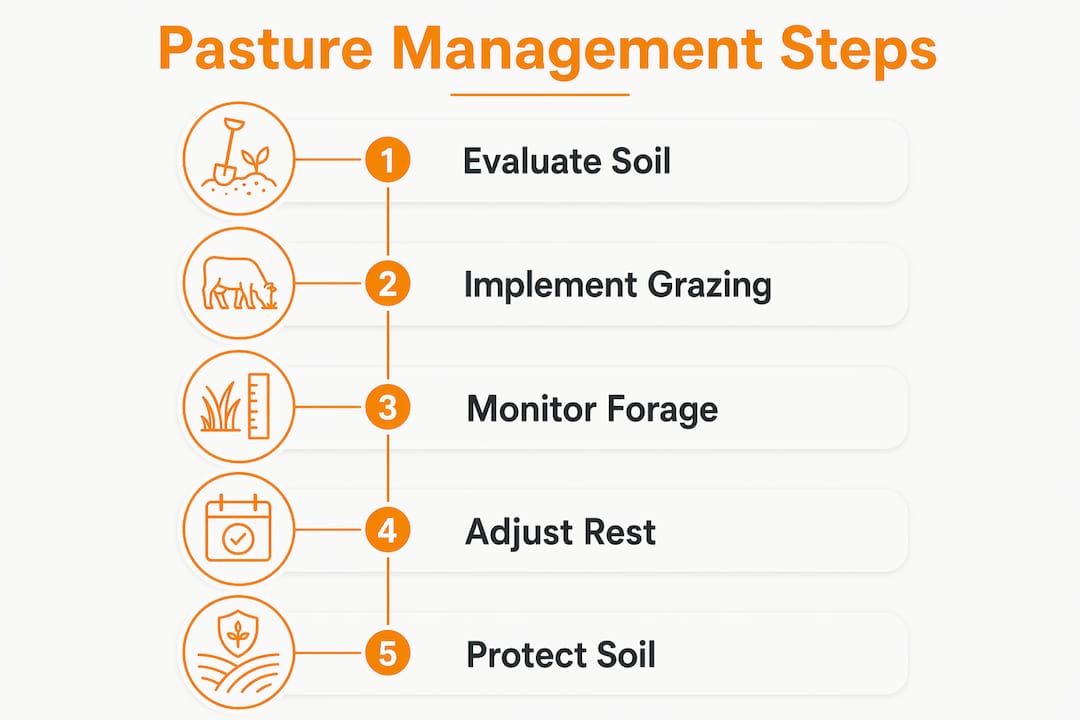
The science behind rotational grazing is straightforward. Rested plants rebuild root reserves, which drives faster regrowth and denser sward. Denser sward means more forage per acre and less bare ground for weeds to colonize.
Key guidelines for a functional rotational system include:
- Grazing period: Keep each paddock grazing event to 10 days or less. Intensive systems recommend this limit to prevent selective overgrazing within a single paddock.
- Recovery period: Allow 90 or more days of rest in established rotational systems to restore plant vigor and root mass.
- Paddock number: More paddocks mean longer rest periods without reducing total stocking density. A minimum of six paddocks is a practical starting point for most operations.
- Stocking density: Higher density for shorter periods produces more uniform grazing than low density over long periods.
- Water access: Provide clean water in every paddock. Calves with access to pumped water sources gained 16–18 lbs more per grazing season than those drinking from dugouts. That weight gain difference reflects water quality’s direct impact on animal performance.
Pro Tip: Place salt and mineral blocks 600–800 feet from water sources. This placement pulls livestock away from the water point and spreads grazing pressure evenly across the paddock, preventing the bare, compacted zones that form around water troughs.
What are the best practices for soil health and fertility in pasture management?
Soil health is the foundation of forage productivity. Soil testing for pH, phosphorus, and sulfur determines what your pasture actually needs, rather than what you assume it needs. Applying lime or fertilizer without a test is guesswork that wastes money and can create nutrient imbalances that harm legume persistence.
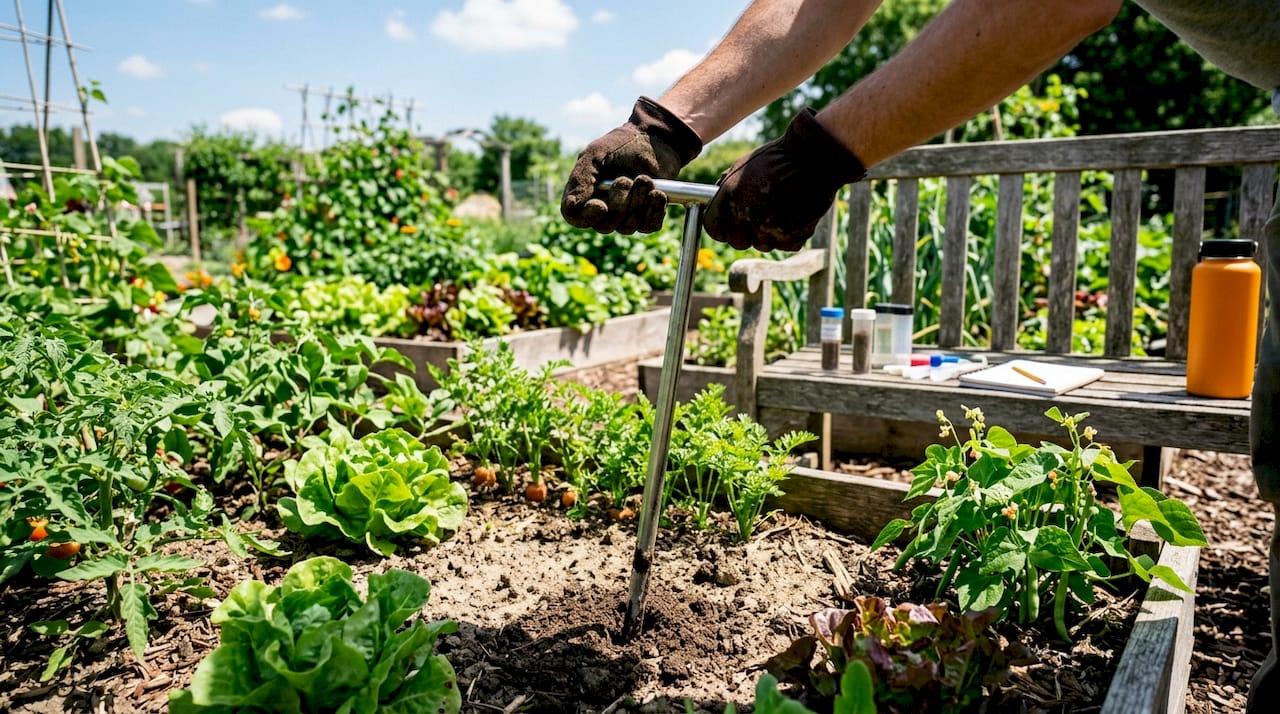
Legumes like clover and alfalfa fix atmospheric nitrogen, which reduces your fertilizer bill significantly. But they require a soil pH in the 6.0–7.0 range to thrive. Below that threshold, legume nodulation fails and the plants thin out, leaving grasses to dominate and nitrogen inputs to drop.
Timing fertilizer applications matters as much as the rate. Apply nitrogen in early spring when grasses are actively growing and can take up nutrients before runoff risk peaks. Avoid applications on waterlogged or frozen ground.
Soil compaction is a separate but related problem. Wet conditions concentrate livestock traffic and compact the soil surface, reducing water infiltration and root depth. When paddocks become saturated, sacrifice one or two paddocks to concentrate grazing and protect the rest. That short-term loss prevents long-term structural damage across your entire system.
Pro Tip: Test soil every two to three years and keep records by paddock. Paddock-level data reveals which areas consistently underperform and need targeted lime or phosphorus inputs rather than blanket applications.
How to monitor and maintain optimal forage height and pasture condition?
Forage height is the most direct indicator of whether your rotation is working. Maintaining a minimum residual height of 5–10 cm after grazing preserves enough leaf area for photosynthesis to drive rapid recovery. Graze below that threshold and you force the plant to draw on root reserves instead. Repeated defoliation below the minimum height weakens root systems over multiple seasons.
Common forage species have specific target heights for both entry and exit:
| Forage species | Start grazing at | Stop grazing at |
|---|---|---|
| Perennial ryegrass | 15–20 cm | 5–7 cm |
| Tall fescue | 20–25 cm | 8–10 cm |
| Orchardgrass | 20–25 cm | 8–10 cm |
| Mixed legume/grass | 15–20 cm | 7–10 cm |
Visual assessment works alongside height measurement. Signs of poor pasture condition include:
- Bare patches covering more than 10% of a paddock’s surface
- Dominance of unpalatable or invasive weed species
- Thin, prostrate plant growth with no upright leaf structure
- Soil surface visible between plants at normal walking distance
A pasture ruler or rising plate meter gives you a consistent, objective measurement. Visual assessment alone introduces bias, particularly when you are managing the same paddocks every season and become accustomed to gradual decline.
Recovery time adjustments must track seasonal growth rates. In spring, forage grows fast and recovery periods of 12–15 days may be sufficient. By late summer, the same paddock may need 30–36 days to reach the same entry height. Failing to extend recovery periods as growth slows is one of the most common causes of pasture collapse in late summer.
What seasonal management strategies optimize pasture resilience year-round?
A pasture management calendar converts good intentions into consistent results. Proactive, calendar-based management aligns fertilization and grazing with forage growth peaks in spring and tapers inputs as growth slows in summer and winter. Without a calendar, reactive decisions accumulate and compound into serious pasture degradation.
-
Spring: Apply phosphorus and sulfur based on soil test results as soon as soil temperature allows. Begin grazing when forage reaches the species-specific entry height, not by calendar date alone. Spring growth is fast, so rotation speed must increase to prevent paddocks from becoming overly mature and stemmy.
-
Early summer: Reduce nitrogen inputs as growth rate slows. Monitor paddocks for weed pressure, particularly broadleaf weeds that exploit any bare ground. Spot-treat weeds early before seed set. Consider taking surplus paddocks as hay or silage if forage growth outpaces grazing demand.
-
Late summer: Extend recovery periods to match slower growth rates. Reduce stocking density if forage supply tightens. Avoid grazing paddocks below the minimum residual height during drought stress. Dry conditions combined with overgrazing cause the most severe and long-lasting pasture damage.
-
Fall: Apply lime if soil pH testing indicates it is needed. Fall is the best time for lime because it has the winter months to react with the soil before spring growth begins. Overseed thin or bare areas with species suited to your region and climate.
-
Winter: Rest all paddocks where possible. If winter grazing is unavoidable, designate sacrifice paddocks and protect the rest. Avoid grazing wet paddocks with heavy livestock, as hoof traffic on saturated soil creates compaction and pugging damage that takes multiple seasons to repair.
Adaptive stocking density is the practical tool that connects your calendar to real-time conditions. When a drought cuts growth rates, reduce animal numbers or supplement with conserved forage rather than forcing the pasture to absorb the deficit.
What techniques help prevent overgrazing and promote uniform livestock distribution?
Overgrazing is not just about too many animals. It is about animals returning to the same plants before those plants have recovered. Even a light stocking rate causes overgrazing if the rotation is too fast or paddocks are too large.
Livestock naturally congregate near water, shade, and gates. That congregation creates localized overuse while distant areas of the same paddock remain undergrazed. The result is a patchwork of bare, compacted zones next to rank, overgrown areas. Neither zone is productive.
Practical techniques to promote uniform distribution:
- Fence paddocks to a manageable size. Smaller paddocks force livestock to graze the entire area before moving on. Large, unfenced areas always produce uneven grazing.
- Place water and minerals strategically. Salt and mineral blocks placed 600–800 feet from water pull livestock away from the water point and distribute grazing pressure across the paddock.
- Evaluate carrying capacity annually. Carrying capacity is not fixed. Drought, soil degradation, and weed encroachment all reduce it. Match stocking rates to actual forage production, not historical averages.
- Use temporary fencing for flexibility. Temporary electric fencing lets you subdivide paddocks during periods of fast spring growth or restrict access to recovering areas without permanent infrastructure costs.
Fencing is the physical tool that makes rotational grazing possible. Without it, the best rotation plan on paper stays theoretical. Well-placed fences, combined with strategic water and mineral placement, do more to prevent overgrazing than any other single intervention.
Key Takeaways
Effective pasture management requires integrating rotational grazing, soil fertility, forage height monitoring, and seasonal planning into one consistent system.
| Point | Details |
|---|---|
| Apply “take half, leave half” | Leave 50% of forage after each grazing event to preserve plant vigor and speed regrowth. |
| Use rotational grazing | Limit grazing periods to 10 days or less and allow 90+ days of recovery to prevent overgrazing. |
| Test soil regularly | Test pH, phosphorus, and sulfur every two to three years and apply inputs based on results, not assumptions. |
| Adjust recovery periods seasonally | Shorten recovery to 12–15 days in spring and extend to 30–36 days in late summer to match growth rates. |
| Distribute livestock with fencing and minerals | Place salt blocks 600–800 feet from water and use paddock fencing to prevent localized overuse. |
What I have learned from watching pastures fail and recover
Most pasture problems I have seen come from one decision made repeatedly: returning livestock to a paddock before the forage has recovered. It does not look catastrophic the first time. The second time, you notice the plants are shorter at entry. By the third or fourth rotation, you are grazing plants that never rebuilt their root reserves, and the pasture starts to thin from the inside out.
The counterintuitive part is that the damage accumulates silently. Farmers who graze by calendar date rather than forage height often do not recognize the decline until weeds are already filling the gaps. At that point, recovery takes years, not weeks.
What actually works is treating recovery periods as a variable, not a fixed number. Spring recovery is fast. Late summer recovery is slow. The rotation must flex with the season, even if that means reducing stocking density temporarily. Short-term production pressure is a poor trade for a pasture that takes three seasons to rebuild.
Soil testing is the other discipline that separates productive operations from struggling ones. Pastures with corrected pH and adequate phosphorus recover faster after grazing, resist drought stress better, and support legume populations that reduce fertilizer costs. The test costs almost nothing relative to the value of the information it provides.
The ranchers I respect most treat their pastures the way a good mechanic treats an engine. They do not wait for failure. They plan grazing rotations in advance, monitor forage height consistently, and adjust before problems compound. That discipline is not complicated. It just requires commitment to the system over the short-term convenience of leaving gates open.
— Juiced
Fencefast supports your rotational grazing system
Rotational grazing only works when your fencing infrastructure supports it. Paddocks that are too large, poorly divided, or lacking reliable water access undermine even the best grazing plan.
Fencefast carries a full range of electric fencing systems and livestock management supplies designed for Canadian farmers and ranchers building or upgrading rotational grazing setups. From temporary electric fence reels for flexible paddock subdivision to permanent post-and-wire systems for long-term infrastructure, Fencefast has the products and the expertise to match your operation’s scale and terrain. As an authorized Gallagher dealer with 26 years of experience, Fencefast also offers virtual fencing technology for operations ready to take herd management to the next level. Visit fencefast.ca to browse the full catalog or get expert guidance on your setup.
FAQ
What is the “take half, leave half” rule in pasture management?
The “take half, leave half” rule means livestock should remove approximately 50% of available forage during each grazing event. Leaving the remaining 50% preserves enough leaf area for the plant to photosynthesize and recover quickly before the next grazing cycle.
How long should a paddock rest between grazing events?
Recovery periods should range from 12–15 days in spring to 30–36 days in late summer, depending on growth rate. Intensive rotational systems recommend a minimum of 90 days of rest for established pastures to fully restore plant vigor.
What are the signs of overgrazing in a pasture?
Overgrazing shows up as bare patches covering more than 10% of a paddock, dominance of weed species, and thin or prostrate plant growth with visible soil between plants. Selective depletion of palatable species is an early warning sign that often precedes visible bare ground.
How often should I test pasture soil?
Soil testing every two to three years is the standard recommendation. Testing by individual paddock rather than across the whole property reveals localized deficiencies in pH, phosphorus, or sulfur that blanket applications would miss.
Does water placement affect grazing distribution?
Water placement directly controls where livestock spend their time. Placing salt and mineral blocks 600–800 feet from water sources pulls animals away from the water point and spreads grazing pressure more evenly across the paddock, reducing compaction and bare zones near troughs.

