

Finding your cattle or horses slipping past an electric fence can leave any Canadian farmer frustrated. The difference between a reliable barrier and an ineffective one often comes down to your grounding system. A ground rod is a conductive metal rod driven into soil, creating the return path that gives your fence the shocking power to keep livestock safely contained. This article explains how the right materials, installation, and soil conditions affect the effectiveness of your grounding solution, so your fence works when you need it most.
Table of Contents
- What Is An Electric Fence Ground Rod?
- Types And Materials Of Ground Rods
- Proper Installation Steps And Positioning
- Soil Conditions And Fence Effectiveness
- Common Mistakes And Troubleshooting Tips
Key Takeaways
| Point | Details |
|---|---|
| Importance of Ground Rods | Ground rods are essential for completing the electrical circuit of an electric fence, ensuring effective animal control by providing a return path for current. |
| Quality Matters | The effectiveness of your electric fence depends on the quality of the grounding system; poorly installed ground rods can significantly reduce electrical flow. |
| Appropriate Materials | Choosing the right ground rod material is crucial; galvanized steel is cost-effective, while copper-clad steel offers superior corrosion resistance in problematic soil types. |
| Installation Precision | Proper installation and placement of ground rods in moist areas are vital; spacing rods at least 10 feet apart can enhance conductivity and fence reliability. |
What Is an Electric Fence Ground Rod?
A ground rod is a conductive metal rod driven into moist soil that serves as the critical return path for electric current flowing through your fence system. Think of it as the other half of an electrical circuit. When an animal touches your hot wire, electricity travels through the animal’s body into the ground, then back through the soil to the ground rod, and finally returns to the energizer to complete the loop. Without this return pathway, no shock reaches the animal, and your fence becomes useless. Proper grounding creates the complete circuit that makes electric fencing work, which is why ground rod installation is just as important as the fence wire itself.
For Canadian livestock operations, understanding how ground rods function explains why many farmers experience weak or unreliable fencing. The effectiveness of your entire electric fence system depends almost entirely on the quality of your grounding system. A single poorly installed ground rod can reduce electrical flow by 50% or more, leaving your cattle, horses, or poultry able to push through a fence that should stop them cold. Poor soil contact means higher electrical resistance, and higher resistance means less shocking power. The soil moisture and rod placement directly determine how effectively electricity returns to your energizer and how well your animals respect the fence line.
Ground rods typically measure between 4 and 8 feet in length, though longer rods work better in drier conditions. The system usually involves multiple rods spaced about 10 feet apart, all connected with copper wire and quality clamps to the main grounding wire running back to your energizer. Each rod must make solid contact with moist soil to minimize electrical resistance in the circuit. Installing ground rods correctly means digging past any dry topsoil and into the moisture-rich layer below, where conductivity is reliable year-round. Many farmers discover their fencing problems stem from ground rods installed too shallow or in sandy, dry soil rather than issues with the fence line itself.
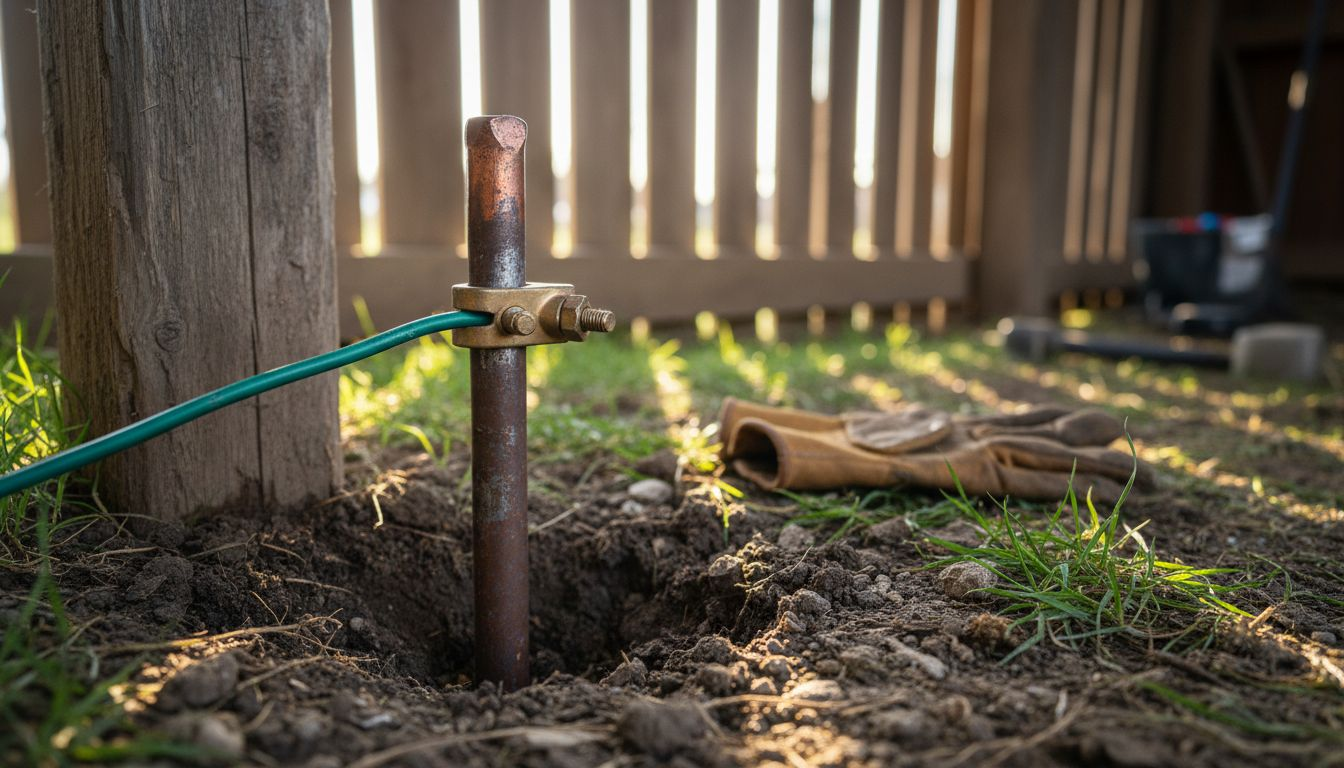
Pro tip: Test your soil moisture before installing ground rods. If the ground is too dry, consider installing rods deeper or adding more rods closer together to compensate, and always wet the soil around newly installed rods to optimize conductivity from day one.
Types and Materials of Ground Rods
Your choice of ground rod material directly affects how long your grounding system lasts and how reliably it conducts electricity back to your energizer. The most common options are galvanized steel rods and copper-clad steel rods, each with distinct advantages depending on your soil conditions and budget. Galvanized steel offers affordability and adequate performance in most Canadian soil types, making it the go-to choice for farmers working with limited budgets. Copper-clad steel combines the best of both worlds by pairing a steel core for mechanical strength with a copper outer layer that resists corrosion. This hybrid design performs exceptionally well in harsh or acidic soil conditions where pure steel might corrode over time, though the cost is higher upfront.
Connecting your ground rods to the rest of your system requires careful material selection to prevent corrosion. Copper-clad steel ground rods resist corrosion while maintaining durability in challenging soil, but pairing materials matters. Never mix galvanized steel rods with copper wire and standard clamps, as different metals create a corrosion problem called galvanic corrosion where one metal essentially eats away at the other underground. For smaller energizers under 20 joules, 12½ gauge galvanized steel fence wire works fine for connections. Larger energizers requiring more power need heavier-gauge copper wire or high-conductivity lead-out cable to handle the current without resistance losses. If you must mix metals, use stainless steel or bronze clamps as intermediaries to prevent corrosion between the rod and wire.
Think about your specific soil conditions when selecting rod material. Sandy or dry soil requires either longer rods or copper-clad steel to maintain good conductivity year-round. Wet clay soil is forgiving and works well with basic galvanized steel. Acidic soil common in parts of Eastern Canada favors copper-clad steel because the copper layer protects against the corrosive environment. Ground rods typically run 4 to 8 feet long, and you’ll usually install multiple rods spaced about 10 feet apart, all bonded together with appropriate connecting wire. Investing slightly more in copper-clad steel or quality connectors now means fewer headaches replacing corroded rods five years from now when you have hundreds of head of livestock depending on that fence.
Here is a quick comparison of ground rod materials and their typical applications:
| Material Type | Durability in Soil | Corrosion Resistance | Best Use Scenario |
|---|---|---|---|
| Galvanized Steel | Moderate | Limited | Wet clay soil, budget farms |
| Copper-Clad Steel | High | Excellent | Acidic, sandy, or rocky soil |
| Stainless Steel | Very High | Superior | Long-term, harsh conditions |
Pro tip: Ask about your specific soil composition at your local agricultural extension office before purchasing rods, and if your soil tests acidic or sandy, choose copper-clad steel rods paired with stainless steel clamps to maximize longevity and performance.
Proper Installation Steps and Positioning
Getting ground rods in the ground correctly makes the difference between a fence that works reliably and one that fails when you need it most. Start by choosing your installation locations strategically. Pick spots that stay naturally moist throughout the year, such as the north side of a building, near a water trough, or in low-lying areas where moisture collects. Avoid placing rods near utility lines, metal gates, or existing grounding systems from other structures, as these can create dangerous interference and electrical hazards. Once you have identified good locations, space your rods at least 10 feet apart from each other. This spacing reduces electrical resistance between rods and ensures each one operates at maximum efficiency. Most operations should install a minimum of three rods to create a solid grounding system, though larger operations with high-joule energizers may need more.
The actual installation process is straightforward but physically demanding. Driving rods at least six feet deep into moist soil ensures adequate contact with conductive earth layers year-round, even during dry summer months. Use a sledgehammer or manual post driver to drive the rod straight down, keeping it as vertical as possible to maximize soil contact. If you hit rock or extremely hard ground before reaching six feet, add additional rods rather than stopping short. Once all rods are installed, connect them with a single continuous piece of unbroken wire using appropriate clamps at each connection point. This single wire becomes your main ground conductor running back to the energizer. Select connecting wire that matches the rod material to prevent corrosion problems. For instance, use copper wire with copper-clad rods and galvanized steel wire with galvanized steel rods.
After installation, test your system for proper conductivity. You can purchase a simple digital resistance meter from agricultural suppliers or contact your local extension office for testing assistance. Most sources recommend a resistance reading below 25 ohms for effective operation, though lower is always better. If your readings are higher than acceptable, add more rods or extend existing rods deeper. Wet the soil around newly installed rods to immediately improve conductivity. Many Canadian farmers install rods in fall when soil moisture is naturally higher, then verify performance the following spring before heavy livestock grazing season begins. This timing ensures your system is battle-tested before your animals depend on it.
Pro tip: Install ground rods in the fall when soil moisture is abundant, then verify resistance readings in early spring using a resistance meter, giving you time to add rods or make adjustments before your livestock season begins.
Soil Conditions and Fence Effectiveness
Your soil type determines whether your electric fence system delivers a reliable shock or becomes a useless barrier. This is where many Canadian farmers discover why their fencing fails despite having quality equipment. The fundamental issue is electrical conductivity. Electricity needs a path back to the energizer to complete the circuit and deliver a shock. Sandy, rocky, or dry soils resist electrical flow like an insulator, while moist clay or loam soils conduct electricity freely. Soil conductivity and moisture level directly affect electric fence grounding efficiency, meaning a beautifully installed fence in the wrong soil type underperforms terribly. You could have the best energizer and premium fencing materials, but if your grounding system sits in dry sand, your animals walk through with barely a tingle.
Moist soils like clay and loam are ideal because they naturally conduct electricity well. If your property has these soil types, your grounding investment works harder and longer with minimal maintenance. However, much of Canada contains sandy or rocky soils that resist electrical conductivity. In these challenging conditions, you face two practical solutions. First, install additional ground rods or drive them deeper to reach the moist soil layers beneath the dry surface. Second, consider an earth return grounding system where your fence wire itself serves as the return conductor, improving overall circuit conductivity. Many operations in dry regions use a combination of both strategies. Placement matters too. Install rods in the naturally wettest spots on your property, such as low-lying pasture corners or areas that collect runoff. During drought conditions, even good grounding systems lose effectiveness as surface moisture disappears, so some farmers intentionally water the soil around rods during extended dry spells.
Understanding your specific soil composition allows you to design grounding that actually works. Test your soil before finalizing rod placement. Simple soil tests reveal whether you have clay, loam, sand, or rocky ground. Your local agricultural extension office can run these tests affordably or recommend on-farm testing kits. Once you know your soil type, you can calculate the number of rods needed and their optimal depth. Dense clay soil with good moisture might need just two rods spaced adequately, while sandy ground could require four or five rods placed deeper and more frequently spaced. The investment in understanding your soil upfront saves money and frustration compared to installing rods poorly and then adding more later when your livestock escape.
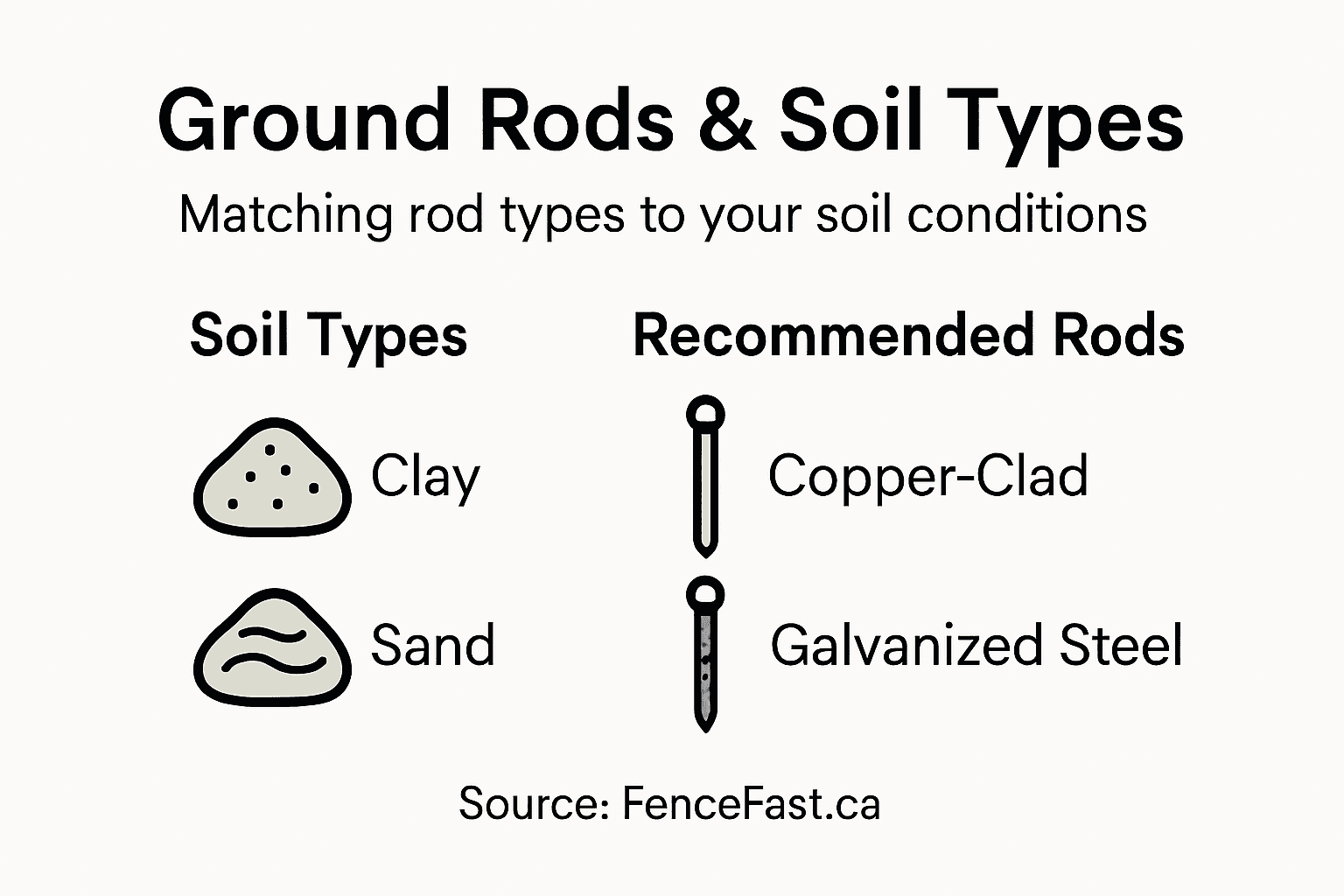
Below is a summary of how soil types impact your grounding strategy:
| Soil Type | Conductivity Level | Installation Advice | Recommended Rods |
|---|---|---|---|
| Clay/Loam | High | Fewer rods, standard depth | Galvanized Steel |
| Sandy | Low | More rods, increased depth | Copper-Clad Steel |
| Rocky | Very Low | Deeper rods or alternate placement | Copper-Clad Steel |
| Acidic | Variable | Use corrosion-resistant materials | Copper-Clad Steel |
Pro tip: Before installing any ground rods, collect soil samples from your target installation areas and have them tested for composition and moisture, then use that information to determine rod quantity and spacing rather than guessing based on general recommendations.
Common Mistakes and Troubleshooting Tips
Most grounding failures trace back to a handful of preventable mistakes that farmers repeat year after year. The first and most common error is installing too few ground rods. Many operations get away with one or two rods in ideal conditions, then wonder why their system fails during dry spells. A single rod can lose effectiveness quickly as surrounding soil dries out, leaving you with an incomplete circuit. The second mistake is spacing rods too close together, which defeats the purpose of multiple rods. When rods sit within a few feet of each other, they essentially compete for the same soil conductivity zone rather than spreading the grounding system across a wider area. Space them at least 10 feet apart to ensure each rod accesses fresh, conductive soil. The third major mistake involves mixing incompatible metals. Pairing galvanized steel rods with copper wire using standard clamps creates galvanic corrosion that degrades your connections within months. Using the wrong connecting wire gauge for your energizer size also causes voltage loss before the shock even reaches the fence.
When your fence suddenly stops working or performs inconsistently, start troubleshooting systematically. First, test your energizer output separately from the grounding system to determine if the problem is the energizer itself or your grounding. Use a voltmeter to check voltage at different points along your fence line and between the fence and ground. A healthy system should show strong voltage readings. Low readings point to grounding issues. Next, inspect all connections visually. Look for corrosion, loose clamps, or broken wires at rod connection points. Even a hairline crack in a clamp connection reduces conductivity dramatically. Check that your ground rod connections are tight and that connecting wires are unbroken from rod to energizer. If visual inspection reveals corrosion or loose connections, clean them with a wire brush and retighten clamps. Sometimes that single repair restores full functionality.
Periodic testing prevents problems before they become expensive failures. During dry weather especially, voltage can drop noticeably as soil moisture decreases around your rods. Some farmers add temporary water around rod areas during summer droughts to maintain conductivity. If testing reveals low voltage that you cannot restore through cleaning and tightening, add additional ground rods. Adding rods costs far less than replacing livestock lost to escape, and modern farms typically benefit from extra grounding capacity anyway. Soil moisture changes seasonally, so a system that works perfectly in spring might underperform in August without additional rods. Keep detailed records of your voltage readings across seasons. This baseline data helps you spot problems early and plan maintenance before animals start testing your fence integrity.
Pro tip: Invest in an inexpensive digital voltmeter and test your fence voltage monthly during grazing season, comparing readings to establish a baseline that alerts you to performance drops before your animals discover fence weaknesses.
Strengthen Your Electric Fence Grounding for Livestock Safety
Ensuring your electric fence delivers a reliable shock starts beneath the surface with proper ground rod selection and installation. Poor grounding leads to weak circuits that leave your valuable livestock vulnerable to escapes and injuries. If you struggle with inconsistent fence performance caused by dry soil conditions or corrosion, you need durable materials and expert advice tailored to Canadian soil types. Concepts like soil conductivity and corrosion resistance are critical. Choosing the right rods, proper spacing, and corrosion-resistant connectors can dramatically enhance your fence’s effectiveness.
Discover high-quality grounding solutions and fencing components at FenceFast.ca. We offer copper-clad steel and galvanized steel ground rods, compatible heavy-gauge wire, and corrosion-resistant clamps designed for lasting performance. Take control of your electric fencing system now and protect your livestock with confidence. Visit us today to shop our complete selection of electric fencing supplies and expert resources. Start building a safer, more reliable fence line by exploring fencing components and electric fencing systems that work as hard as you do.
Frequently Asked Questions
What is the purpose of an electric fence ground rod?
A ground rod is a conductive metal rod that provides a return path for electric current in an electric fence system, allowing the circuit to complete and delivering a shock when an animal touches the hot wire.
How many ground rods do I need for my electric fence?
Most operations should install a minimum of three ground rods, spaced at least 10 feet apart, to create an effective grounding system. Larger operations with high-joule energizers may require more rods to ensure proper functionality.
What materials are best for electric fence ground rods?
Galvanized steel and copper-clad steel are the most common materials. Galvanized steel is affordable and adequate for most soil types, while copper-clad steel offers superior corrosion resistance and durability, making it better for harsh or acidic soil conditions.
How do soil conditions affect electric fence grounding effectiveness?
Soil type and moisture levels are crucial for grounding efficiency. Moist soils like clay and loam conduct electricity well, while sandy or dry soils resist electrical flow. In challenging soil conditions, installing additional ground rods or driving them deeper is necessary to maintain effective grounding.
Recommended
- Electric Fence Ground Rod Installation for Reliable Fencing – FenceFast Ltd.
- Grounding a Electric Fence for Maximum Safety and Performance – FenceFast Ltd.
- Electric Fence Ground Wire: Power, Safety, and Reliability – FenceFast Ltd.
- DIY Ground Rod for Electric Fence: Step-by-Step Setup Guide – FenceFast Ltd.

