

Most American farms rely on electric fencing to keep livestock safe, yet many people have no idea how a single fence charger controls miles of boundary. Choosing the right devices can mean the difference between calm herds and costly escapes. With so many power options and technical terms, finding the best solution for your land is easier when you know what really powers those lines.
Table of Contents
- What Is A Fence Charger?
- Main Types Of Fence Chargers Explained
- How Electric Fence Chargers Work
- Selecting The Right Fence Charger Model
- Installation, Maintenance, And Common Risks
Key Takeaways
| Point | Details |
|---|---|
| Function of Fence Chargers | Fence chargers convert electrical power into high-voltage pulses that deter livestock from crossing boundaries. |
| Types of Chargers | Different charger types include battery-powered, solar-powered, plug-in, and hybrid systems to suit various environments and needs. |
| Selection Criteria | Choosing the right fence charger involves assessing factors like fence length, animal type, and environmental conditions. |
| Maintenance Importance | Regular checks and proper installation are vital to ensure functionality and minimize risks associated with electric fencing systems. |
What Is a Fence Charger?
A fence charger, also known as an energizer, is the critical electrical component that powers electric fencing systems for livestock management and property protection. At its core, this device converts electrical power from sources like batteries, solar panels, or standard electrical outlets into controlled, high-voltage pulses that travel through fence wires, creating an effective psychological barrier for animals.
The fundamental mechanism of a fence charger involves sending short, intense electrical pulses through fence wires that deliver a sharp but safe shock when an animal contacts the fence. These pulses are designed to be brief yet startling, causing animals to learn quickly that crossing the boundary results in an unpleasant experience. The shock is intentionally short to prevent injury while ensuring a powerful deterrent effect.
Fence chargers come in several power configurations to suit different environments and livestock needs:
- Battery-powered units: Ideal for remote locations without electrical access
- Solar-powered chargers: Provide sustainable energy in open pastures
- Plug-in electric models: Offer consistent power for stationary installations
- Hybrid systems: Combine multiple power sources for maximum reliability
Understanding the technical functionality of electric fence energizers helps farmers and ranchers select the right system for their specific agricultural requirements. The goal is always creating a secure, effective boundary that protects livestock while minimizing potential escape or intrusion risks.
Main Types of Fence Chargers Explained
Fence chargers are primarily classified into several key categories based on their power source and electrical characteristics. Low impedance and high impedance chargers represent the primary technical distinctions that farmers and ranchers must understand when selecting the right system for their livestock management needs.
Low Impedance Chargers have become the industry standard, delivering short-duration, high-voltage direct current (DC) pulses that are highly effective for long or multi-wire fence configurations. These modern chargers provide quick, sharp electrical pulses that create a strong deterrent for animals while minimizing power consumption. They work exceptionally well across extensive pastures and complex fencing layouts.
The major power source categories for fence chargers include:
-
AC-Powered Chargers
- Reliable for stationary installations
- Consistent electrical supply
- Best for permanent fence systems near power sources
-
Battery-Powered Chargers
- Maximum portability
- Ideal for remote locations
- Flexible positioning options
-
Solar-Powered Chargers
- Environmentally sustainable
- Excellent for off-grid agricultural settings
- Reduced long-term operational costs
High Impedance Chargers, while less common today, still have niche applications in smaller enclosures or specialized fencing scenarios. These older technology systems produce longer, slower electrical pulses that may be suitable for specific livestock management requirements. However, most modern agricultural operations prefer the more efficient and effective low impedance systems that provide superior performance and animal control.
How Electric Fence Chargers Work
Electric fence chargers transform standard electrical current into precisely controlled, short-duration pulses that create a psychological and physical deterrent for animals. At the core of their functionality, these devices generate electrical signals that travel through connected fence wires, delivering a quick, startling shock when an animal makes physical contact with the fence.
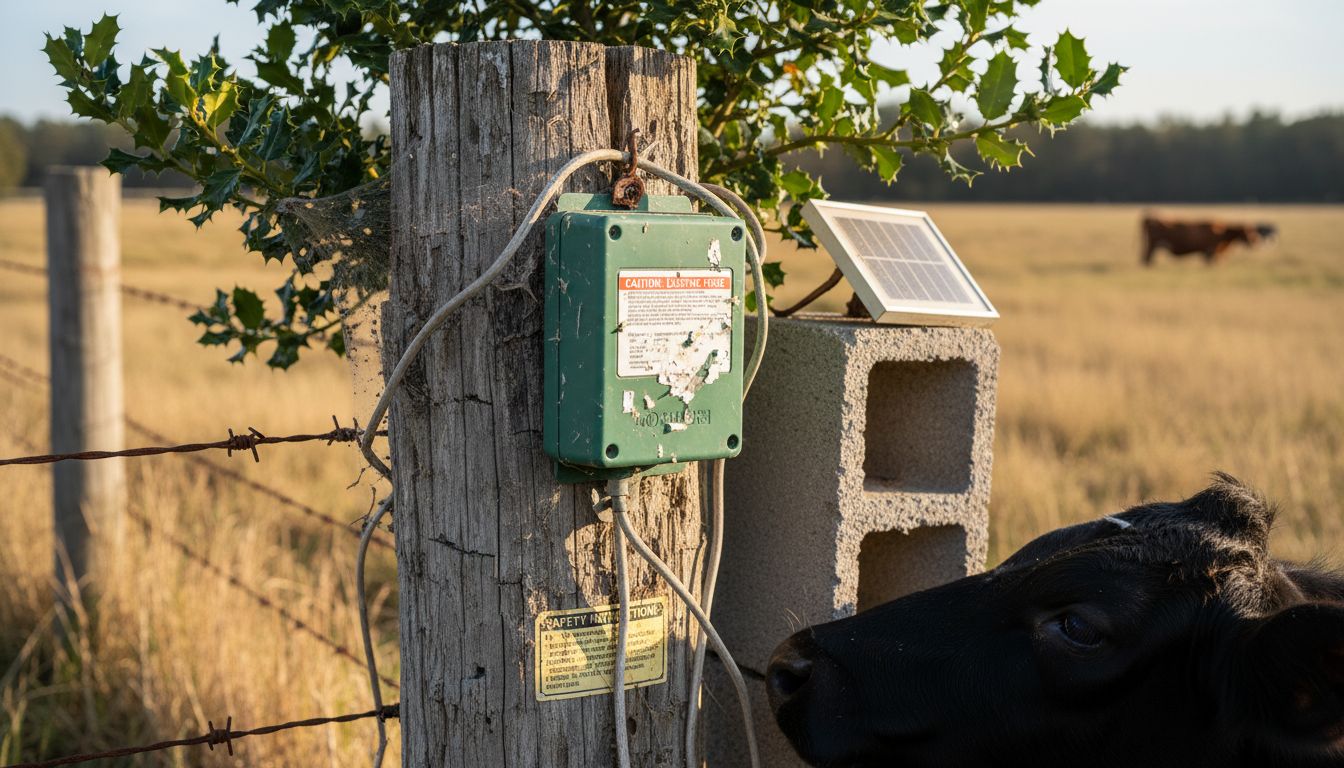
The pulse generation process involves several critical technical components. When an animal touches the electrified wire, they complete an electrical circuit that allows the stored electrical energy to discharge rapidly through their body. This creates an immediate, uncomfortable sensation that teaches the animal to avoid the fence in future interactions. Solar electric fence chargers for cattle leverage advanced pulse technologies to ensure consistent and reliable performance across varying environmental conditions.
The technical breakdown of a fence charger’s operational cycle includes multiple key stages:
-
Power Input
- Receives electrical energy from battery, solar, or AC source
- Converts incoming power to appropriate voltage
-
Pulse Generation
- Creates brief, high-voltage electrical impulses
- Typically lasting milliseconds
- Generates pulses at specific intervals
-
Circuit Completion
- Waits for an animal to contact fence wire
- Allows electrical current to flow when circuit is completed
- Delivers instantaneous shock
-
Reset and Recharge
- Quickly resets after pulse discharge
- Prepares for next potential circuit completion
Modern electric fence chargers are engineered with sophisticated safety mechanisms that prevent continuous electrical discharge, ensuring the shock remains brief and non-lethal while effectively communicating boundaries to livestock and wildlife.
Selecting the Right Fence Charger Model
Selecting the right fence charger is a critical decision that directly impacts the effectiveness of your livestock management and property protection strategy. Choosing an appropriate fence charger involves carefully evaluating multiple key factors that will determine the system’s overall performance and reliability.
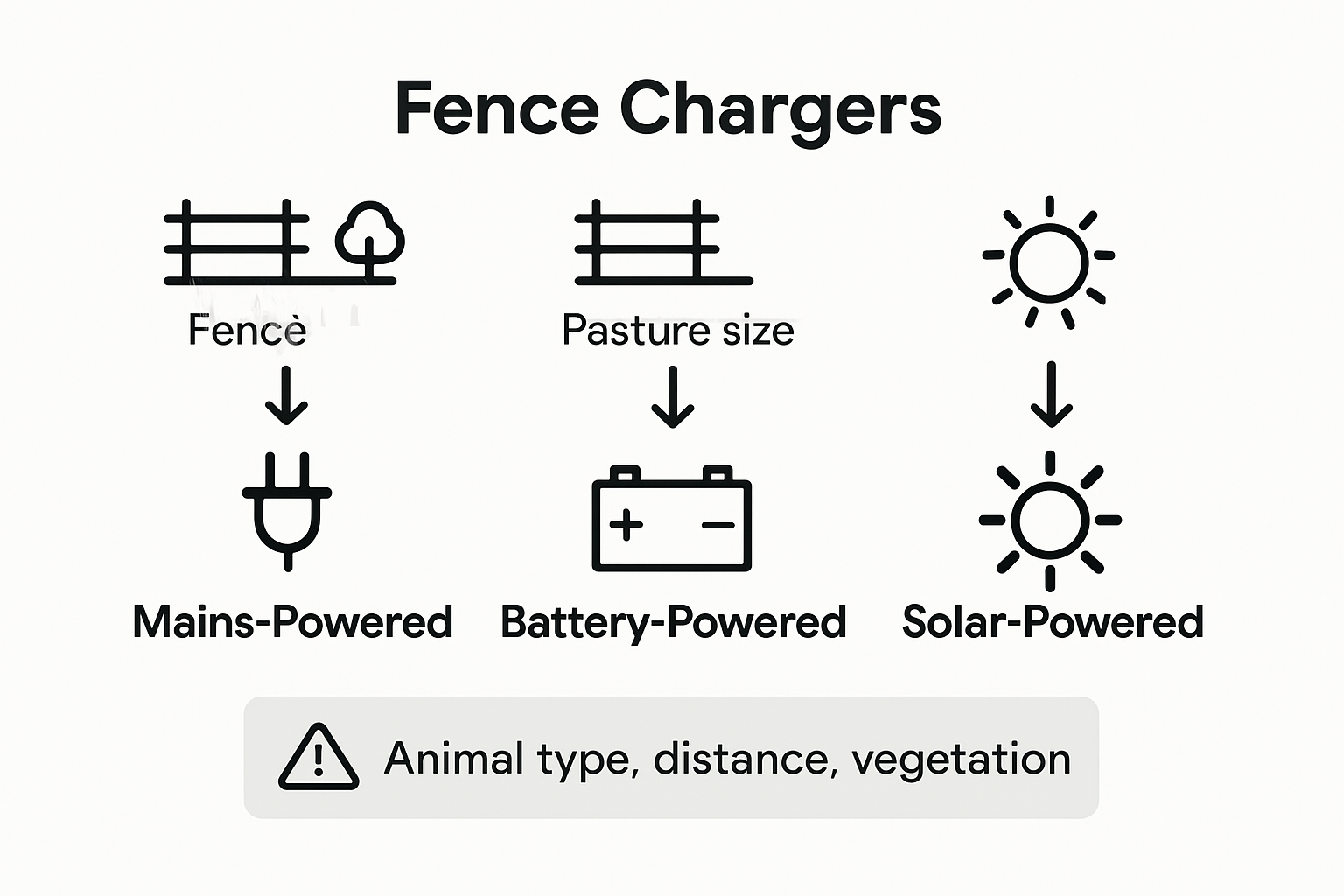
The primary considerations for fence charger selection include fence length, animal type, and environmental conditions. Farmers and ranchers must assess their specific requirements, such as the total wire distance, number of fence lines, and the specific livestock species being contained. For instance, cattle operations might require different charging specifications compared to horse or sheep enclosures due to variations in animal behavior and fence design.
Key selection criteria break down into several essential evaluation points:
-
Fence Length Calculations
- Measure total wire distance
- Account for multiple fence lines
- Consider potential future expansion
-
Power Source Compatibility
- Evaluate local electrical infrastructure
- Consider remote location requirements
- Assess backup power needs
-
Animal Containment Requirements
- Determine livestock species
- Understand animal behavioral patterns
- Assess potential escape risks
-
Environmental Factors
- Analyze climate conditions
- Consider terrain complexity
- Evaluate potential electrical interference
Electric fence chargers designed for specific agricultural environments offer nuanced solutions that address unique operational challenges. Modern chargers provide advanced features like adjustable pulse rates, multiple power input options, and integrated diagnostic systems that help farmers optimize their livestock management strategies with greater precision and efficiency.
Installation, Maintenance, and Common Risks
Electric fence installations require meticulous planning and precision to ensure optimal performance and safety. Understanding critical installation considerations helps prevent costly mistakes that could compromise the entire livestock management system.
Professional installation involves several critical steps that go beyond simple wire placement. Farmers must carefully assess ground conditions, electrical grounding, vegetation interference, and potential environmental challenges. Proper installation includes establishing robust ground rod systems, selecting appropriate wire tensioning techniques, and ensuring consistent electrical conductivity across the entire fence perimeter.
Key maintenance and risk mitigation strategies include:
-
Electrical System Checks
- Monthly voltage testing
- Inspect energizer connections
- Verify ground rod effectiveness
-
Physical Fence Inspection
- Check wire tension
- Remove vegetation contact points
- Repair damaged insulators
- Replace corroded components
-
Potential Risk Zones
- Identify electrical interference sources
- Monitor wildlife interaction points
- Assess seasonal environmental changes
- Plan for potential short circuit areas
-
Safety Precautions
- Install warning signs
- Use protective gear during maintenance
- Keep children and untrained personnel away
- Develop emergency shutdown procedures
Common risks in electric fence systems range from electrical system failures to environmental degradation. Proactive maintenance, regular system diagnostics, and understanding potential failure points are essential for maintaining a reliable and safe livestock containment strategy. Farmers must remain vigilant and implement systematic inspection protocols to prevent unexpected performance issues and potential animal escape scenarios.
Power Your Livestock Fence with Confidence and Precision
Selecting the right fence charger to secure your livestock is essential to prevent escapes and protect your investment. This article highlights key challenges like matching charger types, understanding low versus high impedance chargers, and ensuring compatibility with your power sources. You want a system that delivers reliable electric pulses without failure risks, designed specifically for your animals and fence layout. Don’t let uncertainty or outdated equipment create costly escapes or downtime.
Find the exact electric fencing system components you need to design a secure, efficient boundary at FenceFast.ca. Whether you require battery-powered, solar, or plug-in fence chargers, our extensive selection meets the demands of Canadian farmers and ranchers managing cattle, horses, sheep, and more.

Explore expert-curated electric fence solutions that include energizers, accessories, and livestock management tools all in one place. Take control today by visiting FenceFast.ca and start building a smarter fence system with confidence. Secure your farm now before costly fence failures happen.
Learn more about choosing the right charger with the detailed resources on Fence Charger Selection – Powering Secure Livestock Fences.
Frequently Asked Questions
What factors should I consider when selecting a fence charger for livestock?
When selecting a fence charger, consider factors such as fence length, the type of animals being contained, power source availability, and environmental conditions. Evaluating these aspects will help ensure effective livestock management.
How do low impedance and high impedance chargers differ in performance?
Low impedance chargers provide short, high-voltage pulses that work effectively over long distances and multiple wires, making them suitable for extensive pastures. High impedance chargers generate longer pulses and are generally used in smaller enclosures but are less efficient in modern agricultural setups.
What are the advantages of using solar-powered fence chargers?
Solar-powered fence chargers are environmentally sustainable and provide a reliable energy source in remote or off-grid locations. They help reduce long-term operational costs while ensuring consistent performance.
How can I maintain my electric fence charger for optimal performance?
Regular maintenance includes monthly voltage testing, inspecting energizer connections, checking wire tension, and removing any vegetation contact points. Also, ensure proper grounding and repair any damaged components promptly.

