

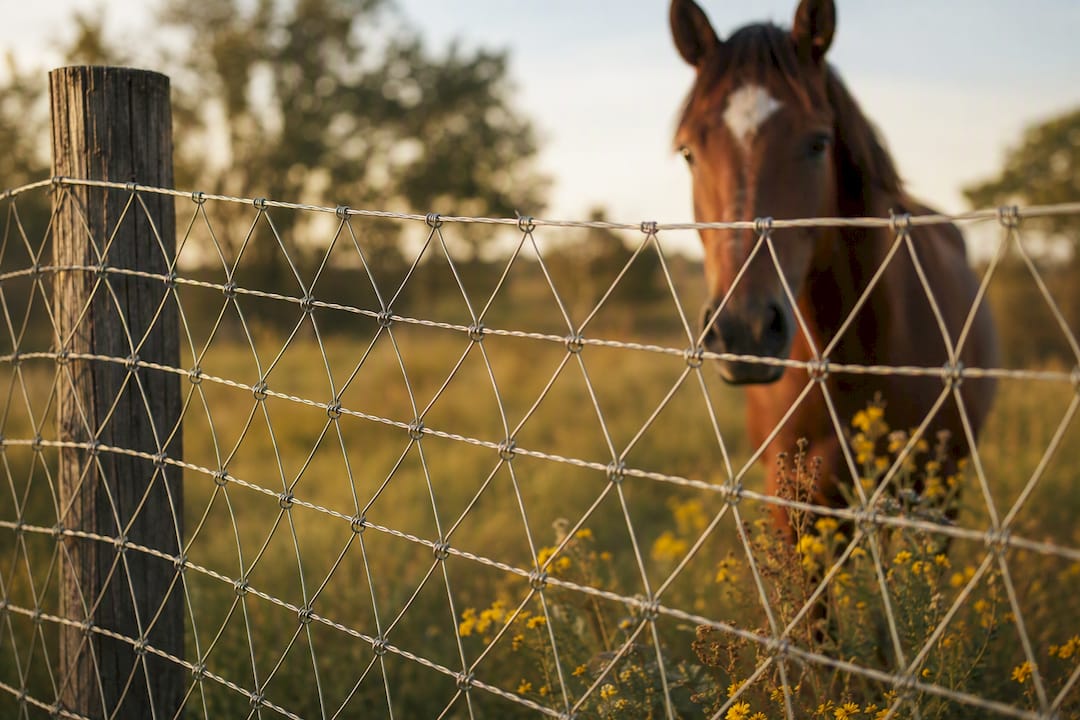
The safest wire-based fencing for horses is V-mesh (diamond-pattern) woven wire, or coated high-tensile wire, paired with a visible top rail. Both stop hooves and heads from getting trapped and give horses a clear visual cue to respect the boundary. An electrified top strand adds a psychological deterrent, but it should never be the only thing standing between your horse and the road.
Skip barbed wire entirely, and don’t rely on bare smooth wire as your sole containment. Before you buy anything, check three things on your existing fence:
- Height: perimeter fencing should run about five feet
- Bottom clearance: low enough that a horse can’t get a leg under it, but not so tight it invites a hoof to catch
- Corners: look for exposed brace wires forming a triangle. That’s a classic entrapment trap.
Key Takeaways
The safest horse fencing pairs small-opening wire mesh or coated high-tensile wire with a visible top rail, and treats electrification as a deterrent rather than the primary barrier.
| Point | Details |
|---|---|
| V-mesh is the safest wire type | Small diamond openings prevent hoof and head entrapment, best for perimeters and foaling paddocks. |
| Visibility prevents collisions | Add a top rail, white tape, or ribbon so horses recognize the fence as a solid barrier. |
| Never use barbed wire | Extension guidance identifies barbed wire as a leading cause of severe entanglement injuries in horses. |
| Maintain tension and corners | Re-tension annually and block exposed brace wires at corners to prevent entrapment. |
| Fencefast supplies the fix | Coated wire, V-mesh, polymer rail, and electric components are available with design consulting support. |
Table of Contents
- What Are the Safest Types of Wire Fencing for Horses?
- How Do You Make Wire Fencing Safer for Horses?
- How Do You Install and Maintain Wire Fencing Correctly?
- When Should You Skip Wire Fencing Altogether?
- How Fencefast Supports Safer Horse Fencing Projects
- Get the Right Wire Fencing Components for Your Property
- Frequently Asked Questions
- Sources
What Are the Safest Types of Wire Fencing for Horses?
Not all wire is created equal, and the differences matter a lot once you’re talking about a 1,000-pound animal that spooks first and thinks later. Here’s how the main wire options stack up.
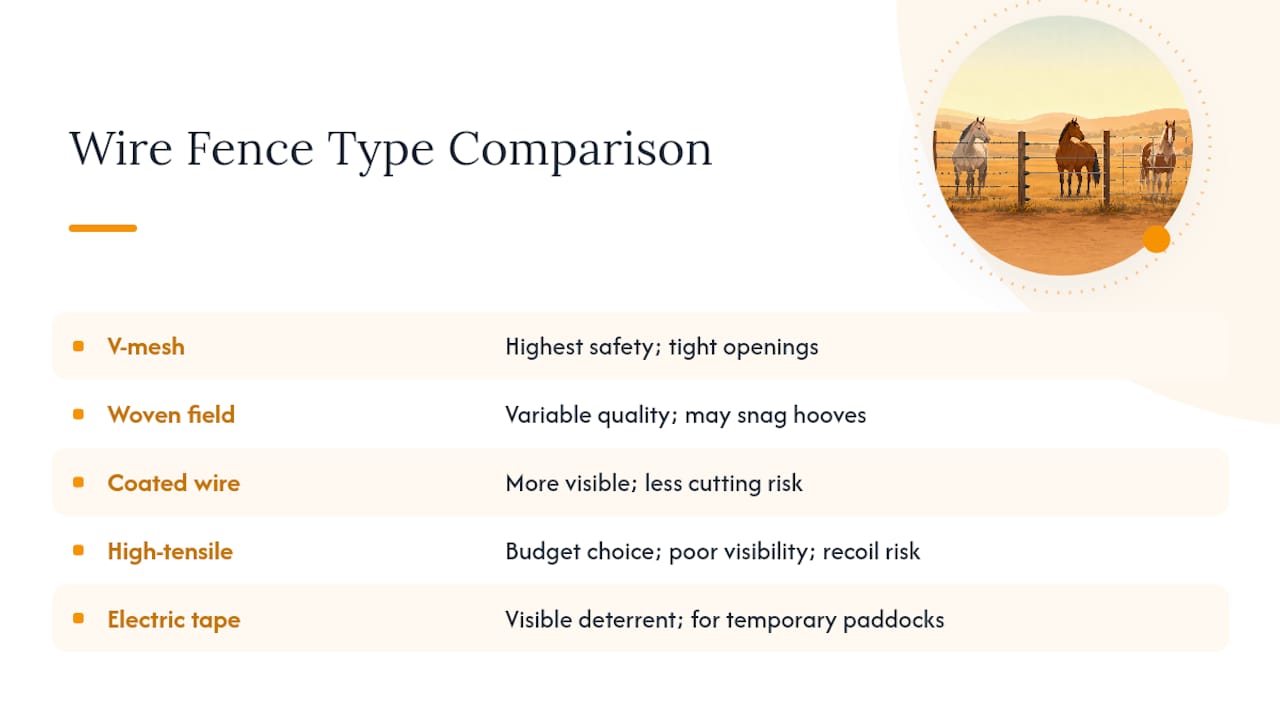
V-mesh, or no-climb woven wire, is the gold standard for a reason. The small diamond-shaped openings are too tight for a hoof or head to slip through, and there’s no exposed wire end to snag skin. V-mesh offers high safety but tends to cost more upfront than other wire options, which is why many owners reserve it for perimeter runs and foaling paddocks where the stakes are highest.
Woven field fence looks similar but isn’t the same product. Knot quality and opening size vary widely between brands, and a loosely woven fence with large square openings can still catch a shod hoof. Check the spec sheet, not just the price tag.
Coated or vinyl-covered wire wraps a plastic or vinyl layer around the strand. This does two things at once: it makes the wire far more visible against grass and shadow, and it reduces the cutting risk if a horse does make contact. Coated wire and polymer horserail products cost more than bare wire but offer noticeably better safety and visibility.
High-tensile smooth wire is the budget option for long perimeter runs, and it holds up structurally. The tradeoff is visibility. A horse moving at speed may not register a thin strand until it’s too late, and if a high-tensile line snaps under tension, the recoil can whip back with real force.
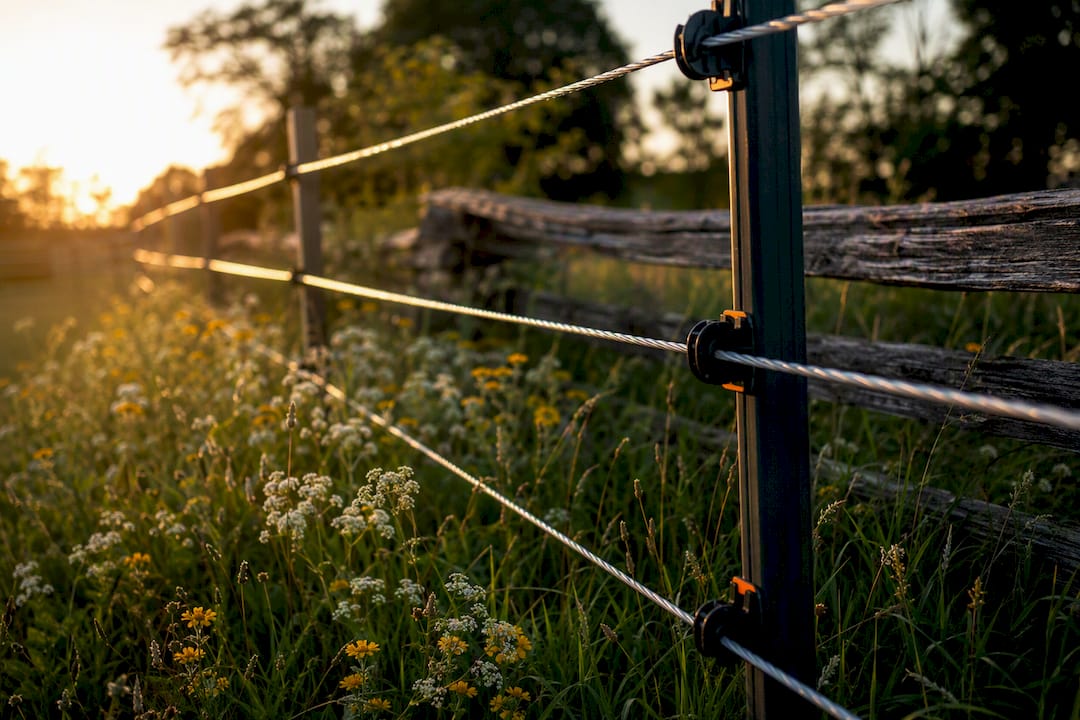
Electric tape or rope earns its keep as a visible, low-cost deterrent, especially for rotational grazing or temporary paddocks. It’s not built to be a permanent perimeter on its own.
How Do You Make Wire Fencing Safer for Horses?
Visibility is the single biggest safety lever you have, and it’s often the cheapest fix. Extension guidance consistently points to a visible top element, whether that’s a wood or PVC rail, wide white tape, or ribbon, as what turns a wire fence into something a horse actually respects instead of running through blind.
Here’s how to build that safety layer in the right order:
- Add a top rail or wide visible strip. This gives horses a clear line to see and stops them from reaching over the top wire.
- Set your height correctly. Perimeter fencing should sit at 54 to 60 inches, with bottom clearance tight enough to block a hoof but not so low it invites pawing injuries.
- Layer in an electrified strand if you want extra deterrence. Mount it offset from the mesh or rail, properly insulated, so it discourages leaning and chewing without becoming the only barrier.
- Choose materials that flex. Wood rails, polymer rail, and coated wire absorb some impact energy on contact. Rigid, brittle materials are more likely to splinter or snap under a horse’s full weight.
Pro Tip: If you can only afford one upgrade this season, add the visible top rail before you touch anything else. It’s the single change most likely to prevent a collision, and it works with whatever wire system you already have.
How Do You Install and Maintain Wire Fencing Correctly?
Good materials still fail without correct installation. Post spacing depends on what you’re running: coated wire and polymer horserail typically need posts closer together, while high-tensile runs can have wider spacing between posts because the coated systems rely on tighter spacing to stop visible sag.
Tension matters just as much as spacing. A fence pulled too tight becomes rigid and unforgiving on impact. Too loose, and wire sags into a shape a horse can step through or get a leg tangled in. Correct tensioning and annual re-checks, especially after seasonal temperature swings, are standard professional guidance.
Corners deserve their own attention:
- Inspect every corner for exposed triangular brace wires.
- Block or cover those brace wires with a short board section or welded panel since installers flag corners as one of the most common entrapment sites on a property.
- Re-tension the whole system at least once a year, and always after a major storm.
Build a simple inspection habit:
- Walk the fence line every spring and fall
- Check insulators and posts after high wind or freeze-thaw cycles
- Look for wire that’s gone slack, rusted, or frayed at joints
When Should You Skip Wire Fencing Altogether?
Barbed wire is not recommended for horses under any circumstance. The barbs that hold cattle in place tear equine skin and can cause severe injury when a panicked horse pulls against it instead of backing away calmly.
- Skip small-opening wire mesh in high-traffic runs where horses are more likely to paw or lean
- Choose solid board, PVC, or polymer horserail for foaling paddocks and stallion runs where injury risk is highest
- If a full rail upgrade isn’t in the budget yet, fix visibility first. It’s the cheapest change with the biggest safety return.
How Fencefast Supports Safer Horse Fencing Projects
Fencefast carries the materials this guide points to directly: coated wire, V-mesh, polymer rail, energizers, and high-visibility tape, along with the connectors and insulators that hold a system together correctly.
- Coated and vinyl wire options built for visibility and reduced cutting risk
- V-mesh and woven mesh panels sized for perimeter and paddock use
- Electric fence components for adding a deterrent strand to existing wire
- Design consulting for owners planning a new perimeter or upgrading in stages
For deeper how-to detail, Fencefast’s guides on safe wire fencing for horses and electric fence installation walk through product-level decisions this article only covers at a high level.
A Note on Budget, Maintenance, and Safety
If money’s tight, fix visibility before you replace a single strand of wire. Stage the rest. For full perimeter work, get a second opinion from someone who installs these systems for a living, and reach out to Fencefast’s pasture fencing guides when you’re ready to plan the layout.
Get the Right Wire Fencing Components for Your Property
Fencefast sells the exact materials this article recommends, not a generic hardware-store substitute. That means coated wire, V-mesh panels, polymer horserail, and energizer kits sized correctly the first time, instead of piecing together mismatched parts from three different suppliers.

If you’re staging an upgrade, start with the visibility fixes and electric components, then move to full mesh or rail replacement as budget allows. Fencefast’s design consulting can help you figure out post spacing, bracing, and material choice for your specific pasture layout before you order anything. Visit Fencefast to browse coated wire, mesh, and electric fencing components, or request a design consultation to plan your project in phases.
Frequently Asked Questions
Is any wire fencing actually safe for horses? Yes. V-mesh woven wire and coated high-tensile wire, combined with a visible top rail, are widely recommended as safe options. The key is avoiding barbed wire and pairing any wire system with a visual cue horses can see clearly.
Why is barbed wire so dangerous for horses? Horses panic and pull against obstacles rather than backing away slowly like cattle do. The barbs designed to discourage leaning tear skin and can cause deep lacerations during a struggle.
What height should horse fencing be? Perimeter fencing should generally run 54 to 60 inches high, with bottom clearance tight enough to prevent a leg from slipping under the lowest strand.
Can I use electric wire as my only horse fence? It works best as an added deterrent on top of a physical barrier like mesh or rail, not as the sole perimeter. A horse startled by a predator or storm can push through a single electric strand.
How often should I inspect my horse fence? Walk the full fence line at least twice a year, in spring and fall, and again after any major storm or hard freeze that could loosen posts or slacken wire tension.
Sources
- Fences for Horses | CAES Field Report
- Horse fencing considerations - University of Minnesota Extension
- Field guide to horse fences - Horse & Rider

