

TL;DR:
- A livestock handling equipment list includes tools for moving, restraining, treating, and weighing animals safely. Designing a connected flow system tailored to herd size and species improves animal welfare and handler safety while preventing bottlenecks. Renting equipment for testing handling needs can save costs and inform better permanent system choices.
A livestock handling equipment list is the complete set of physical tools and systems a farm needs to move, restrain, treat, and weigh animals safely and efficiently. The core categories include squeeze chutes, crowding tubs, adjustable alleys, treatment pens, and weighing systems. Brands like Priefert and Powder River have built their reputations on these categories, and government programs like the UK’s Farming Equipment and Technology Fund 2026 formally categorize eligible gear under item codes like FETF60 and FETF72. Whether you run 20 cows or 500, the right farm animal handling equipment determines how safe your operation is for both animals and handlers.
1. The essential livestock handling equipment list by category
Every farm’s handling setup starts with the same core equipment categories, even if the scale and spec differ. Understanding what each piece does helps you build a list that matches your workflow rather than just copying someone else’s setup.
Squeeze chutes are the anchor of any cattle handling system. They come in three main configurations: manual lever-operated, hydraulic, and portable. Hydraulic chutes from manufacturers like Priefert and Powder River apply even pressure across the animal’s body, reducing bruising and panic. Portable chutes work well for smaller operations or producers who move between pastures. All modern squeeze chutes should include a headgate with quick-release capability and a side-exit option for safer animal release.
Crowding tubs and adjustable alleys are the pieces most farmers underestimate. Most handling difficulties occur in the lead-up area, not at the chute itself. A solid-sided crowding tub with a curved alley reduces balking because cattle cannot see distractions ahead and follow their natural tendency to move in a curve. Adjustable-width alleys let you run different sizes of cattle through the same system without gaps that cause animals to turn around.
Treatment pens and stanchions serve a different purpose than squeeze chutes. These are for routine health procedures, maternity monitoring, and post-treatment recovery. Penn State Extension recommends one maternity pen per 25 cows and one treatment pen per 50 cows. Built-in stanchions in these pens allow low-stress restraint for procedures that do not require full-body compression.
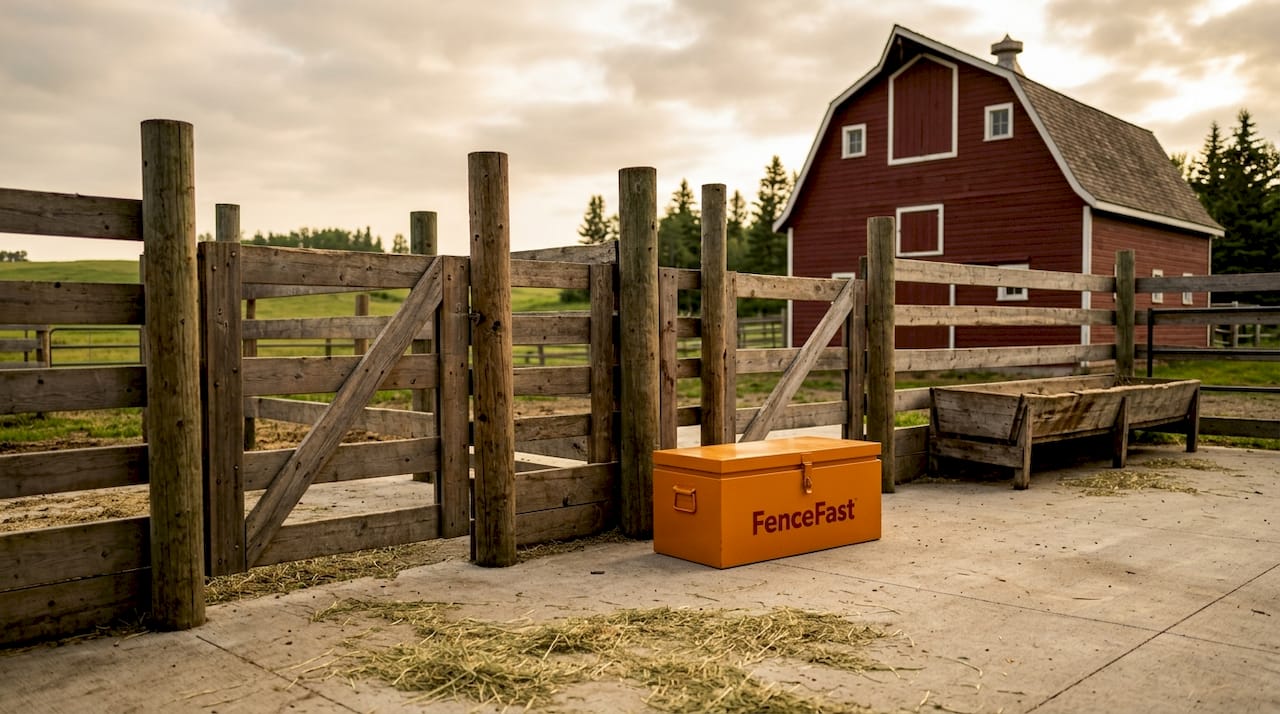
Weighing and drafting systems complete the management side of your equipment list. A load cell scale platform integrated with a drafting gate lets you sort animals by weight class without additional handling. Fencefast covers how a weigh system integration translates directly into better feed and marketing decisions.
Species-specific gear rounds out the list. Sheep require dedicated handlers, conveyors, and mobile dip systems. The FETF 2026 program lists mobile sheep handling systems as a distinct eligible category, which reflects how different sheep flow management is from cattle. Pigs need low-profile boards and sorting panels rather than chutes, since forcing pigs into cattle-style alleys causes extreme stress and injury.
Pro Tip: Before purchasing any single piece of equipment, sketch your handling flow from the holding pen to the exit. Equipment that does not connect logically to the next step will create bottlenecks regardless of its individual quality.
2. How a handling system improves animal welfare and handler safety
The biggest mistake in assembling livestock handling gear is treating each piece as independent. Experts who treat handling equipment as a connected flow system achieve safer, lower-stress movement by designing transitions from crowding tub to alley to chute to exit holding pens. Each transition point is where stress accumulates or dissipates.
Stressed cattle take 20 to 30 minutes for heart rate recovery after a poorly managed handling event. That stress response affects weight gain, immune function, and reproductive performance. A well-designed flow system with solid crowding panels, non-slip rumber flooring, and a properly lit alley can cut that recovery time significantly.
“Addressing chute problems alone is insufficient. Solid crowding and alley equipment is critical to smooth livestock movement.” — IFA Helping to Grow Blog
Handler safety follows directly from animal calm. When cattle balk, they kick, spin, and charge. Side exits on squeeze chutes give handlers an escape route. Palpation cages on the rear of the chute protect the handler during reproductive exams. Non-slip flooring throughout the alley system reduces falls for both animals and people. These are not optional upgrades. They are baseline safety features for any working cattle operation.
For sheep and pig operations, the welfare principles are the same but the equipment differs. Sheep conveyors reduce the physical labor of tipping sheep for hoof trimming and shearing. Low-stress pig sorting boards guide animals with pressure rather than noise or force. Investing in cattle handling system design principles applies across species: calm animals move predictably, and predictable movement keeps handlers safe.
3. Choosing equipment by farm size and animal species
No single restraint or treatment facility works for every operation. Penn State Extension guides operators to select components based on personal workflow needs and herd size rather than defaulting to a standard package. A tiered approach prevents over-purchasing and keeps your setup manageable.
Here is a practical tiered framework for cattle operations:
- Starter tier (under 50 head): Portable squeeze chute with headgate, one crowding tub, a single adjustable alley section, and a portable platform scale. This setup handles vaccinations, pregnancy checks, and weaning without permanent infrastructure.
- Mid-size tier (50 to 200 head): Permanent hydraulic squeeze chute, curved solid-sided alley, crowding tub with a 12-foot diameter, one treatment pen with stanchion, and an integrated weigh scale with basic drafting.
- Large operation tier (200 head and above): Full flow system with automatic hydraulic chute, double-width crowding tub, multiple alley sections, dedicated maternity pens, electronic ID readers at the scale, and automatic drafting gates for three-way sorting.
| Species | Key equipment differences | Priority item |
|---|---|---|
| Cattle | Squeeze chutes, hydraulic headgates, crowding tubs | Hydraulic squeeze chute |
| Sheep | Conveyors, mobile dip systems, sheep handlers | Mobile handling unit |
| Pigs | Sorting boards, low-profile panels, loading ramps | Sorting boards |
| Horses | Stocks, padded headgates, wash racks | Stocks with side access |
Government grant programs offer a useful cross-check for your list. The FETF 2026 item categories cover hydraulic squeeze crushes, automatic weighing crates, and mobile sheep systems. Using these categories as a scaffold helps you identify workflow-critical items you might otherwise overlook.
4. Should you buy or rent livestock handling equipment?
Renting livestock handling gear is a legitimate strategy, not just a budget compromise. NC Cooperative Extension recommends renting portable chute systems and scales to evaluate actual handling demands before committing to permanent installations. Randolph County Center rents portable cattle platform scales and chutes with palpation cages at $25 per week in-county and $50 per week out-of-county. That pricing makes a two-week rental far cheaper than discovering a purchased chute does not fit your alley width.
When renting makes sense:
- Seasonal processing events like weaning or pregnancy checking that happen once or twice a year
- Testing a specific chute model before purchasing the same unit permanently
- Filling a gap while permanent infrastructure is being built
- Smaller operations where the cost of ownership exceeds the frequency of use
When buying is the right call:
- Weekly or bi-weekly handling events that make rental logistics impractical
- Operations where transport time and setup costs exceed rental savings
- Permanent facility builds where equipment anchors the flow system design
- Herds above 100 head where a portable rental unit creates throughput bottlenecks
Pro Tip: Rent the exact model you are considering buying. Run your full herd through it twice before deciding. Problems with gate latches, floor grip, and headgate speed only show up under real working conditions.
Maintenance is a factor in the buy decision that most farmers underestimate. Hydraulic systems require fluid checks, seal replacements, and cylinder maintenance. Farm equipment maintenance practices directly affect the lifespan of your chute investment. A neglected hydraulic chute that fails mid-processing costs far more in lost time than the maintenance would have.
5. Portable vs. permanent equipment: what the tradeoffs actually are
Portable livestock handling equipment offers flexibility that permanent setups cannot match, but that flexibility comes with real tradeoffs. Portable chutes and panels can be moved between pastures or loaned to neighboring operations, which matters on large acreage where cattle are processed in remote paddocks. The tradeoff is setup time, stability, and throughput speed.
Permanent installations anchor your flow system to one location, which means cattle learn the path and move through it with less resistance over time. Animals that have been through a facility repeatedly show measurably lower stress responses because the environment is familiar. That familiarity effect does not exist with portable equipment that changes location every season.
The practical answer for most mid-size operations is a hybrid approach. A permanent hydraulic chute and crowding tub at the home yard handles the majority of processing. A portable alley system and temporary panels extend that capacity to remote paddocks for seasonal work. This combination covers the full range of handling needs without duplicating major capital investments.
Portable fencing solutions for sheep follow the same logic. Fixed perimeter fencing defines the operation, while portable panels and handling units move with the flock for shearing, dipping, and health checks.
Key takeaways
A complete livestock handling equipment list treats every piece as part of a connected flow system, not a standalone purchase. Matching equipment to herd size, species, and handling frequency prevents over-investment and under-performance.
| Point | Details |
|---|---|
| Flow system design | Buy equipment as a connected system from crowding tub through alley to chute to exit. |
| Species-specific gear | Cattle, sheep, pigs, and horses each require distinct equipment categories and configurations. |
| Tiered by herd size | Match equipment complexity to herd size: starter, mid-size, and large operation tiers differ significantly. |
| Rent before you buy | Renting portable chutes and scales at $25 to $50 per week lets you test workflow before committing. |
| Treatment pen ratios | Plan one maternity pen per 25 cows and one treatment pen per 50 cows as a baseline. |
What I’ve learned about building a handling equipment list that actually works
Most farmers build their handling setups the same way: they buy a chute first, then realize the alley does not work, then add a crowding tub, then wonder why cattle still balk. The equipment list grows backward from a problem rather than forward from a plan.
The farms I have seen run the smoothest handling days share one trait. They designed the exit before they designed the entrance. When you know exactly where cattle need to end up after processing, every piece of equipment upstream of that point has a clear job. The crowding tub exists to feed the alley. The alley exists to feed the chute. The chute exists to feed the exit pen. That sequence is not complicated, but most equipment lists ignore it entirely.
Species matters more than most generic guides admit. A cattle handling setup repurposed for sheep is a welfare problem waiting to happen. Sheep do not respond to the same pressure cues as cattle, and forcing them through cattle-scale alleys causes pile-ups and injuries. If you run mixed species, budget for separate handling systems rather than trying to adapt one setup for everything.
The rental advice is genuinely underused. Spending two weeks running your actual herd through a rented hydraulic chute tells you more than any spec sheet. You will learn whether the headgate speed matches your working pace, whether the floor grip holds on wet days, and whether the side exit placement works for your team. That knowledge is worth more than the rental cost.
One more thing: livestock fence safety and handling equipment are not separate topics. The fencing that connects your holding pens to your handling facility is part of the flow system. A gap in that connection creates the same problem as a poorly designed alley.
— Juiced
Build your handling setup with Fencefast
Fencefast supplies Canadian farmers with the fencing tools and livestock management equipment that connect directly to a functional handling setup. From durable fencing components that define your holding pens and lead-up areas to the hardware that keeps your facility secure and working, Fencefast carries what your operation needs. The Hayes fencing and crimping tool is a practical example of the kind of industry-grade tool that makes building and maintaining a livestock handling facility faster and more reliable. Browse the full Fencefast catalog at fencefast.ca to find equipment suited to cattle, sheep, and mixed-species operations across Canada.
FAQ
What is included in a basic livestock handling equipment list?
A basic list includes a squeeze chute, crowding tub, adjustable alley, treatment pen with stanchion, and a portable weighing scale. These five categories cover the core handling, restraint, and health management needs for most cattle operations.
How do I choose between a manual and hydraulic squeeze chute?
Hydraulic chutes apply even pressure and reduce handler fatigue, making them the better choice for operations processing more than 50 head regularly. Manual chutes work for smaller herds or producers who need portability over speed.
What equipment do sheep farms need that cattle farms do not?
Sheep operations require dedicated conveyors, mobile dip systems, and sheep-specific handlers because sheep do not respond to cattle-scale pressure cues. The FETF 2026 program lists mobile sheep handling systems as a separate eligible category, reflecting these distinct needs.
Is renting livestock handling equipment worth it?
Renting is worth it for seasonal processing or before making a permanent purchase. Randolph County Center rents cattle chutes with palpation cages for $25 per week in-county, making a two-week trial far cheaper than buying the wrong unit.
How many treatment pens does a dairy operation need?
Penn State Extension recommends one maternity pen per 25 cows and one treatment pen per 50 cows as a baseline. The exact number depends on your herd size, calving season intensity, and how frequently you perform routine health procedures.
Recommended
- Animal species fencing requirements: The Canadian farmer’s guide – FenceFast Ltd.
- Fence installation steps for Canadian farms: A practical guide – FenceFast Ltd.
- Livestock fence regulations in Canada: Practical guide – FenceFast Ltd.
- Animal fencing basics: Essential solutions for Canadian farms – FenceFast Ltd.

