

TL;DR:
- Electric fencing conditions animals to respect boundaries using brief, controlled high-voltage pulses, offering a safe and cost-effective containment method. It outperforms traditional fences in flexibility, safety, predator control, and ease of reconfiguration, especially for rotational grazing systems. Proper installation, grounding, maintenance, and visible conductors are essential to ensure reliable performance and long-term animal and property protection.
Electric fencing is a containment system that delivers brief, controlled high-voltage pulses to safely deter animals and define property boundaries without physical injury. Livestock owners across North America choose to install electric fencing because it combines low installation cost, flexible configuration, and proven behavioral conditioning into one system that traditional woven wire or barbed wire simply cannot match. Understanding why install electric fencing starts with recognizing that the fence does not physically stop an animal. It teaches the animal to stop itself.
What are the main benefits of installing electric fencing?
Electric fencing outperforms traditional fencing on four measurable dimensions: cost, flexibility, safety, and predator control. Each advantage compounds the others, which is why the system has become the default choice for serious livestock operations.
Cost-effectiveness is the most immediate benefit. Woven wire and high-tensile barbed wire require heavy corner posts, bracing systems, and significant labor to install. Electric fencing uses lighter posts, fewer materials, and faster installation. The ongoing maintenance cost is also lower because you are managing voltage rather than replacing broken wire or re-tensioning sagging strands.
Flexibility is where electric fencing separates itself entirely from fixed alternatives. Temporary electric fencing is affordable, quick to install, and easy to move, making it the standard tool for rotational grazing and adaptive pasture management. You can subdivide a 100-acre pasture into eight paddocks in a single afternoon and reconfigure the layout next season without digging a single post hole.
Here is a direct comparison of electric fencing against the two most common traditional alternatives:
| Factor | Electric fencing | Woven wire / barbed wire |
|---|---|---|
| Installation speed | Fast, minimal equipment | Slow, requires heavy bracing |
| Upfront material cost | Low to moderate | Moderate to high |
| Portability | High (temporary systems) | None |
| Animal injury risk | Very low (non-lethal pulse) | Moderate to high (lacerations) |
| Predator deterrence | High with proper setup | Low to moderate |
| Maintenance complexity | Voltage monitoring | Physical repair of breaks |
Safety is a genuine advantage, not a marketing claim. Pulsed shocks last milliseconds and are designed to condition behavior without causing medical harm to animals or people. Barbed wire, by contrast, causes lacerations in horses and cattle every season. The non-lethal deterrent model reduces veterinary costs and stress-related production losses.
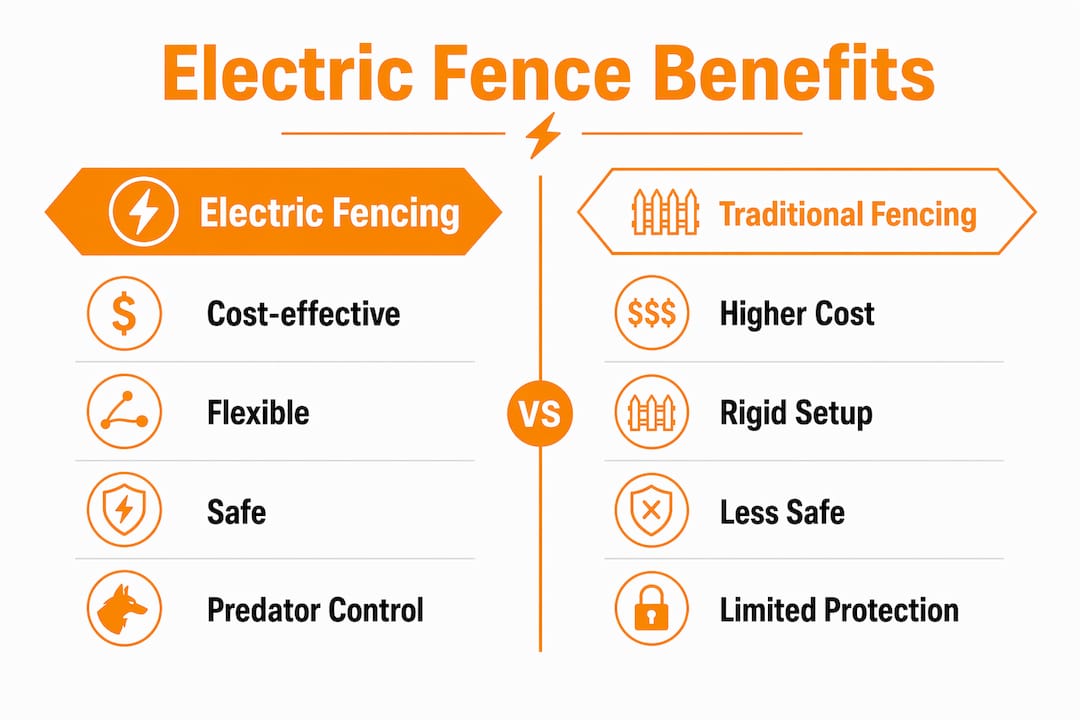
Predator control rounds out the core benefits. Electric fencing protects poultry, sheep, and small livestock from coyotes, foxes, and bears in ways that a standard post-and-wire fence cannot. The shock interrupts predator approach behavior before a kill occurs, which is the only point in the cycle where prevention is possible.
How does electric fencing work to control livestock and deter predators?
Electric fencing works through two mechanisms operating simultaneously: a physical pulse and a learned behavioral response. Understanding both is what separates operators who get reliable performance from those who constantly chase fence failures.
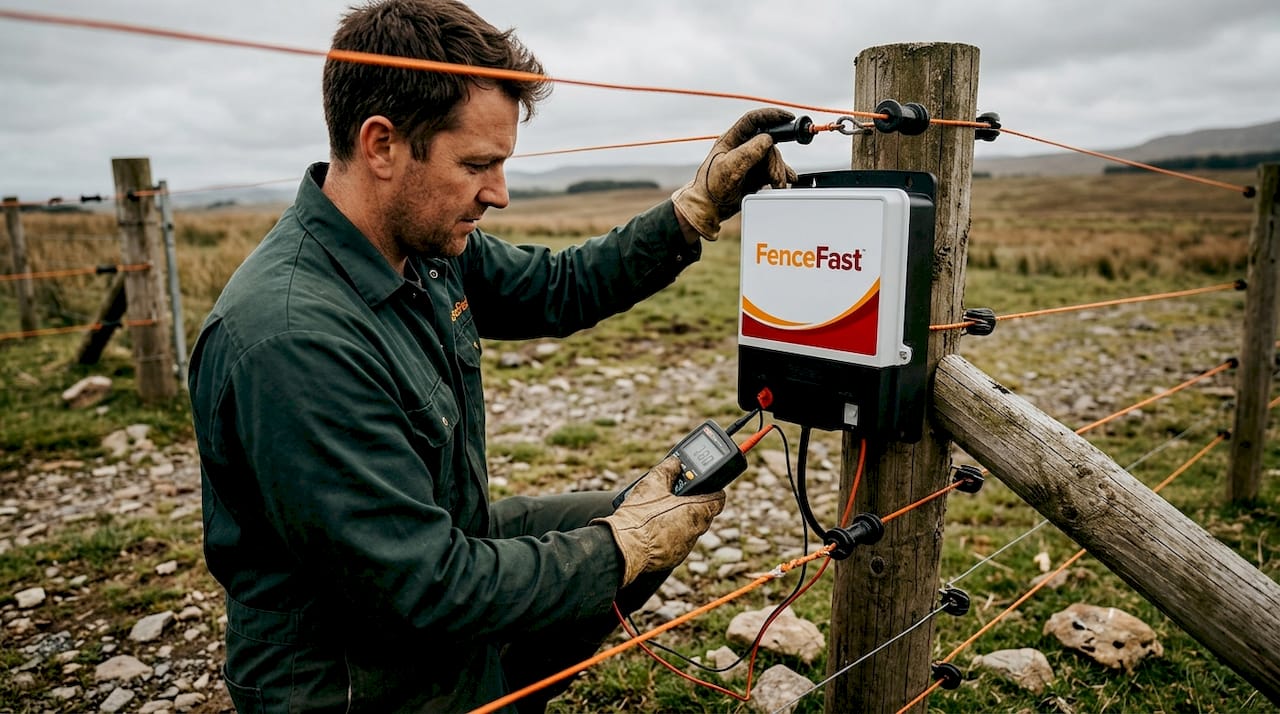
The physical mechanism is straightforward. UL 69-verified energizers produce pulses approximately 0.0003 seconds in duration at 0.001 to 0.003 amperes of current. That combination delivers a sharp, memorable shock without sustained current flow, which is what makes the system safe. The pulse is uncomfortable, not dangerous.
The behavioral mechanism is where the real work happens. Animals learn to avoid the fence after initial contact, and that learned avoidance becomes the primary containment force over time. This means the fence is doing less electrical work and more psychological work as the season progresses. A well-trained herd respects a single strand of polywire the same way it respects a five-strand high-tensile fence, because the memory of the shock is the deterrent.
Grounding is the component most operators underestimate. Without a complete circuit through the ground, the energizer produces no effective shock. Soil type and moisture directly affect conductivity, meaning sandy or rocky soils require more grounding rods or deeper placement to maintain performance. A fence that reads 5,000 volts at the energizer but only 2,000 volts at the far end has a grounding problem, not an energizer problem.
Fence visibility reinforces the behavioral component. Bright-colored tape and polywire increase livestock awareness of the boundary, reducing accidental contact that can break fence lines and disrupt the conditioning process. White or yellow tape is standard for horses and cattle in low-visibility conditions.
Pro Tip: Train new animals to the fence in a small, controlled area before releasing them into larger paddocks. One or two controlled contacts in a safe environment builds lasting fence respect and reduces breakouts during the first week.
For predator deterrence, the mechanics differ slightly. Predators approach fences low and fast, so wire placement at nose height for the target predator species is critical. Electrified netting combined with physical barrier layers like buried mesh provides the most reliable exclusion for poultry and small livestock.
What are the key installation and maintenance factors for electric fences?
Getting the installation right determines whether your fence performs for a decade or fails within a season. The following steps cover the factors that experienced installers treat as non-negotiable.
- Install at least three grounding rods spaced approximately 10 feet apart. Teagasc recommends this as the baseline for reliable shock delivery, with adjustments for poor soil conductivity.
- Select an energizer matched to your fence load. A Gallagher or Parmak energizer sized for 10 miles of fence on a 2-mile run will underperform and leave voltage gaps. Match joule output to actual fence length and anticipated vegetation load.
- Manage vegetation under the fence line. Grass and weeds contacting the wire bleed voltage to ground and are the most common cause of fence failure alongside poor grounding. Mow or spray a clear strip under the wire before energizing.
- Test voltage weekly at multiple points along the fence, not just at the energizer. A voltage drop of more than 20% between the energizer and the far end indicates a short or grounding issue that needs immediate attention.
- Post warning signs at regular intervals. This is a legal requirement in most Canadian provinces and American states, and it protects you from liability if a person contacts the fence.
- Use high-visibility materials on any fence line where horses or new livestock will be introduced. White polytape or bright polywire reduces the chance of animals running through the fence before they recognize it.
Pro Tip: Use a dedicated fence tester rather than a voltage meter. Fence testers show both voltage and fault direction, cutting troubleshooting time from hours to minutes. Fencefast carries several models suited to both temporary and permanent installations.
For a detailed walkthrough of the installation process, the electric fence setup guide from Fencefast covers post spacing, wire height, and energizer placement for cattle, horses, and mixed operations.
How does electric fencing support rotational grazing?
Rotational grazing is the practice of moving livestock through a series of paddocks on a scheduled cycle, allowing each paddock to rest and regenerate before the next grazing period. Electric fencing makes this practice economically viable for operations of any size.
The core advantage is speed of reconfiguration. Temporary polywire or polytape on step-in posts can divide a large pasture into paddocks in under an hour. That speed means you can adjust paddock size based on forage availability, herd size, or weather conditions without committing to permanent infrastructure. Fixed fencing locks you into a layout that may not match next year’s conditions.
Pasture health improves measurably under rotational systems. Resting paddocks recover faster, root systems deepen, and forage quality increases across the season. The Alabama Cooperative Extension identifies temporary electric fencing as the key enabling technology for flexible pasture management, specifically because of its low cost and ease of movement.
Animal behavior in a rotational system also becomes more predictable over time. Cattle and sheep that have been trained to respect electric fencing move calmly between paddocks and respond to single-strand temporary divisions without pressure. This reduces handling stress and the labor required for routine moves. For more on setting up a rotational system, Fencefast’s guide on rotational grazing fencing covers paddock layout and wire configuration in practical detail.
How do electric fences protect livestock from predators?
Predator pressure is one of the most financially damaging and emotionally difficult challenges in livestock management. Electric fencing addresses it directly by interrupting predator approach behavior before a kill occurs.
Vermont Fish and Wildlife recommends electric netting and preventive fencing specifically for poultry, with a strong emphasis on early installation before predators establish a pattern of access. Once a fox or coyote learns that a specific location provides easy prey, breaking that habit requires significantly more effort than preventing it in the first place.
The most effective predator exclusion systems layer electric fencing with physical barriers. Electrified netting at perimeter height, combined with buried mesh to prevent digging and overhead netting for aerial predators, creates a multi-layer defense that addresses all common attack vectors. No single fence type stops every predator, but the combination stops most.
Key practices for predator-resistant electric fencing include:
- Install before losses occur. Early installation prevents predators from habituating to the area as a food source.
- Set wire height for the target predator. Coyotes require lower wires than bears. Match the configuration to the actual threat on your property.
- Bait the fence during the training period. Applying peanut butter or aluminum foil to the wire attracts curious predators to make nose contact, delivering a shock that conditions avoidance.
- Secure feed and attractants. Electric fencing works best when combined with good farm hygiene. Unsecured feed draws predators past the fence line repeatedly until they find a gap.
- Check the fence perimeter after storms. Fallen branches and debris create shorts and physical gaps that predators exploit quickly.
Key takeaways
Electric fencing is the most cost-effective, flexible, and behaviorally sound containment system available to livestock owners, provided grounding, visibility, and maintenance are treated as non-negotiable priorities.
| Point | Details |
|---|---|
| Psychological barrier | Animals learn to avoid the fence after initial contact, reducing ongoing containment labor. |
| Grounding is critical | At least three grounding rods spaced 10 feet apart are required for reliable shock delivery. |
| Rotational grazing enabler | Temporary electric fencing allows fast paddock reconfiguration without permanent infrastructure. |
| Predator protection | Early installation and layered barriers prevent predators from establishing access patterns. |
| Maintenance drives performance | Weekly voltage testing and vegetation management prevent the most common fence failures. |
What I’ve learned after years of watching electric fences succeed and fail
Most fence failures I have seen come down to one of two things: inadequate grounding or skipped maintenance. Operators invest in a quality Gallagher energizer, run clean wire, and then install two grounding rods in dry sandy soil and wonder why the cattle walk through the fence in August. The energizer is doing its job. The ground circuit is not.
The second pattern I see constantly is operators who train their animals once and then let fence voltage drift. Electric fencing depends on the animal’s memory of a sharp, reliable shock. If the voltage drops to 1,500 volts because of vegetation shorts and the animals test the fence, that memory gets overwritten. You are back to square one with a herd that no longer respects the boundary.
What works, consistently, is treating the fence as a managed system rather than a set-and-forget installation. Weekly voltage checks take five minutes. Clearing vegetation under the wire takes an afternoon twice a season. Those two habits keep the system performing at the level you paid for.
The cost argument for electric fencing is also stronger than most operators realize until they run the numbers. A temporary polywire rotational system for 200 acres costs a fraction of permanent woven wire for the same area, and it gives you flexibility that fixed fencing never will. For operations considering virtual fencing technology like Gallagher eShepherd, the behavioral principles are identical. The animal still learns to respect a boundary through conditioning. The delivery mechanism is just GPS rather than wire.
— Juiced
Get the right electric fencing setup with Fencefast

Fencefast supplies the full range of electric fencing components for Canadian livestock operations, from Gallagher energizers and grounding systems to polywire, polytape, and step-in posts for rotational grazing setups. As an authorized Gallagher dealer with 26 years of experience, Fencefast brings product knowledge that generic farm supply retailers cannot match. Whether you are building a permanent perimeter fence for cattle or a flexible rotational system for sheep and horses, the team at Fencefast can help you select the right energizer output, grounding configuration, and wire type for your specific soil conditions and herd size. Nationwide shipping is available across Canada.
FAQ
What is the main reason to install electric fencing?
Electric fencing creates a psychological barrier that conditions animals to respect boundaries through brief, non-lethal shocks. This reduces containment labor, lowers material costs compared to traditional fencing, and provides flexible configuration for rotational grazing.
How many grounding rods does an electric fence need?
A minimum of three grounding rods spaced approximately 10 feet apart is the standard recommendation for reliable fence performance. Sandy or rocky soils with low moisture content require additional rods or deeper placement to maintain adequate conductivity.
Is electric fencing safe for livestock and people?
Yes. UL 69-verified energizers produce pulses lasting approximately 0.0003 seconds at 0.001 to 0.003 amperes, which is uncomfortable but not medically harmful. Warning signs posted at regular intervals along the fence line are required by law in most jurisdictions.
Can electric fencing stop predators like coyotes and foxes?
Electric fencing significantly reduces predator losses when installed before predators establish access patterns. The most effective systems combine electrified netting with physical barriers like buried mesh, addressing both ground-level and digging attack vectors.
How often should I test my electric fence voltage?
Weekly voltage testing at multiple points along the fence line is the recommended standard. A drop of more than 20% between the energizer and the far end of the fence indicates a short circuit or grounding problem that requires immediate troubleshooting.

