

TL;DR:
- Proper fencing materials and design are crucial for livestock safety and cost efficiency.
- Electric fencing significantly reduces animal escapes and can be easily integrated with other fencing types.
- Regular maintenance and adherence to local regulations ensure long-lasting, effective fencing systems.
Most Canadian livestock owners assume a sturdy fence is just a sturdy fence. That assumption costs time, money, and animals. Electric fencing reduces escapes by 85-90%, yet many farms still rely entirely on aging barbed wire or wood rail setups that were designed for a different era of agriculture. Choosing the right fence is not about picking the cheapest option per foot. It is about matching materials, height, and design to your specific animals, your land, your local regulations, and even the wildlife sharing your property. This guide walks you through the core fencing types, species-specific configurations, wildlife exclusion strategies, and the Canadian rules you need to know.
Table of Contents
- Understanding common animal fencing types
- Matching fence designs to livestock species
- Wildlife exclusion and ecosystem-friendly fencing
- Canadian regulations, installation, and upkeep essentials
- What most fencing guides get wrong—and how to fix it
- Explore trusted fencing solutions for your farm
- Frequently asked questions
Key Takeaways
| Point | Details |
|---|---|
| Choose the right fence type | Selecting fencing based on animal needs and terrain boosts safety and lifespan for your livestock. |
| Consider provincial codes | Canadian regulations require minimum fence heights and materials—know your province’s requirements before installing. |
| Regular maintenance is essential | Monthly inspections and repairs prevent up to 80% of fence failures and keep animals secure. |
| Wildlife-friendly designs save costs | Eco-aware fencing reduces injury risk, blocks intrusion, and lowers long-term expenses for Canadian farmers. |
| Access funding and expert support | Grants help offset exclusion fencing costs and trusted suppliers provide proven products and advice. |
Understanding common animal fencing types
Not all fences are created equal, and the wrong choice can mean constant repairs, injured animals, or livestock on the highway. The main categories used on Canadian farms are high-tensile wire, woven wire, barbed wire, electric, and wood. Each has a distinct role, and understanding where they shine helps you spend smarter.
Common livestock fencing types include high-tensile wire with a 20-30 year lifespan ideal for cattle, woven wire suited to sheep and goats, barbed wire used for cattle perimeters but carrying injury risk for horses, electric fencing that reduces escapes by 85-90% and works across species, and wood rail fencing favored for horses due to high visibility.
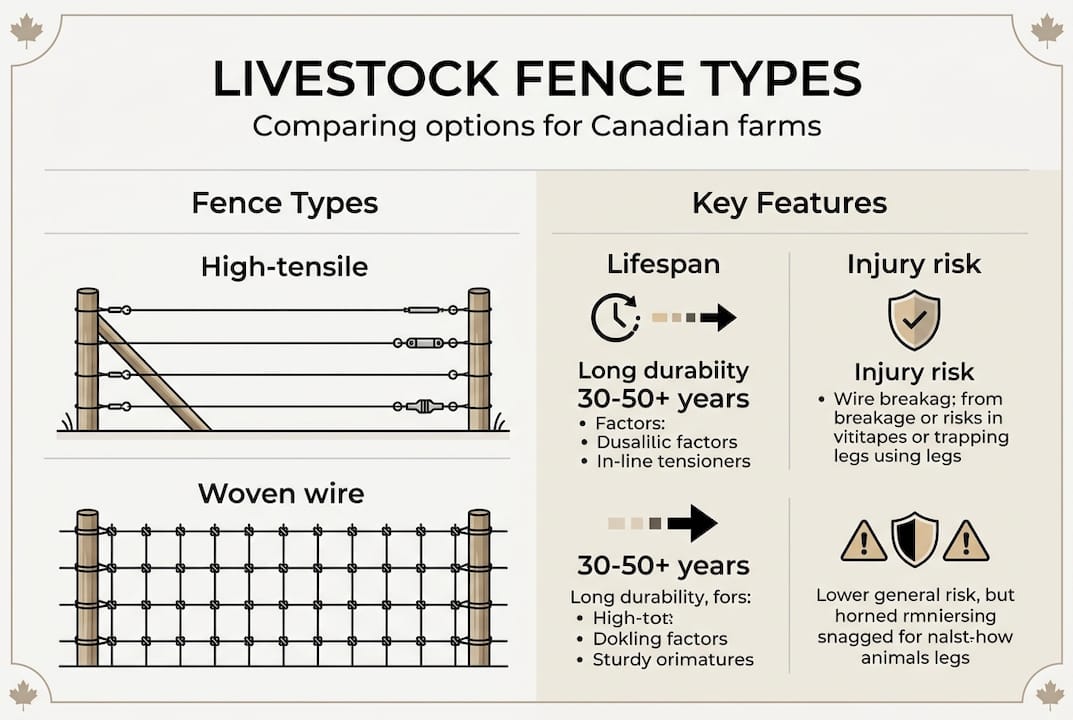
Here is a quick comparison to help you decide:
| Fence type | Best for | Lifespan | Relative cost | Injury risk |
|---|---|---|---|---|
| High-tensile wire | Cattle, perimeters | 20-30 years | Medium | Low |
| Woven wire | Sheep, goats | 15-25 years | Medium-high | Low |
| Barbed wire | Cattle only | 10-15 years | Low | High |
| Electric | All species | Varies | Low-medium | Very low |
| Wood rail | Horses | 10-20 years | High | Low-medium |
One of the most common mistakes is choosing barbed wire because it is cheaper upfront. Barbed wire is cheaper but carries higher injury risk and maintenance demands, while high-tensile wire offers a longer service life with fewer injuries. For horses especially, barbed wire is a serious hazard. A spooked horse that hits a barbed wire fence can suffer deep lacerations that lead to infection, vet bills, and in worst cases, euthanasia.
High-tensile wire, by contrast, has enough give to absorb impact without cutting. It also holds tension better through Canadian freeze-thaw cycles, which repeatedly stress traditional fencing. Electric fencing adds a psychological layer that most animals learn to respect after one or two contacts, making it one of the most cost-effective tools available.
Key advantages of electric fencing over traditional options:
- Works as a standalone system or as an offset addition to existing fences
- Easily moved for rotational grazing setups
- Lower material cost per foot compared to wood or woven wire
- Minimal injury risk due to short-pulse shock design
- Effective for a wide range of species with strand adjustments
For a deeper look at your options, the types of livestock fencing guide covers each category in detail with installation tips.
Matching fence designs to livestock species
Knowing the fence types is step one. Knowing how to configure them for your specific animals is where real-world performance is won or lost. Each species has different escape tendencies, body sizes, and behavioral quirks that demand specific setups.
Fence height and strand requirements by species are as follows: cattle need 5-strand high-tensile wire at 54 inches; horses require 4-5 rail wood or coated wire at 60 inches with high visibility; sheep and goats need woven wire plus an electric offset strand at 48 inches; pigs need woven wire with an electric strand at snout height. Minimum code heights across provinces range from 4 to 5 feet.
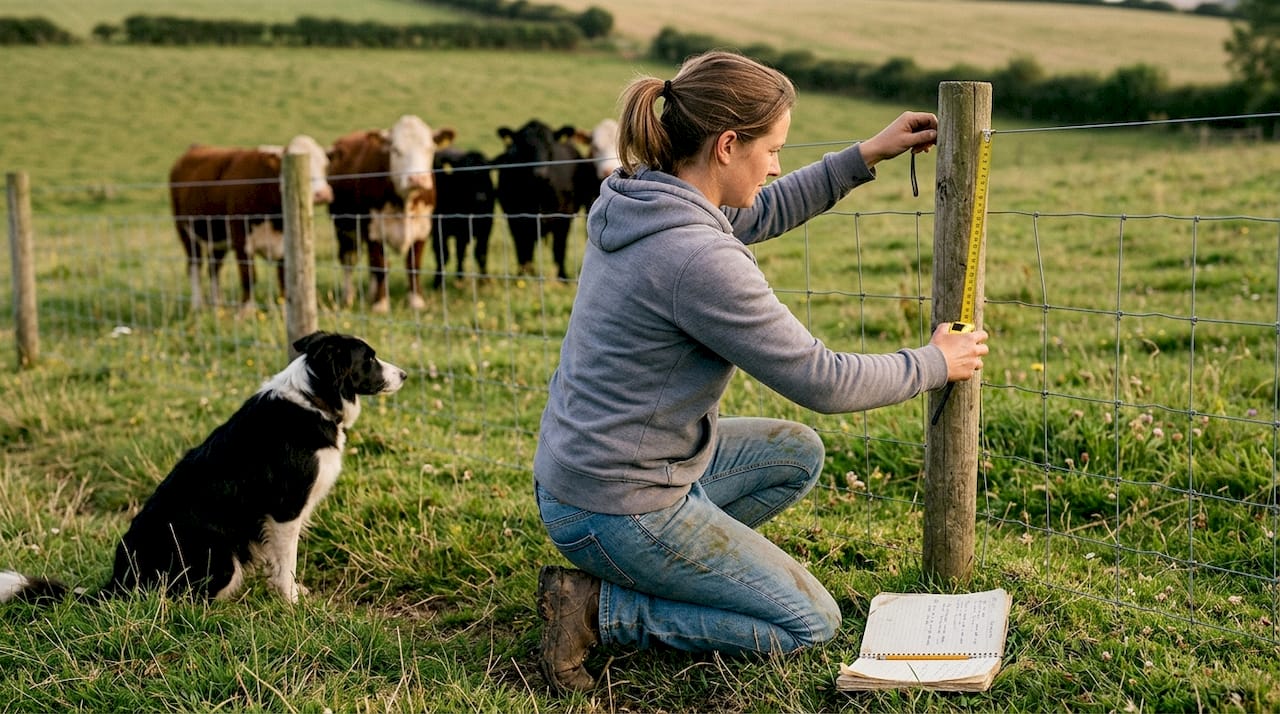
| Species | Recommended fence | Height | Key feature |
|---|---|---|---|
| Cattle | 5-strand high-tensile | 54 inches | Tensioned perimeter |
| Horses | 4-5 rail wood or coated wire | 60 inches | High visibility |
| Sheep/Goats | Woven wire + electric offset | 48 inches | Predator deterrence |
| Pigs | Woven wire + electric at snout | 36-42 inches | Low barrier control |
Electric fencing uses short pulses as a psychological barrier rather than a physical one. Key components include an energizer, insulators, grounding rods, and posts. Cattle typically need 3-5 strands, while sheep require 5-7 strands for effective containment, and the system reduces breaches by 85-90% when properly maintained.
For cattle, check out cattle fencing tips to fine-tune your setup. Sheep owners will find electric fencing for sheep especially useful for predator management, and portable fencing for sheep covers flexible rotational options.
Here is a step-by-step approach to configuring electric fencing for a new paddock:
- Choose the right energizer size based on total fence length and vegetation load
- Install corner and end posts first, using concrete or compacted gravel for stability
- Space line posts 10-15 feet apart depending on terrain
- Run grounding rods at least 6 feet deep, spaced 10 feet apart
- Attach insulators to posts before stringing wire
- Tension the wire and test voltage with a fence tester before introducing animals
Pro Tip: Vegetation touching electric fence wires drains voltage fast. Mow or spray a 12-inch strip under your fence line before energizing, and check it monthly during the growing season. A fence reading below 3,000 volts is unlikely to deter determined animals.
Wildlife exclusion and ecosystem-friendly fencing
Livestock fencing keeps animals in. Wildlife exclusion fencing keeps other animals out. These are related but distinct goals, and many Canadian farms need both working together.
Wildlife exclusion options include woven wire at 2.4 meters for elk and deer at $8-15 per meter, electric or polyrope systems for predator deterrence, and smooth bottom wire set 16-18 inches high with 12-inch spacing for wildlife-friendly designs that reduce animal injury by 80%.
Key features of effective wildlife exclusion fencing:
- Smooth bottom wire prevents leg entanglement for deer and other wildlife
- Tight spacing (12 inches or less) at the base blocks smaller predators like coyotes
- Height of 2.4 meters or more is needed to reliably stop elk and white-tailed deer
- Electric offset strands on the outside face deter bears and wolves
- Buried aprons (12 inches underground, bent outward) stop burrowing predators
Wildlife-friendly designs such as smooth low wires balance livestock security with ecosystem health and can lower long-term costs by 15%, while traditional solid barriers block wildlife migration corridors and can fragment habitat.
For farms near wildlife corridors, this balance matters both ecologically and financially. Fences that injure deer or trap small animals create liability and can attract negative attention from neighbors and regulators.
“Exclusion fences that incorporate wildlife-safe design features protect livestock while preserving natural movement patterns, reducing long-term repair costs and supporting biodiversity on working farms.”
Exclusion fences cut intrusions by up to 90%, and regular maintenance prevents 80% of fence failures across all fence types. That second number is the one most farmers underestimate.
Pro Tip: Walk your entire wildlife exclusion perimeter after every major storm. Wind, falling branches, and frost heave are the top three causes of sudden fence failure. Catching a downed section early is far cheaper than tracking down scattered livestock or filing an insurance claim.
For a full breakdown of design options, visit the wildlife exclusion fencing guide or explore understanding wildlife exclusion fencing for species-specific configurations.
Canadian regulations, installation, and upkeep essentials
Building a fence without knowing local rules is a gamble no farmer should take. Canadian fencing law varies significantly by province, and getting it wrong can mean fines, forced removal, or liability for damages.
Canadian fencing codes vary by province: Ontario’s Line Fences Act requires 4-foot minimum height for cattle with cost-sharing provisions between neighbors, while Alberta sets 4 feet for cattle and 5 feet for horses. Farms may be held liable if escaped livestock causes property damage or traffic accidents, and posts must be set below the frost line at 24-36 inches.
For a full overview of your obligations, the fencing laws in Canada guide and livestock fencing regulations resource are both worth bookmarking before you break ground.
Installation steps that protect your investment:
- Clear the fence line of brush, rocks, and debris before setting any posts
- Install braced corner assemblies first using concrete or compacted gravel
- Set line posts 3-4 meters apart, deeper on slopes and corners
- String wire from corner to corner before tensioning
- Tension high-tensile wire to manufacturer specs using a wire strainer
- Test all gates for swing clearance and latch security
Once the fence is up, maintenance is what keeps it standing:
- Inspect tension and post stability monthly
- Check insulators on electric fences for cracking or UV degradation
- Clear vegetation from the fence line every spring and midsummer
- Re-tension high-tensile wire after the first hard frost of the season
- Document all repairs with dates for insurance and liability records
Installation costs run $1-6 per foot depending on materials and terrain, and high-tensile wire costs $75-120 per 100 feet with a 20-30 year lifespan. Electric systems reduce ongoing maintenance costs significantly, and Ag Clean Tech funding can cover up to 50% of wildlife exclusion fencing costs for eligible farms.
What most fencing guides get wrong—and how to fix it
Most fencing content focuses almost entirely on installation. Pick the right posts, tension the wire correctly, set the corners deep. That advice is not wrong, but it misses the bigger picture entirely.
The truth is that regular maintenance prevents 80% of failures, which means the material you chose matters far less than whether you walk the line every month. A perfectly installed barbed wire fence that nobody checks will fail faster than a modest electric setup that gets weekly attention.
Wildlife-friendly fencing is another area where farms are leaving value on the table. Farms that adopt smooth-wire, low-bottom designs are not just being ecologically responsible. They are reducing injury claims, lowering repair frequency, and building a reputation that matters in rural communities where word travels fast.
Electric fencing is also massively underused for rotational grazing. Farmers who have not tried a portable electric system for moving cattle or sheep between paddocks are often surprised at how much labor it saves. The electric fence setup guide is a solid starting point if you have never run a temporary system before. The flexibility alone is worth the learning curve.
Explore trusted fencing solutions for your farm
You now have a clear picture of what works, what the rules require, and where most farms go wrong. The next step is getting the right materials in your hands.
At FenceFast, we stock everything from complete energizer systems to specialty netting for predator exclusion. If you are setting up a new paddock or reinforcing an existing perimeter, the electric fence accessory kit is a practical starting point with all the core components in one package. For flexible livestock containment, the animal electric fence netting works well for sheep, poultry, and rotational setups. Our team is also available for design consulting if you need help sizing a system for your specific acreage and species mix.
Frequently asked questions
What is the most durable animal fencing for Canadian farms?
High-tensile wire fencing offers a 20-30 year lifespan and low injury risk, making it the most durable long-term choice for cattle operations across Canada.
How does electric fencing prevent livestock escapes?
Electric fencing delivers short, safe pulses that create a psychological barrier animals learn to avoid, reducing escapes by 85-90% when the system is properly grounded and maintained.
Are there grants or funding options for exclusion fencing?
Yes. Ag Clean Tech funding can cover up to 50% of wildlife exclusion fencing costs for eligible Canadian farms, making it worth checking before you finalize your budget.
What are the legal requirements for farm fencing in Canada?
Minimum fence heights and materials vary by province, with most requiring at least 4 feet for cattle. Farms can be held liable if escaped livestock causes damage or a road accident.
How often should farm fencing be maintained?
Monthly inspections are the standard recommendation. Regular maintenance prevents up to 80% of fence failures, making it the single highest-return habit for any livestock operation.
Recommended
- Fence installation steps for Canadian farms: A practical guide – FenceFast Ltd.
- Agricultural fencing in Canada: choosing durable solutions – FenceFast Ltd.
- Best poultry fencing solutions for safe Canadian flocks – FenceFast Ltd.
- Top anti-predator fence options for Canadian livestock – FenceFast Ltd.

