

Regular weighing is the single most reliable numerical control a livestock producer has. It protects animal health, sharpens feed spending, and times sales for better returns. Skip the scale and you’re running dosing, breeding, and marketing decisions on guesswork, and that guesswork shows up directly on the bottom line at sale time.
TL;DR:
- Accurate weighing allows early detection of health issues through trend analysis, reducing treatment costs and preventing large losses.
- Weighing at key reproductive milestones improves breeding success rates by providing reliable data on animal readiness.
- Regular, automated weighing can save labor and enhance feed efficiency, often paying for itself within three years through savings and better sale timing.
- Different systems suit operation size: platform or chute scales are best for infrequent use, while walk-over or in-paddock systems suit frequent weighing and automated data collection.
- Consistent weighing schedules, gentle handling, and proper equipment matching optimize data accuracy and operational decision-making.
Table of Contents
- Why Is Weighing Important for Health Monitoring?
- How Does Weighing Improve Feed Efficiency and ADG?
- What Weight Targets Matter for Breeding Decisions?
- How Does Accurate Weighing Protect Sale Revenue?
- What Are the Main Types of Livestock Weighing Systems?
- What’s the Best Weighing Schedule and Handling Routine?
- Is Weighing Equipment Worth the Investment?
- How Fencefast Helps You Put Weighing Into Practice
- Author’s Practical View
- Get the Right Weighing Setup From Fencefast
- Sources
- FAQ
Why Is Weighing Important for Health Monitoring?
A single weight reading tells you almost nothing. A weight trend tells you everything. Health monitoring depends on comparing an animal’s current weight against its own growth curve, not against a herd average or a guess based on how it looks standing in the pen.
Visual estimation is where most producers get burned. Even experienced hands routinely misjudge weight by more than 10%, and the error grows larger on heavier animals, exactly the ones where a dosing mistake carries the most risk.
Statistic Callout: Estimation errors over 10% aren’t rare outliers. They’re common enough that Penn State Extension flags them as a routine risk of skipping the scale, particularly with sale weights and medication dosing.
Weight deviations trigger specific actions once you’re tracking trends instead of snapshots:
- A sustained drop or flat-lined average daily gain signals possible parasite load, respiratory disease, or feed access problems.
- A sudden single-animal loss after a normal trend points to acute illness or injury, not measurement noise.
- A gradual, herd-wide slowdown suggests a ration or water access issue rather than individual sickness.
Catching these patterns early, before visible symptoms, is what separates a $20 treatment from a $2,000 loss.
How Does Weighing Improve Feed Efficiency and ADG?
Average daily gain (ADG) is the number that tells you whether your feed dollars are working. You calculate it by dividing total weight gain by the number of days between weighings, and it’s the clearest signal of feed conversion efficiency you’ll get without a nutritionist on-site full time.
Benchmarks vary by class, but growing heifers typically target 1.5 to 2.5 pounds of gain per day, while finishing feeders often run higher depending on ration energy density. When ADG comes in below target, here’s the sequence that actually fixes it:
- Re-weigh a sample group to rule out scale error or a bad handling day before touching the ration.
- Check ration energy and protein against the target class, adjusting concentrate ratio if intake looks adequate but gain doesn’t.
- Sort animals falling well below the group average into a separate pen for targeted supplementation.
- Re-weigh in 14 to 21 days to confirm the adjustment worked before committing to it herd-wide.
Feed is usually the largest line item on a livestock operation, and the Gallagher Knowledge Hub points to ADG tracking as the direct lever for cutting waste in that budget.
What Weight Targets Matter for Breeding Decisions?
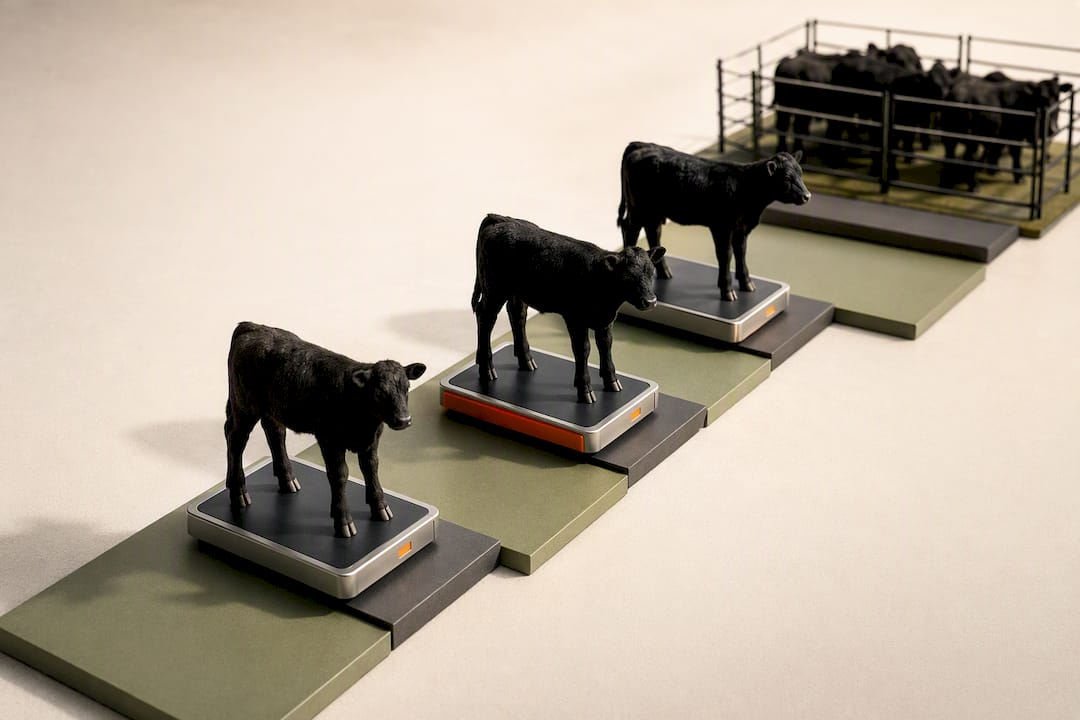
Heifer weight at breeding time is one of the strongest predictors of whether she conceives on schedule. Extension research consistently links heifers bred at roughly 60 to 65 percent of expected mature weight to higher first-service conception rates than lighter animals bred on a calendar date alone.
Weighing at key reproductive milestones gives you the data to act on, rather than hope for:
- Pre-breeding weight check to confirm heifers have hit target percentage before the bull goes in or AI starts.
- Mid-gestation weight to catch nutritional shortfalls before they affect calf birth weight or dam condition.
- Post-weaning weight on replacement candidates to select for genuine growth potential instead of frame size alone.
Pair weight data with body condition scoring. A heifer can hit a target number while carrying poor muscle or excess fat, and the two measures together catch what either one misses alone.
How Does Accurate Weighing Protect Sale Revenue?
Selling on weight without a certified scale is a bet against your own margin. Buyers and packers price by the pound, and even small measurement gaps compound fast once you multiply across a full lot.
Statistic Callout: A shrink or overestimate of even a modest number of pounds per head on a large feeder lot, at typical market pricing, can swing total sale revenue by thousands of dollars in a single transaction, before accounting for any dock or penalty for under or over target weight.
Certified scales are required for trade in many jurisdictions, and beyond the legal requirement, accurate on-farm weighing lets you forecast when a lot will actually hit its market-ready window instead of guessing and either selling light or feeding past the optimal point. Consistent weighing across a group also improves lot uniformity, and buyers pay premiums for uniform lots because they’re easier to process and price with confidence.
What Are the Main Types of Livestock Weighing Systems?
Matching the equipment to your operation size and handling frequency matters more than chasing the most advanced option available. Here’s how the main categories stack up:
- Platform scales are the standard for general-purpose weighing, durable, accurate, and simple to move between pens or facilities.
- Crush or chute scales integrate directly into an existing handling system, minimizing extra animal movement during processing.
- Weigh bars retrofit onto an existing chute floor or panel, a lower-cost entry point for producers not ready to invest in a dedicated unit.
- Walk-over and in-paddock systems capture weight passively as animals move to water or feed, cutting yard events and handling stress dramatically, with Optiweigh case studies showing rapid payback where early weight loss detection prevented larger losses.
- Camera and imaging tools are the newest entrant, predicting weight without physical handling, though calibration against a known scale is still necessary before trusting the numbers.
Pro Tip: Start with a chute or platform scale if you’re weighing fewer than a few times a year. Move to walk-over or EID-integrated systems once you’re weighing monthly or more, that’s the frequency where labor savings start to outweigh the equipment cost.
Larger operations running frequent weigh events benefit most from EID integration, since it links every reading automatically to the right animal without a second data entry step.
What’s the Best Weighing Schedule and Handling Routine?
A weighing program only works if it’s consistent enough to build a real trend line, and gentle enough that the numbers reflect actual growth rather than stress-induced weight swings.
- Feedlot operations typically weigh every 28 to 30 days to track ADG against ration changes on a predictable cycle.
- Breeding herds weigh at defined events, pre-breeding, mid-gestation, and weaning, rather than on a fixed calendar.
- Smallholders and small ranches can weigh monthly or tie weighing to specific events like vaccination days to avoid extra handling trips.
- Record every weight against the individual animal’s tag, not just a pen average, so trends are traceable back to one animal.
Handling technique affects the number on the scale. Calm, unhurried movement into the chute, motion-averaging scale heads, and chute design that avoids sudden stops all reduce the temporary weight suppression that comes from a stressed animal, a documented effect that passive weighing systems are specifically designed to avoid.
Is Weighing Equipment Worth the Investment?
The ROI case for a weigh program comes from four places: feed savings from tighter ration decisions, avoided losses from catching illness before it spreads, better sale timing that avoids docks and missed premiums, and labor savings once automation replaces repeated manual weigh days.
- Feed savings alone often justify a basic scale on operations feeding more than a handful of head through a growing season.
- Case studies on automated and walk-over systems report labor reductions from fewer yard events, since animals weigh themselves passively at water or feed access points.
- In-paddock systems have shown payback within a single season in some documented scenarios, largely from catching weight loss early enough to intervene before it became a larger loss.
A rough rule of thumb: if your expected annual savings from feed efficiency and avoided losses exceed roughly a third of the equipment’s upfront cost, the investment pays for itself within three years even before counting labor savings.
How Fencefast Helps You Put Weighing Into Practice
The company carries weighing equipment, EID integration tools, and consulting support designed to match scale type to herd size, handling setup, and budget. A real-farm case study documents a cattle producer who cut handling time and improved management decisions after adopting a dedicated weigh system, the kind of concrete outcome that makes the investment case easier to justify on paper.
Three steps to get started:
- Audit your current animal type, herd size, and handling workflow before shopping for equipment.
- Pick an equipment class, chute scale, weigh bars, or walk-over, that matches your weighing frequency, not your budget alone.
- Review the weighing and reading equipment guidance or request a design consultation for a setup tailored to your facility.
Author’s Practical View
Treat weighing as a continuous data stream, not a once-a-year chore, and every other decision on the operation gets sharper. Weigh one representative animal or group this week and compare it against your last estimate. The gap will tell you exactly how much guesswork has been driving your decisions.
— Juiced
Get the Right Weighing Setup From Fencefast
Fencefast is the practical starting point for producers ready to move from visual guessing to scale-based decisions, without needing to piece together equipment from multiple vendors. As an authorized Gallagher dealer with over two decades in the fencing and animal management space, The company stocks weighing equipment alongside handling and EID infrastructure that supports effective use of weight data.
Browse the fence equipment collection to see handling infrastructure that pairs with a weigh setup, or head to the Fencefast homepage to request design consultation on a system sized for your herd. If you’re weighing fewer than a dozen times a year, start with a simple chute scale. If you’re managing a larger herd, ask about EID integration so every reading logs automatically against the right animal.
Sources
- Benefits of weighing beef cattle — Penn State Extension
- Benefits of weighing your livestock — Gallagher Knowledge Hub
- Automated cattle weighing — FutureBeef
- Optiweigh in-paddock cattle weighing — PIRSA/Optiweigh
- Farm scales guide — ScaleBlog
FAQ
What Is the Purpose and Importance of Weighing Livestock?
Weighing gives you the exact numbers behind health checks, medication dosing, feed decisions, and sale timing, replacing visual guesswork that’s frequently off by more than 10 percent.
Why Is Weighing Important in Agriculture?
Weight data drives nearly every operational decision in livestock agriculture, from calculating ADG to determining breeding readiness to hitting market weight without penalty.
What Is the Primary Purpose of a Livestock Scale?
A livestock scale provides accurate, repeatable weight measurements that support health monitoring, correct dosing, feed efficiency tracking, and fair market pricing.
Why Are Weighing Scales So Important on a Farm?
Without a scale, dosing calculations, feed rations, and sale prices all rely on estimates that routinely miss the actual weight by a meaningful margin, and that margin costs money at every stage.
How Often Should I Weigh My Livestock?
Feedlots typically weigh every 28 to 30 days, breeding herds weigh at key reproductive events, and smallholders often weigh monthly or tie it to routine handling days like vaccinations.

