

Managing goats on sprawling Canadian pastures brings real challenges, from keeping herds safely contained to protecting them from predators and optimizing pasture health. For farmers and hobbyists, finding a flexible, reliable solution can make the difference between stress and success. With movable electric fencing, you can turn rotational grazing into a practical reality, offering not just secure containment but also improved land management and herd performance in any rural environment.
Table of Contents
- What Is a Movable Electric Fence for Goats?
- Types of Movable Electric Fencing Systems
- How Movable Electric Fences Work for Goats
- Essential Components and Setup Steps
- Costs, Maintenance, and Common Pitfalls
Key Takeaways
| Point | Details |
|---|---|
| Movable Electric Fences Offer Flexibility | These fencing systems allow goat farmers to implement rotational grazing, enhancing pasture management and promoting soil health. |
| Effective Containment Mechanism | The electric pulse from the energizer deters goats by providing a brief, uncomfortable shock, training them to respect boundaries. |
| Maintenance is Crucial | Regular inspections and voltage tests are essential to ensure effectiveness and prevent escapes or fence failures. |
| Cost Considerations | Initial setup costs can range from $200 to $800 for small to medium herds, with ongoing maintenance expenses to consider for long-term use. |
What Is a Movable Electric Fence for Goats?
A movable electric fence represents a dynamic and flexible solution for goat farmers seeking effective livestock management. These portable fencing systems are designed to provide controlled grazing capabilities while ensuring the safety and containment of goats across changing pasture environments.
At its core, a movable electric fence is a lightweight, temporary fencing system that can be quickly repositioned to support strategic pasture management. Unlike traditional permanent fencing, these systems offer remarkable advantages for agricultural operations:
- Allows rotational grazing strategies
- Enables precise paddock control
- Supports regenerative agriculture practices
- Provides flexible livestock management
- Reduces parasite transmission through movement
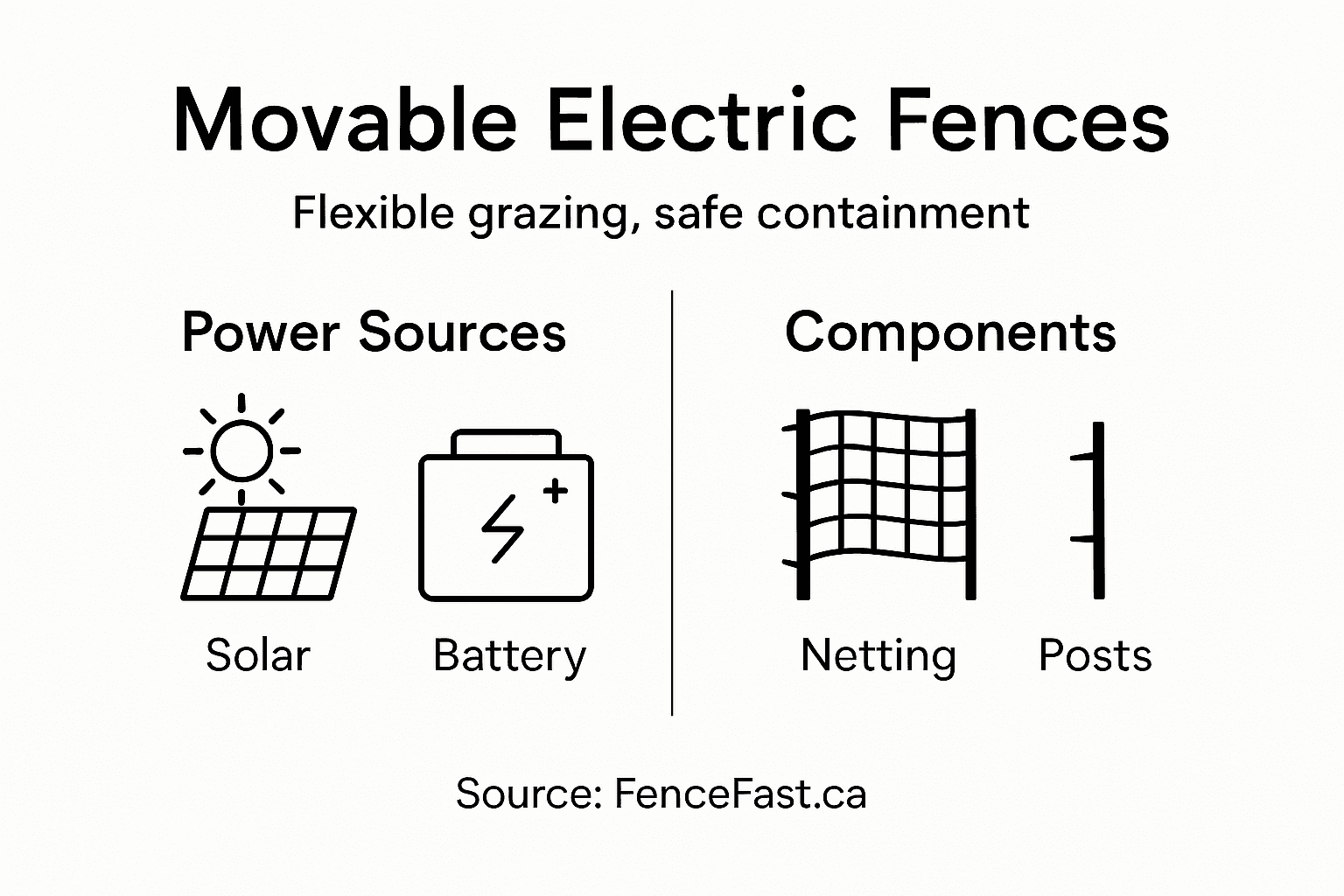
The fundamental components typically include electrified wire or netting, portable posts, and an energizer that delivers a mild electric charge. When a goat touches the wire, they receive a short, uncomfortable shock that trains them to respect boundary lines without causing significant harm.
Energizer technologies power these fences through various methods, including solar panels, battery systems, or direct electrical connections. The electric pulse creates a psychological barrier that effectively contains goats without requiring substantial physical infrastructure.
Goat farmers appreciate movable electric fences because they transform pasture management from a static to a dynamic process. By frequently rotating grazing areas, farmers can optimize land usage, improve soil health, and provide diverse nutritional opportunities for their herds.
Pro tip: Practice setting up and taking down your movable electric fence several times before deploying it with live animals to ensure smooth, efficient operations.
Types of Movable Electric Fencing Systems
Goat farmers have several portable electric fencing options to manage their herds effectively. These flexible systems provide unique solutions for different agricultural environments and specific livestock management needs.
The three primary types of movable electric fencing systems for goats include:
-
Electric Fence Netting (Electronet)
- Plastic mesh with integrated electric wires
- Provides visual and physical containment
- Ideal for predator protection
- Requires more setup time
-
Electric Polywire Fencing
- Lightweight wire strands
- Extremely portable and quick to install
- Best for temporary paddock divisions
- Highly flexible positioning
-
Electric Tape Fencing
- Wider electrical tape instead of thin wire
- More visible to animals
- Reduces risk of animals accidentally touching fence
- Suitable for flat terrain
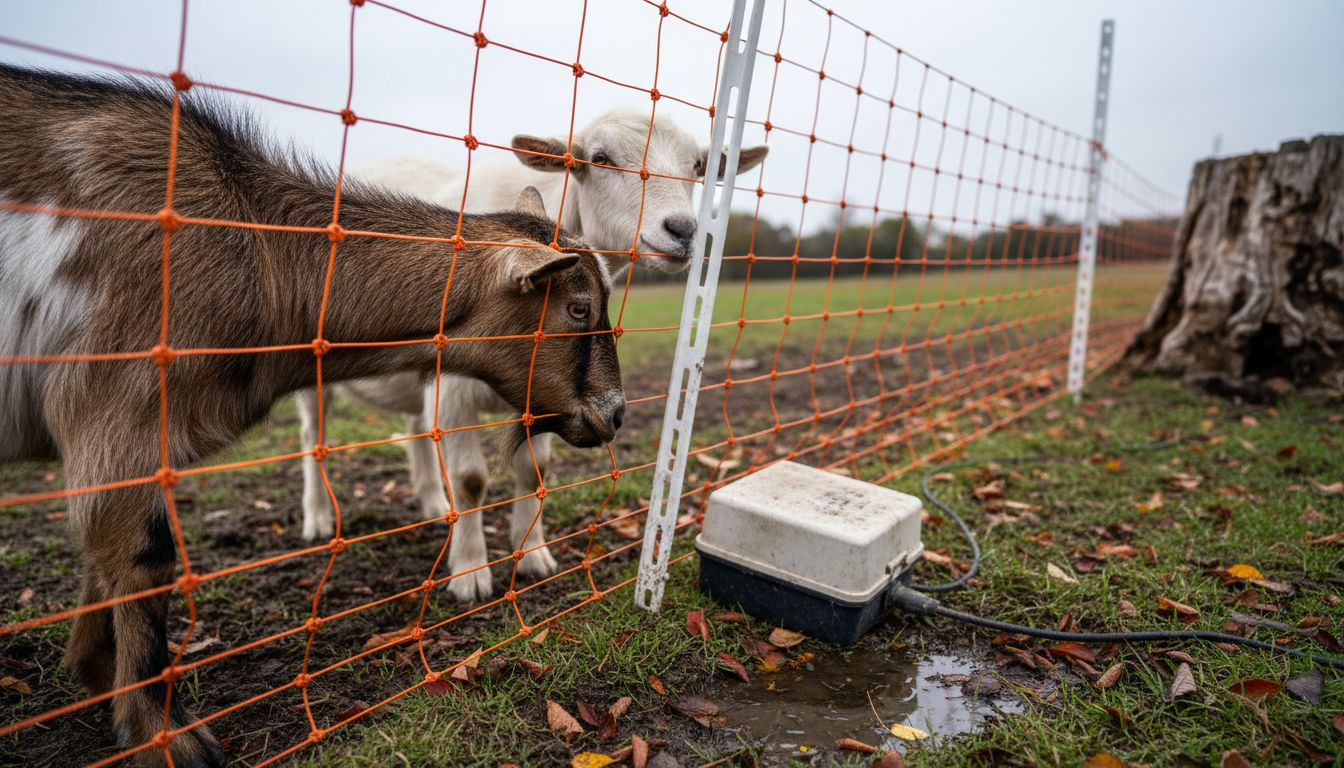
Netting fences offer comprehensive containment by creating a complete barrier that prevents goats from escaping while simultaneously deterring predators. These systems typically feature spike-style posts integrated directly into the mesh, making them stable and easy to position across various terrains.
Polywire and tape systems provide maximum flexibility for rotational grazing strategies. Farmers can quickly reconfigure paddock boundaries, allowing precise control over grazing patterns and land management. The lightweight nature of these systems means they can be rapidly repositioned to optimize pasture utilization.
Here is a comparison of movable electric fencing system types by key criteria:
| Fencing Type | Portability | Best Use Scenario | Predator Deterrence |
|---|---|---|---|
| Electric Netting | Moderate | All-terrain, predators | Very high |
| Polywire | Very high | Rapid paddock changes | Moderate |
| Electric Tape | High | Flat, open grazing areas | Low |
Choosing the right movable electric fencing system depends on your specific herd size, terrain characteristics, and management objectives.
Pro tip: Invest in a voltage tester to regularly check your electric fence’s effectiveness and ensure consistent performance across different fencing sections.
How Movable Electric Fences Work for Goats
Movable electric fences operate on a simple but effective principle of psychological animal containment. These innovative systems create a deterrent barrier that prevents goats from crossing boundaries through a carefully controlled electrical pulse.
The fundamental mechanism involves several key components:
-
Energizer Unit
- Generates electrical pulses
- Converts power source energy into fence current
- Controls shock intensity and frequency
-
Conductive Wiring
- Carries electrical current
- Typically made of aluminum or steel
- Provides continuous electrical connection
-
Grounding System
- Completes electrical circuit
- Ensures effective shock delivery
- Allows current to return to energizer
Electrical pulse characteristics are crucial in creating an effective deterrent. When a goat touches the electrified wire, they experience a quick, sharp shock that creates a memorable negative association. The pulse is designed to be uncomfortable but not harmful, effectively training animals to respect fence boundaries.
The shock mechanism works through basic electrical principles. As the goat completes the electrical circuit by touching the wire while standing on the ground, a brief but intense electrical pulse passes through their body. This momentary discomfort creates a powerful psychological barrier that discourages future attempts to breach the fence.
The effectiveness of an electric fence depends on consistent voltage, proper installation, and regular maintenance.
Pro tip: Test your fence’s voltage regularly using a specialized voltage tester to ensure consistent and effective animal containment.
Essential Components and Setup Steps
Successful movable electric fencing for goats requires careful planning and precise installation techniques. Understanding the essential components and setup process ensures effective livestock management and pasture control.
The core components of a movable electric fence system include:
-
Fence Posts
- T-posts or step-in plastic posts
- Lightweight and easily movable
- Must provide stable fence support
- Available in various lengths
-
Electrical Components
- Solar or plug-in energizer
- Electric wire or netting
- Grounding rods
- Insulators for wire attachment
- Voltage tester
-
Supplementary Materials
- Connecting clips
- Tension springs
- Wire connectors
- Protective gloves
- Measuring tape
The setup process requires methodical execution. Farmers should first clear the designated area of tall vegetation, ensuring a clean installation surface. Fence post placement is critical - posts must be spaced consistently to maintain wire tension and create a uniform barrier.
When installing the electrical components, careful attention to grounding and energizer connection determines the fence’s effectiveness. The electrical circuit must be complete, with grounding rods installed at the proper depth and angle to ensure consistent electrical transmission.
Proper fence setup is 80% preparation and 20% actual installation.
Pro tip: Always do a complete voltage test after installation and before introducing goats to the new fence system.
Costs, Maintenance, and Common Pitfalls
Goat farmers must carefully consider the financial and operational aspects of movable electric fencing systems. Understanding potential costs, maintenance requirements, and potential challenges is crucial for successful implementation.
Initial cost considerations include:
-
Equipment Expenses
- Energizer unit: $50-$300
- Fence posts: $2-$10 per post
- Wire or netting: $0.25-$1 per linear foot
- Grounding materials: $20-$50
- Total startup cost: $200-$800 for small to medium herds
-
Ongoing Maintenance Costs
- Annual replacement parts: $50-$150
- Electricity or battery expenses: $20-$50 per year
- Voltage tester replacement: $30-$80 every 2-3 years
Maintenance requirements are critical for long-term fence effectiveness. Regular inspections should include checking electrical connections, clearing vegetation, testing voltage levels, and repairing any damage to wires or posts.
Typical maintenance and troubleshooting points for movable electric fences:
| Maintenance Task | Recommended Frequency | Common Issue if Missed |
|---|---|---|
| Voltage test | Every 2 weeks | Fence underperforming |
| Check wire connections | Monthly | Power loss or shorts |
| Clear vegetation around fence | As needed (growing season) | Fence grounding/shorting |
| Inspect for damage | After storms or weekly | Escapes or injuries |
Common pitfalls can significantly compromise fence performance. Farmers must be vigilant about potential issues such as inadequate grounding, vegetation shorting the fence, and insufficient goat training. These problems can lead to escaped animals and reduced fence reliability.
Preventative maintenance is always cheaper than emergency repairs.
Pro tip: Create a monthly maintenance checklist and schedule regular fence system inspections to catch potential issues before they become expensive problems.
Enhance Your Movable Electric Fence Setup with Expert Solutions from FenceFast.ca
Managing goats with movable electric fences requires reliable components and tools that ensure safety, flexibility, and effective livestock containment. If you want to avoid common pitfalls like poor grounding, inconsistent voltage, or time-consuming installations, choosing the right equipment is essential. From energizers and solar panels to high-quality wire, posts, and voltage testers, having the best supplies supports your goals of rotational grazing and predator protection.

Discover a wide range of fencing components and electric fencing systems tailored for agricultural needs at FenceFast.ca. Explore our selection of durable fence posts, energizers, and accessories designed for easy setup and maintenance so you can confidently optimize your pasture management. Take control of your fencing projects today by visiting the FenceFast.ca home page and equip your farm with the solutions trusted by Canadian farmers and ranchers.
Frequently Asked Questions
What is a movable electric fence for goats?
A movable electric fence for goats is a portable fencing system that provides controlled grazing and ensures the safety and containment of goats across changing pasture environments. It typically consists of electrified wire, portable posts, and an energizer that delivers a mild electric charge.
How does a movable electric fence work for goats?
Movable electric fences operate by delivering a psychological deterrent through an electrical pulse. When a goat touches the electrified wire or netting, they receive a quick, uncomfortable shock, teaching them to respect the boundaries without causing harm.
What types of movable electric fencing systems are available for goats?
There are three primary types of movable electric fencing systems: Electric Fence Netting (Electronet), Electric Polywire Fencing, and Electric Tape Fencing. Each type offers unique benefits, catering to different grazing strategies and terrain types.
What are the maintenance requirements for a movable electric fence?
Maintenance includes regular inspections for electrical connections, clearing vegetation, testing voltage levels, and repairing any damage. It’s crucial to perform these tasks frequently to ensure the fence remains effective and animals stay contained.

