

TL;DR:
- Rural fencing laws specify height, material, and setback rules that owners must follow even on large properties. Exceeding these limits requires permits or variances and can lead to delays and costs. Proper documentation and local authority consultation help prevent legal and neighbor disputes.
Zoning laws for rural fencing define exactly how you may build a fence on your property, covering required heights, setback distances, permitted materials, and when you need a permit. These rules come from municipal zoning boards, state agricultural departments, and sometimes homeowners associations, and they apply even on large rural parcels where owners often assume no restrictions exist. Front yard height limits commonly sit at 42 inches, while rear and side yards typically allow up to 6 feet before a variance is required. Getting this wrong costs money, delays projects, and can force you to tear down completed work.
What are typical height and location restrictions in rural zoning laws?
Height limits are the most frequently misunderstood part of rural fencing regulations. Most jurisdictions cap front yard fences at 42 inches, which is 3.5 feet, to preserve sightlines for drivers and pedestrians. Rear and side yard fences are generally permitted up to 6 feet without additional approval.
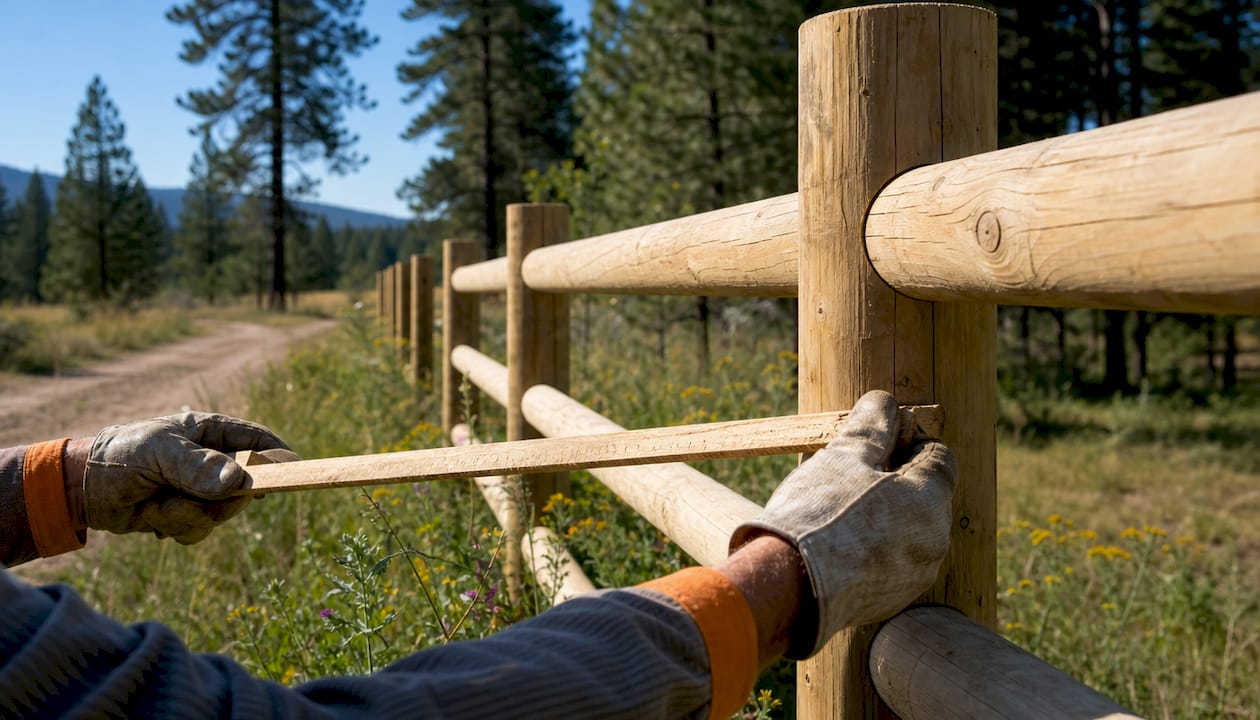
Exceeding those limits triggers a variance or special permit process. A variance requires you to demonstrate a specific hardship, and the review process can take weeks or months. Fences over 8 feet or those encroaching into sight-distance zones often require engineering certification on top of the variance application.
Location matters as much as height. Setback distances from property lines and public rights-of-way vary by jurisdiction. A significant portion of land directly in front of rural homes often falls within a public right-of-way or utility easement, where fences are prohibited or require a separate encroachment permit. That strip of grass between your fence post and the road may not legally be yours to fence.
Common height and setback rules at a glance:
| Location | Typical Height Limit | Notes |
|---|---|---|
| Front yard | 3.5 ft (42 in) | Visibility and traffic safety |
| Side yard | Up to 6 ft | Varies by jurisdiction |
| Rear yard | Up to 6 ft | Sometimes higher with a permit |
| Rights-of-way | Prohibited or restricted | Encroachment permit required |
| Agricultural zones | Often higher | Species and use dependent |
- Front yard fences above 42 inches typically require a variance in most municipalities.
- Side and rear yard fences up to 6 feet are usually permitted as of right.
- Setback distances from property lines range from 0 to several feet depending on local code.
- Utility easements along fence lines may prohibit permanent structures entirely.
Pro Tip: Before you dig a single post hole, pull your property survey and overlay it against your municipality’s zoning map. Easements and rights-of-way are invisible on the ground but very real on paper.
How do zoning laws address fencing materials and livestock containment?
Material restrictions in agricultural zoning are specific and non-negotiable. Barbed wire is permitted for animal containment in agricultural zones but is typically banned in residential or residential-transitional zones where public contact is likely. Electrified fencing follows a similar pattern: allowed for livestock management on farm land, but restricted or outright prohibited where the zone transitions toward residential use.
Many rural property owners assume that owning agricultural land gives them full freedom over fencing choices. That assumption is wrong. Agricultural zoning and state livestock laws impose specific material and location rules that carry real enforcement consequences. A fence that works perfectly for cattle containment on a farm may violate code the moment the parcel is reclassified or borders a residential zone.
State livestock laws add another layer. Agricultural regulations require secure containment to prevent livestock from trespassing onto neighboring land or public roads. The standard for “secure” varies by species. A fence adequate for horses may not meet the legal standard for hogs. Reviewing livestock containment standards before selecting materials saves you from costly retrofits.
Key material considerations for rural fencing:
- Barbed wire: permitted for livestock enclosure in agricultural zones; restricted or banned near residential areas.
- Electrified fencing: allowed on farm land; often prohibited in residential-transitional zones.
- Woven wire and high-tensile wire: widely accepted across most agricultural zones.
- Wood and vinyl: subject to HOA aesthetic requirements in some rural communities.
- Chain link: generally permitted but may face height and setback restrictions.
Pro Tip: Check your state’s livestock trespass statute before choosing fence materials. Some states hold the livestock owner liable for damages only if the fence meets a legally defined standard of construction.
What permits and approvals are required to build fences on rural properties?
Standard code-compliant fences often qualify as “as of right” installations, meaning no permit is required as long as height, materials, and setbacks meet local zoning rules. This exemption disappears the moment your fence deviates from those standards. Non-compliant fences trigger additional requirements and can cause significant project delays.
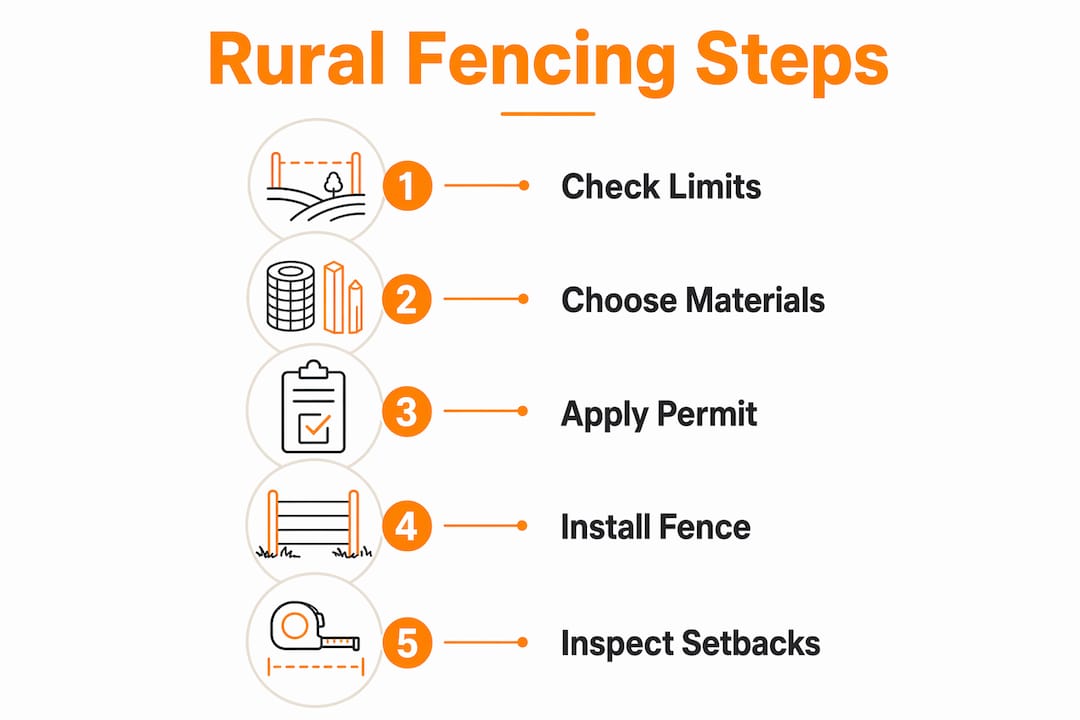
Here is a clear sequence for navigating the permit process:
- Pull your property survey. Local authorities require a to-scale survey plat when you apply for a fence permit. An accurate survey prevents setback errors and speeds up approval.
- Check your zoning designation. Agricultural, rural residential, and transitional zones each carry different rules. Contact your municipal zoning office to confirm which rules apply to your parcel.
- Determine if a building permit is needed. Safety-related fences, such as pool barriers, almost always require a building permit regardless of height. Confirm this with your local building department.
- Apply for a variance if needed. If your planned fence exceeds height limits or sits within a restricted zone, submit a variance application. Be prepared to document the hardship that justifies the exception.
- Check HOA covenants. HOA rules often supersede municipal zoning codes. An HOA may prohibit vinyl fencing, require specific wood species, or mandate a separate approval process entirely independent of the municipal permit.
- Submit documentation. Most applications require a site plan, the survey plat, a description of materials, and fence height specifications.
HOA restrictions catch rural property owners off guard more than any other requirement. A property inside a rural subdivision may carry HOA covenants that are stricter than county zoning. Skipping the HOA review and going straight to the county office is a common and expensive mistake.
How do boundary disputes and property line setbacks impact rural fencing?
Property boundary misunderstandings are the leading cause of illegal fence installations on rural land. Easements and rights-of-way are not visible on the ground, and thorough title and survey research before construction is the only reliable way to avoid placing a fence where it does not legally belong. A fence built even a few inches over a property line can trigger a forced removal order.
Shared or partition fences add legal complexity. In many states, neighboring landowners share the cost and responsibility of maintaining a fence on a common boundary. The rules governing who pays for what, and when, vary significantly by state. Verbal agreements between neighbors feel sufficient at the time but create serious problems later.
Written certified mail notifications for partition fence repairs are legally mandated in many states and are the only documentation that supports a reimbursement claim in court. Verbal agreements lack legal enforceability and are a primary source of neighbor litigation over fencing costs and responsibilities.
The “fence in versus fence out” distinction also matters on rural land. In many rural states, property owners may bear the responsibility for keeping livestock off their own land, which is the opposite of what most people assume. Local herd districts can modify these default rules, so confirming which standard applies in your county is not optional.
Best practices for avoiding boundary disputes:
- Commission a licensed survey before breaking ground on any fence near a property line.
- Review your title report for easements, rights-of-way, and encumbrances.
- Send all partition fence repair notices by certified mail and keep copies.
- Put cost-sharing agreements with neighbors in writing and have both parties sign.
- Understand your state’s fence-in or fence-out default rule before assuming who is responsible.
Pro Tip: A misplaced fence left in place long enough can give rise to an adverse possession claim. If a neighbor’s fence has been sitting on your land for years, consult a property attorney before the statutory period runs out.
Key Takeaways
Rural fencing compliance requires checking height limits, material rules, permit requirements, and property boundaries before any post goes in the ground.
| Point | Details |
|---|---|
| Height limits are strict | Front yards cap at 42 inches; rear and side yards allow up to 6 feet before a variance is needed. |
| Materials are zone-specific | Barbed wire and electrified fencing are permitted in agricultural zones but restricted near residential areas. |
| Permits depend on compliance | Code-compliant fences often need no permit; deviations trigger variance applications and documentation requirements. |
| HOA rules override municipal codes | HOA covenants can impose stricter material and aesthetic standards independent of county zoning. |
| Written records prevent disputes | Certified mail notices and signed agreements are legally required for partition fence repairs in many states. |
What I’ve learned from watching rural fencing projects go sideways
The most common pattern I see is a property owner who reads the county zoning summary, decides their fence qualifies as “as of right,” and starts digging without checking for easements or HOA covenants. The fence goes up, looks great, and then a notice arrives. The fix costs more than the original permit would have.
Early engagement with your local zoning office costs nothing and takes an hour. That conversation tells you exactly what documentation you need, whether a variance is likely to succeed, and which department handles agricultural versus residential rules. Most zoning staff are genuinely helpful when you come in before construction rather than after a complaint.
The fence-in versus fence-out distinction is the piece of rural property fencing rules that surprises people most. Buyers of rural land often inherit assumptions from the previous owner that do not match the actual legal standard in that county. Confirming this before you close on a property is worth the time. You can find a solid overview of rural property fencing laws that covers these distinctions in plain language.
Written documentation is not bureaucratic overhead. It is the only thing that protects you when a neighbor changes their mind about a cost-sharing agreement two years later. Send everything by certified mail, keep the receipts, and treat your fence project like the legal matter it is.
— Juiced
Fencefast has the products and expertise to keep you compliant
Rural fencing compliance starts with choosing the right materials for your zone, your livestock, and your local regulations. Fencefast carries a full range of agricultural fencing supplies built for the demands of farm and ranch land, from high-tensile wire and electric fencing systems to livestock-grade gates and connectors.

The Fencefast team understands the specific requirements that come with agricultural zoning, livestock containment standards, and rural property fencing rules. Whether you are planning a new perimeter fence, upgrading containment for cattle or horses, or looking for guidance on materials that meet your local code, Fencefast provides the products and knowledge to get the job done right. Explore the full catalog and get expert support at fencefast.ca.
FAQ
What are the standard height limits for rural fences?
Front yard fences are typically limited to 3.5 feet (42 inches), while rear and side yard fences are generally permitted up to 6 feet. Exceeding these limits requires a variance or special permit from your local zoning authority.
Do I need a permit to build a fence on rural property?
Standard fences that meet local height, material, and setback requirements often qualify as “as of right” and need no permit. Fences that exceed height limits, use restricted materials, or sit near rights-of-way require a permit or variance application.
Can I use barbed wire or electric fencing on my rural property?
Barbed wire and electric fencing are permitted in agricultural zones for livestock containment but are restricted or prohibited in residential-transitional zones. Check your specific zoning designation and state livestock laws before installing either type.
How close to the property line can I build a fence?
Setback requirements vary by jurisdiction, but land within public rights-of-way or utility easements is typically off-limits for permanent fencing. A licensed property survey is the only reliable way to confirm your legal boundary before construction.
Who is responsible for a fence on a shared property line?
Responsibility for partition fences is governed by state law and varies widely. Many states require cost-sharing between neighbors, and certified mail notices are legally mandated for repair requests. Verbal agreements are not enforceable in most jurisdictions.
Recommended
- Rural Property Fencing Laws: What Landowners Must Know – FenceFast Ltd.
- Best practices for rural fencing: Secure your livestock and land – FenceFast Ltd.
- How to Build a Fence: Step-by-Step Guide for Rural Properties 2025 – FenceFast Ltd.
- Livestock Fencing Regulations: What Owners Must Know – FenceFast Ltd.

